Audi RS 3 Sedan (8Y) specifications and photos
The Audi RS 3 Sedan (8Y) represents the highest performance tier of the fourth-generation A3 lineup. Introduced in 2021, this C-segment four-door pairs an aggressive chassis setup with a potent five-cylinder turbocharged engine.
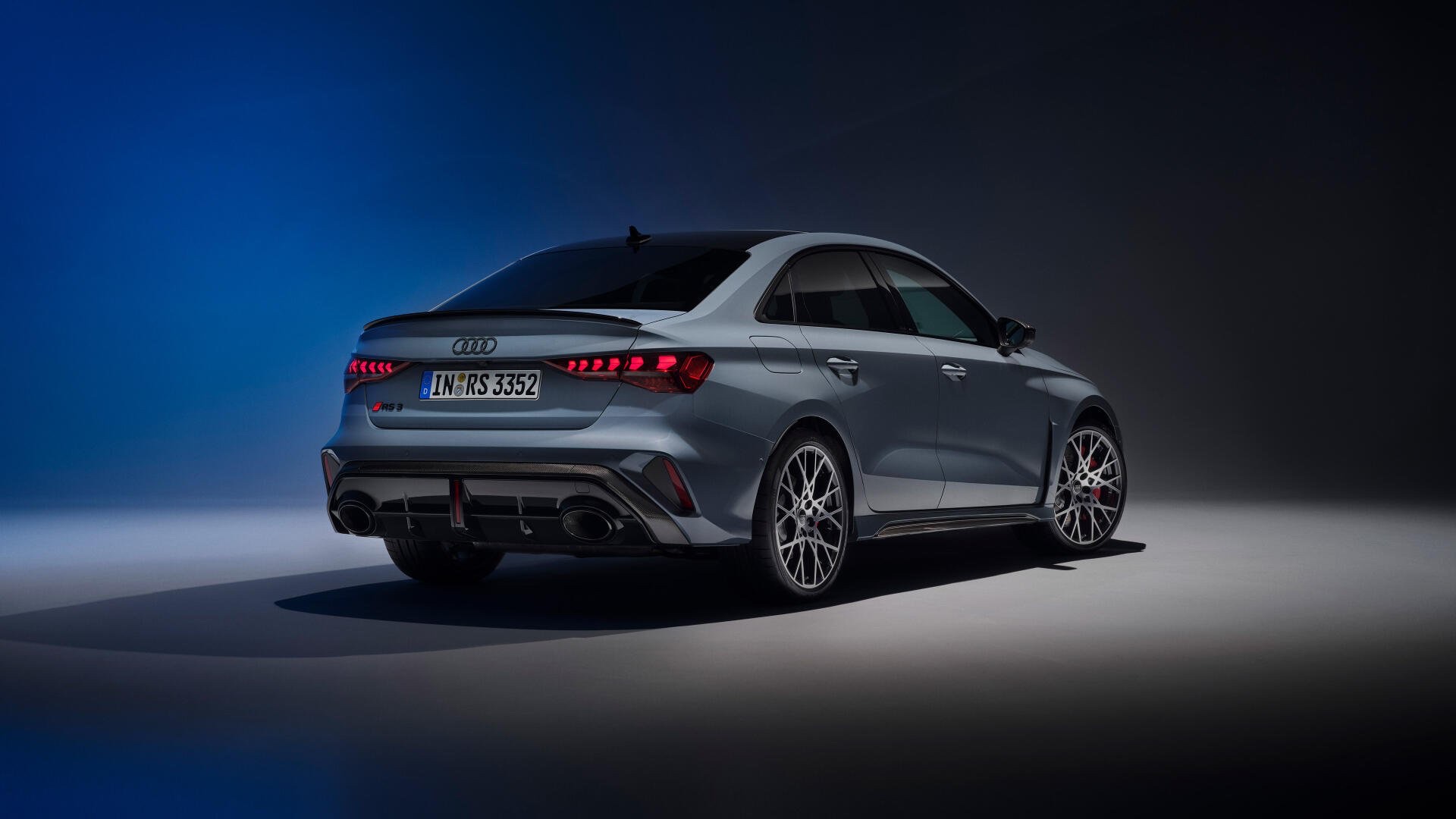
Audi RS 3 Sedan (8Y) at a glance
Quick model context before comparing photos and trim-level specifications.
Positioned at the top of the compact sedan class, the 8Y-generation RS 3 builds on its predecessor by retaining the signature 2.5-liter five-cylinder layout while significantly updating the drivetrain. Formally, peak horsepower remains unchanged, but the torque band has been widened and increased, improving overall responsiveness. The most notable mechanical shift is the introduction of a new all-wheel-drive torque-vectoring rear axle. This generation caters to driving enthusiasts seeking high performance in a compact, everyday footprint, bridging the gap between a standard daily commuter and a dedicated track car.
- Power: 400 hp
- Engine displacement: 2480 cc
- Transmissions: 7 S-tronic
- Seating: 5 seats
Photos, trims and specifications for Audi RS 3 Sedan (8Y)
This model page brings gallery images, trim comparison, and detailed technical data together for the 2021 generation.
Estimate fuel cost
Use trim-level fuel consumption data to estimate monthly and yearly fuel spending.
Fuel costs are estimates. Real consumption can change with driving style, traffic, tires, weather, load, and market-specific equipment.
Audi RS 3 Sedan (8Y) overview
Editorial context for design, cabin, performance, practicality, and buyer notes.
Design
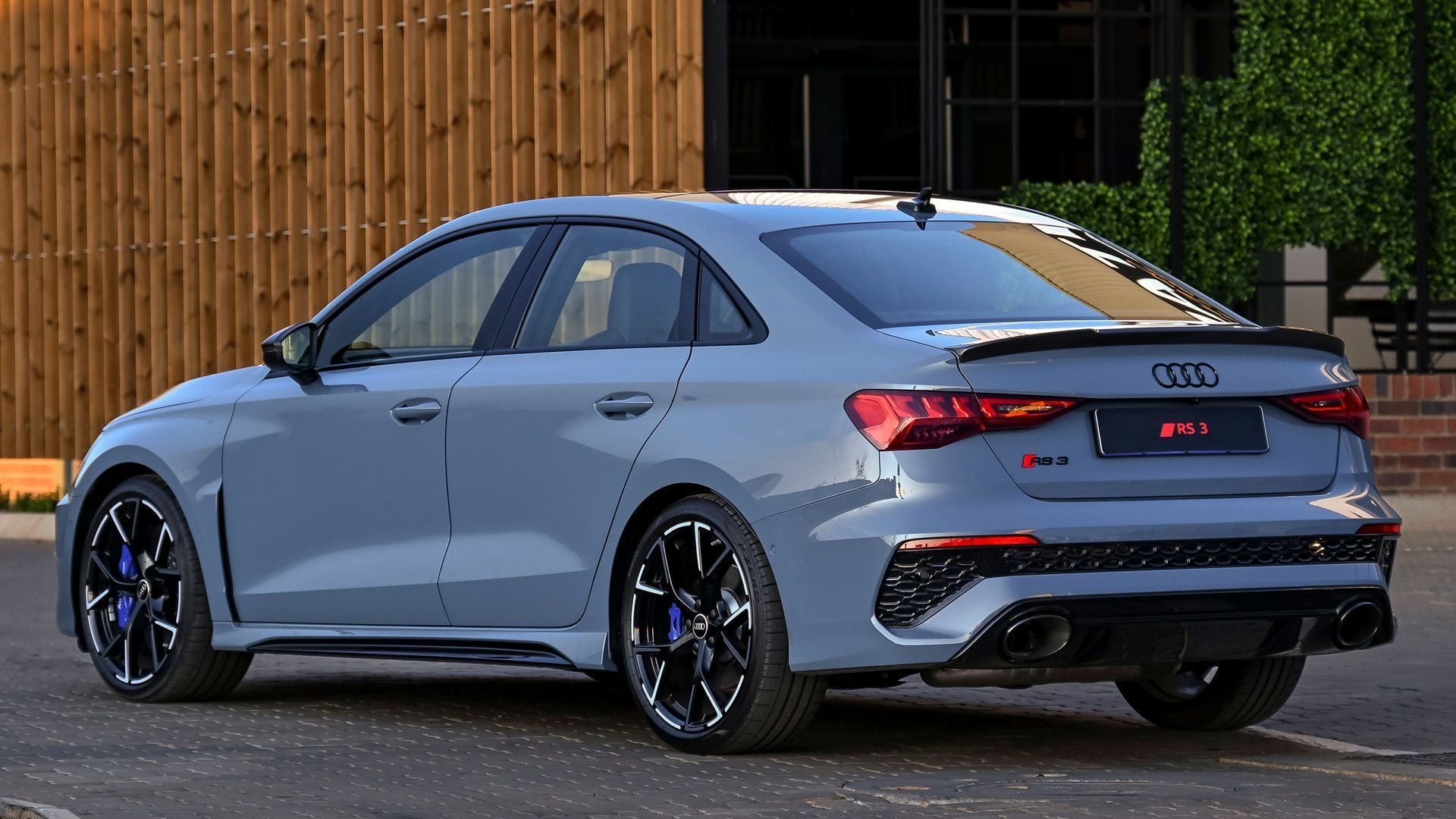
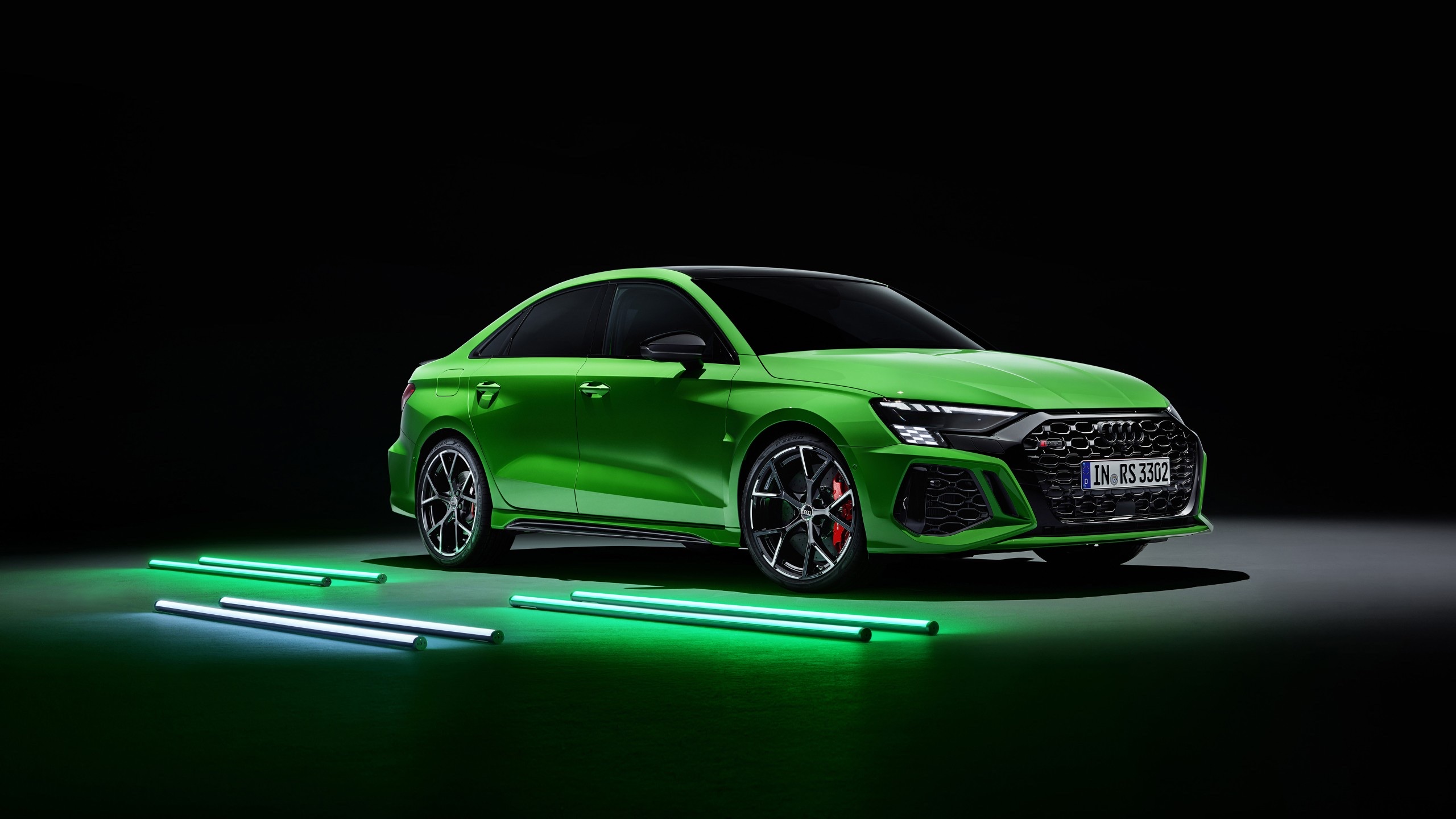
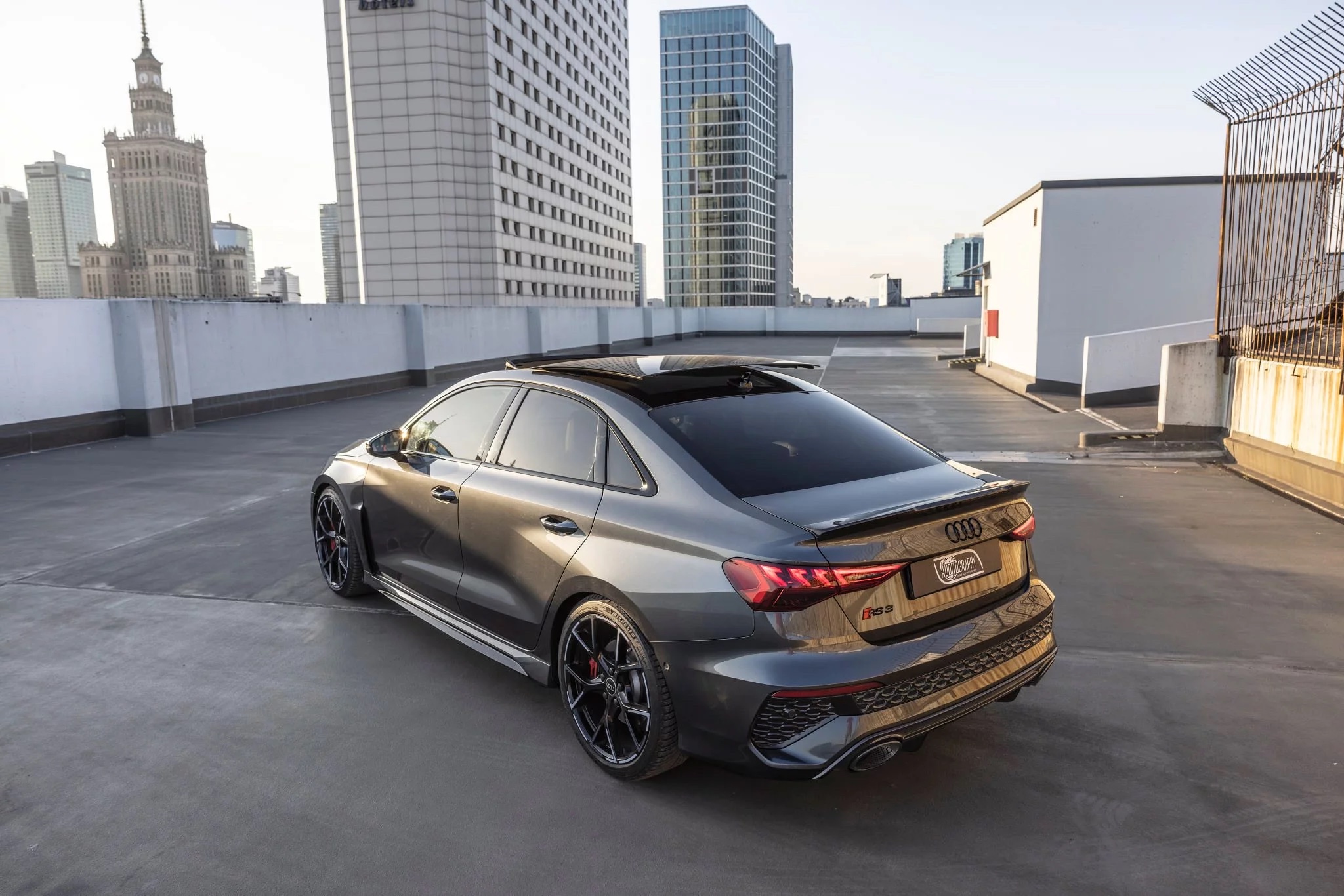
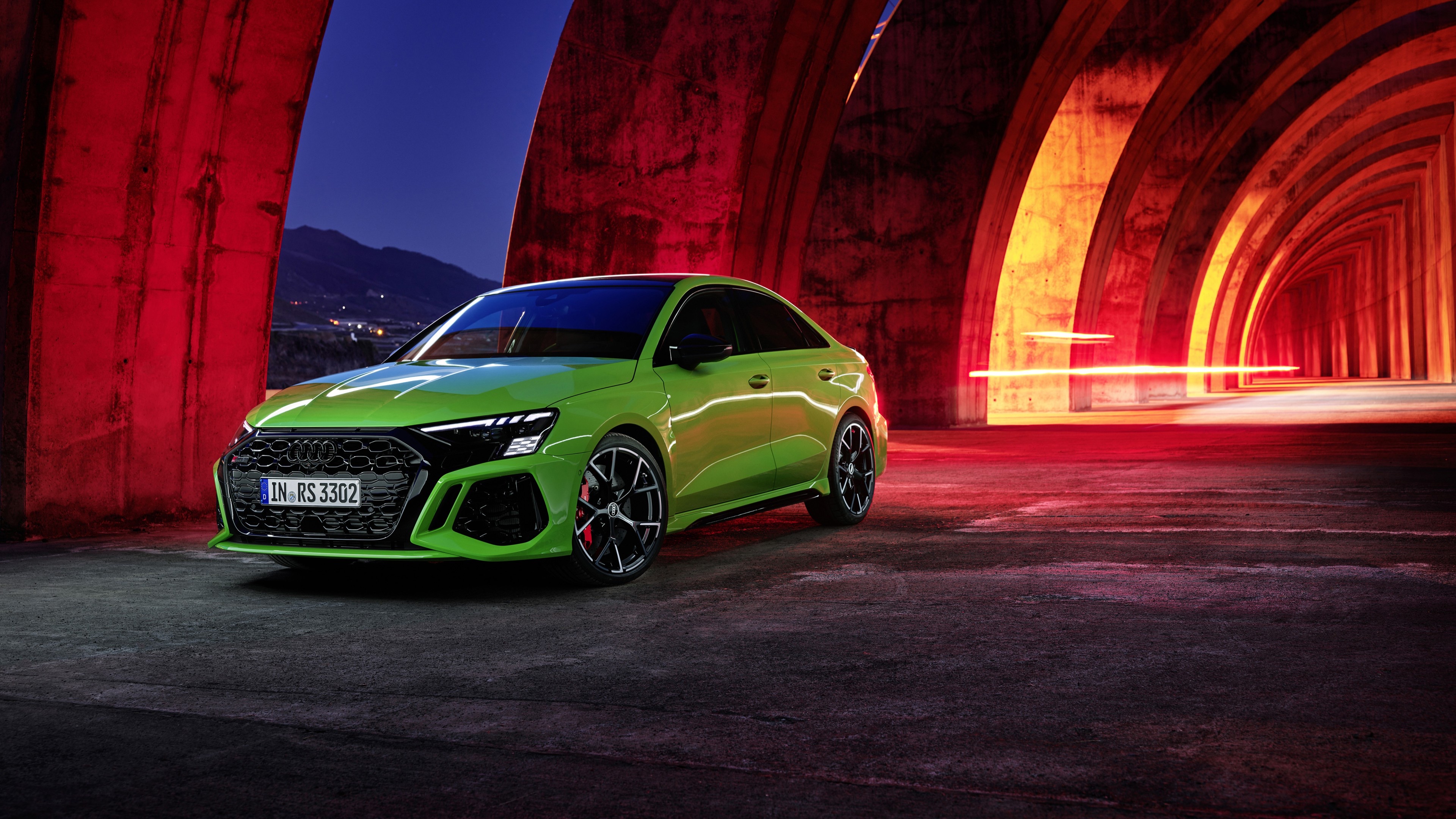
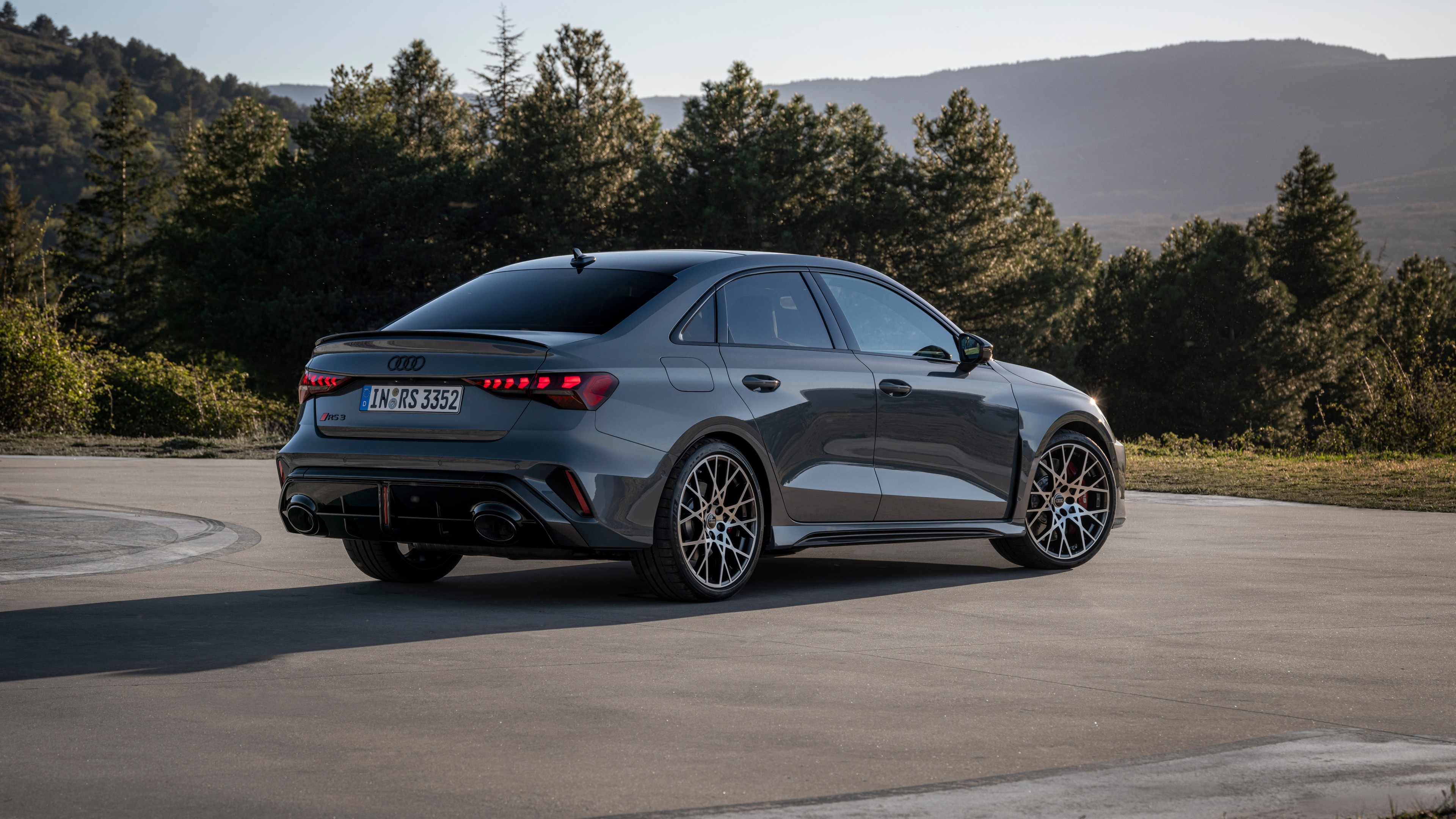
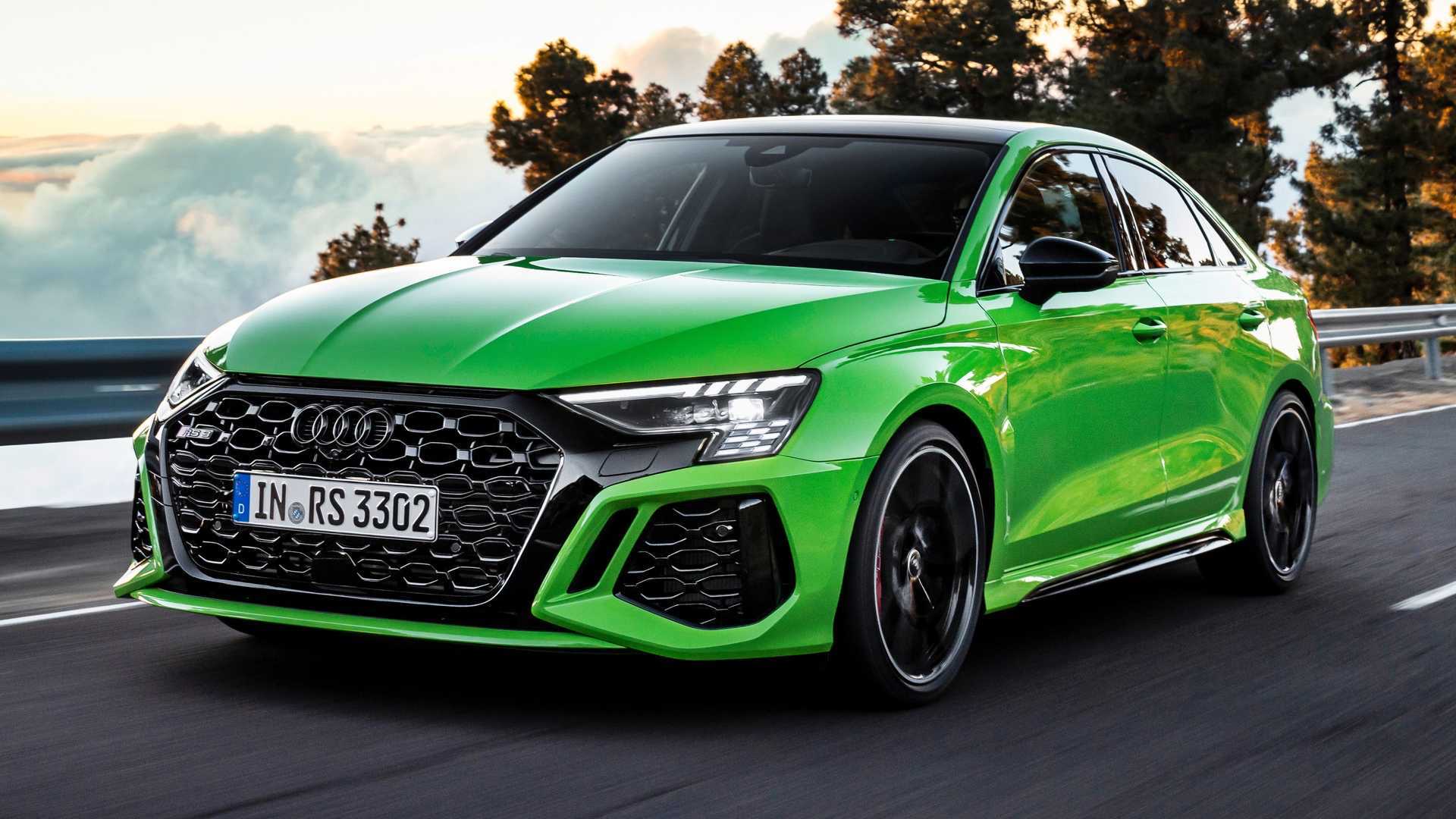
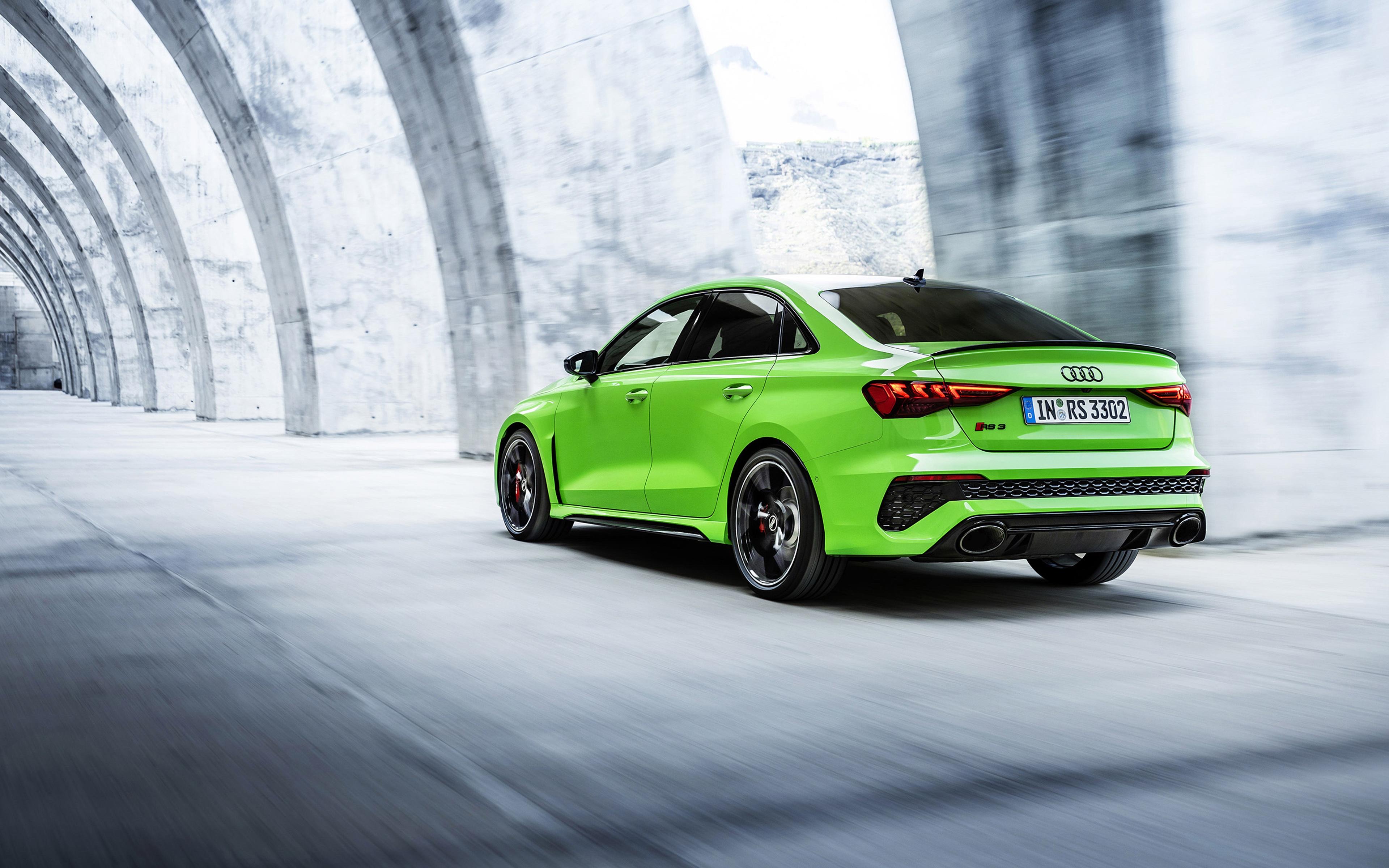
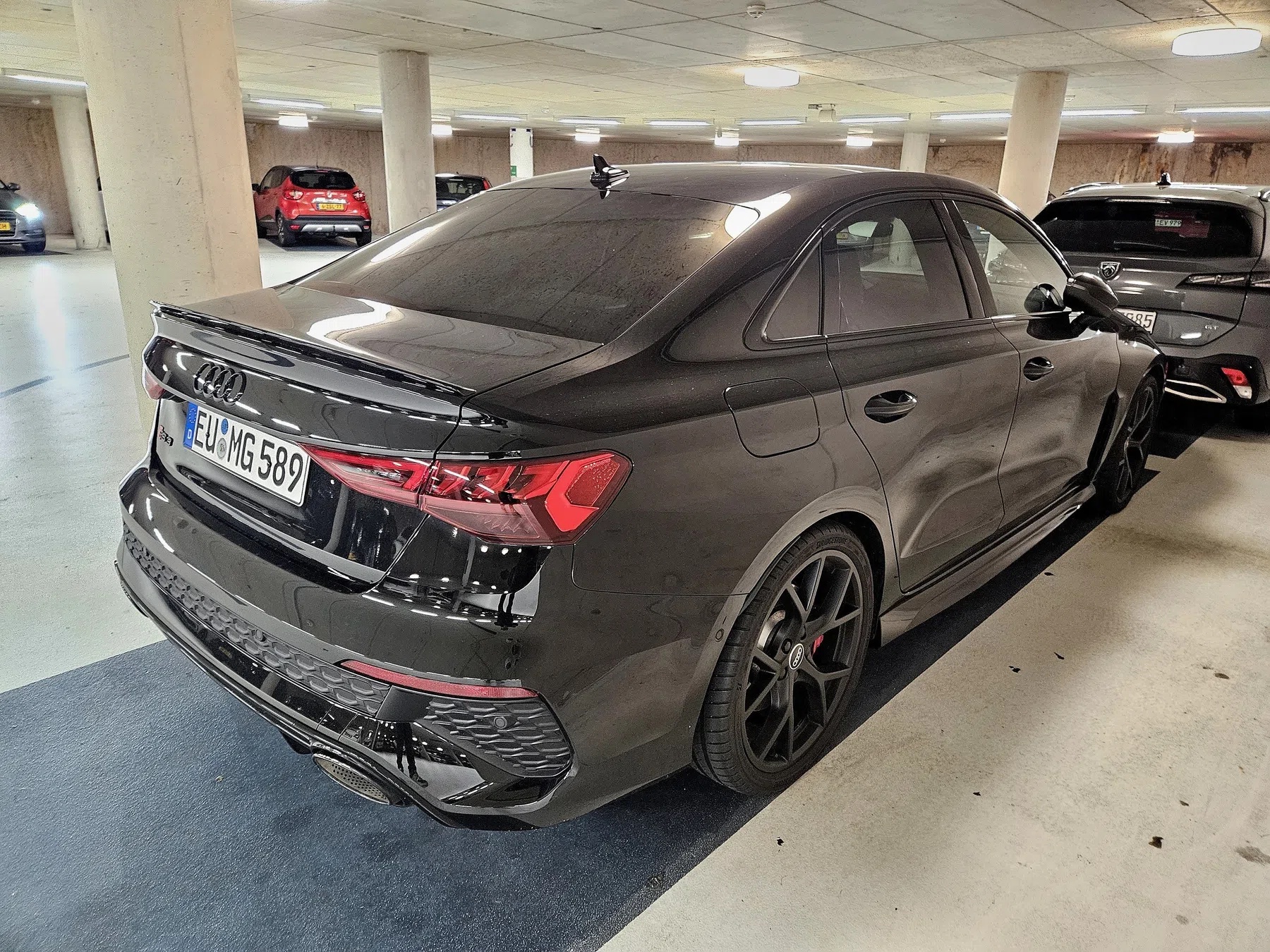
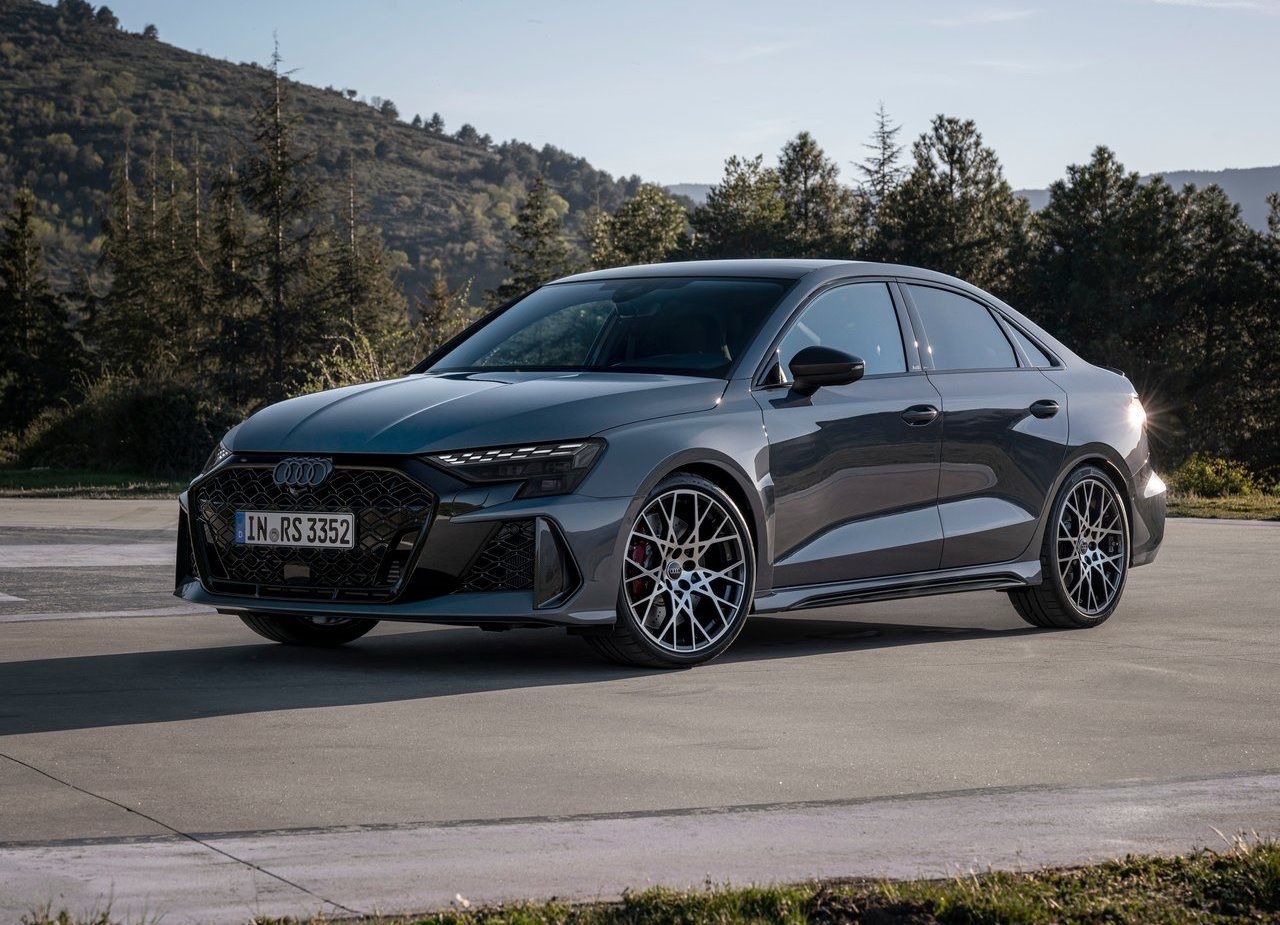
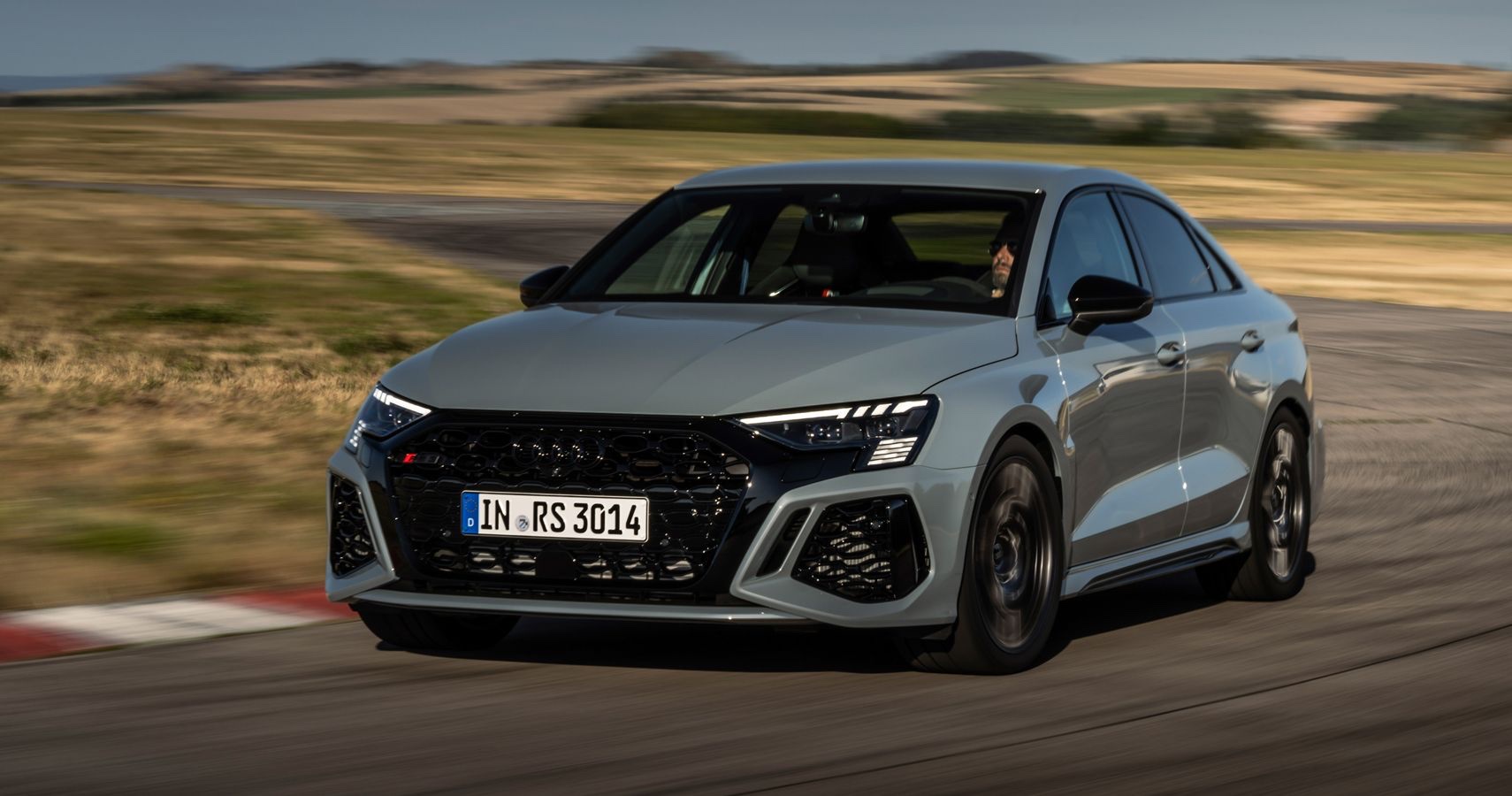
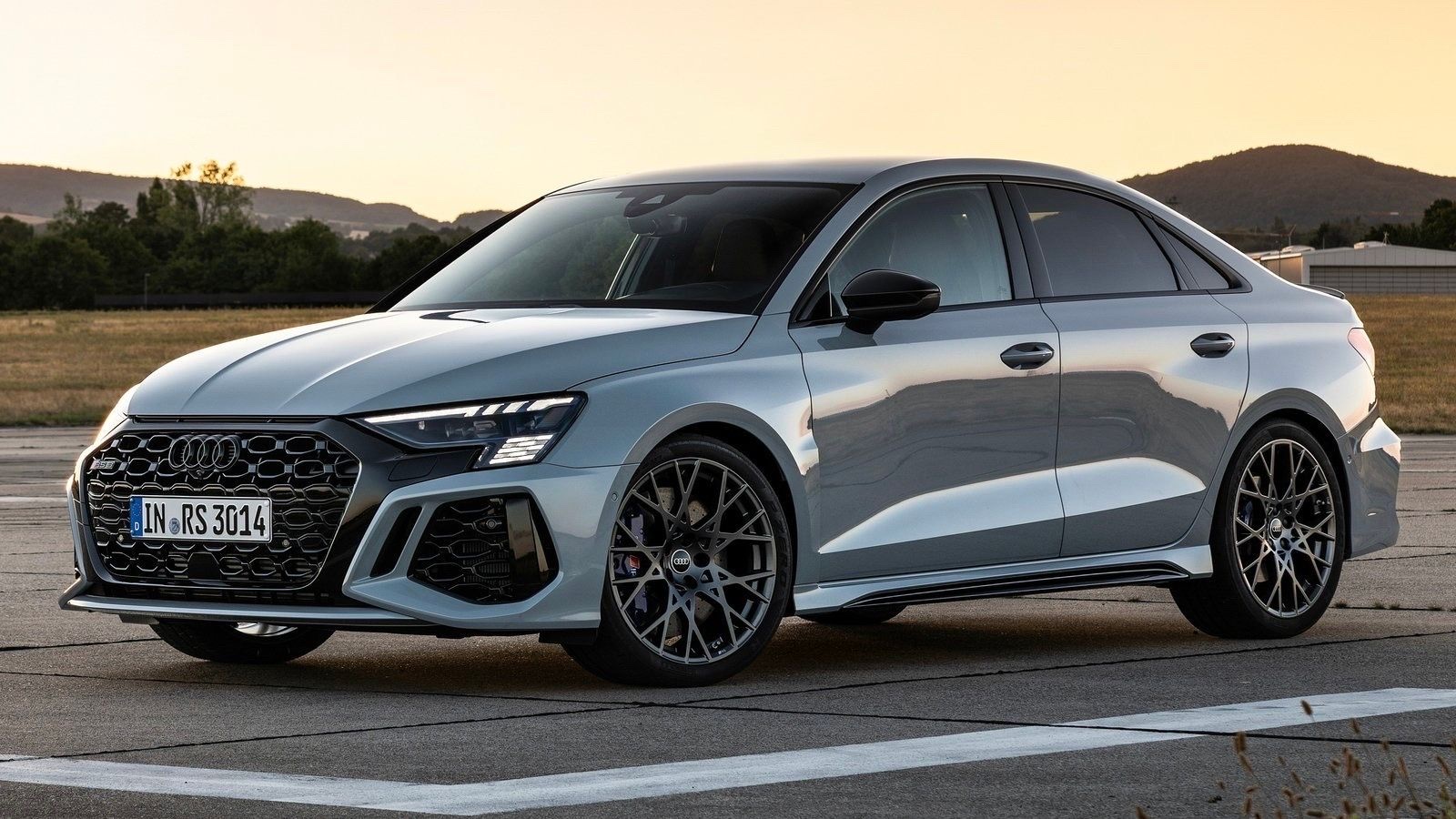
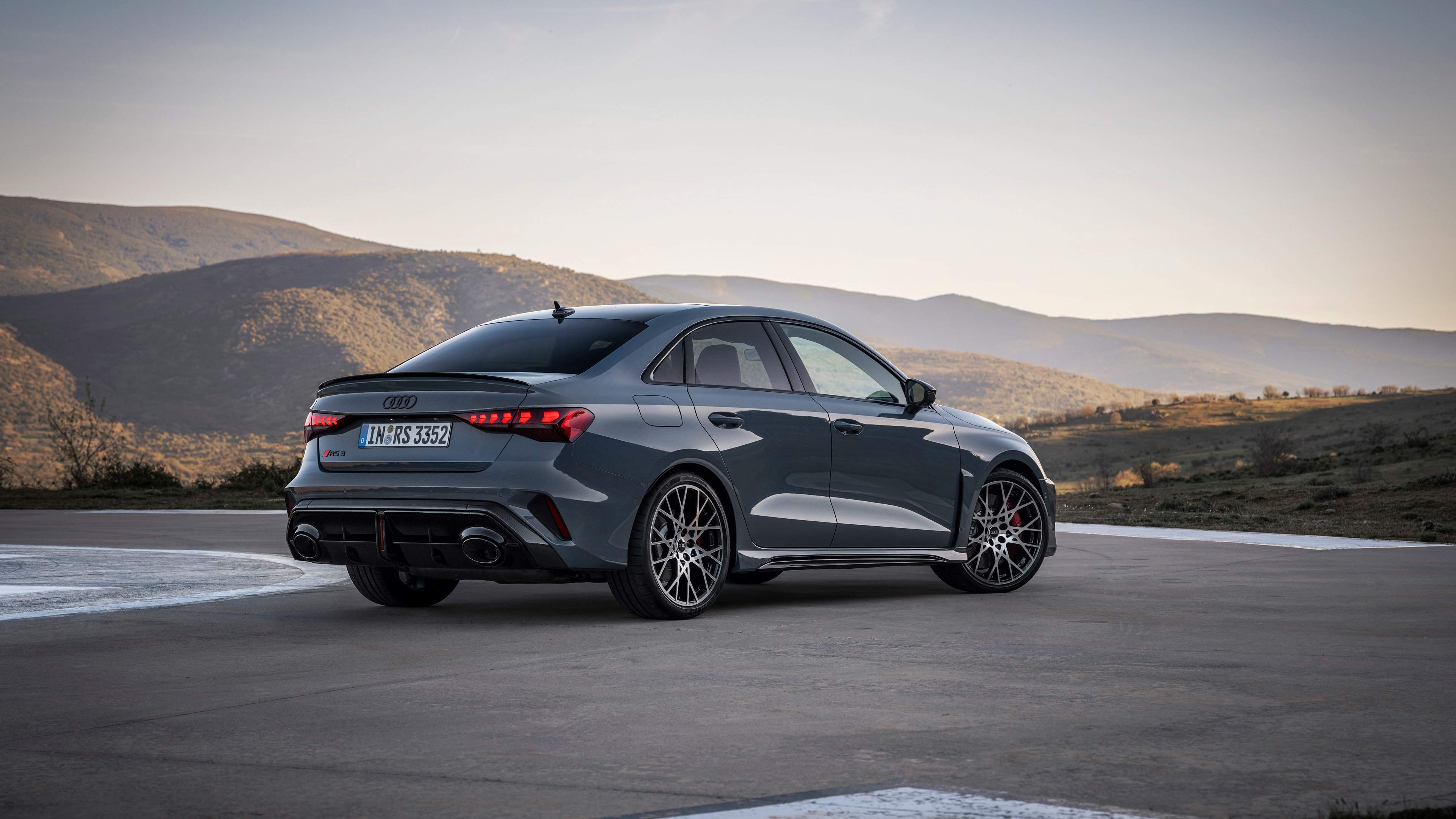
The RS 3 Sedan distinguishes itself from the standard A3 with a considerably wider stance and aggressive aerodynamic elements. The front fascia features an enlarged honeycomb grille and larger outboard air intakes, while the front fenders incorporate functional air vents behind the wheels. At the rear, a pronounced diffuser integrates the model's signature dual oval exhaust outlets. The sedan rides on standard 19-inch 10-spoke alloy wheels and comes equipped with full LED headlights as standard, with Matrix LED units available as an option.
Interior
Inside the cabin, the RS 3 features a driver-focused layout dominated by a 12.3-inch digital instrument cluster with RS-specific graphics and a 10.1-inch central touchscreen. Standard sports seats provide enhanced lateral support, and a flat-bottomed steering wheel underlines the car's performance intent. Buyers can upgrade the upholstery to Nappa leather and add carbon fiber trim pieces, alongside optional red or green color accent packages. The trunk offers a practical capacity of 321 liters for daily usability.
Performance
Power comes from a 2.5-liter TFSI turbocharged five-cylinder engine delivering 400 horsepower and 500 Nm of torque. Paired with a 7-speed S-tronic dual-clutch transmission, the sedan accelerates from 0 to 100 km/h in just 3.8 seconds, with a top speed of 250 km/h. A major update for this generation is the quattro system featuring the RS Torque Splitter. This replaces the previous rear differential with two electronically controlled multi-plate clutches, allowing active torque vectoring across the rear axle and enabling an RS Torque Rear drift mode.
Practicality
Despite its track-focused hardware, the RS 3 remains a functional five-seat sedan. Its compact C-segment dimensions make it manageable in urban environments, while the 321-liter trunk handles routine cargo needs. Fuel consumption in a mixed cycle is rated at 8.7 liters per 100 kilometers, which is reasonable given the output. The standard sports suspension lowers the car by 25mm compared to a regular A3, meaning drivers need to be mindful of ground clearance on steep driveways and speed bumps.
Safety and tech
The RS 3 integrates Audi's contemporary digital ecosystem, centered around the dual-screen infotainment and driver display setup. The performance-oriented displays provide telemetry and shift lights. For exterior lighting, LED technology is standard across the board, with advanced Matrix LED headlights available to improve nighttime visibility and beam management. Performance braking tech includes standard 375mm front and 310mm rear steel discs with six-piston front calipers, with an optional ceramic front brake upgrade available.
Buyer notes
When evaluating the RS 3 Sedan, buyers should weigh the standard steel brakes against the optional ceramic setup depending on intended track use. Similarly, the adaptive shock absorbers and variable exhaust valve system are notable options that expand the car's dual-nature capability. Equipment availability and standard features can vary significantly by regional market, so checking local dealer specifications for packages like the RS design accents or Nappa leather is recommended.
Trims and key specifications
Use this table to compare the main differences between available configurations.
| Trim / modification | Engine | Power | Seats | Transmission |
|---|---|---|---|---|
| 2.5 TFSI (400 hp) 7 S-tronic 4x4 | 2480 cc | 400 hp | 5 | 7 S-tronic |
Specifications can vary by market, model year, and equipment package. Use the trim sections below to review the full data for each configuration.
Audi RS 3 Sedan (8Y) photo gallery
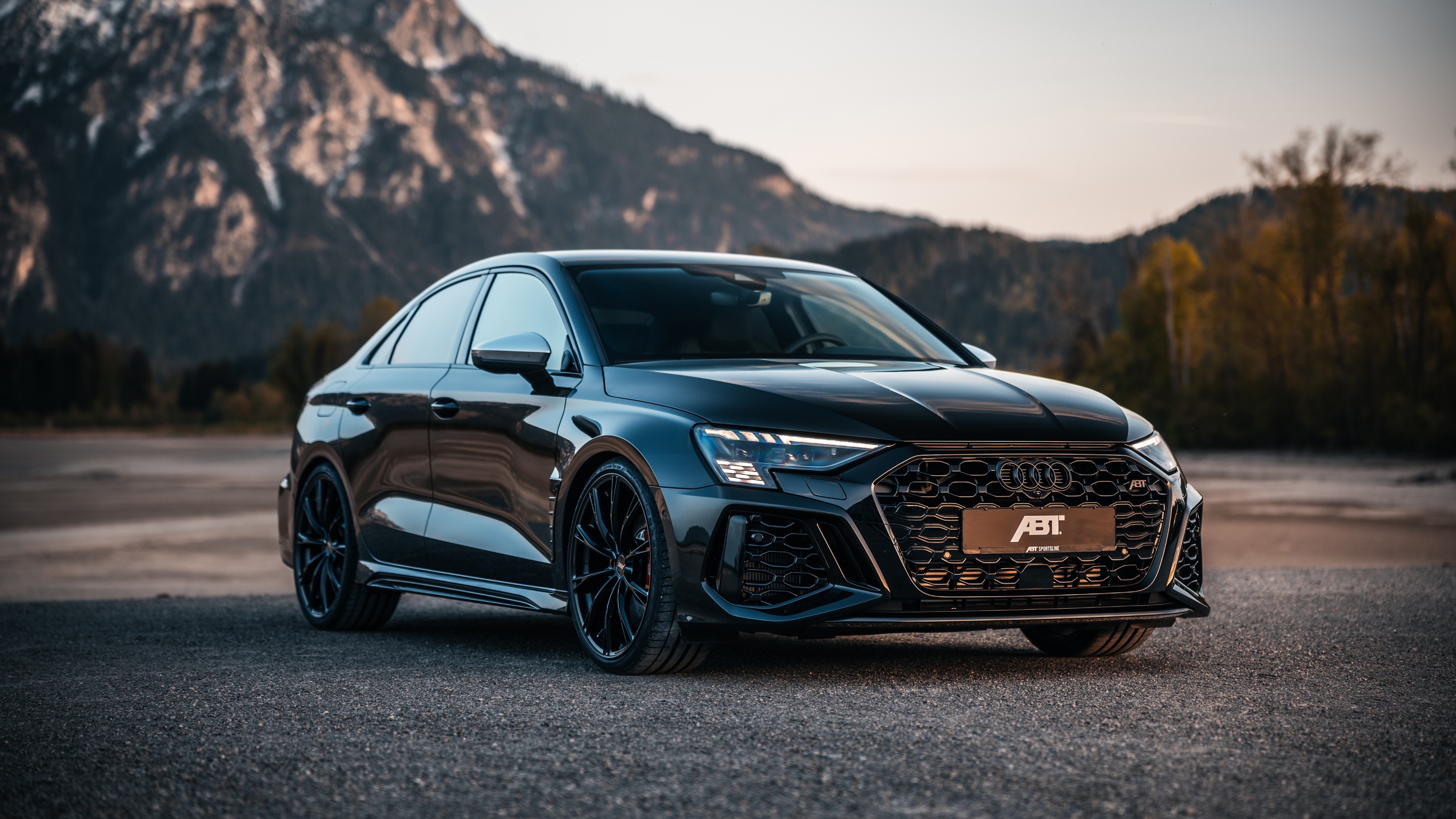
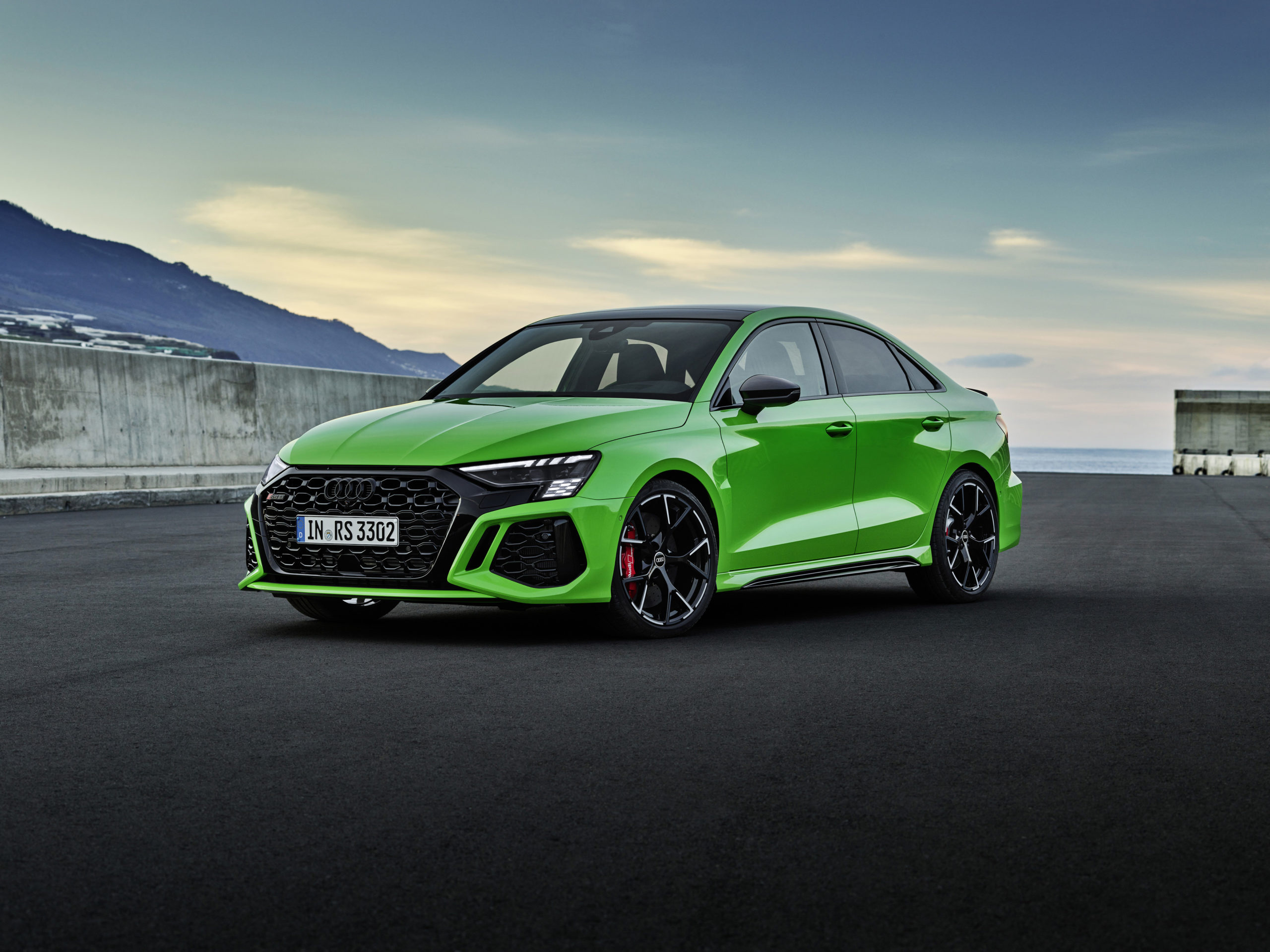
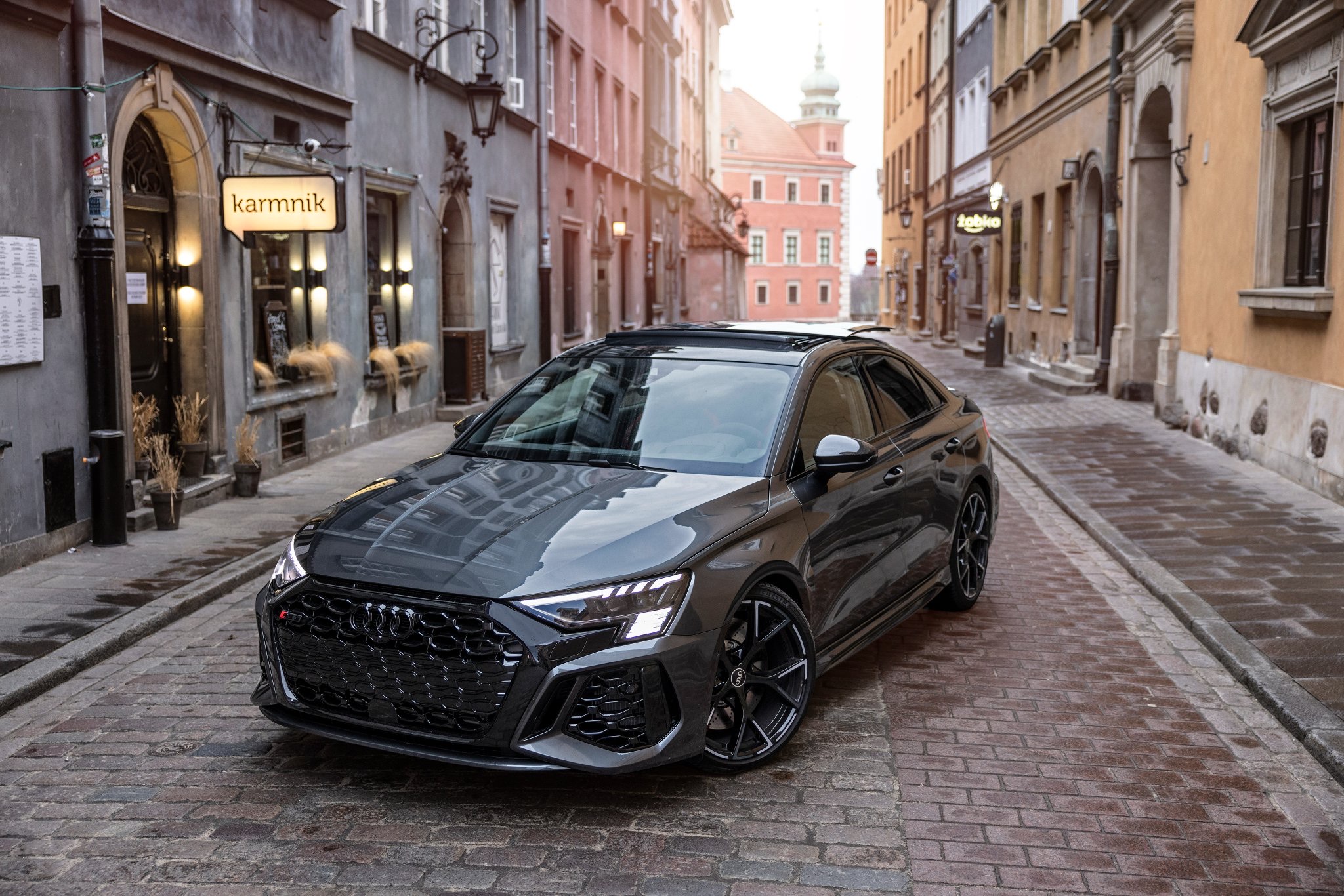
20 images are collected here with the main specifications and trim data for this model.
Photo Audi RS 3 Sedan (8Y)
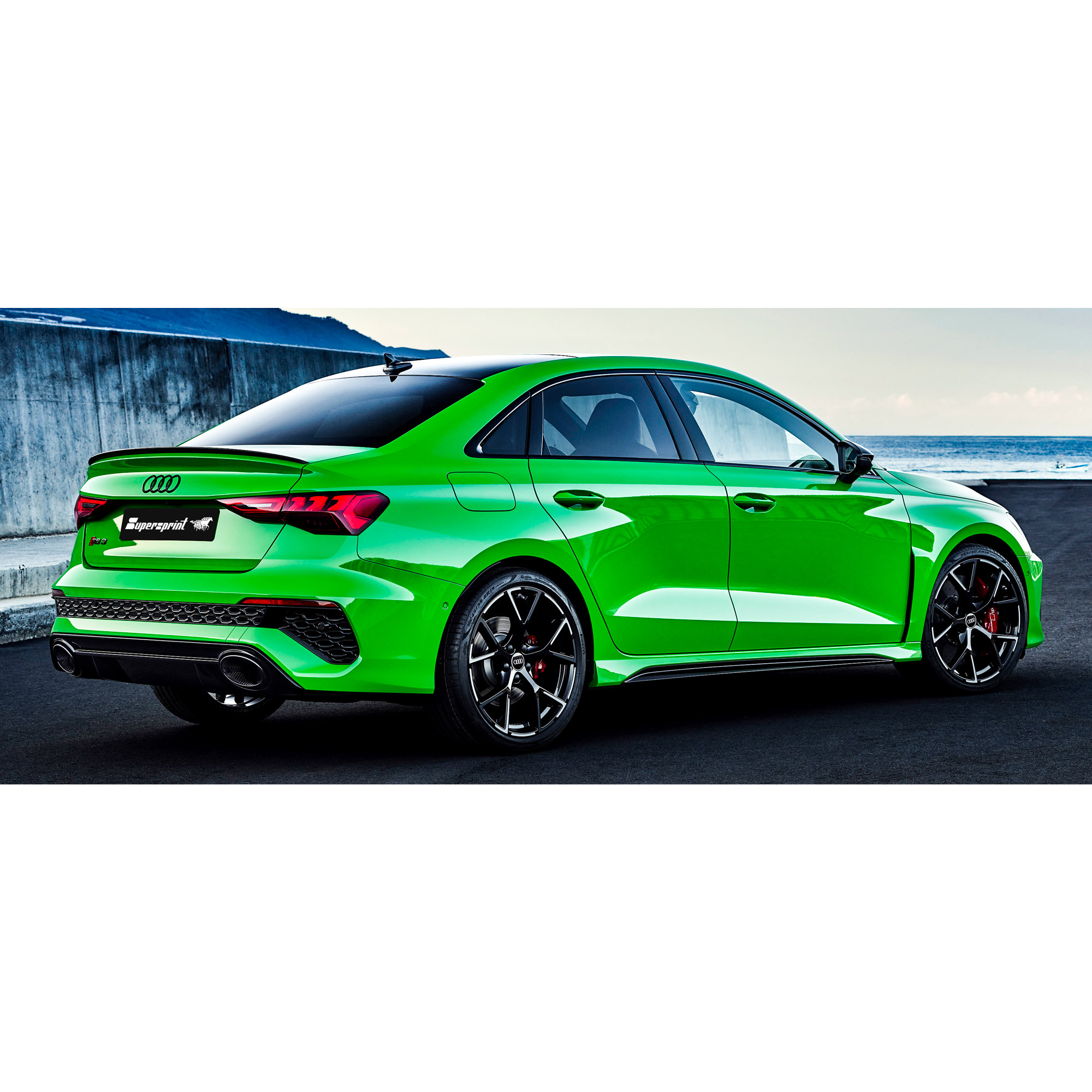
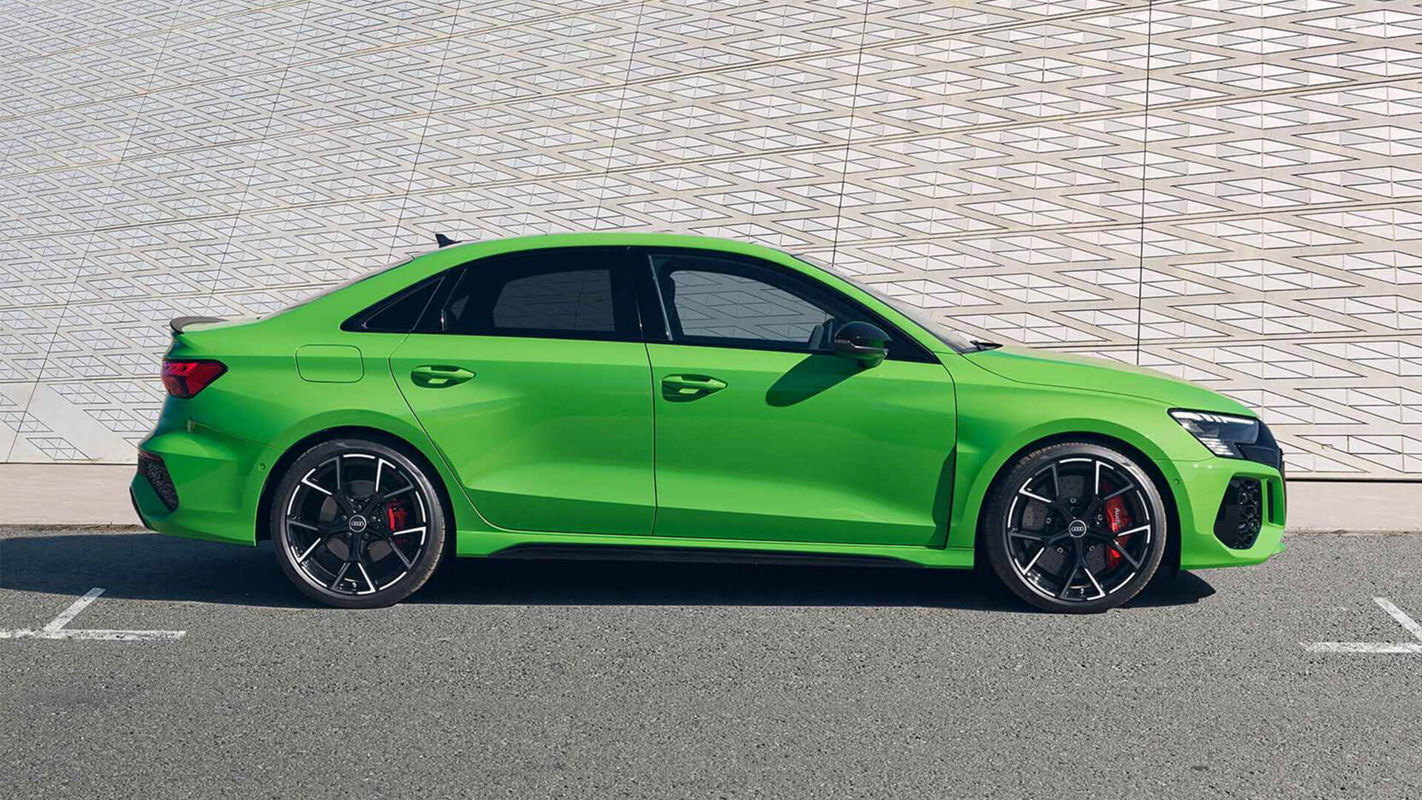
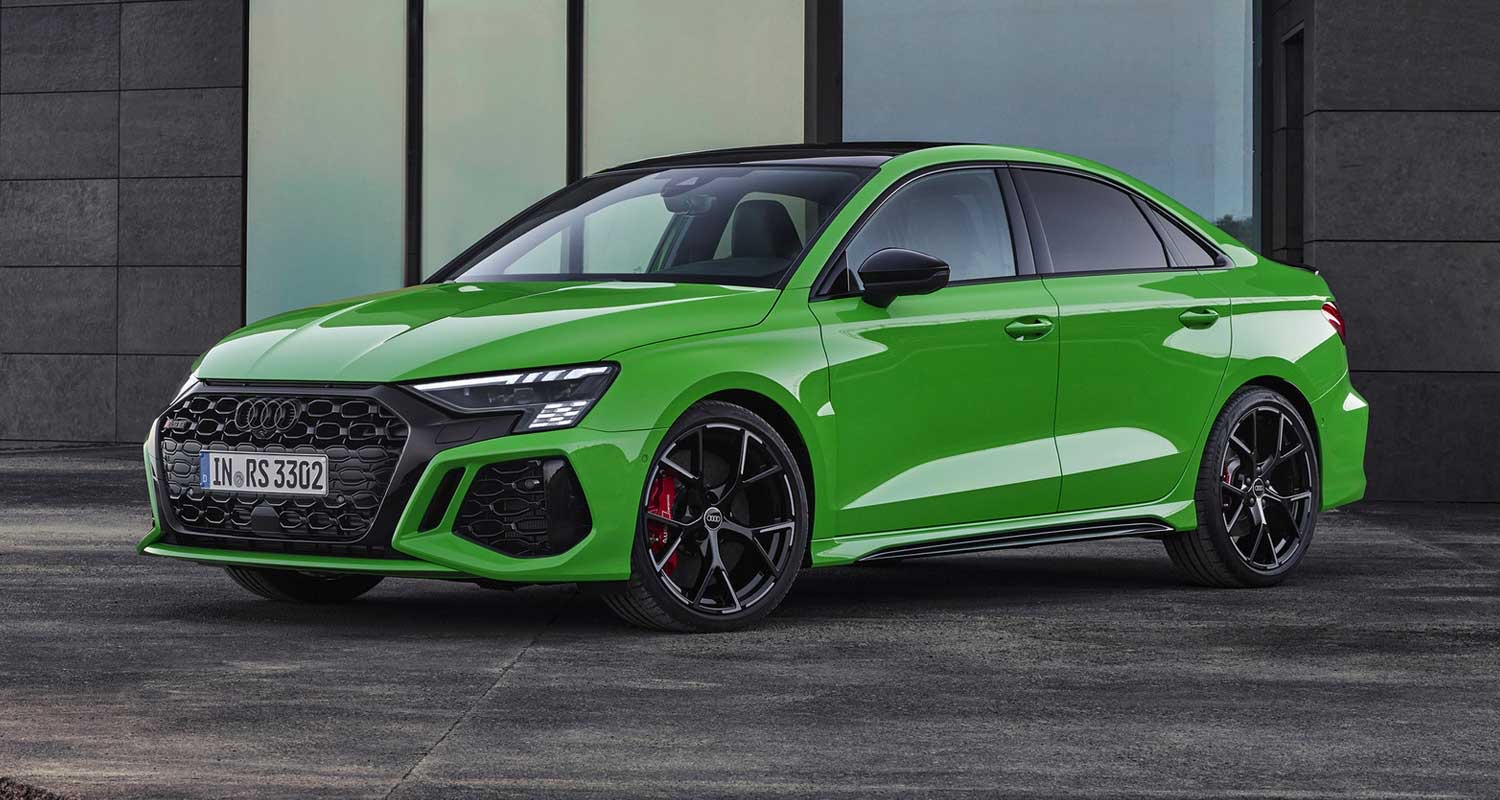
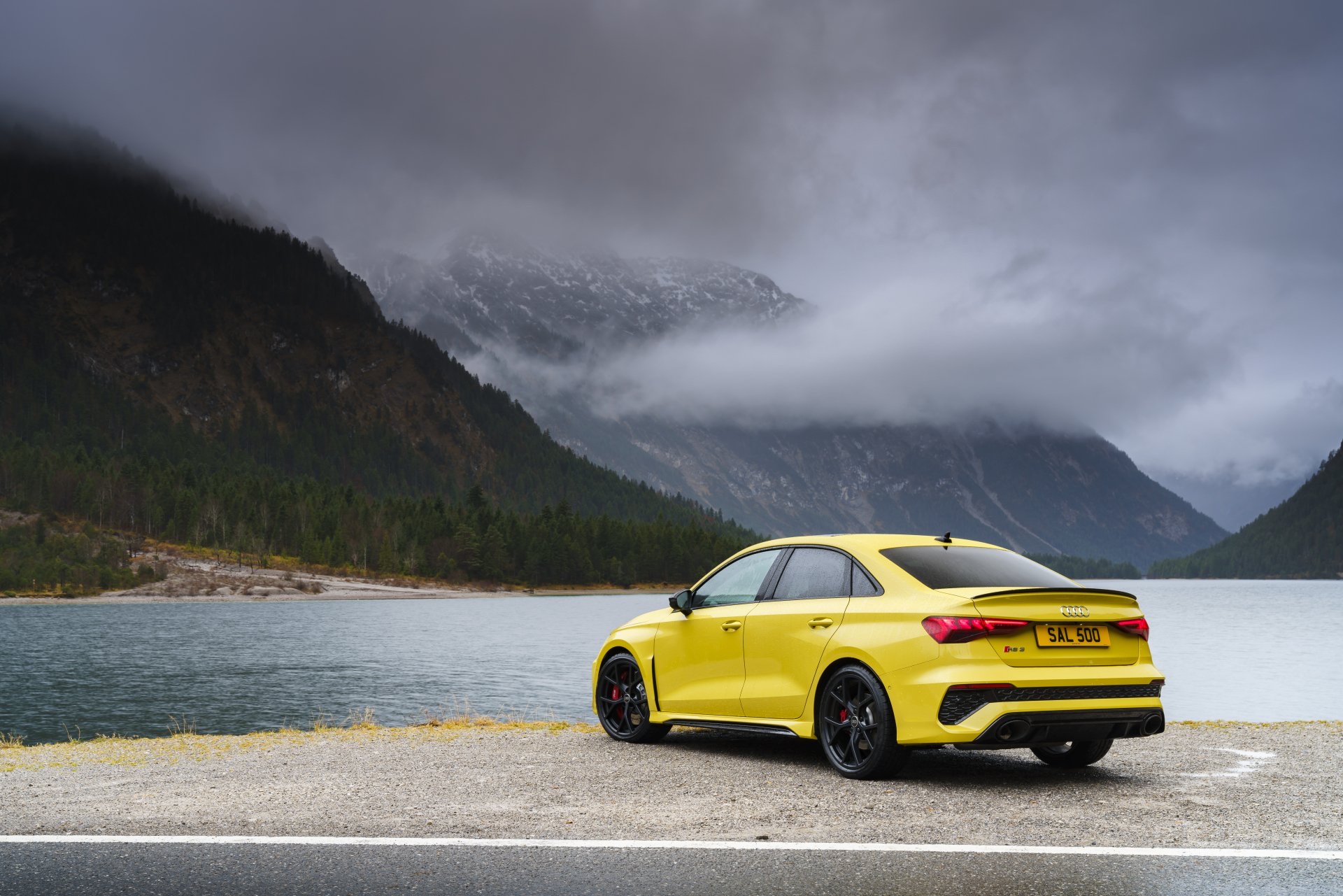
Specifications by trim
Choose a configuration below to open full technical data grouped by category.
2.5 TFSI (400 hp) 7 S-tronic 4x4 37 specifications
Specifications
Performance and consumption
| Fuel consumption city, L/100 km | 11.6 |
|---|---|
| Fuel consumption highway, L/100 km | 7 |
| Fuel consumption combined, L/100 km | 8.7 |
| Top speed, km/h | 250 |
| Acceleration 0-100 km/h, s | 3.8 |
| Emissions standard | Euro VI |
Engine
| Engine | 2.5 TFSI |
|---|---|
| Engine code | EA855 Evo |
| Engine type | Internal combustion engine |
| Fuel type | Gasoline |
| Engine displacement, cc | 2480 |
| Cylinder layout | Inline |
| Number of cylinders | 5 |
| Valves | 20 |
| Turbocharger | + |
| Power, hp | 400 |
| RPM at max power | 5600–7000 |
| Torque, Nm | 500 |
| RPM at max torque | 2250–5600 |
Dimensions
| Seats | 5 |
|---|---|
| Length, mm | 4542 |
| Width, mm | 1984 |
| Height, mm | 1412 |
| Wheelbase, mm | 2631 |
| Front track, mm | 1592 |
| Rear track, mm | 1524 |
| Kerb weight, kg | 1650 |
| Gross weight, kg | 2080 |
| Fuel tank capacity, L | 55 |
| Width without mirrors, mm | 1851 |
| Trunk capacity, L | 321 |
Transmission and drive
| Transmission | 7 S-tronic |
|---|---|
| Transmission type | 2-speed automated manual |
| Drive | All-wheel drive |
| Number of gears | 7 |
| Transmission manufacturer | BorgWarner |
| Automatic transmission | + |
Audi RS 3 Sedan (8Y) questions
Short answers based on the specifications and photos available in this catalog.
What engine does the 2021 Audi RS 3 Sedan use?
It is powered by a 2.5-liter TFSI turbocharged inline-five engine producing 400 horsepower and 500 Nm of torque.
How fast is the RS 3 Sedan (8Y) from 0 to 100 km/h?
Thanks to the updated engine calibration and all-wheel drive, the RS 3 can accelerate from 0 to 100 km/h in 3.8 seconds.
What is the RS Torque Splitter?
It is a specialized rear axle system using two separate multi-plate clutches. This allows the car to distribute rear torque variably between the left and right wheels, reducing understeer and enabling a controlled drift mode.
Does the RS 3 have a different suspension than the standard A3?
Yes, it features a sports suspension that sits 25mm lower than the standard A3, equipped with stiffer mounts, negative camber, and available adaptive shock absorbers.
How much cargo space is in the trunk?
The trunk capacity of the RS 3 Sedan is 321 liters.