Volkswagen Multivan (T7) specifications and photos
The 2021 Volkswagen Multivan (T7) represents the seventh generation of the brand's passenger minivan, now built on the flexible MQB platform. Shifting away from its commercial roots, this iteration focuses heavily on passenger comfort, modern technology, and plug-in hybrid efficiency. It serves as a spacious and versatile family transporter with a car-like driving experience.
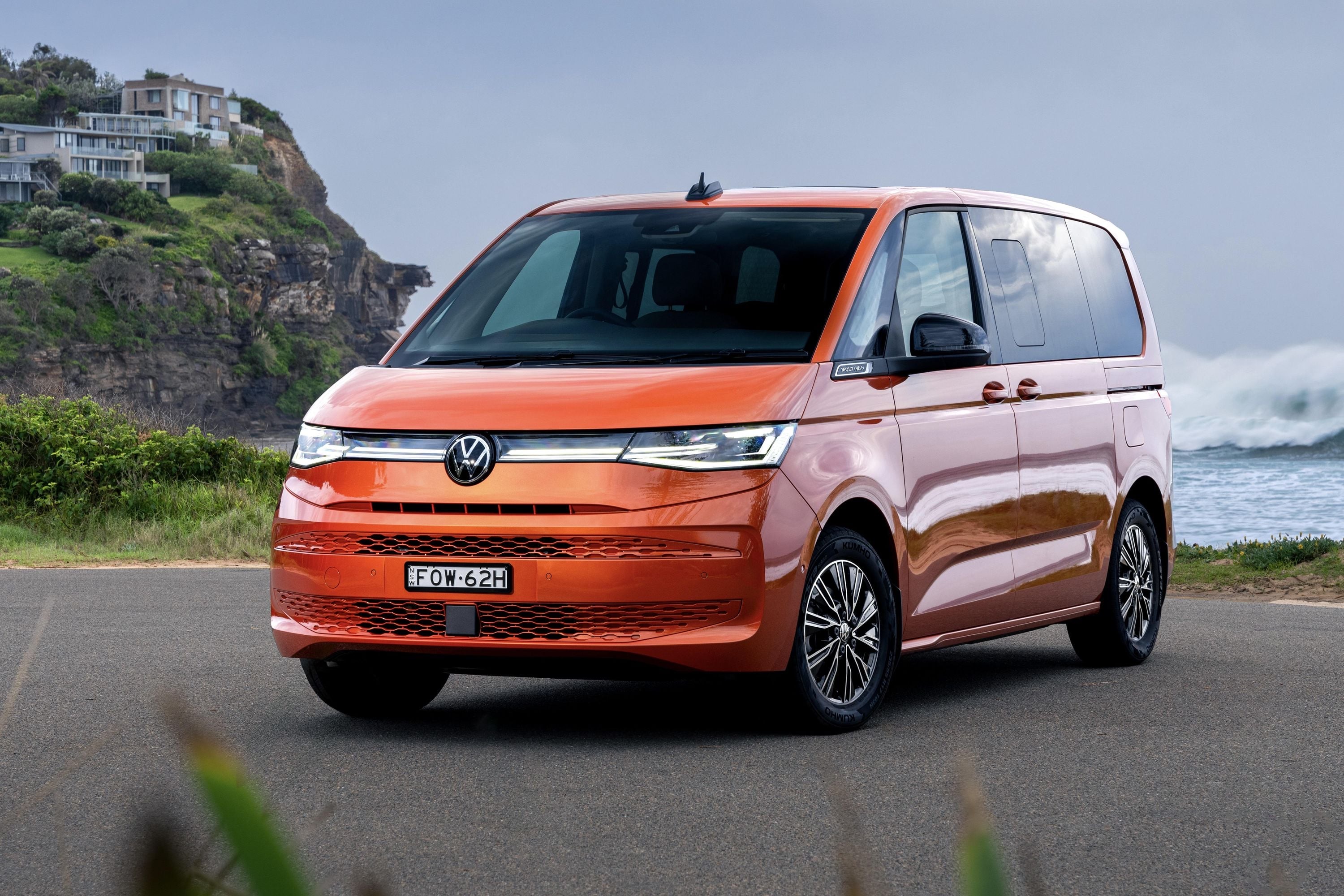
Volkswagen Multivan (T7) at a glance
Quick model context before comparing photos and trim-level specifications.
With the seventh-generation Multivan (T7), Volkswagen has completely reworked its passenger van lineup by transitioning the vehicle to the MQB platform. This structural shift moves the Multivan closer to passenger cars in terms of ride quality, refinement, and safety systems. Unveiled in June 2021, the T7 is offered in standard and extended body lengths, accommodating up to seven passengers. The engine lineup includes standard turbocharged petrol options alongside a plug-in hybrid eHybrid variant, all paired with dual-clutch automatic transmissions sending power to the front wheels. By focusing solely on passenger comfort, this model ditches the utilitarian commercial van compromises, featuring a highly customizable cabin design, digital controls, and active driver assistance systems. It targets families and shuttle services seeking space without sacrificing modern car conveniences.
- Power: 136-218 hp
- Engine displacement: 1395-1984 cc
- Transmissions: 6-speed dual-clutch, 7-speed dual-clutch
- Seating: 7 seats
Photos, trims and specifications for Volkswagen Multivan (T7)
This model page brings gallery images, trim comparison, and detailed technical data together for the 2021 generation.
Estimate fuel cost
Use trim-level fuel consumption data to estimate monthly and yearly fuel spending.
Fuel costs are estimates. Real consumption can change with driving style, traffic, tires, weather, load, and market-specific equipment.
Volkswagen Multivan (T7) overview
Editorial context for design, cabin, performance, practicality, and buyer notes.
Design
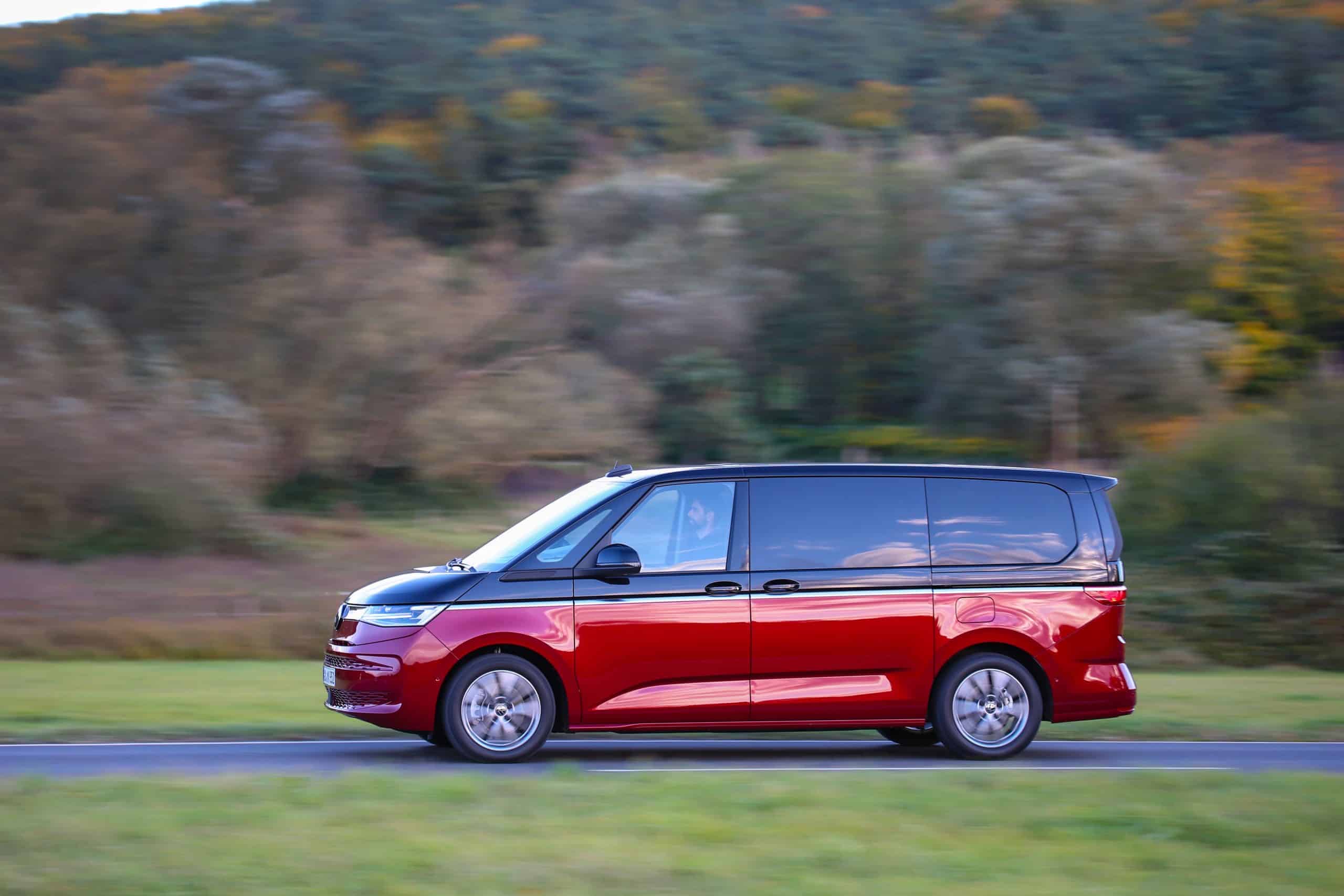
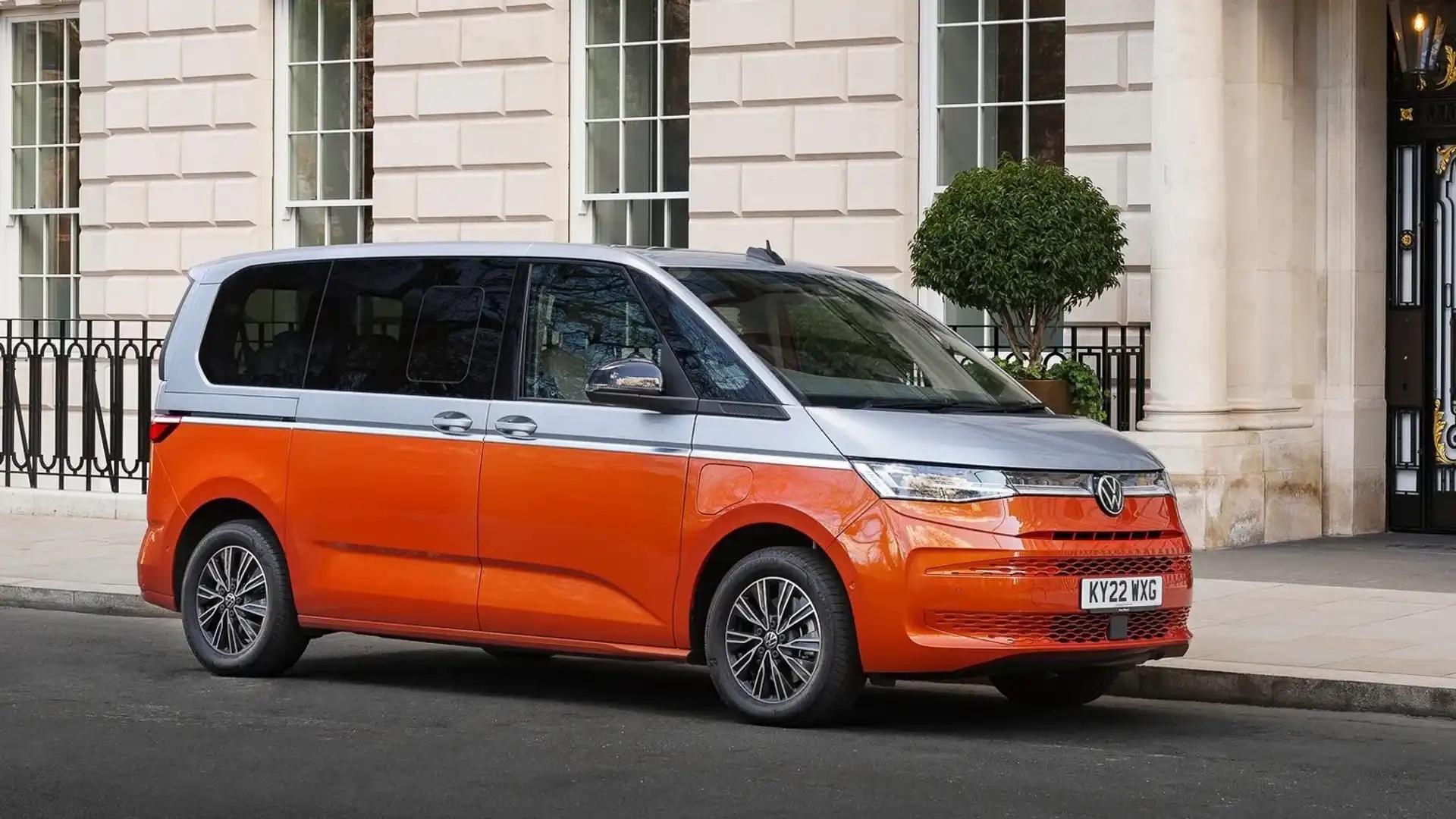
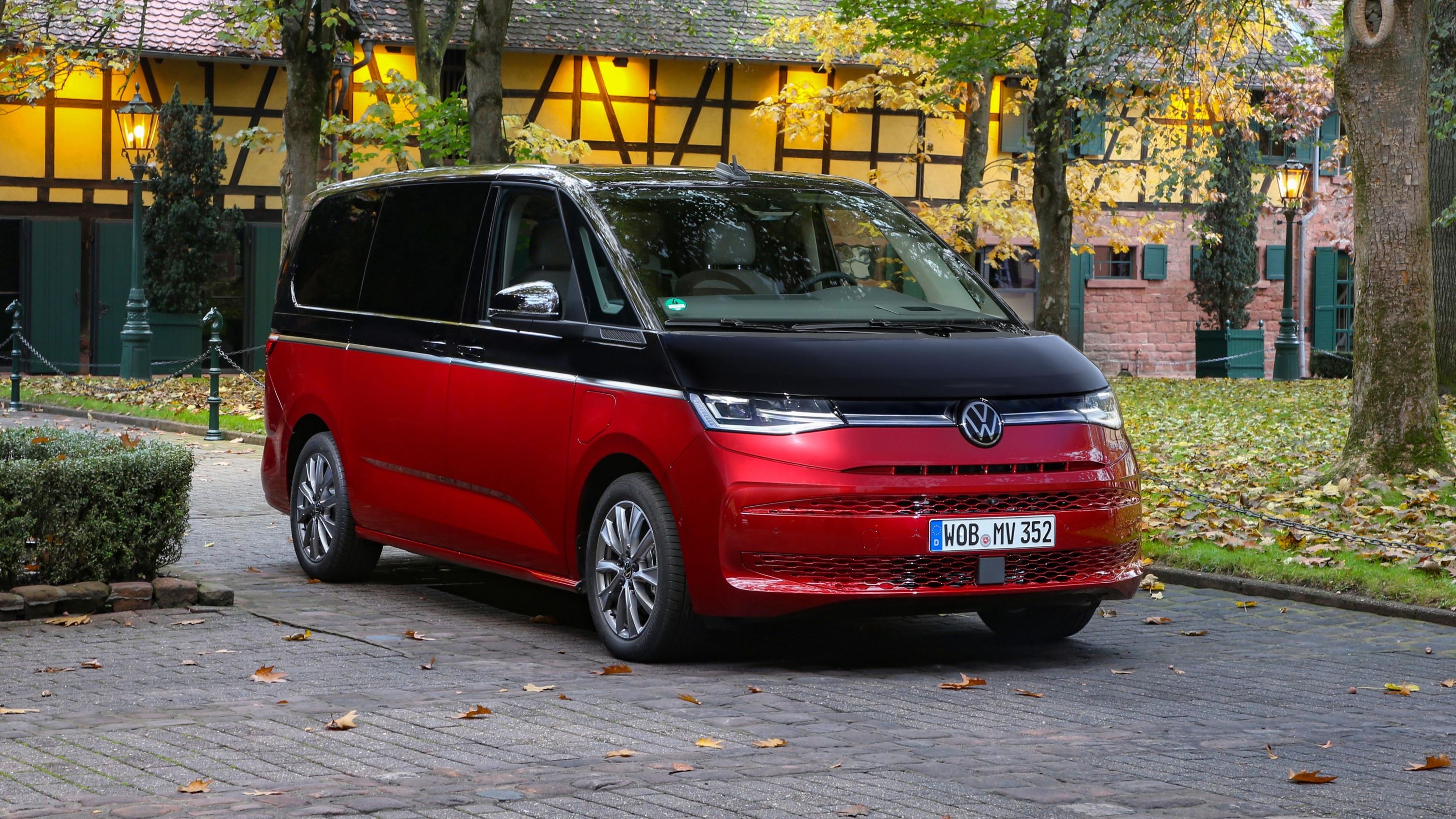
The exterior styling of the Multivan (T7) blends traditional boxy proportions with modern details. The front features slim headlights linked by a thin black strip, while sharp character lines crease the side panels. A prominent design change is the inclusion of small quarter-light windows between the front doors and the A-pillars, improving visibility. Standard versions measure 4973 mm in length, while the extended variant stretches to 5173 mm. Both body styles share a 3124 mm wheelbase, keeping the wheels pushed to the corners. Sliding rear doors provide easy access to the passenger compartment, and an optional panoramic glass roof is available on select models to brighten the cabin.
Interior
The cabin is designed around flexibility, featuring a three-row layout with up to seven seats. Instead of a traditional heavy rear bench, Volkswagen uses individual seats for the second and third rows that are 25 percent lighter, making them easier to slide, fold, or remove entirely. A multi-functional center console with integrated tables and cup holders moves along rails from the front row all the way to the rear. The dashboard is highly digital, dominated by a 10.25-inch digital driver display and a 10-inch center touchscreen. Physical buttons are replaced with touch-sensitive panels for the media, climate control, sliding doors, and lighting, while the compact DSG gear selector is positioned on the dashboard between the main screens.
Performance
The front-wheel-drive Multivan (T7) offers a choice of three powertrains. The entry-level option is a 1.5-liter TSI petrol engine producing 136 horsepower, while a larger 2.0-liter TSI petrol unit generates 204 horsepower. Both petrol engines are paired with a seven-speed DSG automatic transmission. For greater efficiency, the eHybrid version combines a 1.4-liter TSI engine with an electric motor to deliver a combined 218 horsepower, driving through a six-speed DSG. The plug-in hybrid uses a 10.4 kWh battery to provide an estimated 46 to 50 km of electric-only driving range. The source text also references a 150-horsepower 2.0-liter TDI diesel variant.
Practicality
Practicality is a core strength of the Multivan T7, with cargo space that scales dynamically based on passenger needs. With all seven seats in place, the cargo area offers a capacity of 469 liters. Removing the third-row seats expands this volume to 1844 liters, and removing all rear seats unlocks a cavernous 3672 liters. The extended body style increases maximum cargo volume to 4053 liters when configured with the panoramic roof. The flat floor, lightweight removable seats, and sliding center console allow users to easily configure the interior for cargo, passengers, or mobile office setups.
Safety and tech
Volkswagen equips the Multivan (T7) with advanced driver assistance systems, including Level 2 semi-autonomous driving via Travel Assist, which combines adaptive cruise control with active lane keeping. Safety features include autonomous emergency braking with pedestrian and cyclist detection, active blind-spot monitoring, and a 360-degree camera system for easier parking. The infotainment setup includes eSIM compatibility to enable connected online services directly from the vehicle, while touch-sensitive controls manage most secondary vehicle functions.
Buyer notes
When choosing a Multivan (T7), buyers should compare the efficiency and purchase cost of the petrol models against the plug-in eHybrid. The eHybrid is ideal for short daily commutes on electric power, but it has a different six-speed transmission and added battery weight. Those needing maximum cargo capacity should seek out the extended body variant, which adds 200 mm to the rear overhang without changing the wheelbase. Buyers should also note that exact equipment, active safety features, and seating layouts may vary depending on local market specifications.
Trims and key specifications
Use this table to compare the main differences between available configurations.
| Trim / modification | Engine | Power | Seats | Transmission |
|---|---|---|---|---|
| 1.4 TSI eHybrid (218 hp) 6-speed DSG | 1395 cc | 218 hp | 7 | 6-speed dual-clutch |
| 1.5 TSI (136 hp) 7-speed DSG | 1498 cc | 136 hp | 7 | 7-speed dual-clutch |
| 2.0 TSI (204 hp) 7-speed DSG | 1984 cc | 204 hp | 7 | 7-speed dual-clutch |
Specifications can vary by market, model year, and equipment package. Use the trim sections below to review the full data for each configuration.
Volkswagen Multivan (T7) photo gallery
12 images are collected here with the main specifications and trim data for this model.
Photo Volkswagen Multivan (T7)
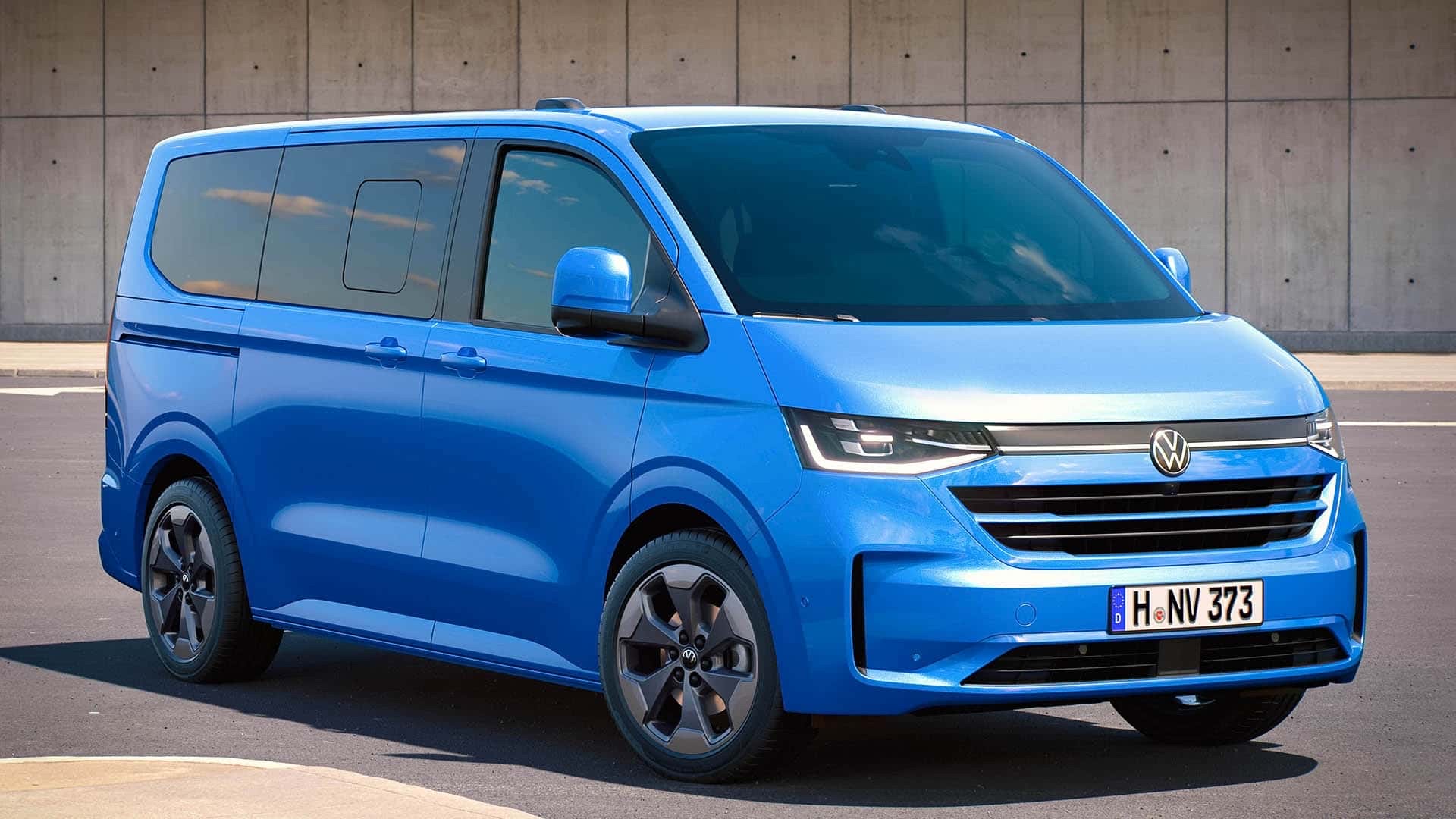
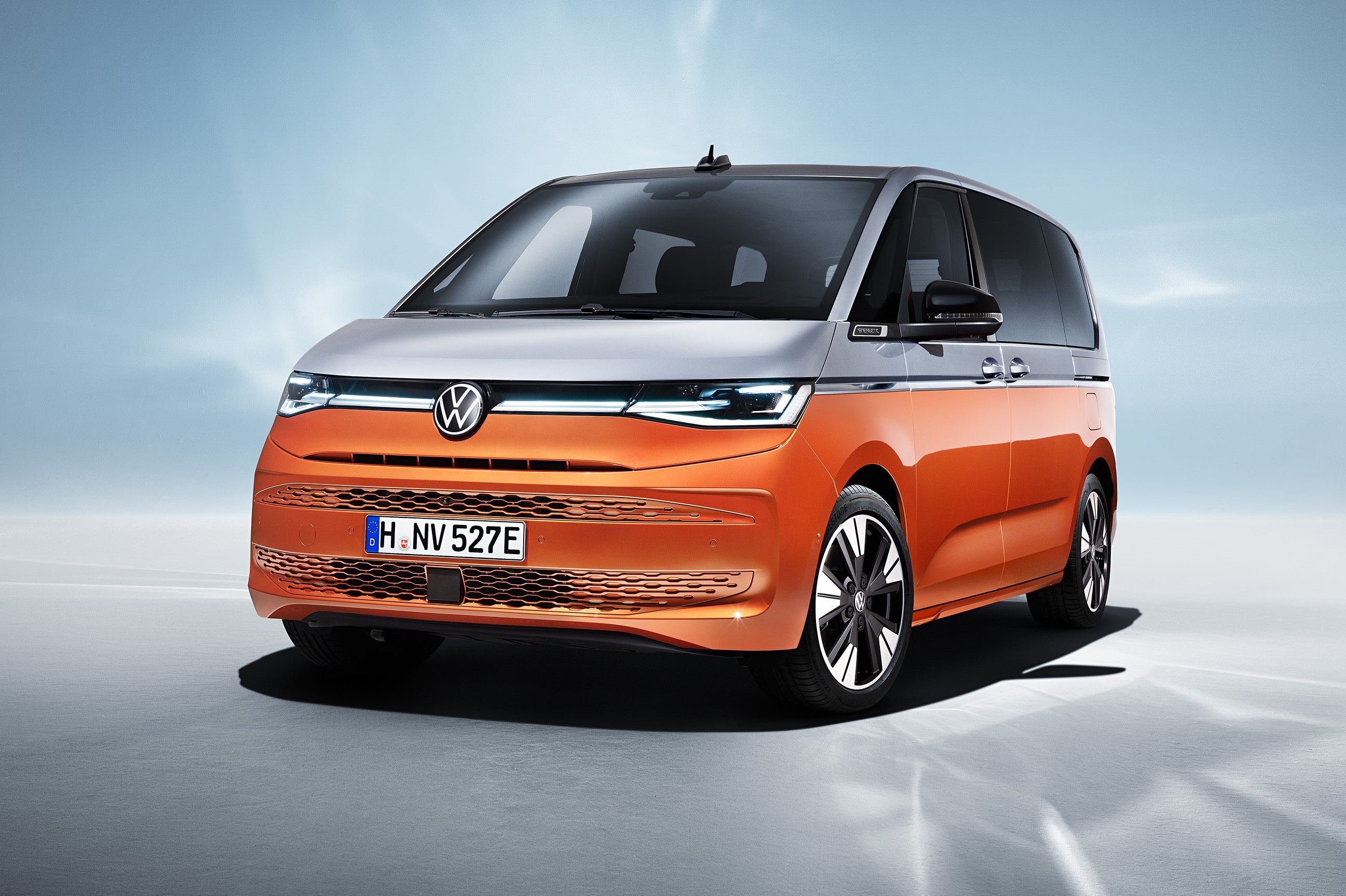
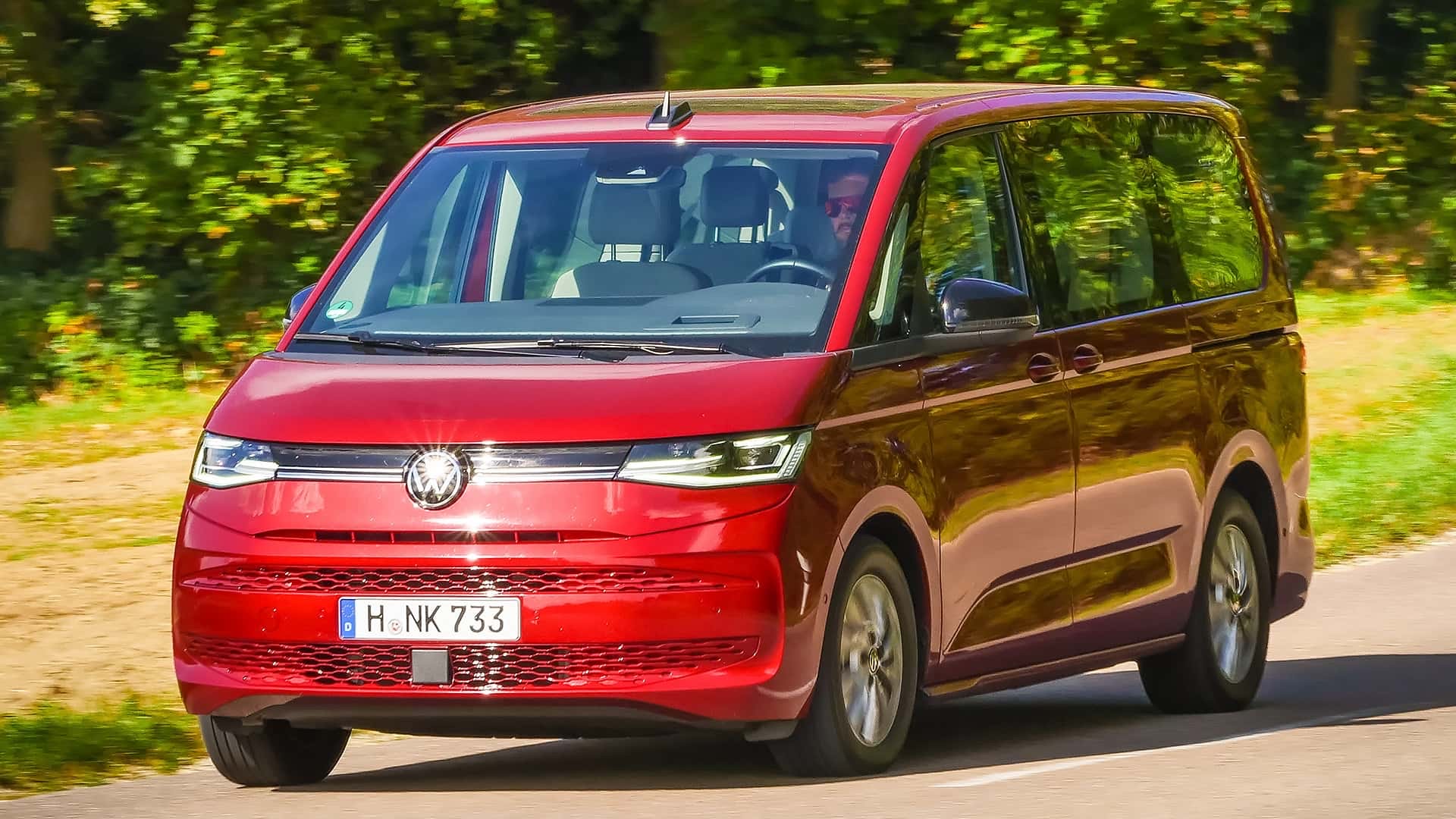
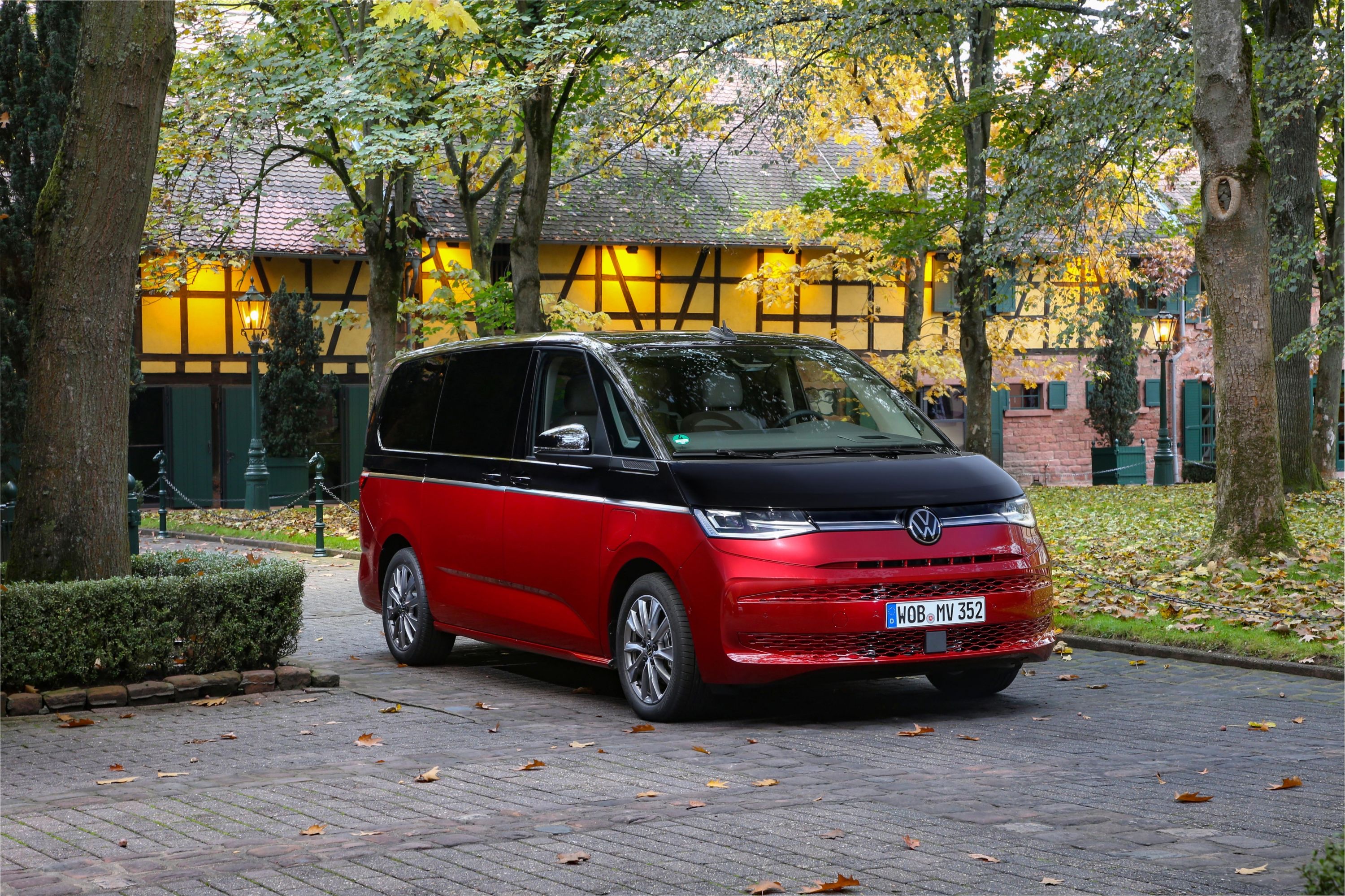
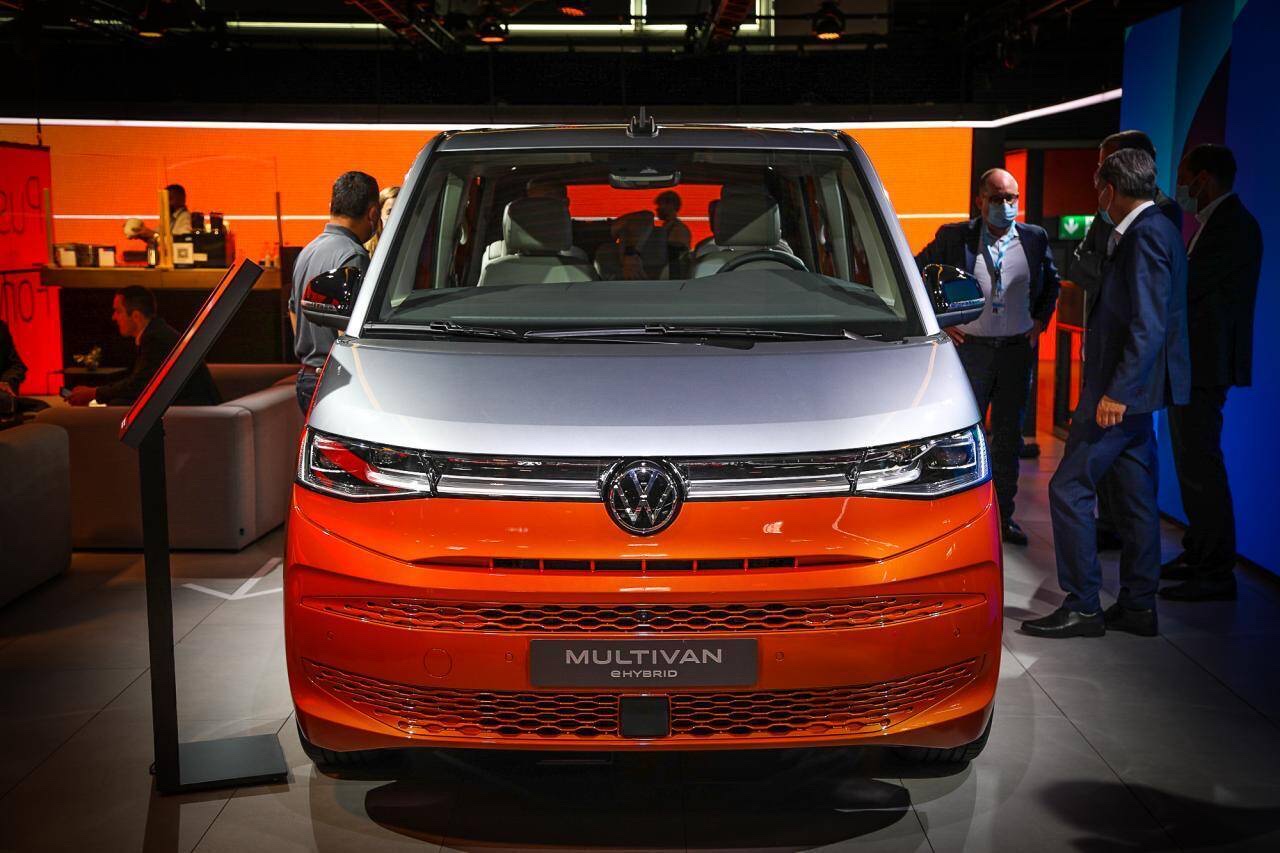
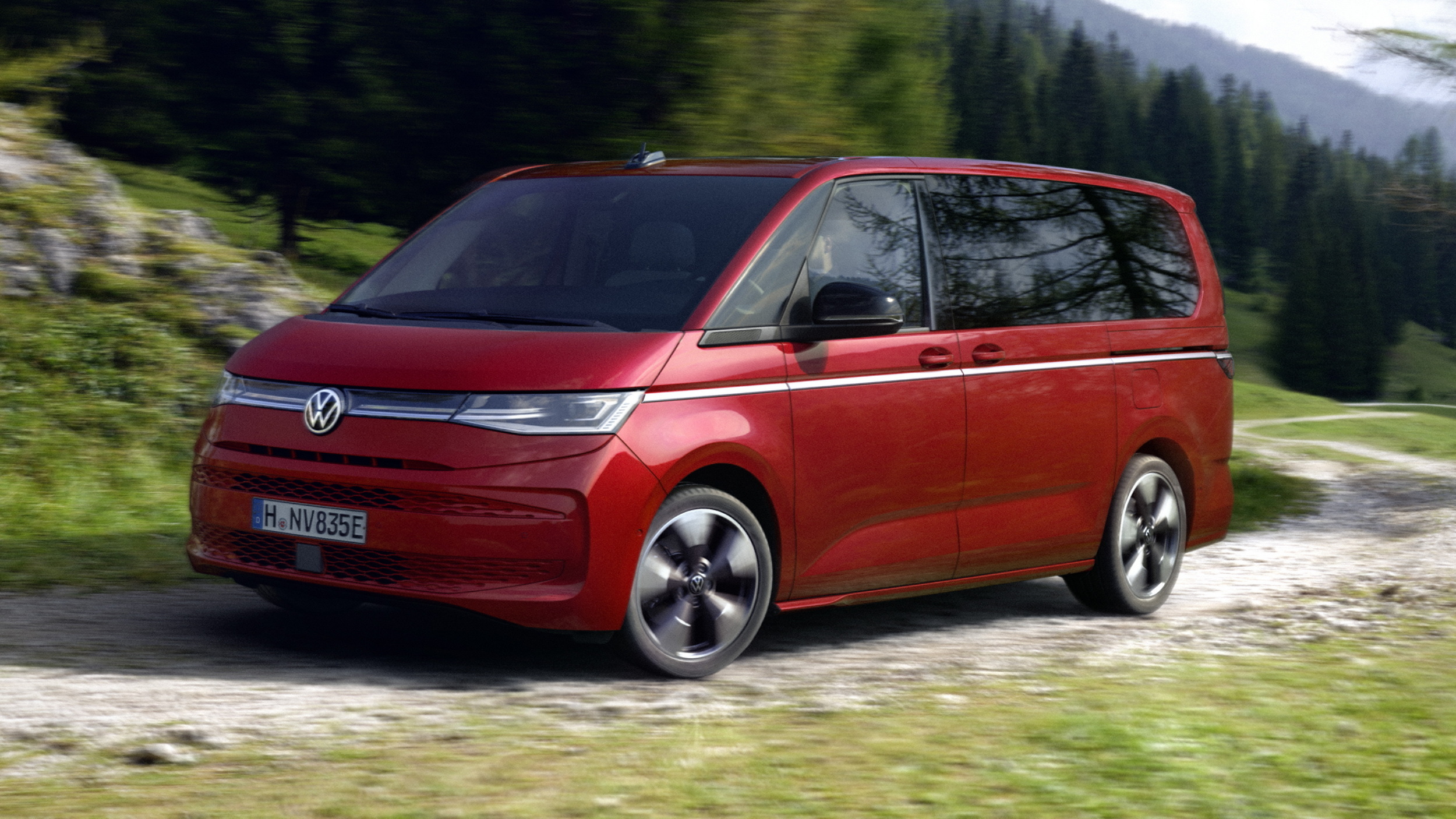
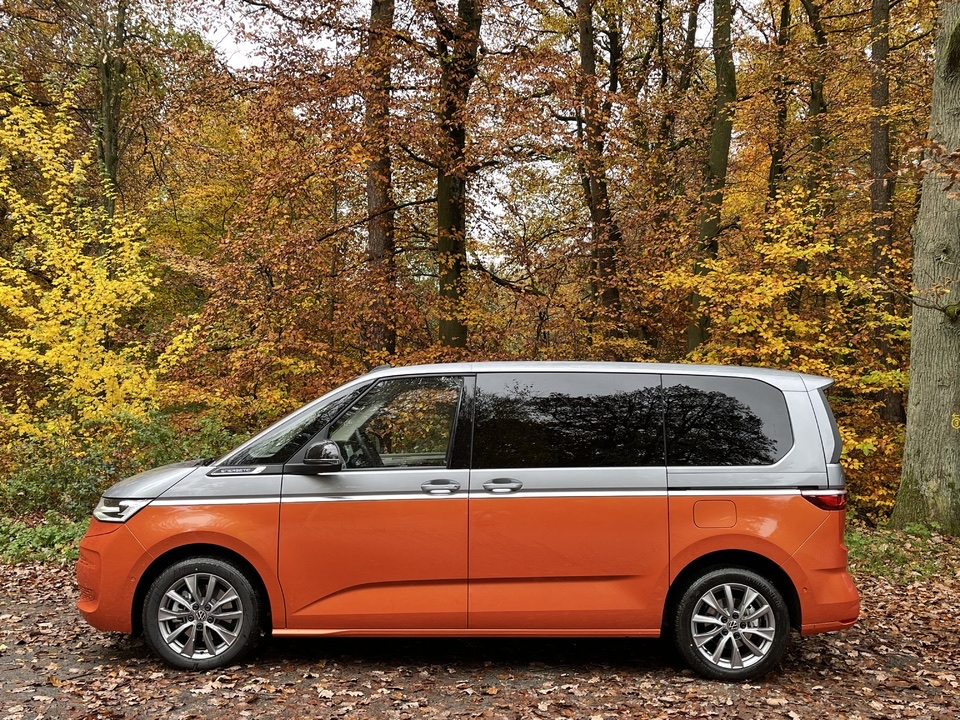
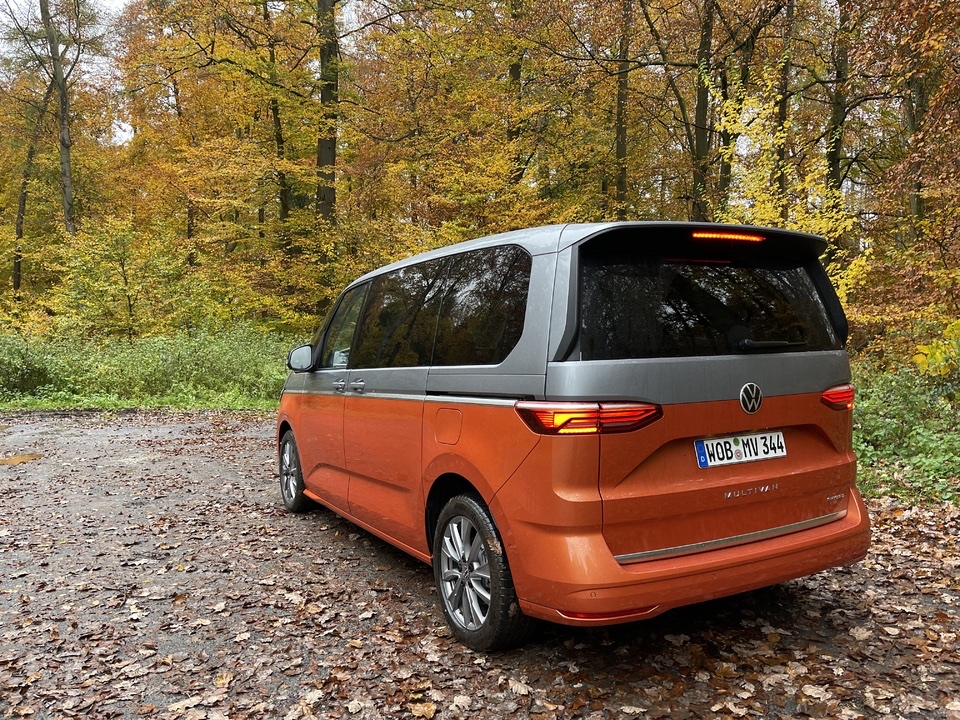
Specifications by trim
Choose a configuration below to open full technical data grouped by category.
1.4 TSI eHybrid (218 hp) 6-speed DSG 46 specifications
Specifications
Performance and consumption
| Fuel consumption combined, L/100 km | 1.5 |
|---|---|
| Top speed, km/h | 192 |
| Acceleration 0-100 km/h, s | 9 |
| Emissions standard | Euro VI |
Engine
| Engine | 1.4 TSI eHybrid |
|---|---|
| Engine code | EA211 |
| Engine type | Hybrid |
| Fuel type | Gasoline |
| Engine displacement, cc | 1395 |
| Cylinder layout | Inline |
| Number of cylinders | 4 |
| Valves | 16 |
| Turbocharger | + |
| Power, hp | 218 |
| RPM at max power | 4900–6500 |
| Torque, Nm | 350 |
| RPM at max torque | 1000–4100 |
| Number of electric motors | 1 |
| EV mode | + |
| Plug-in charging support | + |
| Electric motor power, hp | 116 |
| Combustion engine power, hp | 150 |
| Combustion engine RPM at max power | 5000–6000 |
| Combustion engine torque, Nm | 250 |
| Combustion engine RPM at max torque | 1550–3500 |
| Electric motor torque, Nm | 330 |
| Electric motor RPM at max torque | 0–2500 |
| Electric motor RPM at max power | 2500–4500 |
Dimensions
| Seats | 7 |
|---|---|
| Length, mm | 4973 |
| Width, mm | 2252 |
| Height, mm | 1907 |
| Wheelbase, mm | 3124 |
| Kerb weight, kg | 2014 |
| Gross weight, kg | 2600 |
| Fuel tank capacity, L | 60 |
| Turning circle, m | 12.1 |
| Ground clearance, mm | 152 |
| Width without mirrors, mm | 1941 |
| Trunk capacity, L | 469 |
Transmission and drive
| Transmission | 6-speed dual-clutch |
|---|---|
| Transmission type | 2-speed automated manual |
| Drive | Front-wheel drive |
| Number of gears | 6 |
| Transmission manufacturer | BorgWarner |
| Automatic transmission | + |
1.5 TSI (136 hp) 7-speed DSG 36 specifications
Specifications
Performance and consumption
| Fuel consumption city, L/100 km | 8 |
|---|---|
| Fuel consumption highway, L/100 km | 6 |
| Fuel consumption combined, L/100 km | 6.7 |
| Top speed, km/h | 182 |
| Acceleration 0-100 km/h, s | 13.5 |
| Emissions standard | Euro VI |
Engine
| Engine | 1.5 TSI |
|---|---|
| Engine code | EA211 Evo |
| Engine type | Internal combustion engine |
| Fuel type | Gasoline |
| Engine displacement, cc | 1498 |
| Cylinder layout | Inline |
| Number of cylinders | 4 |
| Valves | 16 |
| Turbocharger | + |
| Power, hp | 136 |
| RPM at max power | 5000–6000 |
| Torque, Nm | 220 |
| RPM at max torque | 1750–3500 |
Dimensions
| Seats | 7 |
|---|---|
| Length, mm | 4973 |
| Width, mm | 2252 |
| Height, mm | 1907 |
| Wheelbase, mm | 3124 |
| Kerb weight, kg | 2014 |
| Gross weight, kg | 2600 |
| Fuel tank capacity, L | 60 |
| Turning circle, m | 12.1 |
| Ground clearance, mm | 152 |
| Width without mirrors, mm | 1941 |
| Trunk capacity, L | 469 |
Transmission and drive
| Transmission | 7-speed dual-clutch |
|---|---|
| Transmission type | 2-speed automated manual |
| Drive | Front-wheel drive |
| Number of gears | 7 |
| Automatic transmission | + |
2.0 TSI (204 hp) 7-speed DSG 36 specifications
Specifications
Performance and consumption
| Fuel consumption city, L/100 km | 9.5 |
|---|---|
| Fuel consumption highway, L/100 km | 6.6 |
| Fuel consumption combined, L/100 km | 7.7 |
| Top speed, km/h | 200 |
| Acceleration 0-100 km/h, s | 9.4 |
| Emissions standard | Euro VI |
Engine
| Engine | 2.0 TSI |
|---|---|
| Engine code | EA888 |
| Engine type | Internal combustion engine |
| Fuel type | Gasoline |
| Engine displacement, cc | 1984 |
| Cylinder layout | Inline |
| Number of cylinders | 4 |
| Valves | 16 |
| Turbocharger | + |
| Power, hp | 204 |
| RPM at max power | 5000–6500 |
| Torque, Nm | 320 |
| RPM at max torque | 1600–4300 |
Dimensions
| Seats | 7 |
|---|---|
| Length, mm | 4973 |
| Width, mm | 2252 |
| Height, mm | 1907 |
| Wheelbase, mm | 3124 |
| Kerb weight, kg | 2014 |
| Gross weight, kg | 2600 |
| Fuel tank capacity, L | 60 |
| Turning circle, m | 12.1 |
| Ground clearance, mm | 152 |
| Width without mirrors, mm | 1941 |
| Trunk capacity, L | 469 |
Transmission and drive
| Transmission | 7-speed dual-clutch |
|---|---|
| Transmission type | 2-speed automated manual |
| Drive | Front-wheel drive |
| Number of gears | 7 |
| Automatic transmission | + |
Volkswagen Multivan (T7) questions
Short answers based on the specifications and photos available in this catalog.
What platform is the 2021 Volkswagen Multivan (T7) built on?
The 2021 Multivan (T7) is built on Volkswagen's MQB passenger car platform, representing a shift away from commercial vehicle platforms to offer better ride quality and refinement.
What engine options are available for the Multivan (T7)?
The lineup includes a 136-horsepower 1.5-liter TSI petrol, a 204-horsepower 2.0-liter TSI petrol, and a 218-horsepower 1.4-liter TSI eHybrid plug-in hybrid. The source also mentions a 150-horsepower 2.0-liter TDI diesel engine.
How much cargo space does the Multivan (T7) offer?
The standard model offers 469 liters behind the third row, 1844 liters behind the second row, and up to 3672 liters with all rear seats removed. The extended model increases maximum capacity to 4053 liters when equipped with the panoramic roof.
What is the electric driving range of the Multivan eHybrid?
The eHybrid plug-in hybrid version features a 10.4 kWh battery that provides an electric-only driving range of approximately 46 to 50 kilometers under the WLTP cycle.
How does the seating layout differ from older models?
The T7 replaces the traditional rear bench seat with individual, modular seats for the second and third rows. These seats are 25 percent lighter, making them easier to slide, fold, or remove to customize the cabin.