Mercedes V-Class (W447) specifications and photos
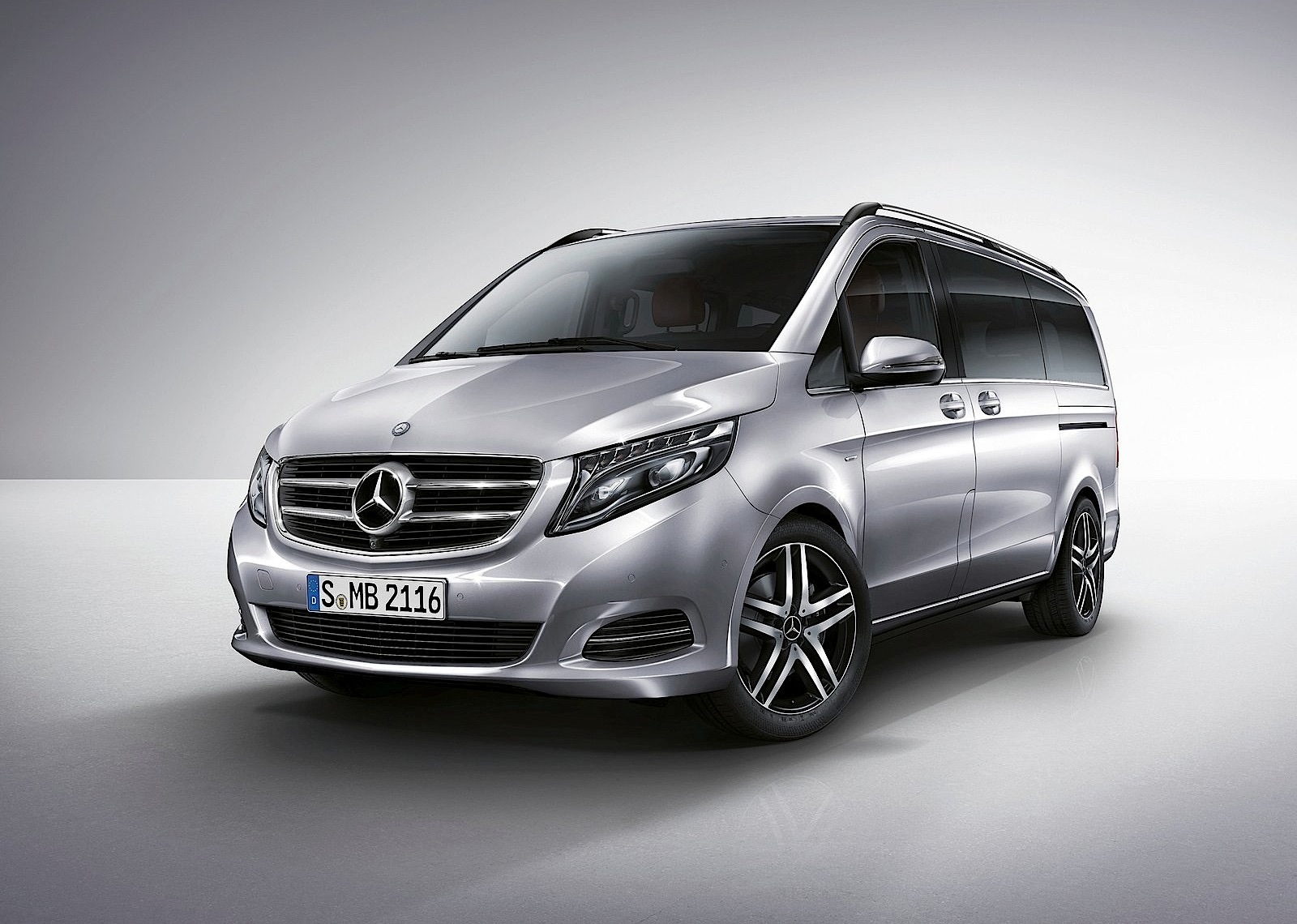
The 2024 Mercedes-Benz V-Class (W447) marks the second restyling of the third-generation luxury minivan. Available with rear-wheel or all-wheel drive, it focuses on combining premium comfort with versatile passenger transport capabilities.
Mercedes V-Class (W447) at a glance
Quick model context before comparing photos and trim-level specifications.
Introduced in March 2024, the updated V-Class (W447) refines the familiar premium passenger van formula. This second facelift brings a sharpened exterior design, modernized digital interfaces, and enhanced comfort features. Positioned as a high-end mobility solution, it caters to large families, executive transport services, and business applications. The updates aim to keep the V-Class competitive by introducing styling elements previously reserved for the brand's flagship sedans, alongside a comprehensive technology upgrade in the cabin.
- Power: 163-237 hp
- Engine displacement: 1950 cc
- Transmissions: 9G-Tronic
Photos, trims and specifications for Mercedes V-Class (W447)
This model page brings gallery images, trim comparison, and detailed technical data together for the 2024 generation.
Estimate fuel cost
Use trim-level fuel consumption data to estimate monthly and yearly fuel spending.
Fuel costs are estimates. Real consumption can change with driving style, traffic, tires, weather, load, and market-specific equipment.
Mercedes V-Class (W447) overview
Editorial context for design, cabin, performance, practicality, and buyer notes.
Design
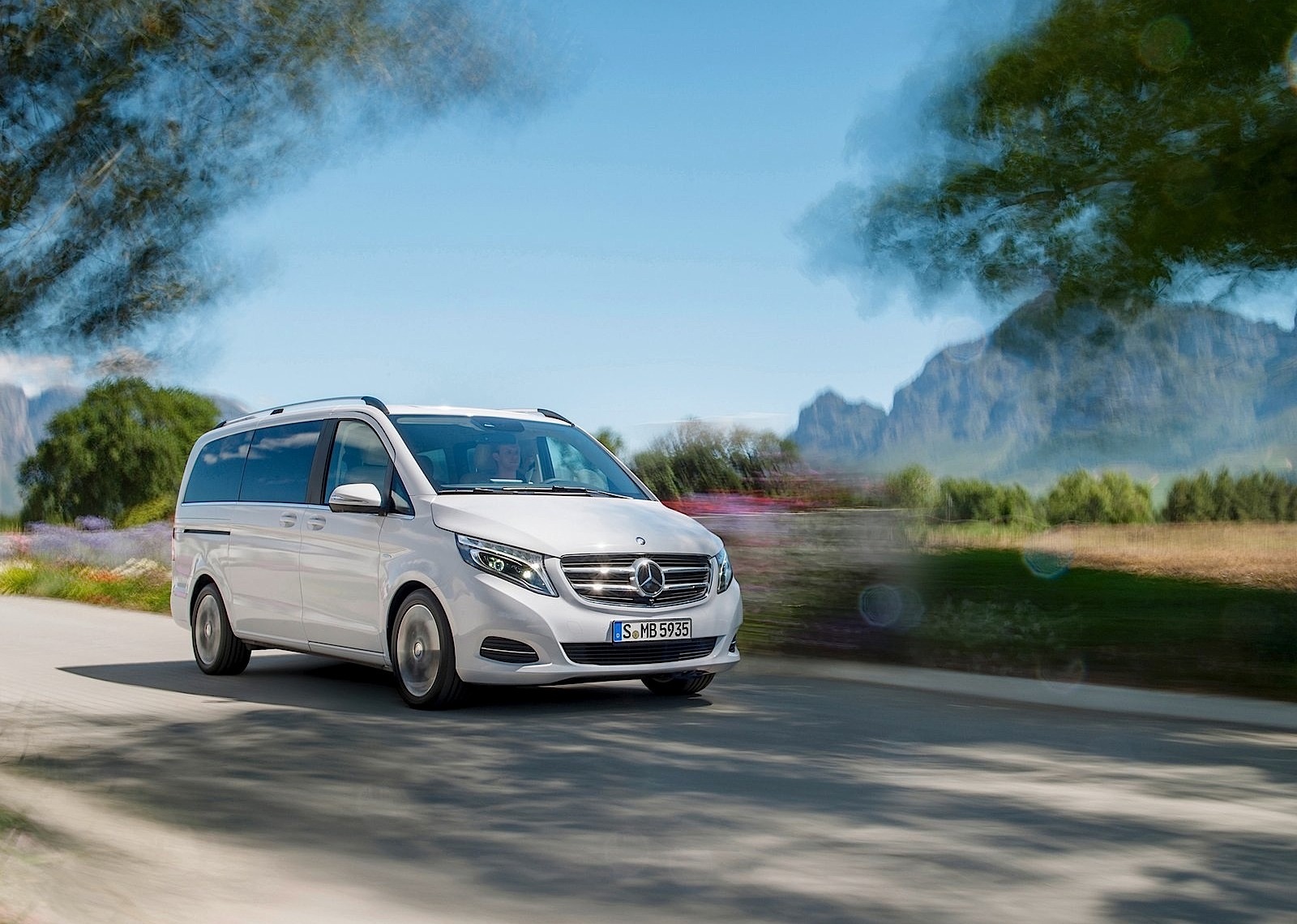
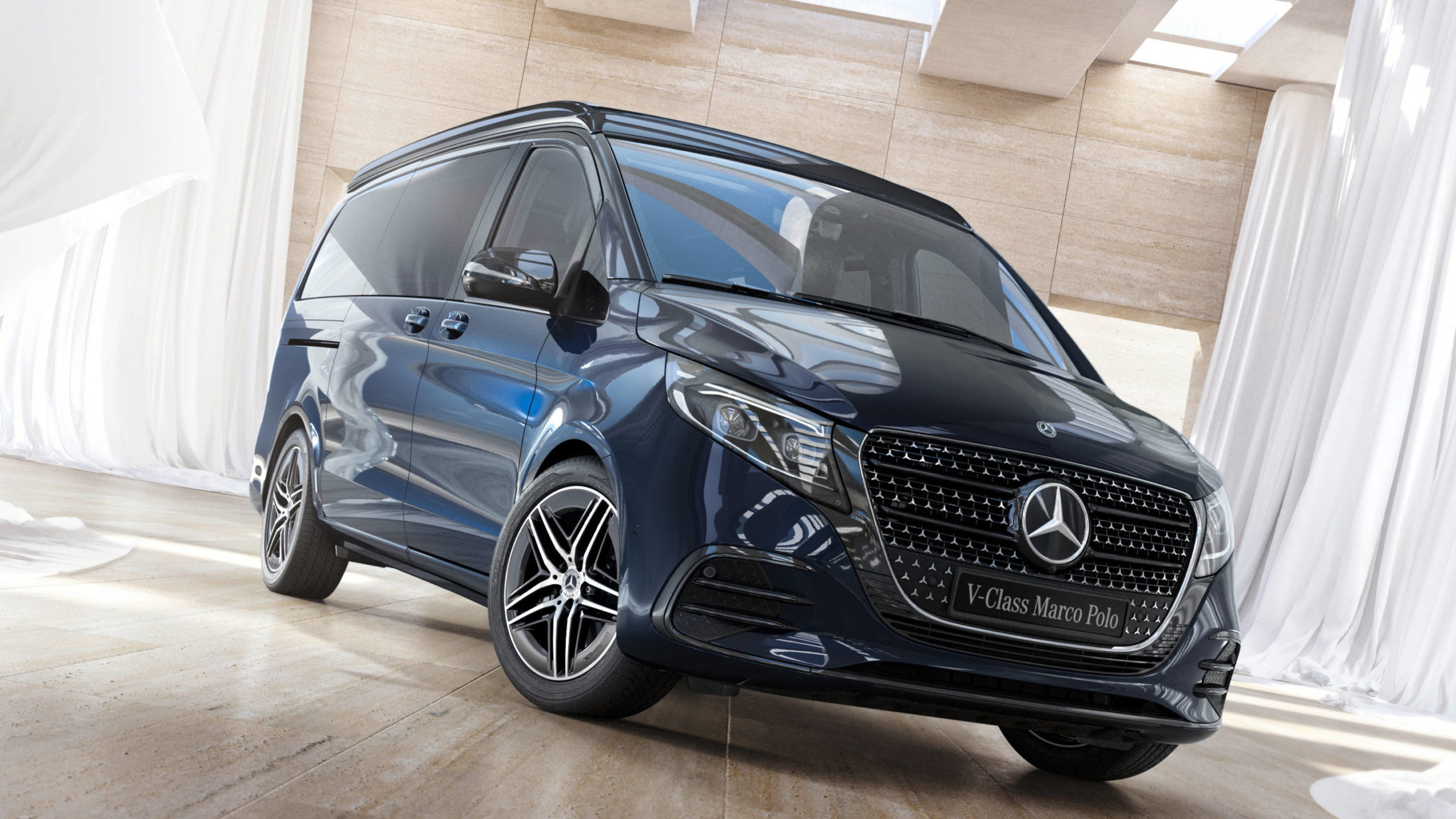
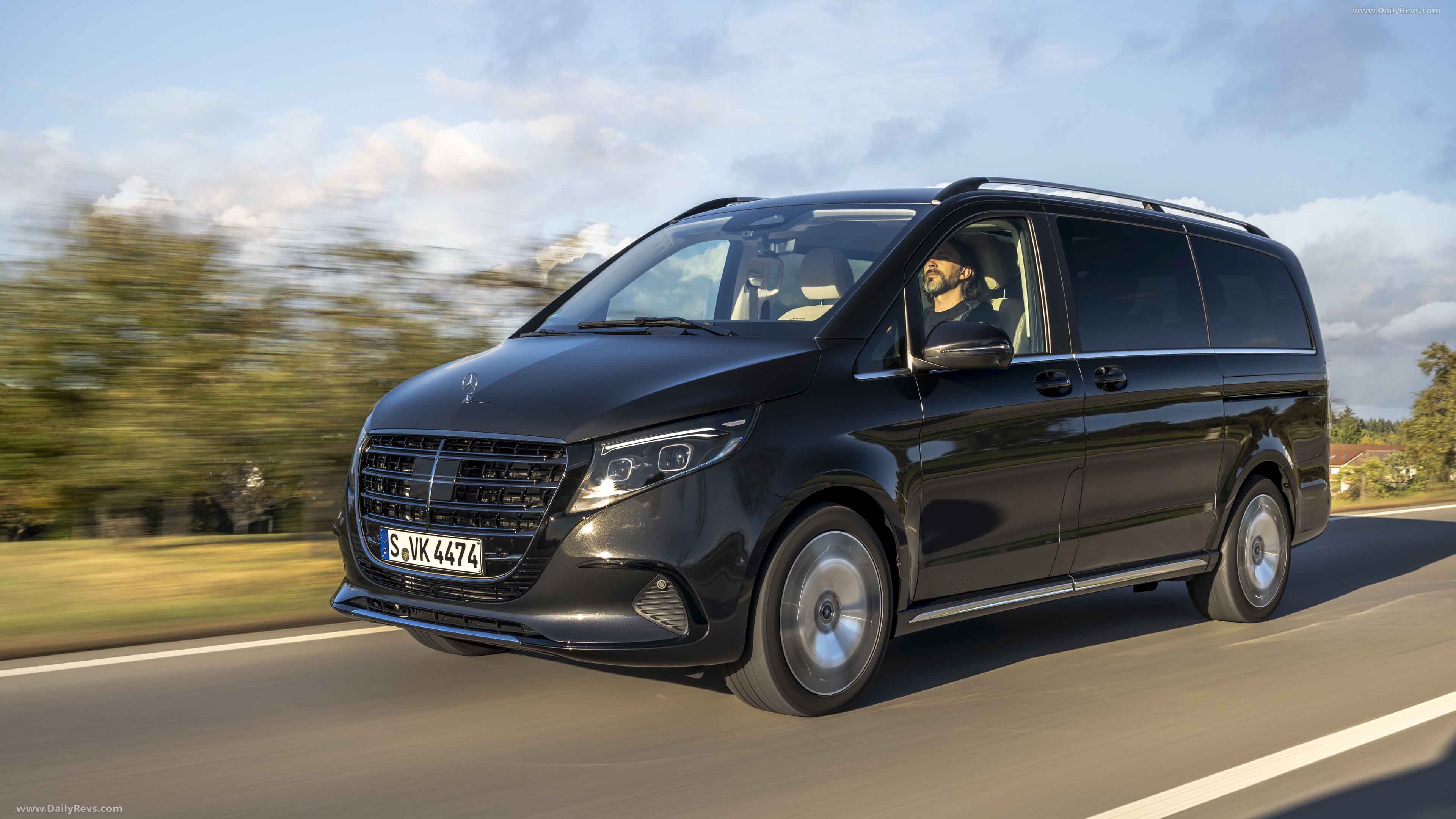
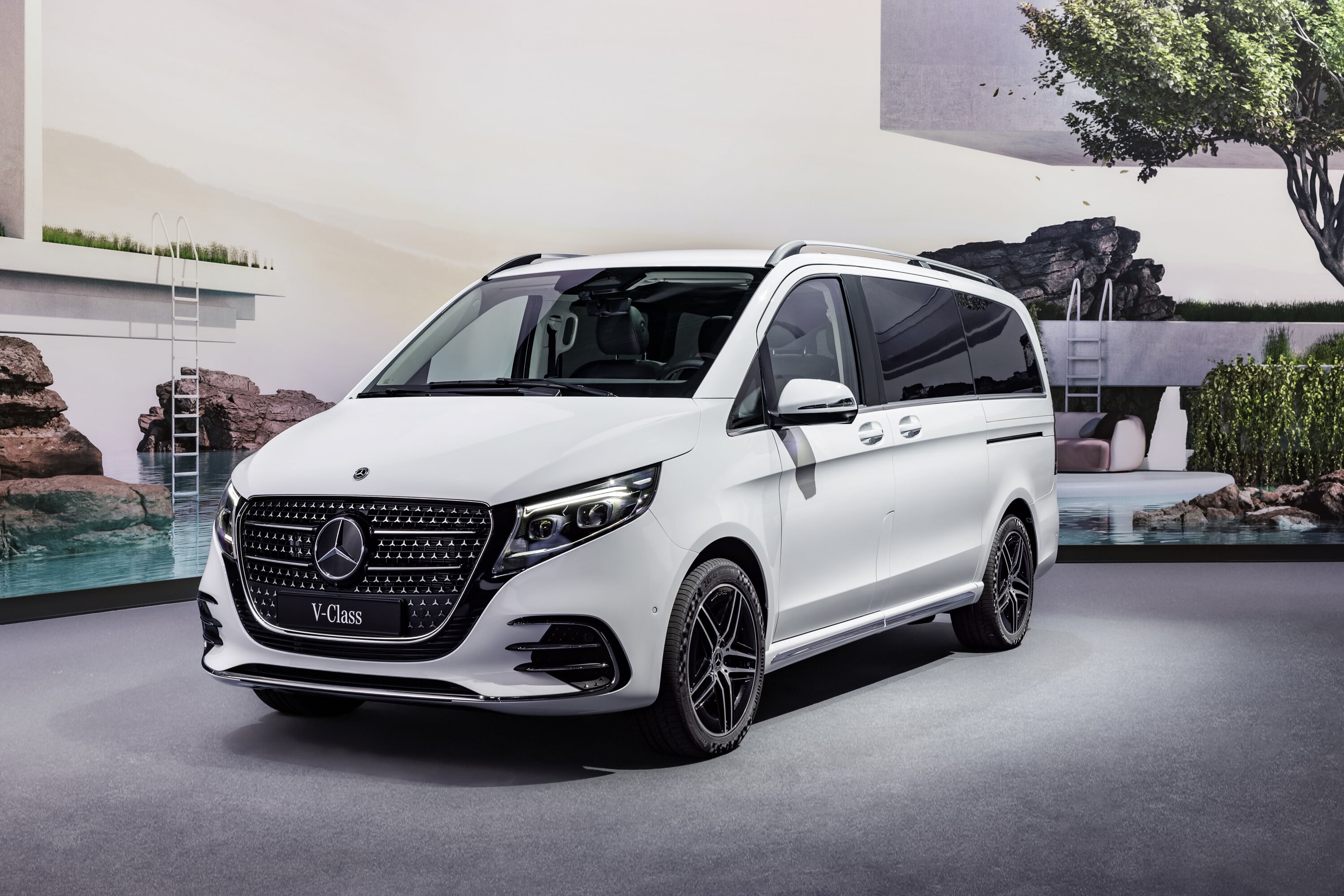
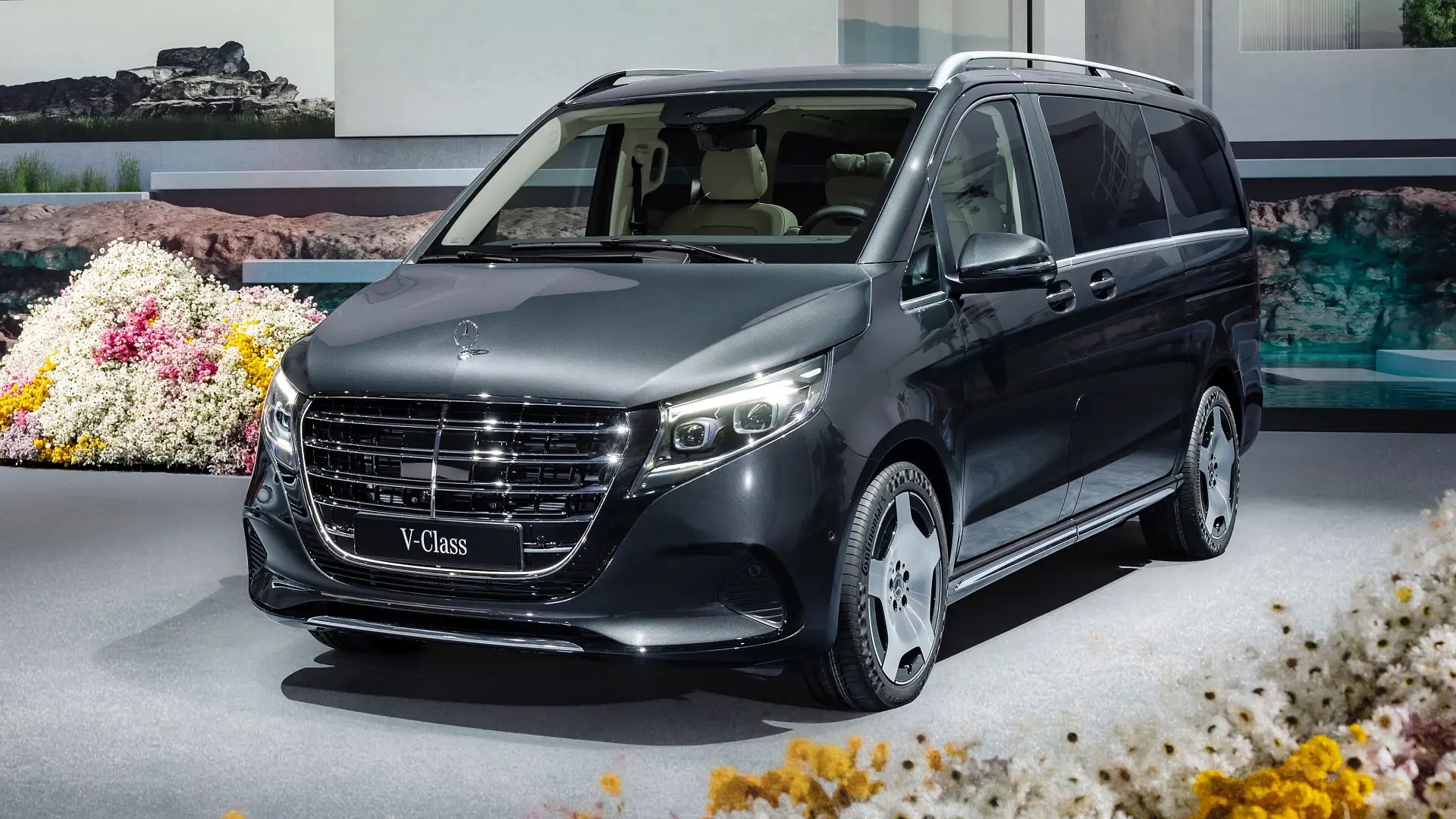
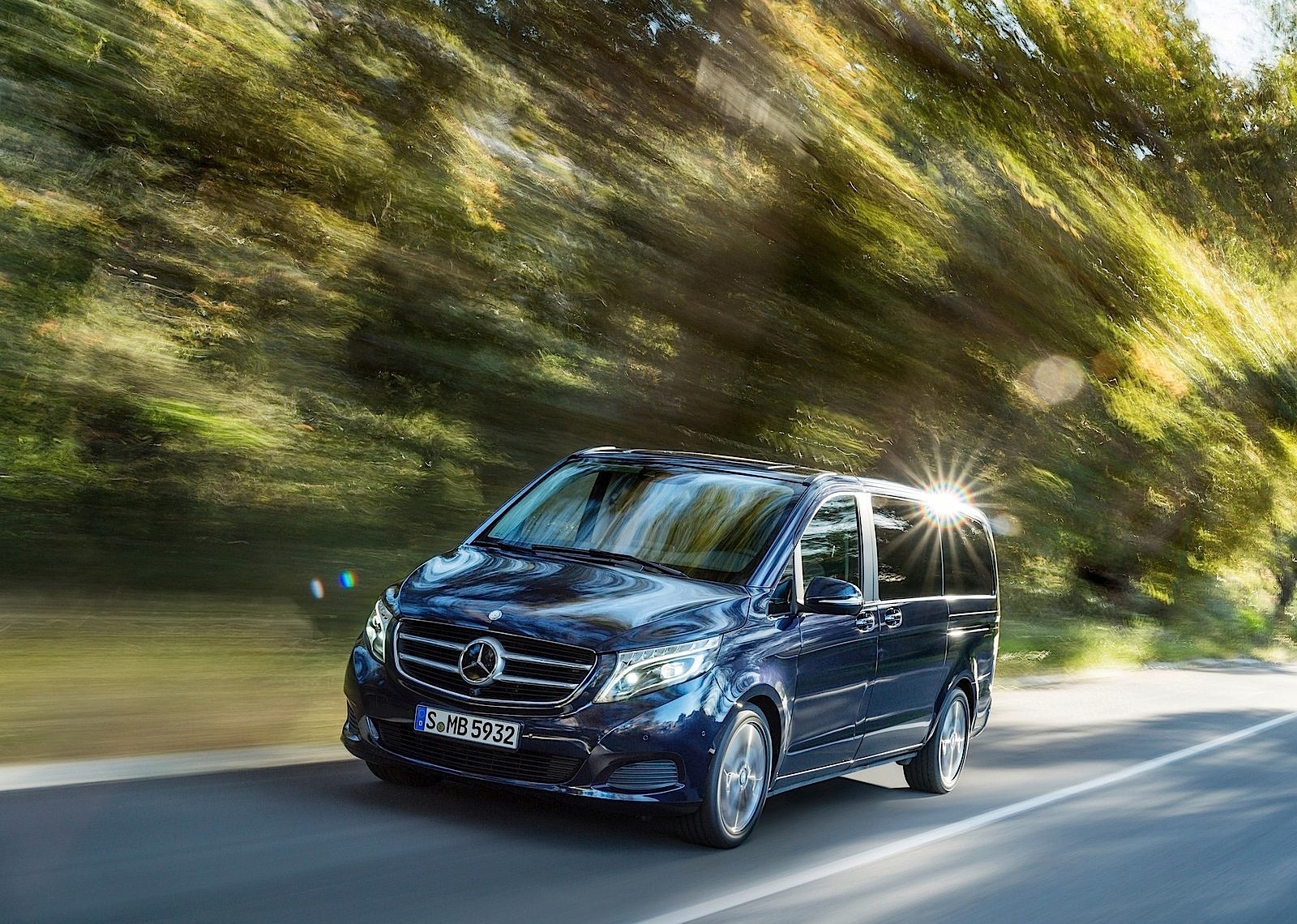
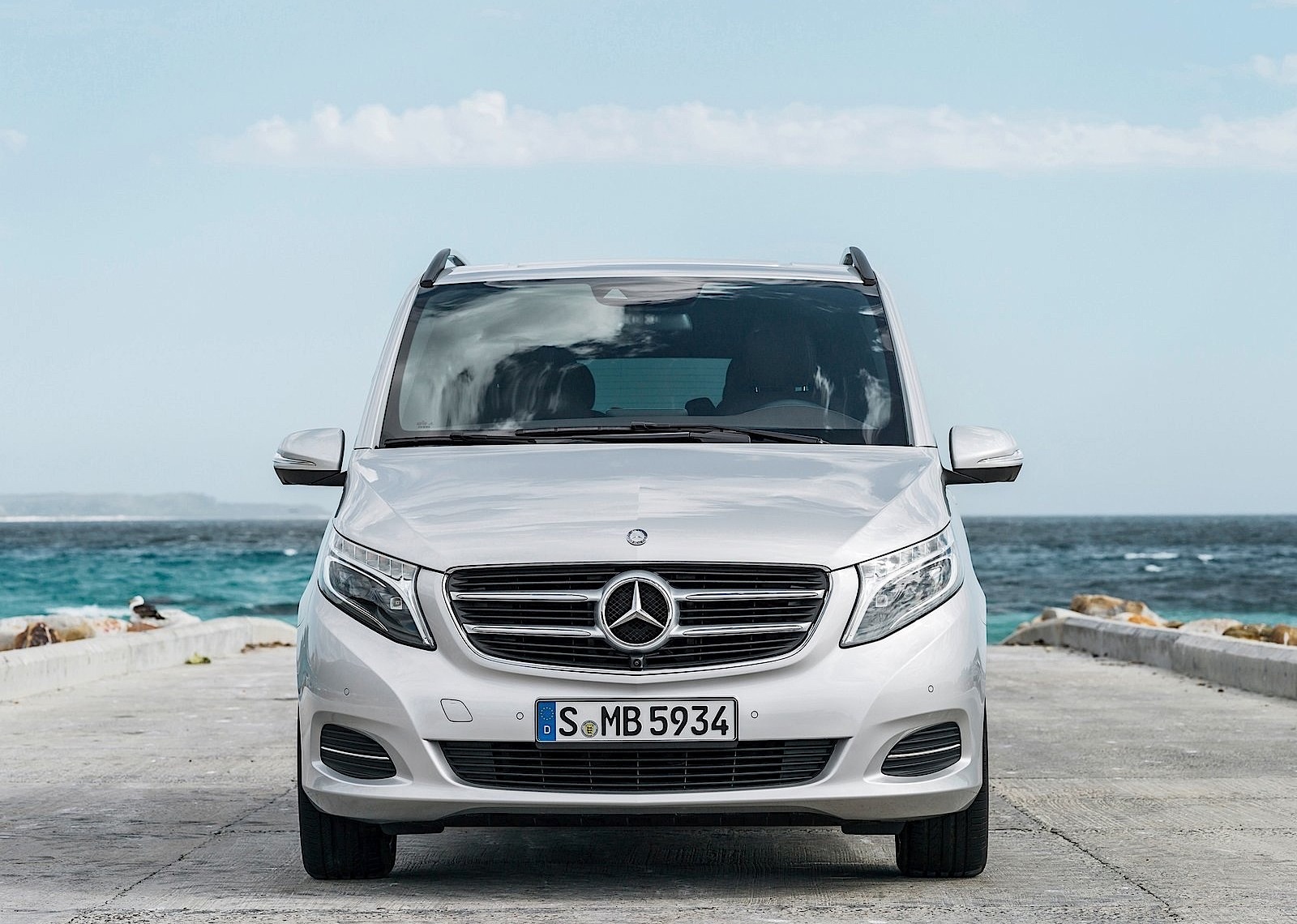
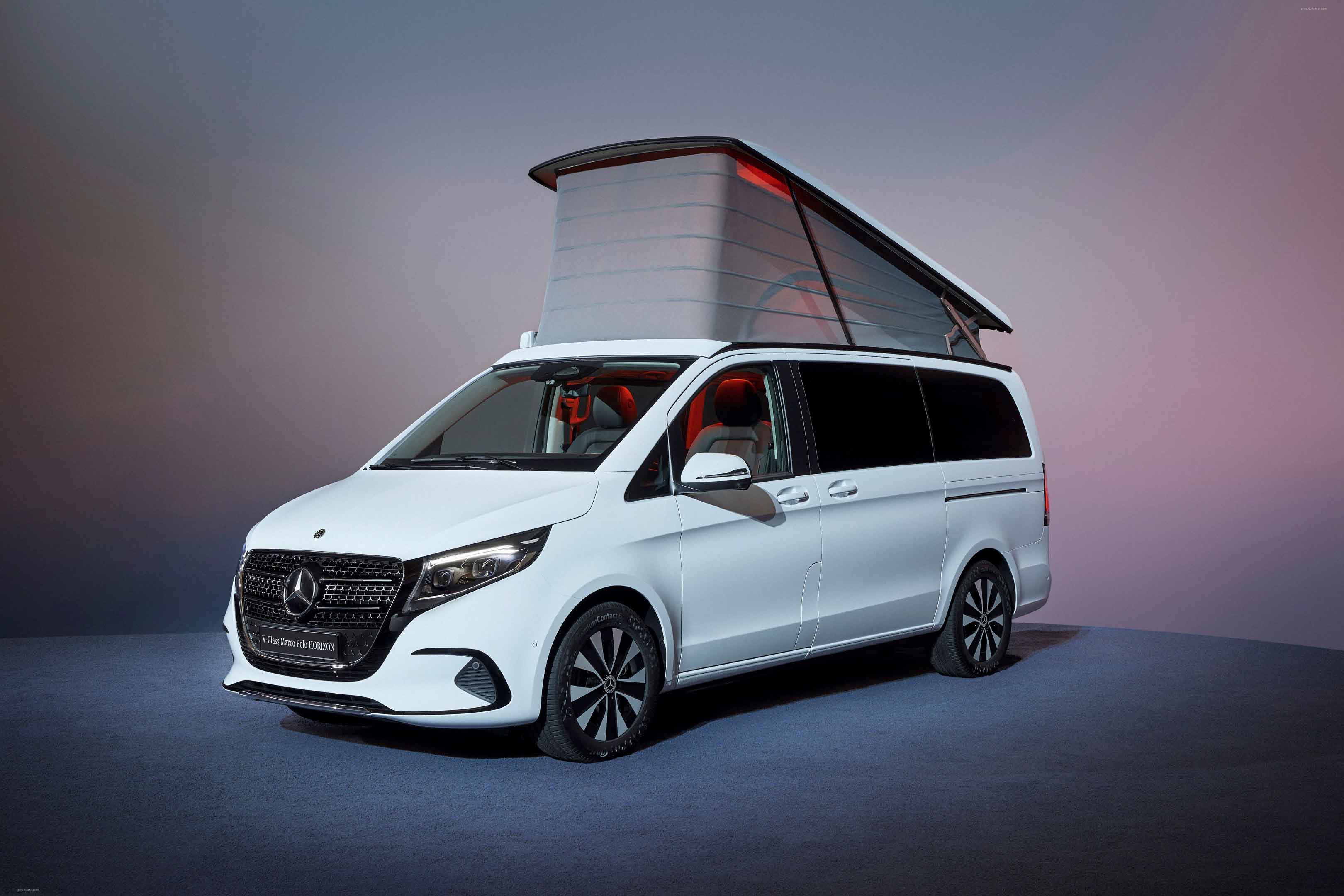
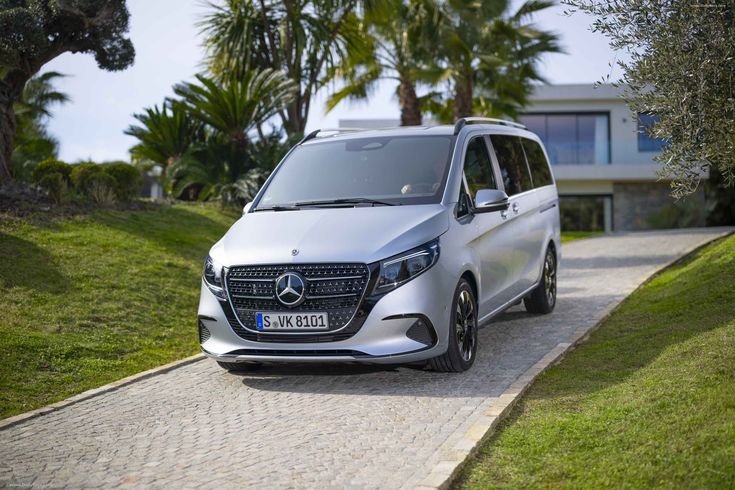
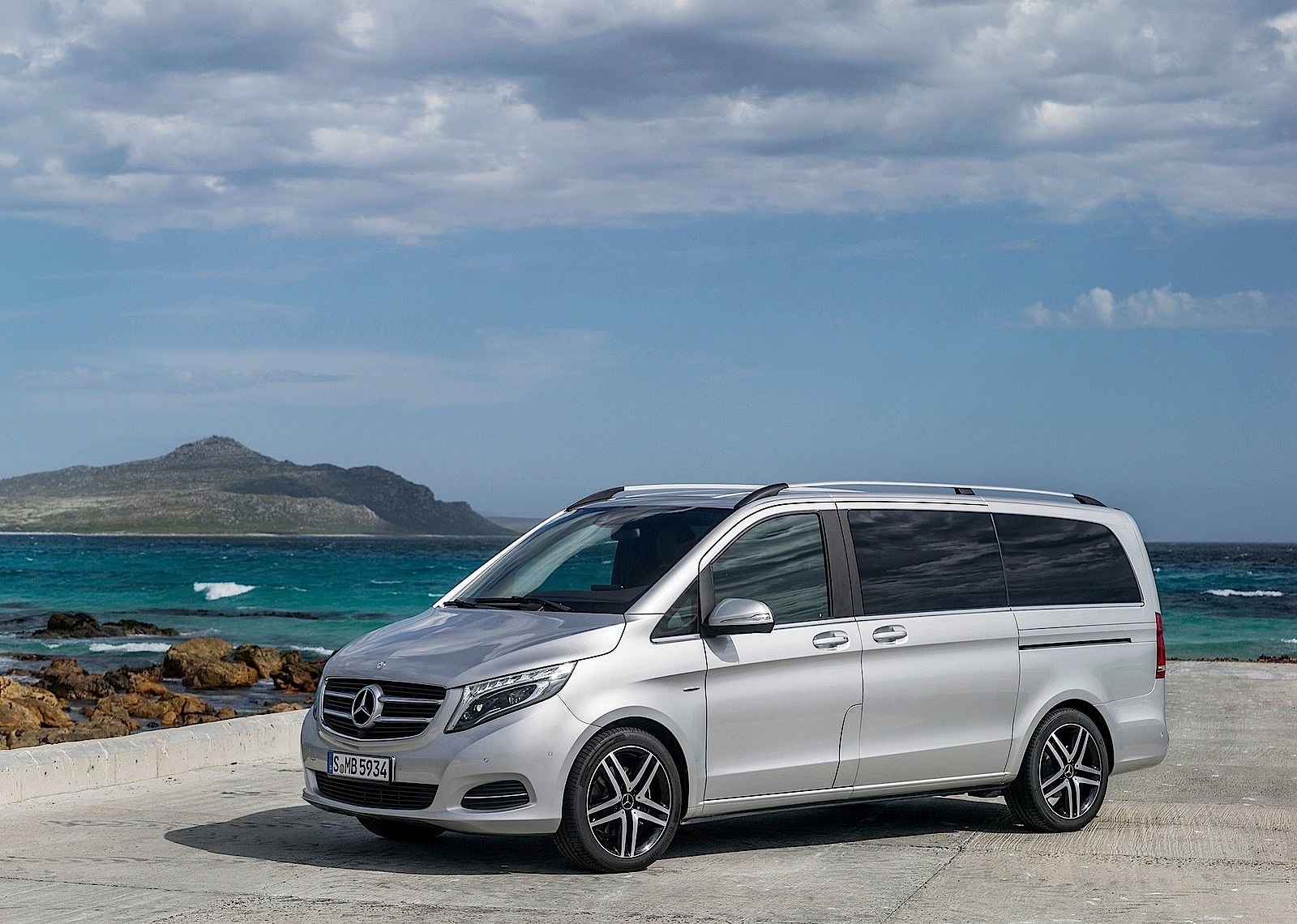
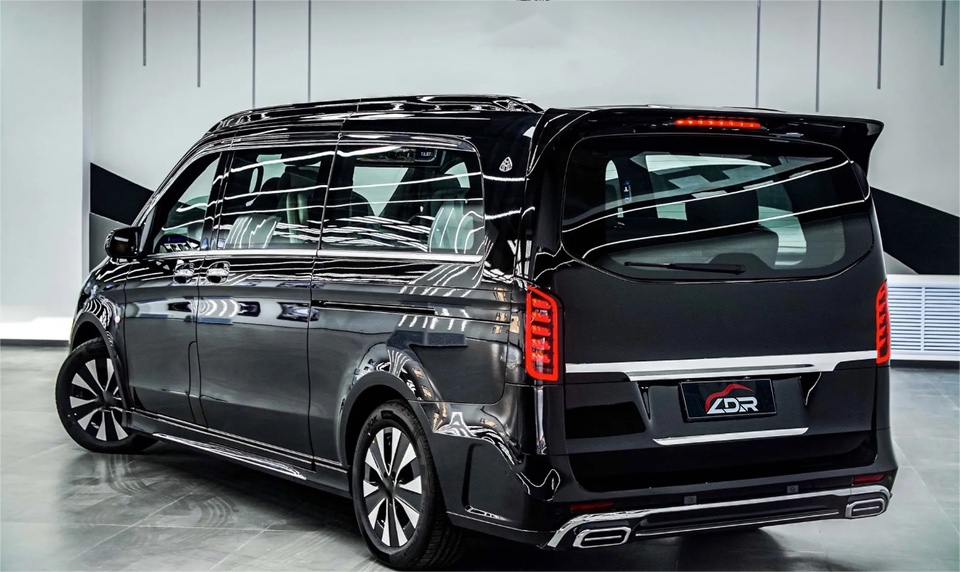
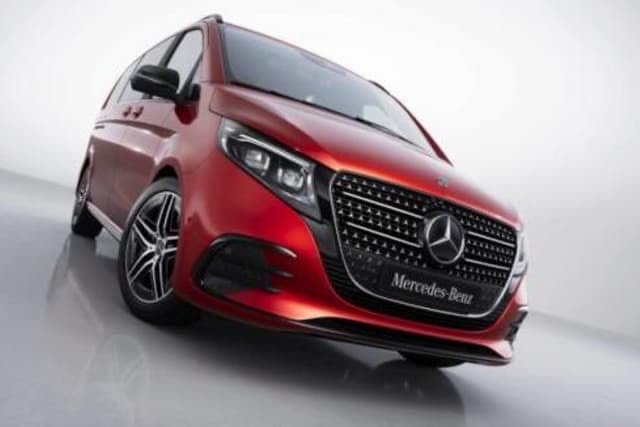
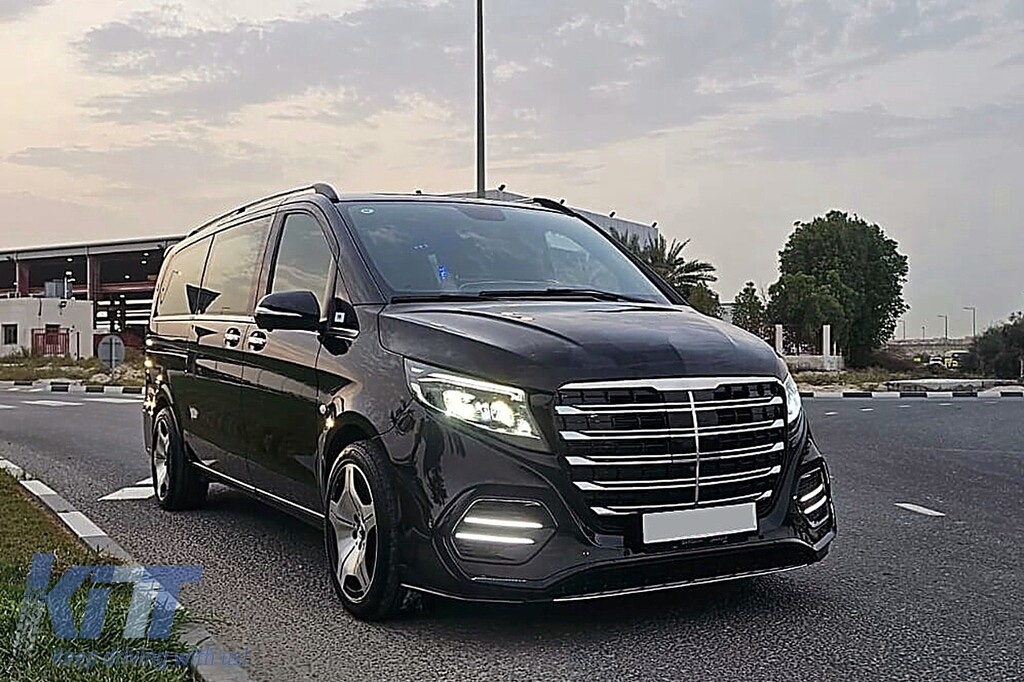
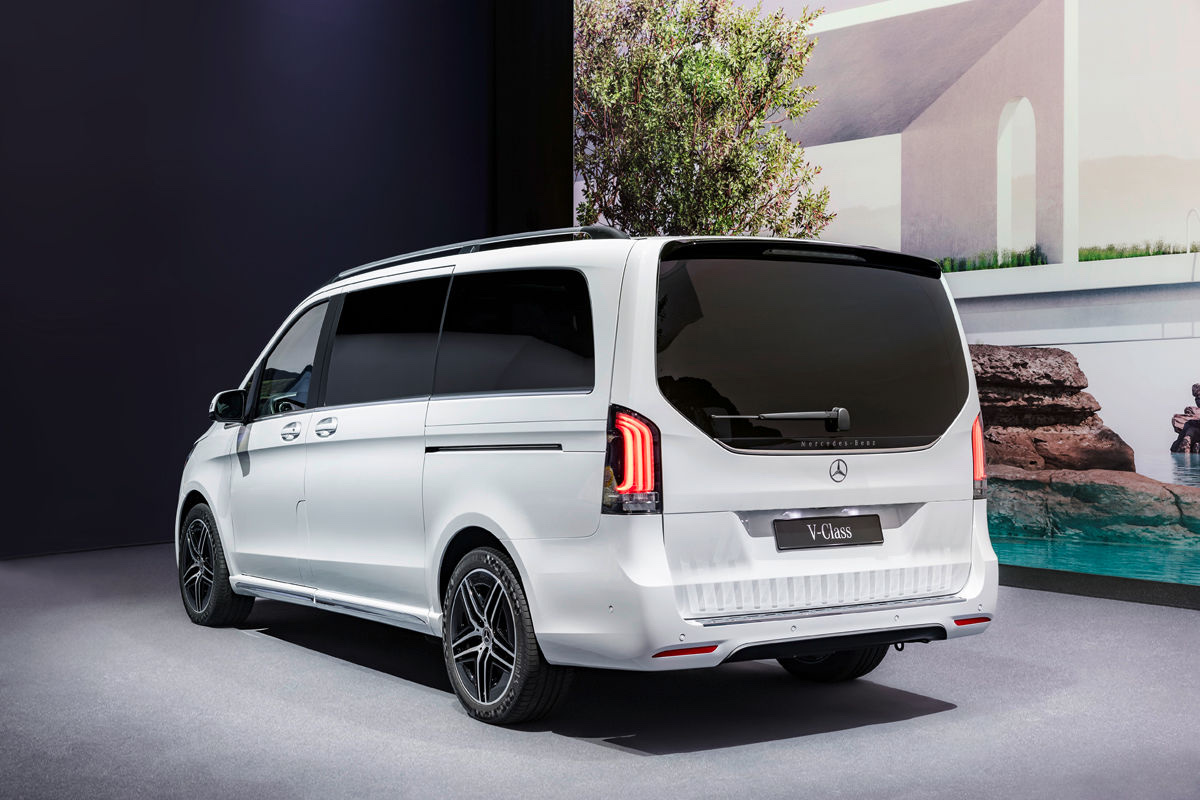
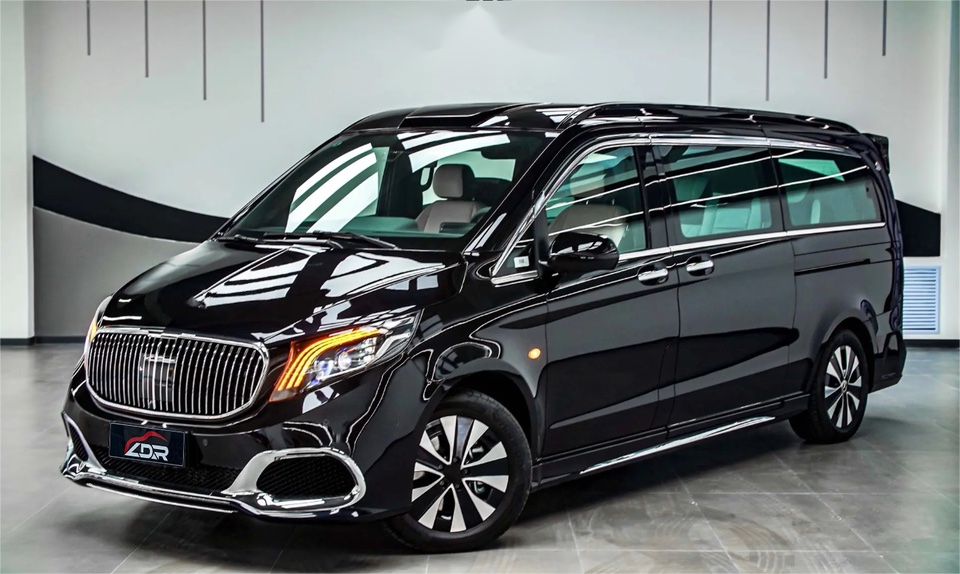
The exterior of the revised V-Class features a new front bumper and an enlarged grille, which can be optioned with an illuminated contour. Illumination is further handled by adaptive MULTIBEAM LED headlights. The top-tier EXCLUSIVE trim uniquely places the classic Mercedes star upright on the hood. The rear receives subtle updates, including darkened LED taillights and a chrome molding featuring Mercedes-Benz script. Buyers can choose from new paint finishes like Kalahari Gold Metallic and Vintage Blue, complemented by alloy wheels sized up to 19 inches.
Interior
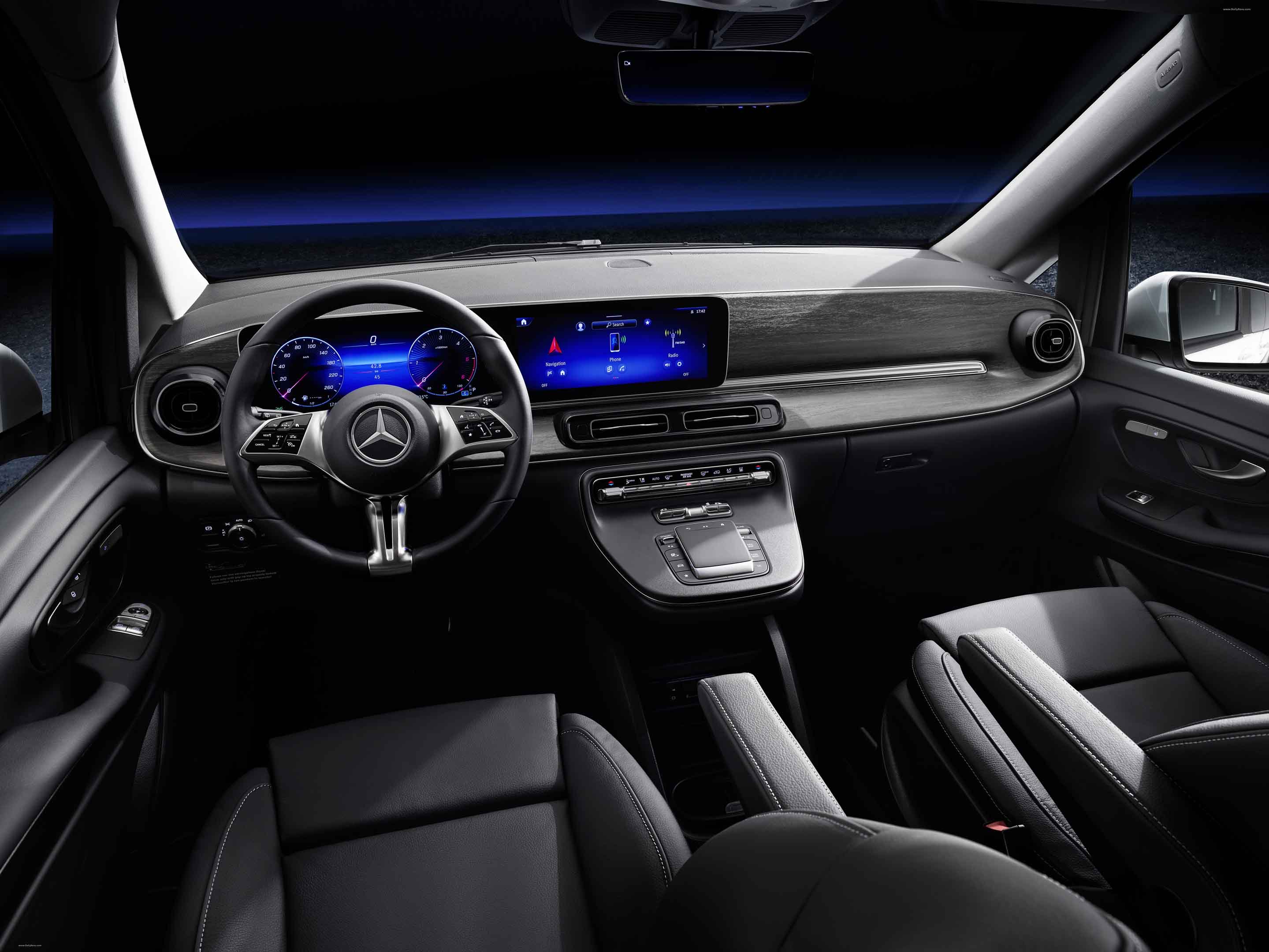
Inside, the dashboard has been completely redesigned to house a dual-screen setup, featuring two 12.3-inch displays integrating the instrument cluster and multimedia system. The cabin offers 64-color ambient lighting and premium material options, including open-pore olive wood and dark aluminum trim. Front occupants benefit from newly designed seats offering power adjustment, ventilation, massage functions, and lumbar support. The second row can be configured with VIP lounge seating and fold-out tables, supporting versatile six, seven, or eight-seat layouts.
Performance
At launch, the V-Class relies on the proven OM654 2.0-liter four-cylinder diesel engine. It is available in three states of tune: the 220d (163 hp, 380 Nm), the 250d (190 hp, 440 Nm), and the range-topping 300d (237 hp, 500 Nm), which can accelerate from 0 to 100 km/h in 7.9 seconds. All diesel variants are paired with a 9G-TRONIC nine-speed automatic transmission, driving the rear wheels, with all-wheel drive available. A future M254 gasoline hybrid producing 231 hp is also planned for the lineup.
Practicality
As a large minivan, utility remains a core focus. The V-Class accommodates varying passenger and cargo needs through flexible seating arrangements. A significant update for this iteration is the inclusion of a left-side sliding door as standard equipment across all trims, improving access in tight spaces. While the standard trunk volume is rated at 610 liters behind the rear seats, removing the seating rows unlocks a cavernous maximum cargo capacity of up to 5,010 liters, suitable for extensive transport tasks.
Safety and tech
The updated technological suite is centered around the MBUX infotainment interface, which now incorporates augmented reality for the navigation system and supports personalized driver profiles. The inclusion of MULTIBEAM LED headlights improves nighttime visibility through active light distribution. The digital cockpit modernizes the driving experience, bringing the commercial-based chassis closer to the brand's passenger car standards in terms of connectivity and user interface.
Buyer notes
Buyers looking at the 2024 V-Class should carefully consider their space requirements and typical passenger loads when selecting between the 220d, 250d, and 300d powertrains. Those prioritizing rear-seat luxury will want to investigate the VIP seating options, while commercial users might focus on maximizing seating capacity. Pay attention to standard versus optional equipment, as features like the illuminated grille and specific interior trims may be tied to higher equipment packages like the EXCLUSIVE line.
Trims and key specifications
Use this table to compare the main differences between available configurations.
| Trim / modification | Engine | Power | Seats | Transmission |
|---|---|---|---|---|
| 220d | 1950 cc | 163 hp | 6/8 | 9G-Tronic |
| 250d | 1950 cc | 190 hp | 6/8 | 9G-Tronic |
| 300d | 1950 cc | 237 hp | 6/8 | 9G-Tronic |
Specifications can vary by market, model year, and equipment package. Use the trim sections below to review the full data for each configuration.
Mercedes V-Class (W447) photo gallery
18 images are collected here with the main specifications and trim data for this model.
Photo Mercedes V-Class (W447)
Specifications by trim
Choose a configuration below to open full technical data grouped by category.
220d 36 specifications
Specifications
Performance and consumption
| Fuel consumption combined, L/100 km | 7.1 |
|---|---|
| Top speed, km/h | 195 |
| Acceleration 0-100 km/h, s | 11 |
| Emissions standard | Euro VI |
Engine
| Engine | 2.0 CDi |
|---|---|
| Engine code | OM 654 |
| Engine type | Internal combustion engine |
| Fuel type | Diesel |
| Engine displacement, cc | 1950 |
| Cylinder layout | Inline |
| Number of cylinders | 4 |
| Valves | 16 |
| Turbocharger | + |
| Power, hp | 163 |
| RPM at max power | 4200 |
| Torque, Nm | 380 |
| RPM at max torque | 1200-2400 |
Dimensions
| Seats | 6/8 |
|---|---|
| Length, mm | 4895 |
| Width, mm | 2249 |
| Height, mm | 1901 |
| Wheelbase, mm | 3200 |
| Front track, mm | 1666 |
| Rear track, mm | 1646 |
| Kerb weight, kg | 2160 |
| Fuel tank capacity, L | 70 |
| Turning circle, m | 11.8 |
| Width without mirrors, mm | 1928 |
| Trunk capacity, L | 610 |
Transmission and drive
| Transmission | 9G-Tronic |
|---|---|
| Transmission type | automatic |
| Drive | Rear-wheel drive |
| Number of gears | 9 |
| Transmission manufacturer | Daimler AG |
| Automatic transmission | + |
| Transmission country | Germany |
250d 35 specifications
Specifications
Performance and consumption
| Fuel consumption combined, L/100 km | 7.2 |
|---|---|
| Top speed, km/h | 205 |
| Acceleration 0-100 km/h, s | 9.5 |
| Emissions standard | Euro VI |
Engine
| Engine | 2.0 CDI |
|---|---|
| Engine code | OM 654 |
| Engine type | Internal combustion engine |
| Fuel type | Diesel |
| Engine displacement, cc | 1950 |
| Cylinder layout | Inline |
| Number of cylinders | 4 |
| Valves | 16 |
| Power, hp | 190 |
| RPM at max power | 4200 |
| Torque, Nm | 440 |
| RPM at max torque | 1400-2400 |
Dimensions
| Seats | 6/8 |
|---|---|
| Length, mm | 4895 |
| Width, mm | 2249 |
| Height, mm | 1901 |
| Wheelbase, mm | 3200 |
| Front track, mm | 1666 |
| Rear track, mm | 1646 |
| Kerb weight, kg | 2160 |
| Fuel tank capacity, L | 70 |
| Turning circle, m | 11.8 |
| Width without mirrors, mm | 1928 |
| Trunk capacity, L | 610 |
Transmission and drive
| Transmission | 9G-Tronic |
|---|---|
| Transmission type | automatic |
| Drive | Rear-wheel drive |
| Number of gears | 9 |
| Transmission manufacturer | Daimler AG |
| Automatic transmission | + |
| Transmission country | Germany |
300d 35 specifications
Specifications
Performance and consumption
| Fuel consumption combined, L/100 km | 7.2 |
|---|---|
| Top speed, km/h | 220 |
| Acceleration 0-100 km/h, s | 7.9 |
| Emissions standard | Euro VI |
Engine
| Engine | 2.0 CDi |
|---|---|
| Engine code | OM 654 |
| Engine type | Internal combustion engine |
| Fuel type | Diesel |
| Engine displacement, cc | 1950 |
| Cylinder layout | Inline |
| Number of cylinders | 4 |
| Valves | 16 |
| Power, hp | 237 |
| RPM at max power | 4200 |
| Torque, Nm | 500 |
| RPM at max torque | 1600 |
Dimensions
| Seats | 6/8 |
|---|---|
| Length, mm | 4895 |
| Width, mm | 2249 |
| Height, mm | 1901 |
| Wheelbase, mm | 3200 |
| Front track, mm | 1666 |
| Rear track, mm | 1646 |
| Kerb weight, kg | 2160 |
| Fuel tank capacity, L | 70 |
| Turning circle, m | 11.8 |
| Width without mirrors, mm | 1928 |
| Trunk capacity, L | 610 |
Transmission and drive
| Transmission | 9G-Tronic |
|---|---|
| Transmission type | automatic |
| Drive | Rear-wheel drive |
| Number of gears | 9 |
| Transmission manufacturer | Daimler AG |
| Automatic transmission | + |
| Transmission country | Germany |
Mercedes V-Class (W447) questions
Short answers based on the specifications and photos available in this catalog.
What are the engine options for the 2024 Mercedes V-Class?
The primary power source is a 2.0-liter diesel engine available in three outputs: 163 hp (220d), 190 hp (250d), and 237 hp (300d). A 231-hp gasoline hybrid is expected to join the lineup later.
How many passengers can the V-Class hold?
The V-Class offers highly configurable seating arrangements. Depending on the chosen layout, it can accommodate six, seven, or eight passengers.
What type of transmission does it use?
All current engine configurations are mated to a 9G-TRONIC nine-speed automatic transmission. It comes standard with rear-wheel drive, though all-wheel drive is available.
Is the V-Class practical for cargo?
Yes, it is highly practical. It offers a standard 610 liters of trunk space, which can expand to a massive 5,010 liters when the rear seats are removed. A left-side sliding door is now standard for easier access.
What are the key interior updates for this generation?
The latest restyling introduces a new dashboard featuring dual 12.3-inch displays for the instruments and infotainment. It also adds advanced features like augmented reality navigation and customizable driver profiles.