Toyota Mirai specifications and photos
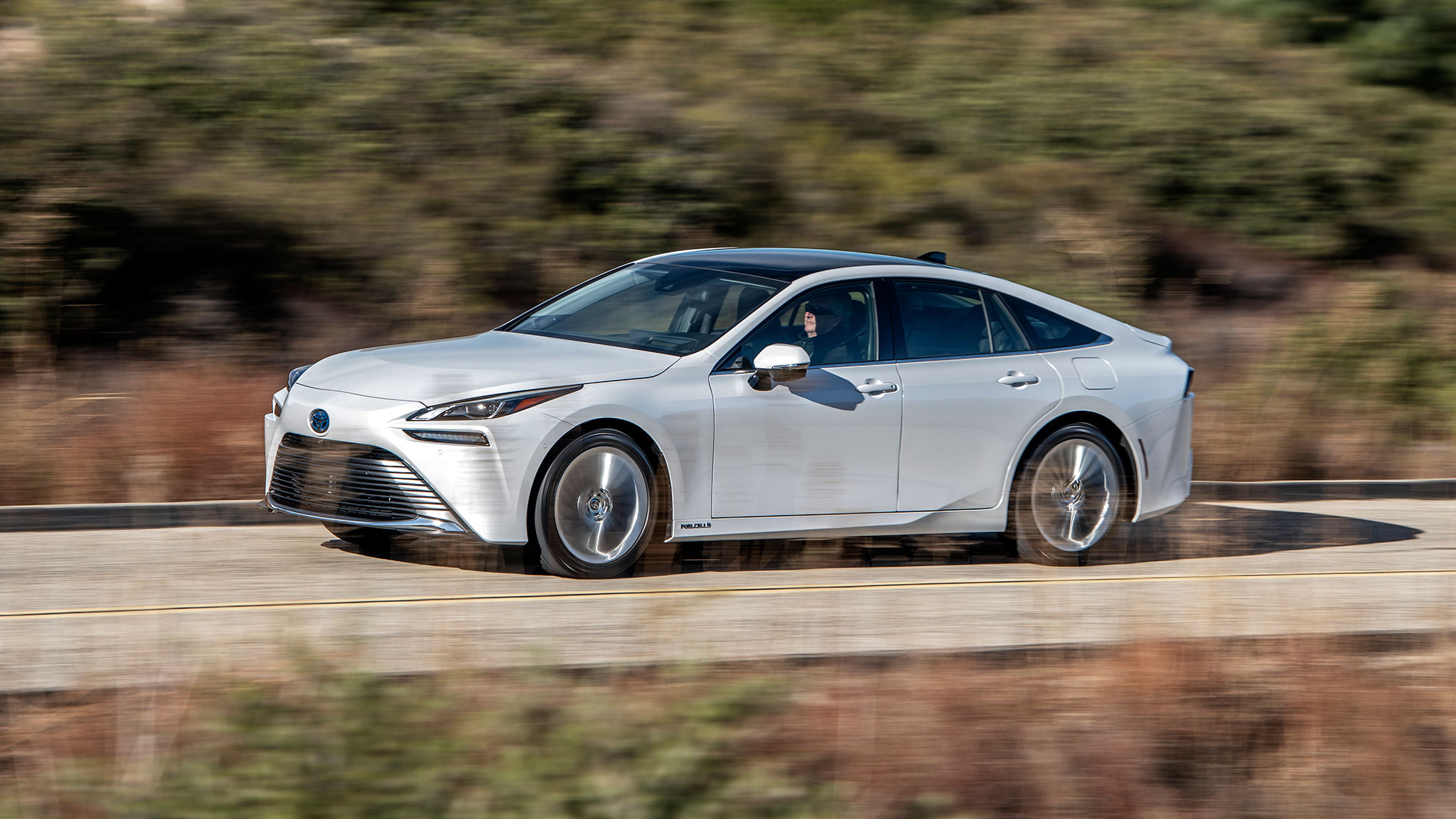
The 2021 Toyota Mirai is a rear-wheel-drive hydrogen fuel-cell sedan that transitions the model into its second generation. Built on a premium platform, this zero-emission executive sedan offers a longer driving range and a more upscale cabin. It represents a significant redesign in both appearance and driving dynamics compared to its predecessor.
Toyota Mirai at a glance
Quick model context before comparing photos and trim-level specifications.
The second-generation Toyota Mirai undergoes a substantial redesign, transitioning from a front-wheel-drive platform to the GA-L rear-wheel-drive architecture shared with premium Lexus models. This structural change significantly alters the vehicle's proportions, making it longer, wider, and lower. The wheelbase is extended by 140 mm to 2920 mm, allowing for a roomier interior cabin. Under the hood, Toyota engineers repositioned the fuel-cell stack, which works alongside three strategically placed hydrogen tanks to achieve a balanced 50:50 front-to-rear weight distribution. These storage capacity upgrades increase the overall driving range by approximately 30 percent, enabling the sedan to travel up to 650 kilometers on a single fill-up. Ultimately, the Mirai is positioned as a comfortable, quiet highway cruiser with rapid refueling capability that makes it a unique option in the zero-emission segment.
- Power: 182 hp
- Transmissions: single-speed reduction gear
- Seating: 5 seats
Photos, trims and specifications for Toyota Mirai
This model page brings gallery images, trim comparison, and detailed technical data together for the 2021 generation.
Toyota Mirai overview
Editorial context for design, cabin, performance, practicality, and buyer notes.
Design
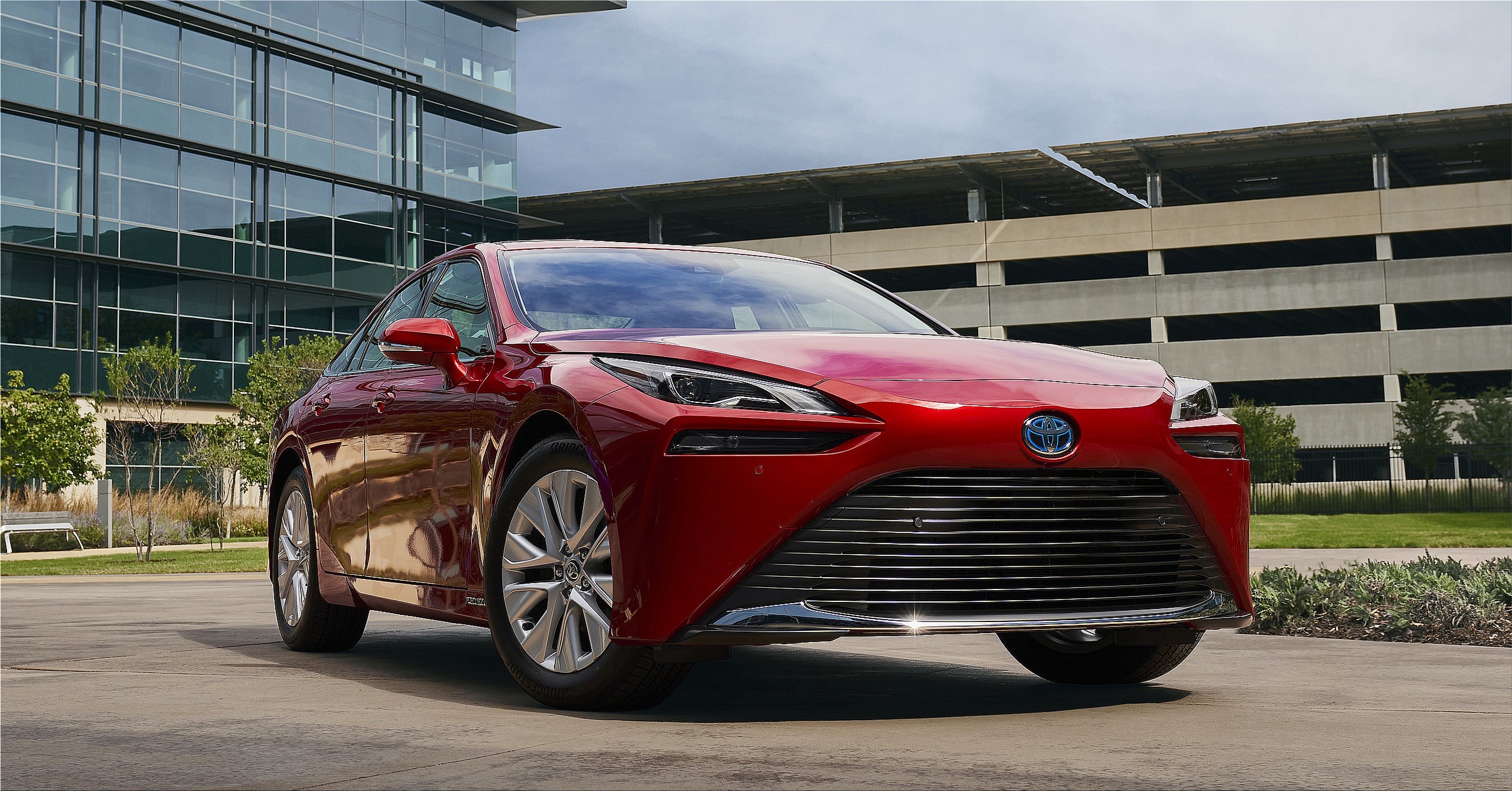
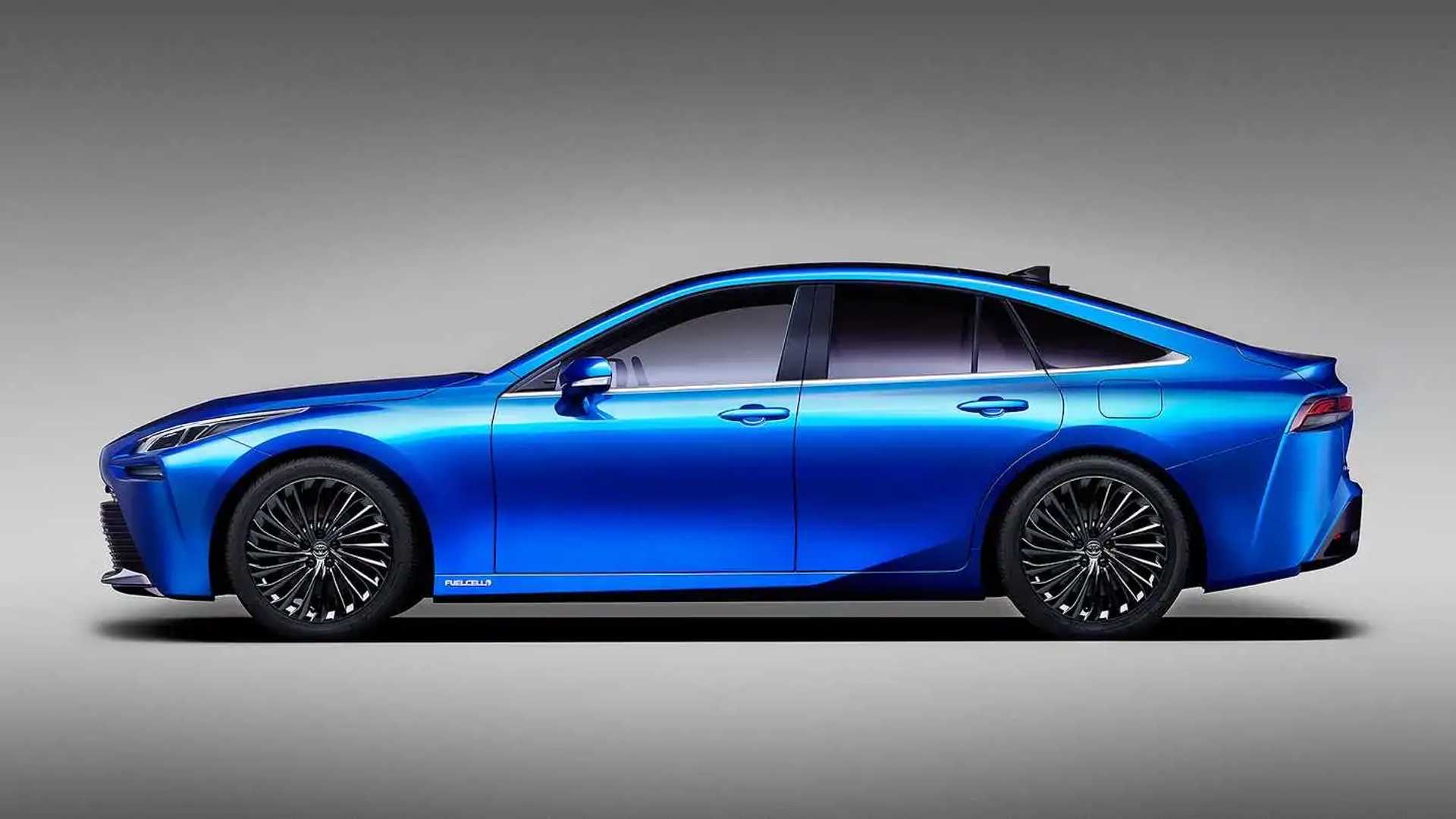
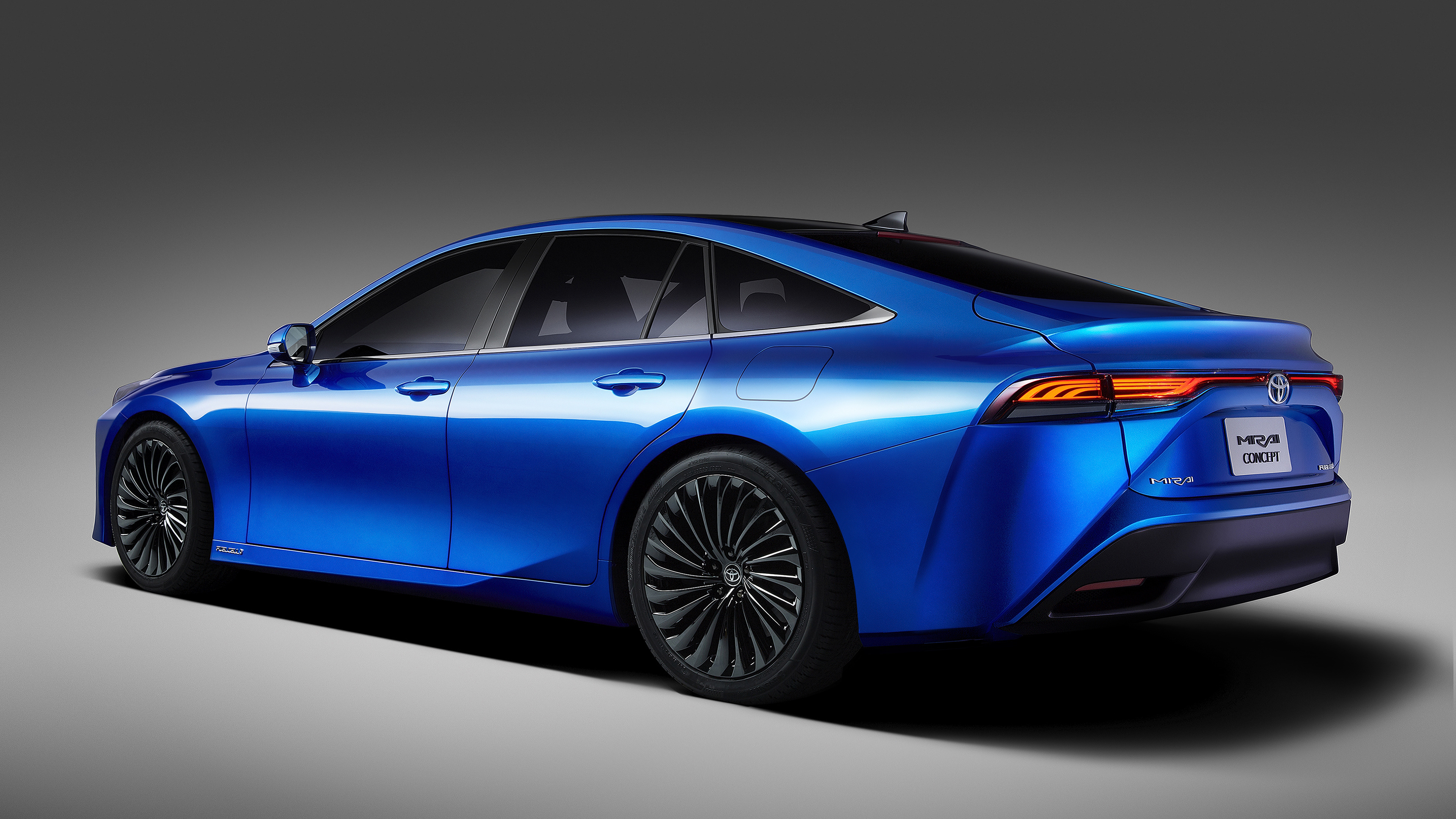
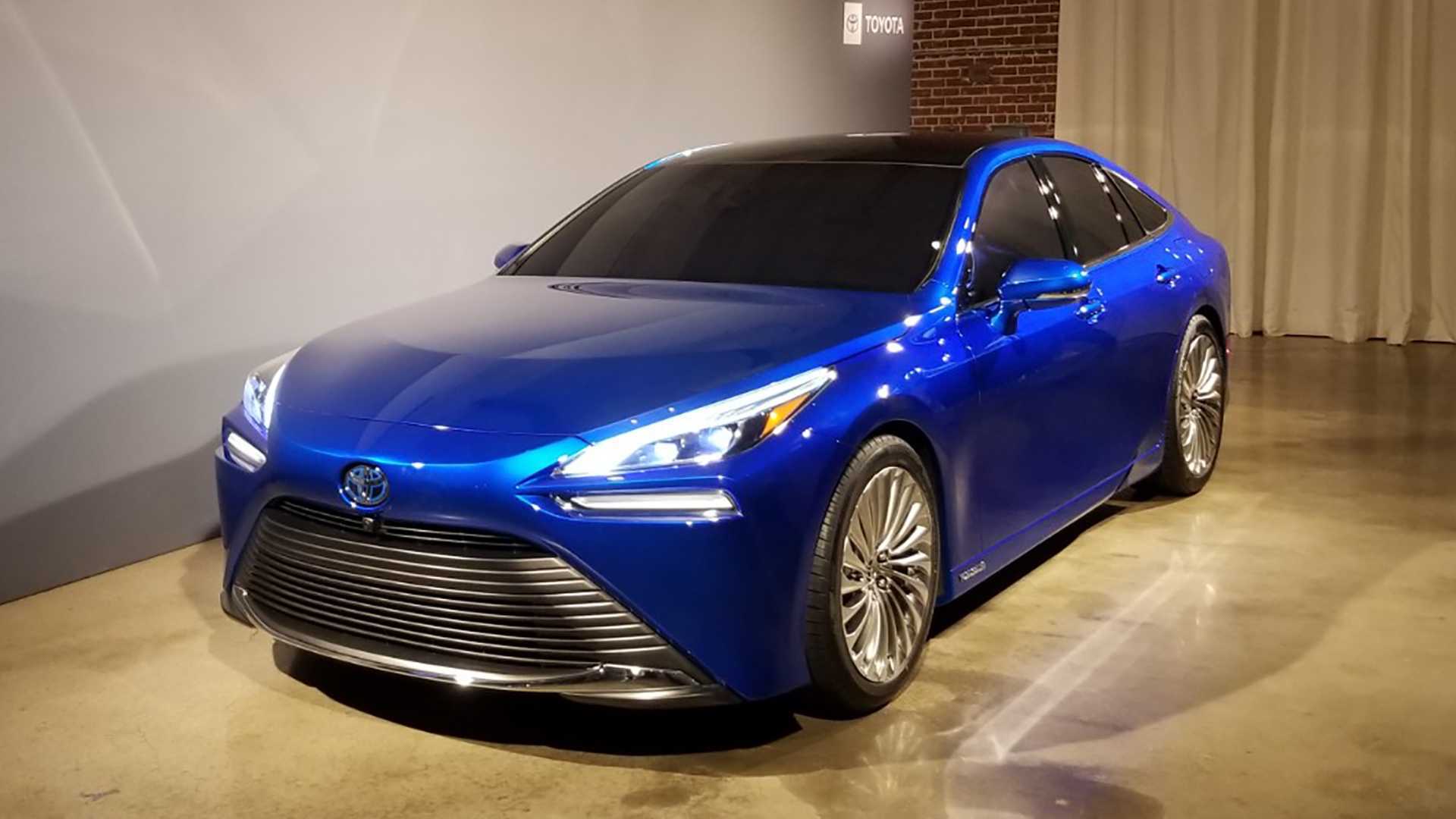
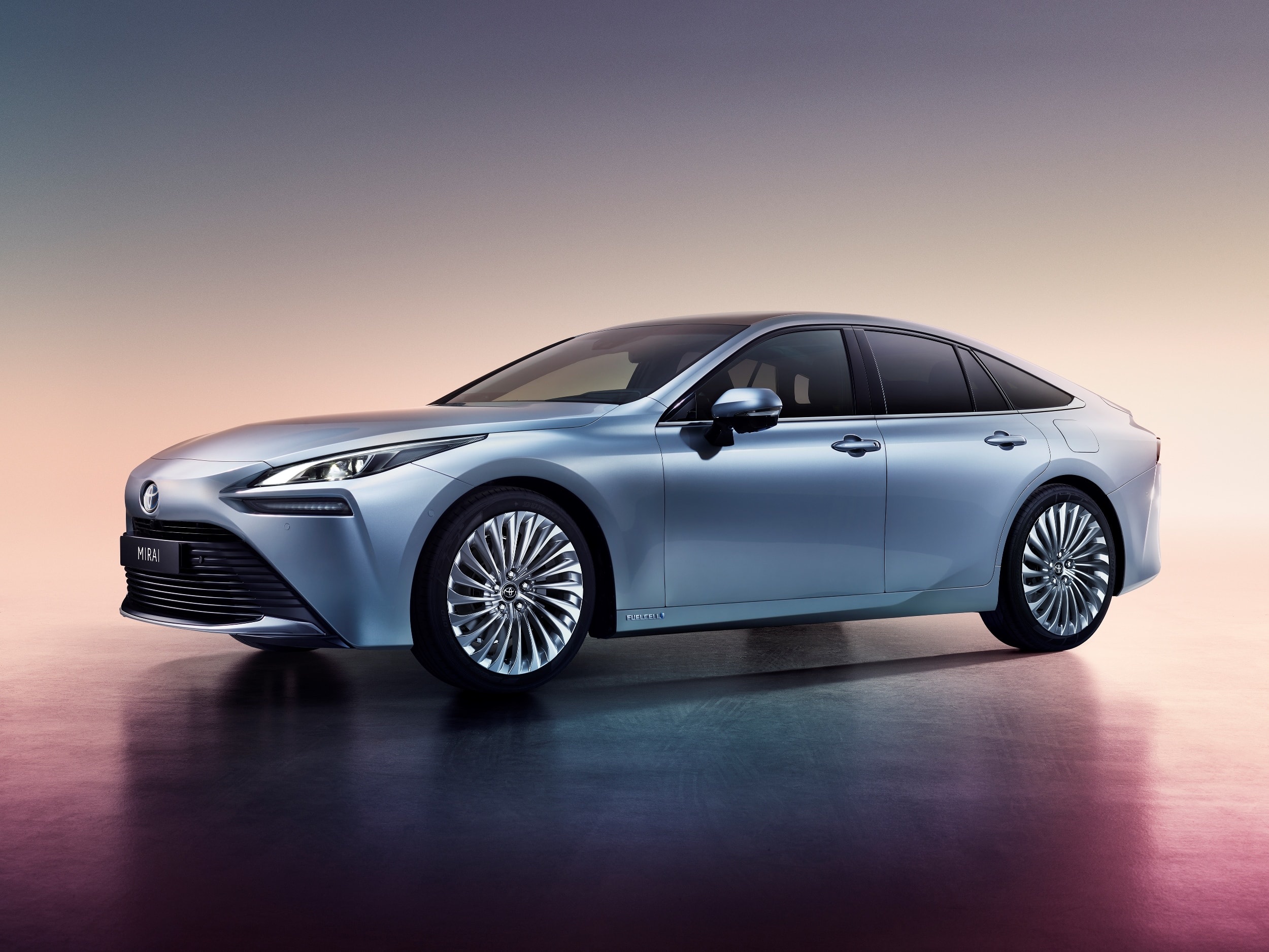
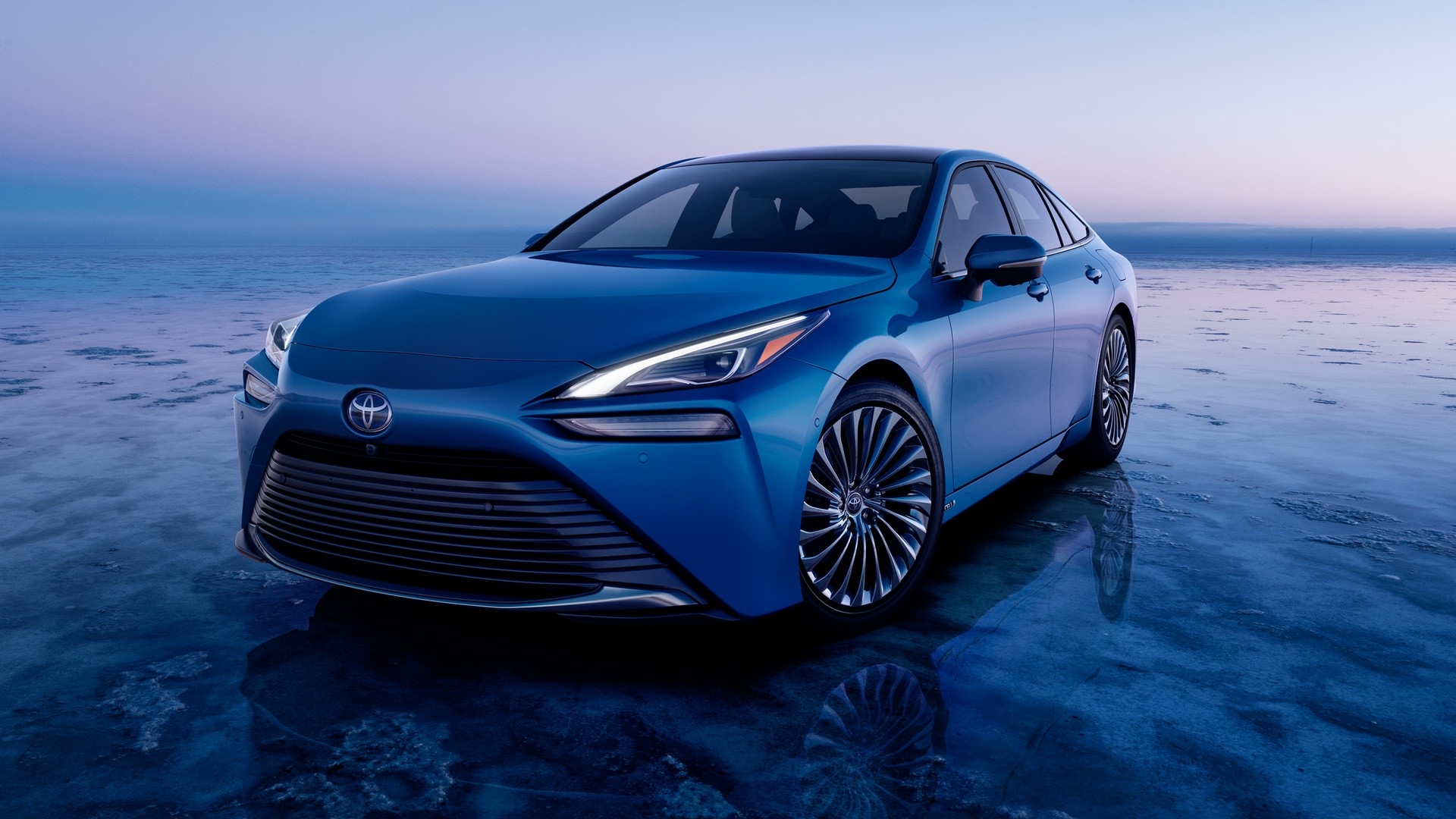
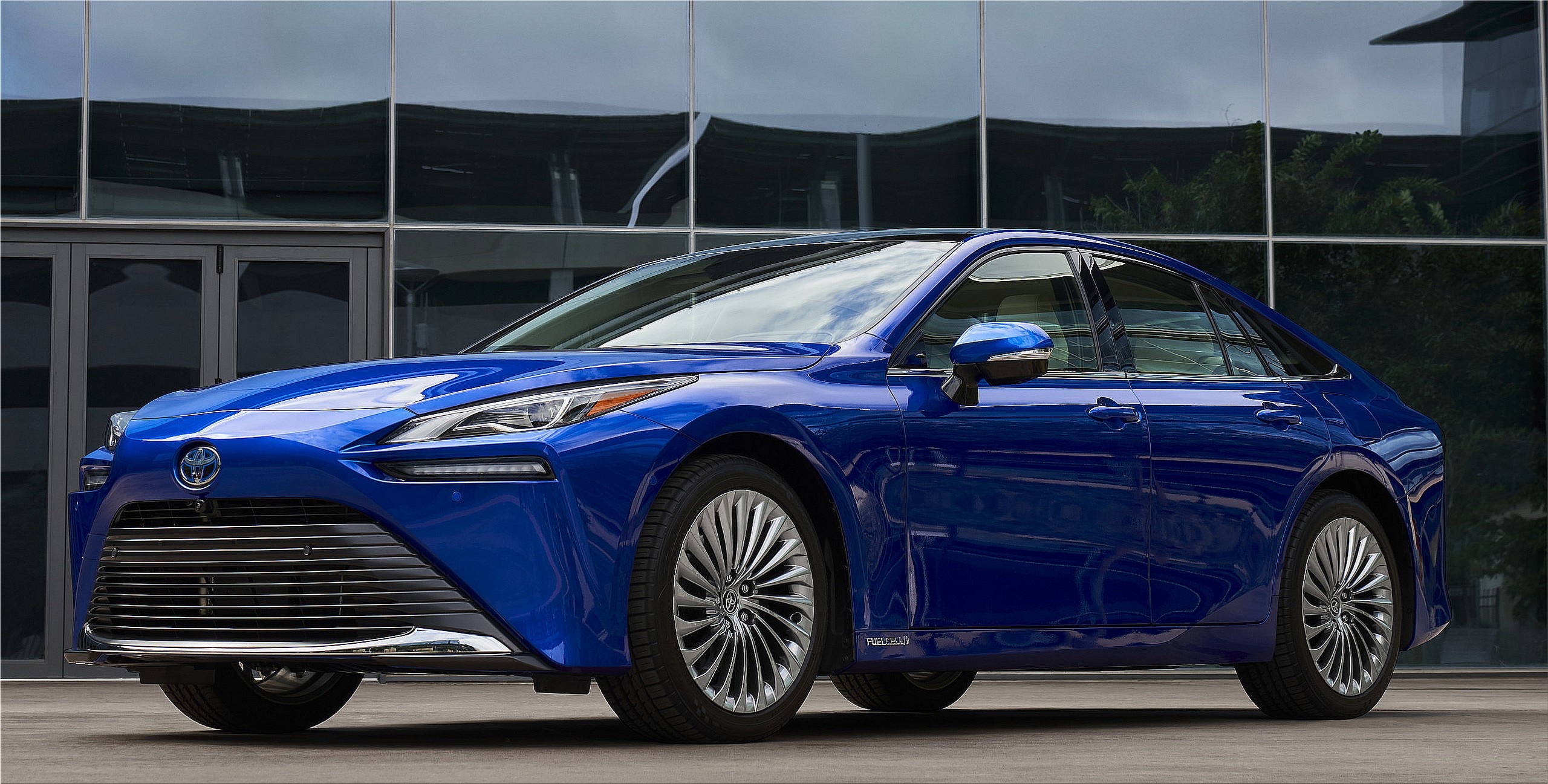
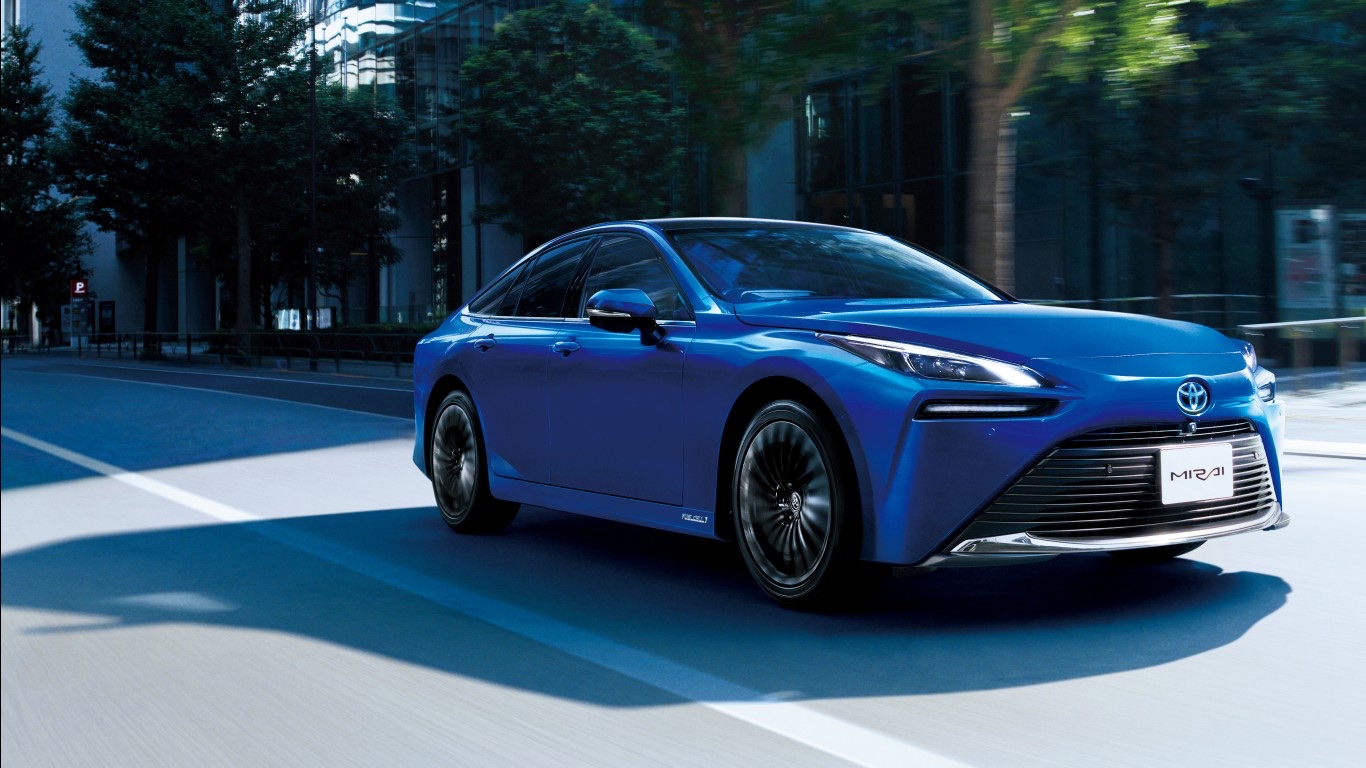
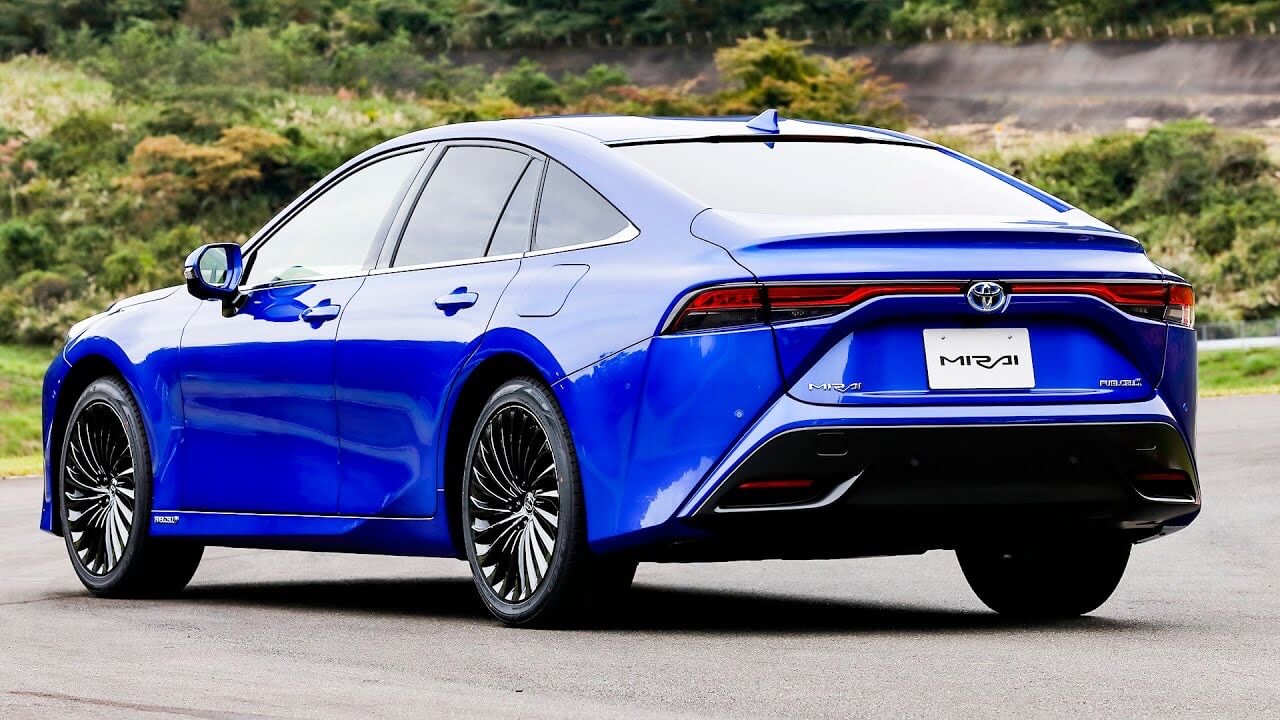
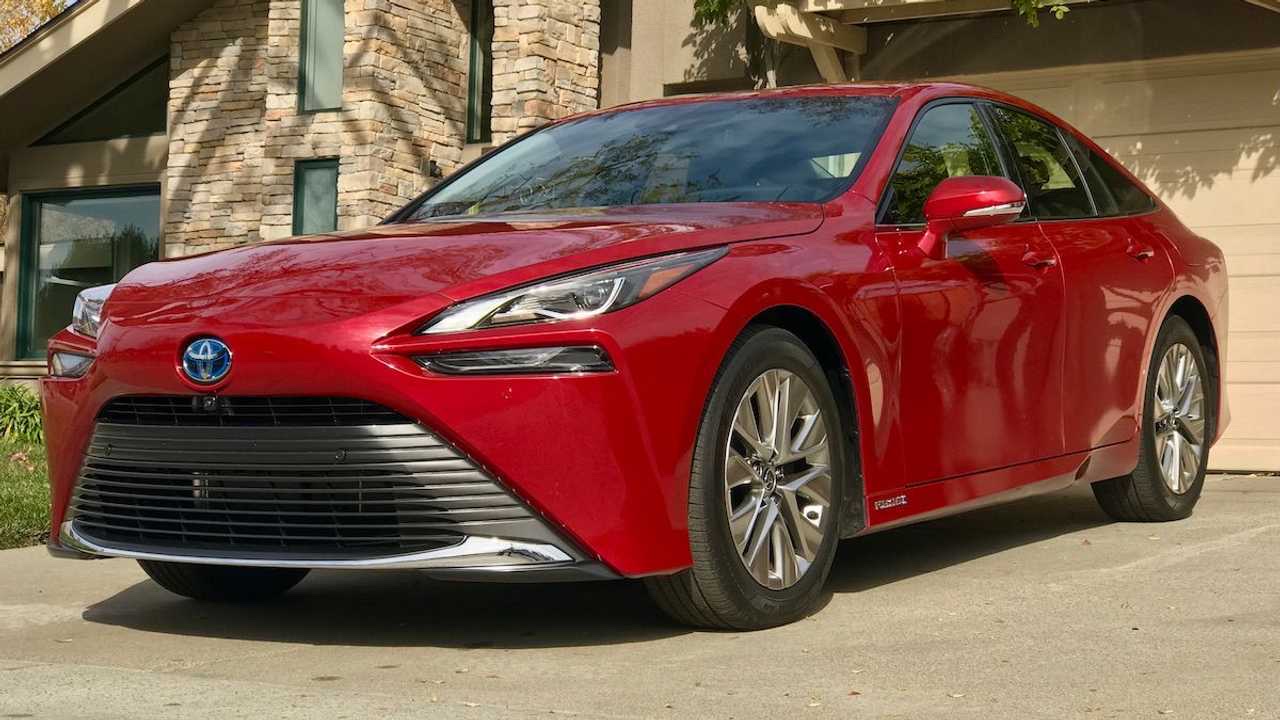
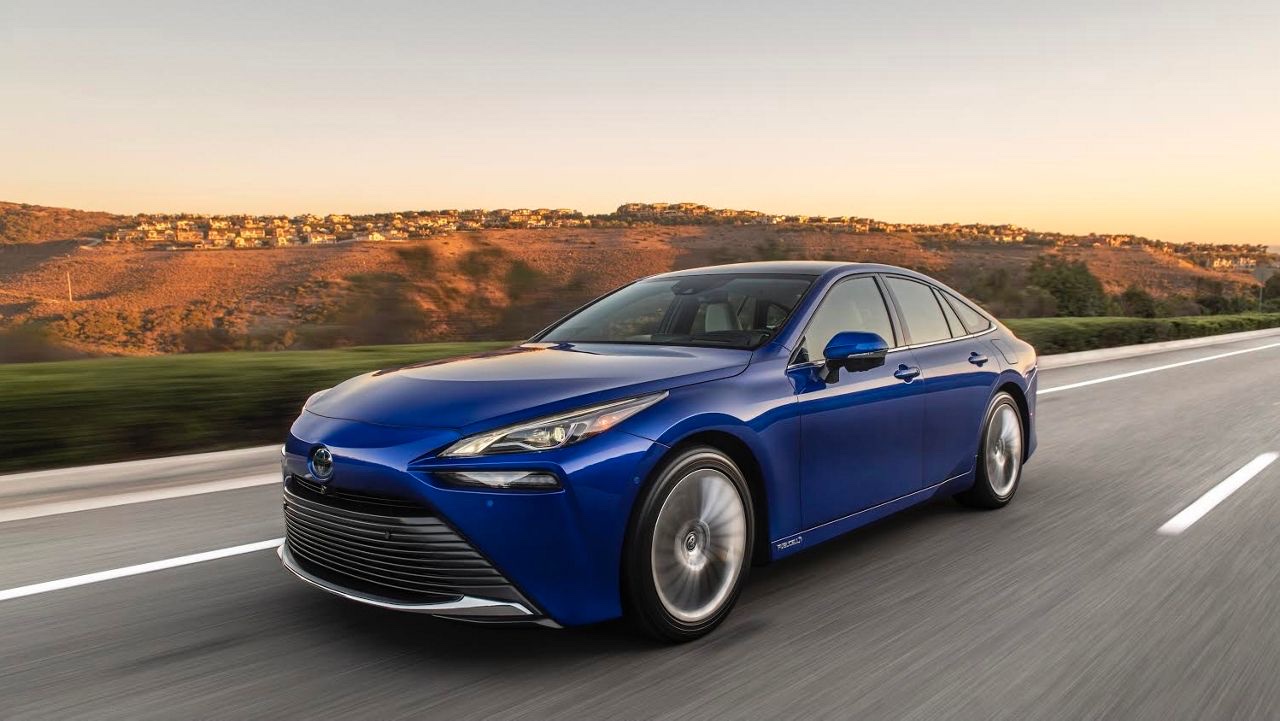
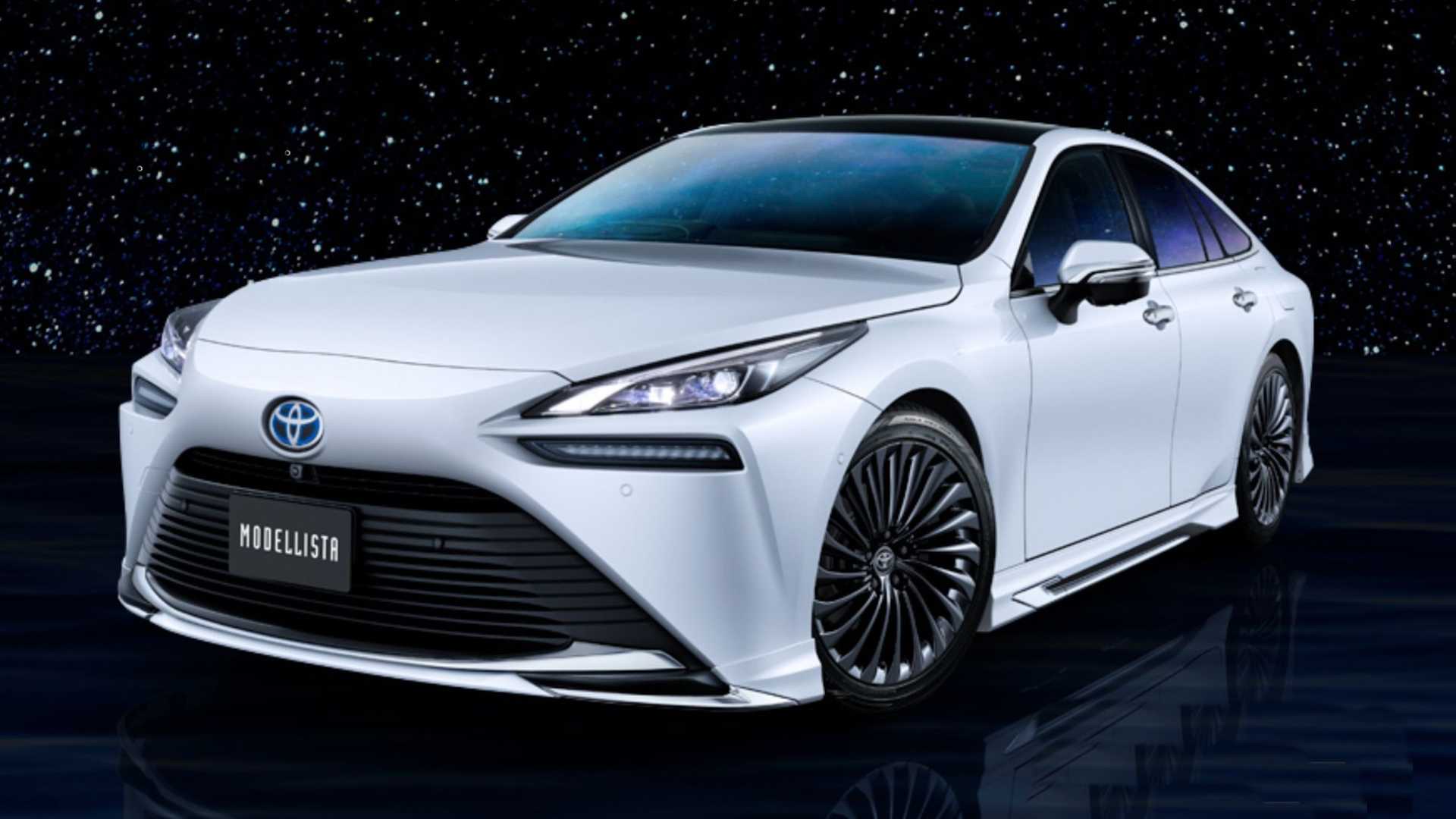
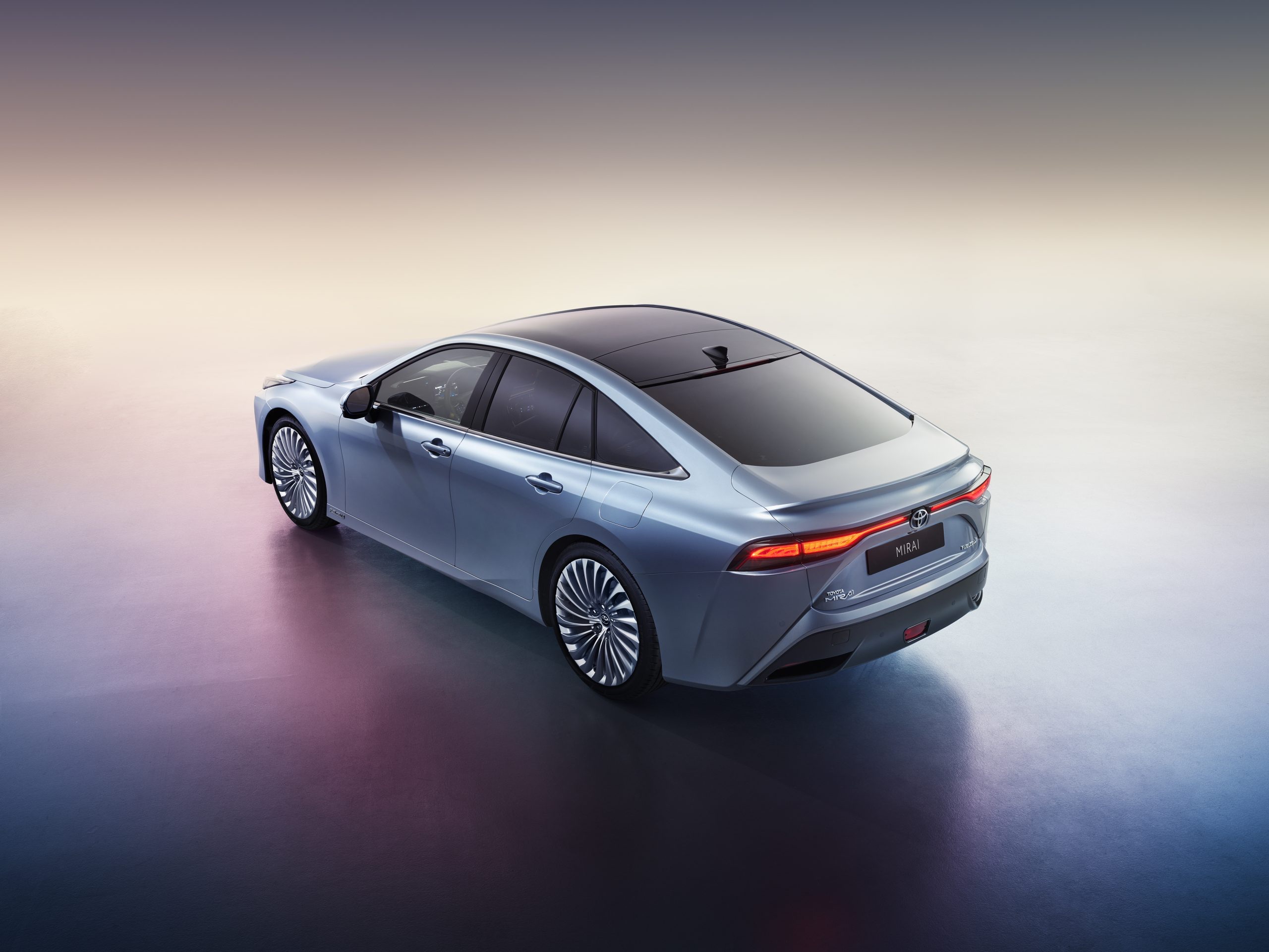
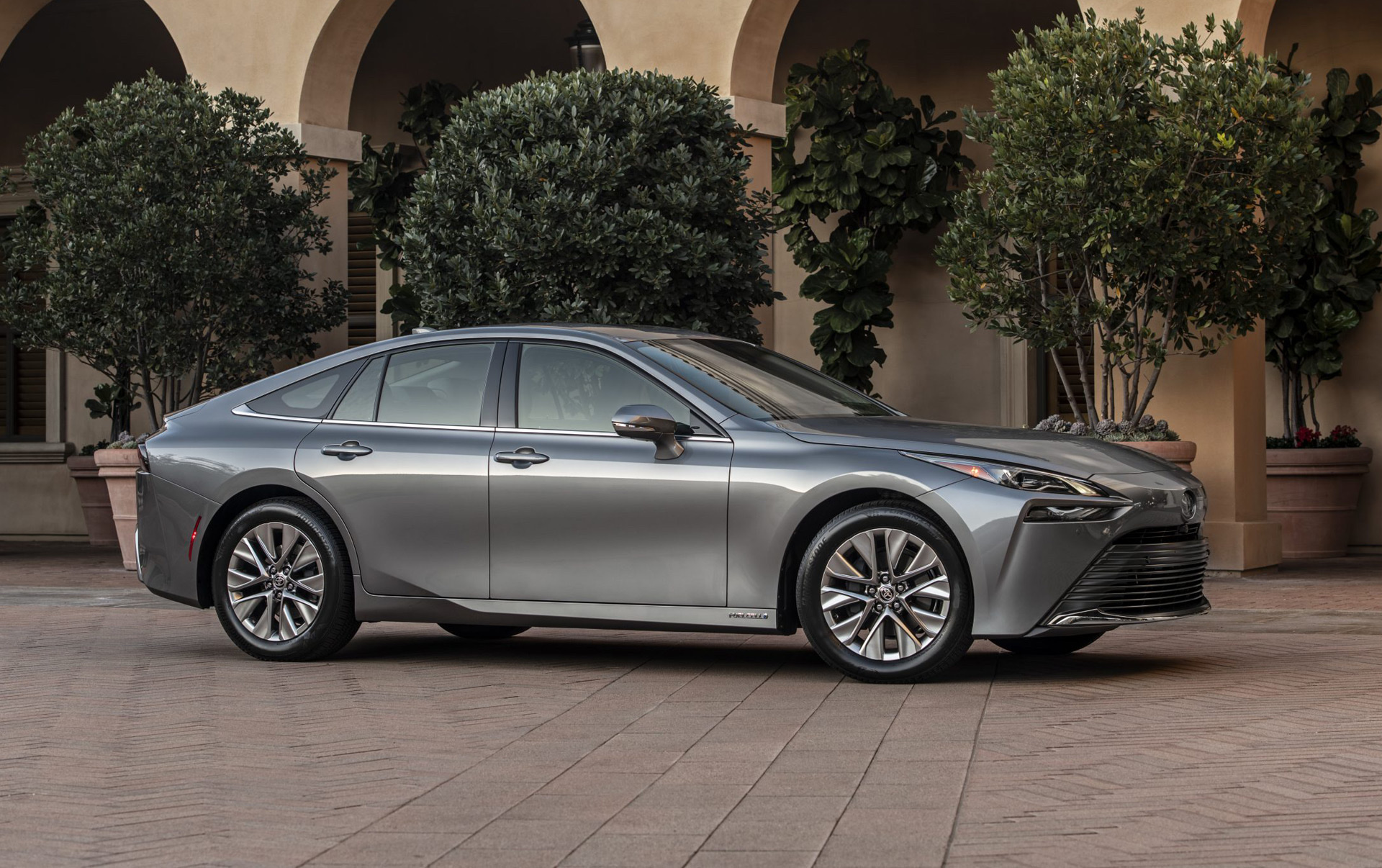
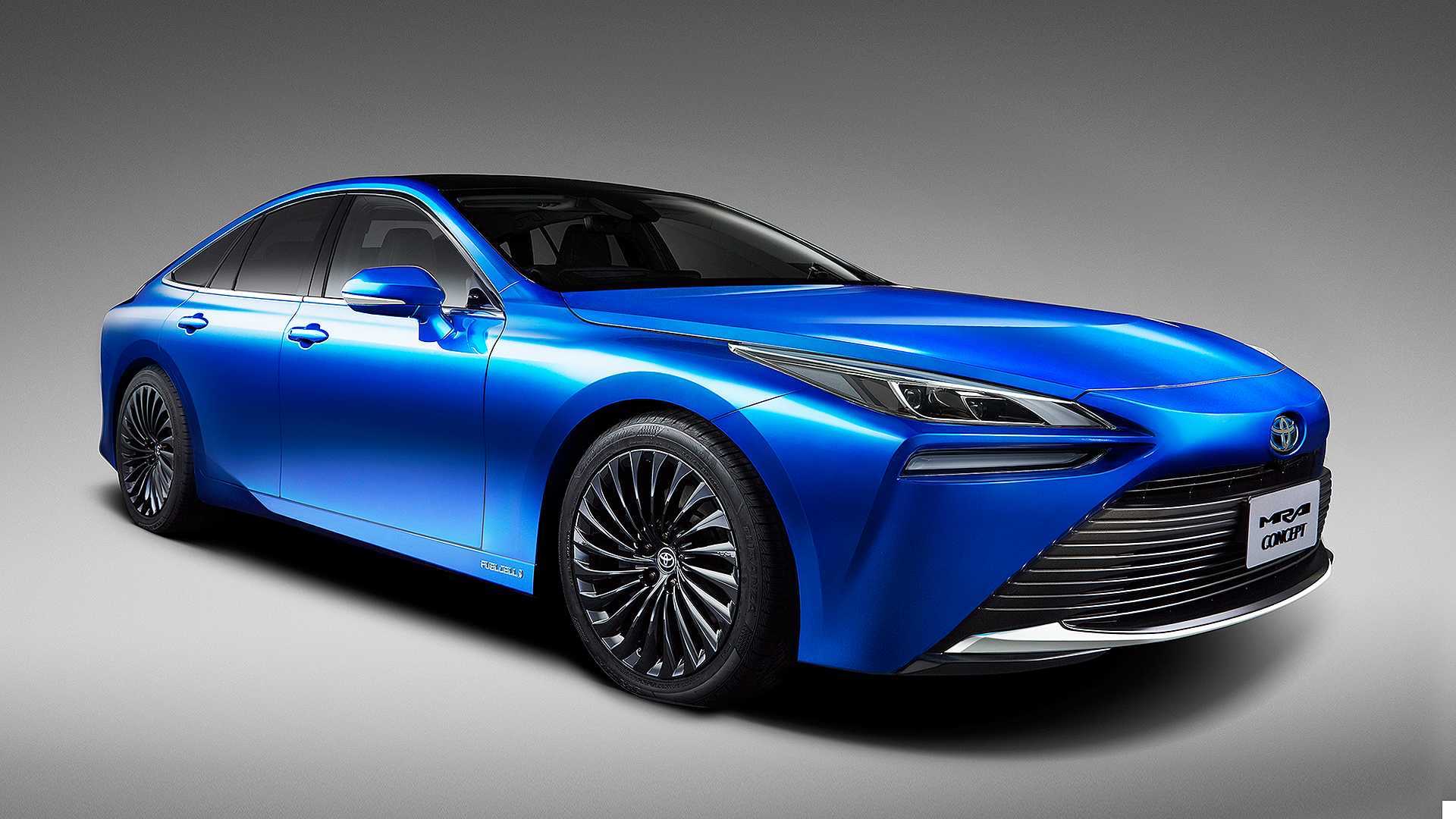
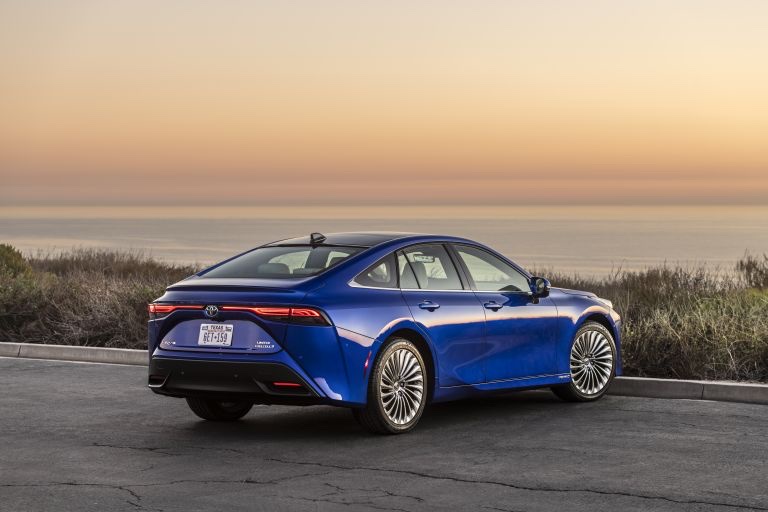
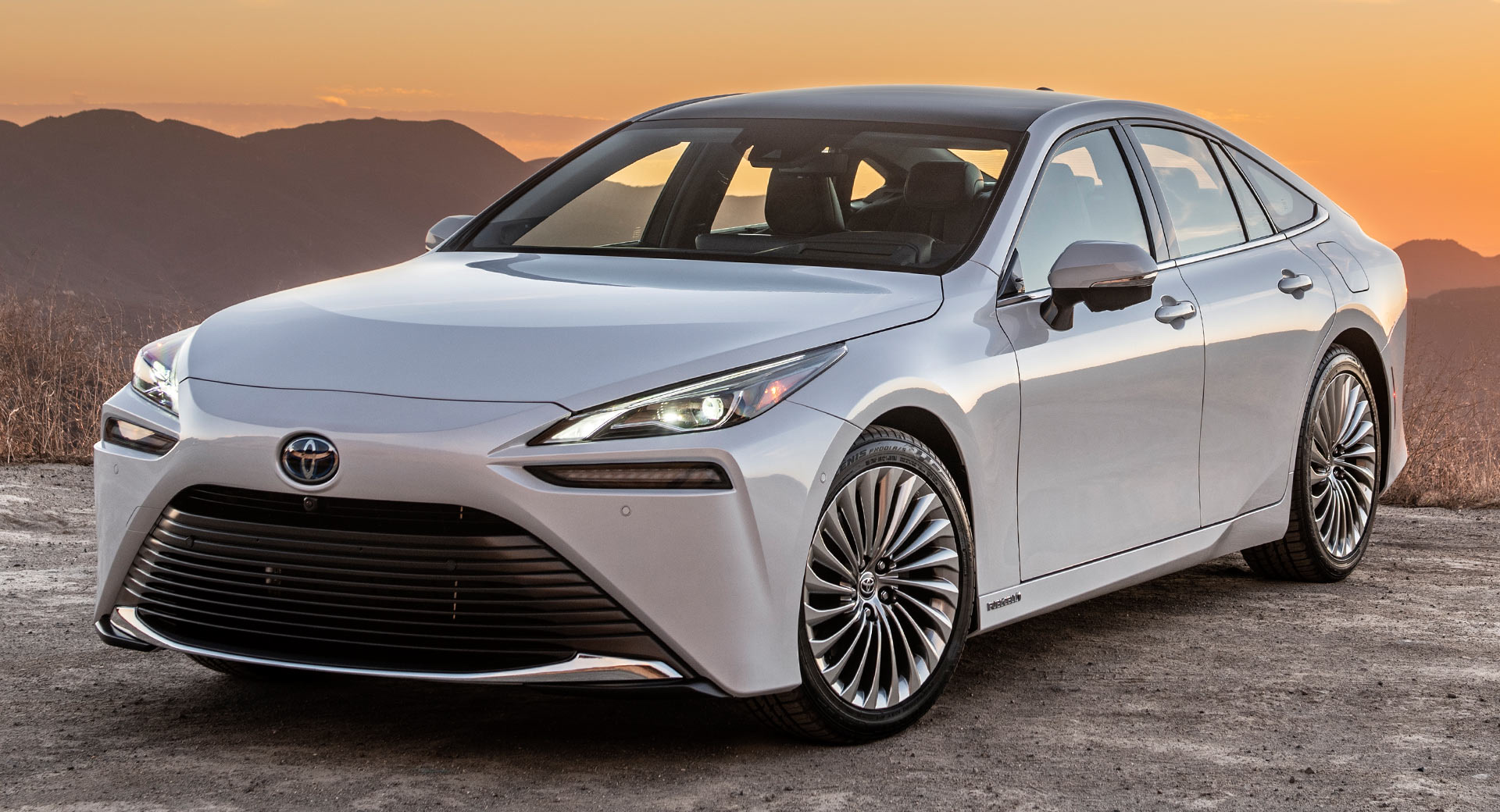
The exterior styling of the 2021 Mirai is fully revised, replacing the polarising shapes of the first generation with a sleek fastback silhouette. The body length is increased by 85 mm to 4975 mm, and the width is wider by 70 mm to 1885 mm, while the height is lowered by 65 mm to 1470 mm. A redesigned front grille, new headlights, and a sloping roofline give the sedan a planted and elegant appearance. The revised proportions improve aerodynamic efficiency while establishing a mature, premium road presence.
Interior
Inside, the Mirai receives a driver-focused cabin overhaul. The instrument panel is relocated from the center of the dashboard to directly behind the steering wheel. A 12.3-inch touchscreen infotainment display is tilted slightly toward the driver for easier access. Thanks to the longer wheelbase, the cabin now accommodates up to five passengers, up from four in the previous generation. Cabin comfort and convenience are enhanced by a three-zone climate control system, wireless phone charging, and a 14-speaker JBL premium audio system.
Performance
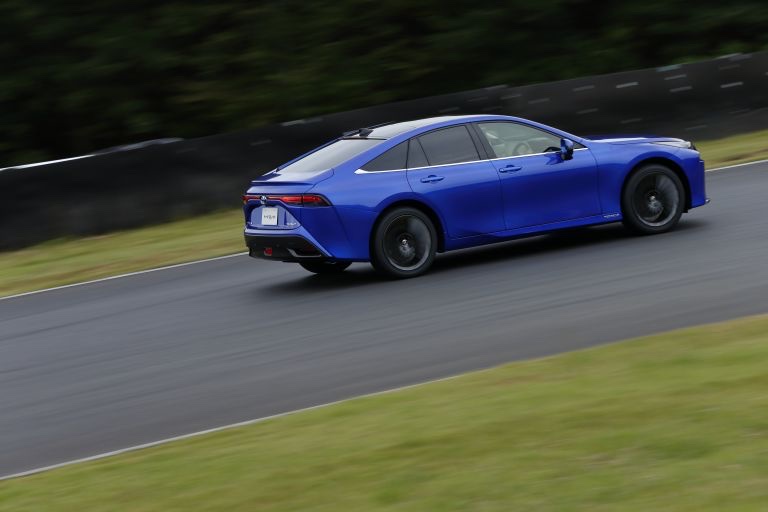
The powertrain features a rear-mounted electric motor delivering 182 horsepower and 300 Nm of torque. It is powered by a 174-horsepower electrochemical fuel-cell generator and three under-floor hydrogen storage tanks. This rear-wheel-drive configuration enables the sedan to accelerate from 0 to 100 km/h in 9 seconds and reach a top speed of 175 km/h. Moving the fuel-cell stack under the hood and rearranging the tanks yields a balanced 50:50 weight distribution, which improves overall handling and ride quality compared to the first-generation model.
Practicality
With a seating capacity of five, the Mirai serves as a spacious daily vehicle, though cargo space is slightly compromised. Due to the placement of the rear hydrogen storage tank, the trunk capacity is limited to 321 liters. The sedan has a ground clearance of 150 mm, which is typical for E-segment passenger cars. A turning circle of 11.6 meters ensures the vehicle remains maneuverable in city environments despite its increased length.
Safety and tech
The Mirai comes equipped with the Toyota Safety Sense 2.5+ suite, which features adaptive cruise control, automatic emergency braking, lane-keep assist, and road sign recognition. Tech features include a surround-view camera system, blind-spot monitoring, and parking sensors. The cabin is equipped with heated and ventilated seats for both front and rear passengers, power-adjustable front seats, and a power-operated rear window sunshade for added rear passenger comfort.
Buyer notes
Buyers considering the 2021 Toyota Mirai should confirm local hydrogen refueling infrastructure, as operation is restricted to regions with active stations. The vehicle is offered in a single 128 kW rear-wheel-drive configuration. Although standard equipment levels are high, specific package options, interior trims, and feature availability can vary depending on the destination market. It is advisable to compare regional trim differences to ensure the desired level of equipment.
Trims and key specifications
Use this table to compare the main differences between available configurations.
| Trim / modification | Engine | Power | Seats | Transmission |
|---|---|---|---|---|
| 128 KW (182 hp) | - | 182 hp | 5 | single-speed reduction gear |
Specifications can vary by market, model year, and equipment package. Use the trim sections below to review the full data for each configuration.
Toyota Mirai photo gallery
19 images are collected here with the main specifications and trim data for this model.
Photo Toyota Mirai
Specifications by trim
Choose a configuration below to open full technical data grouped by category.
128 KW (182 hp) 29 specifications
Specifications
Performance and consumption
| Top speed, km/h | 175 |
|---|---|
| Acceleration 0-100 km/h, s | 9 |
| Emissions standard | Euro VI |
Engine
| Engine | 128 KW |
|---|---|
| Engine code | TFCS |
| Engine type | Hybrid |
| Power, hp | 182 |
| Torque, Nm | 300 |
| Number of electric motors | 1 |
| EV mode | + |
| Electric motor power, hp | 182 |
| Electric range, km | 650 |
| Electric motor torque, Nm | 300 |
Dimensions
| Seats | 5 |
|---|---|
| Length, mm | 4975 |
| Height, mm | 1470 |
| Wheelbase, mm | 2920 |
| Front track, mm | 1610 |
| Rear track, mm | 1605 |
| Kerb weight, kg | 1900 |
| Gross weight, kg | 2415 |
| Turning circle, m | 11.6 |
| Ground clearance, mm | 150 |
| Width without mirrors, mm | 1885 |
| Trunk capacity, L | 321 |
Transmission and drive
| Transmission | single-speed reduction gear |
|---|---|
| Transmission type | automated manual |
| Drive | Rear-wheel drive |
| Automatic transmission | + |
Toyota Mirai questions
Short answers based on the specifications and photos available in this catalog.
What is the driving range of the 2021 Toyota Mirai?
The 2021 Toyota Mirai offers an estimated driving range of up to 650 kilometers on a full charge of hydrogen. This represents a 30 percent increase over the first-generation model, achieved by adding a third hydrogen tank.
How fast is the 2021 Toyota Mirai?
Powered by a 182-horsepower electric motor, the Mirai accelerates from 0 to 100 km/h in 9 seconds. The hydrogen fuel-cell sedan has a maximum speed of 175 km/h.
How many seats does the 2021 Mirai have?
The second-generation Mirai features a redesigned cabin that seats five passengers. The previous generation only had seating for four occupants.
What platform does the second-generation Mirai use?
The 2021 Mirai is built on Toyota's premium GA-L modular platform, a rear-wheel-drive architecture shared with luxury vehicles like the Lexus LS and LC.
What safety technology is standard on the 2021 Mirai?
The sedan comes standard with the Toyota Safety Sense 2.5+ package, which includes adaptive cruise control, automatic emergency braking, lane-keeping assist, and traffic sign recognition.