Hyundai i20 specifications and photos
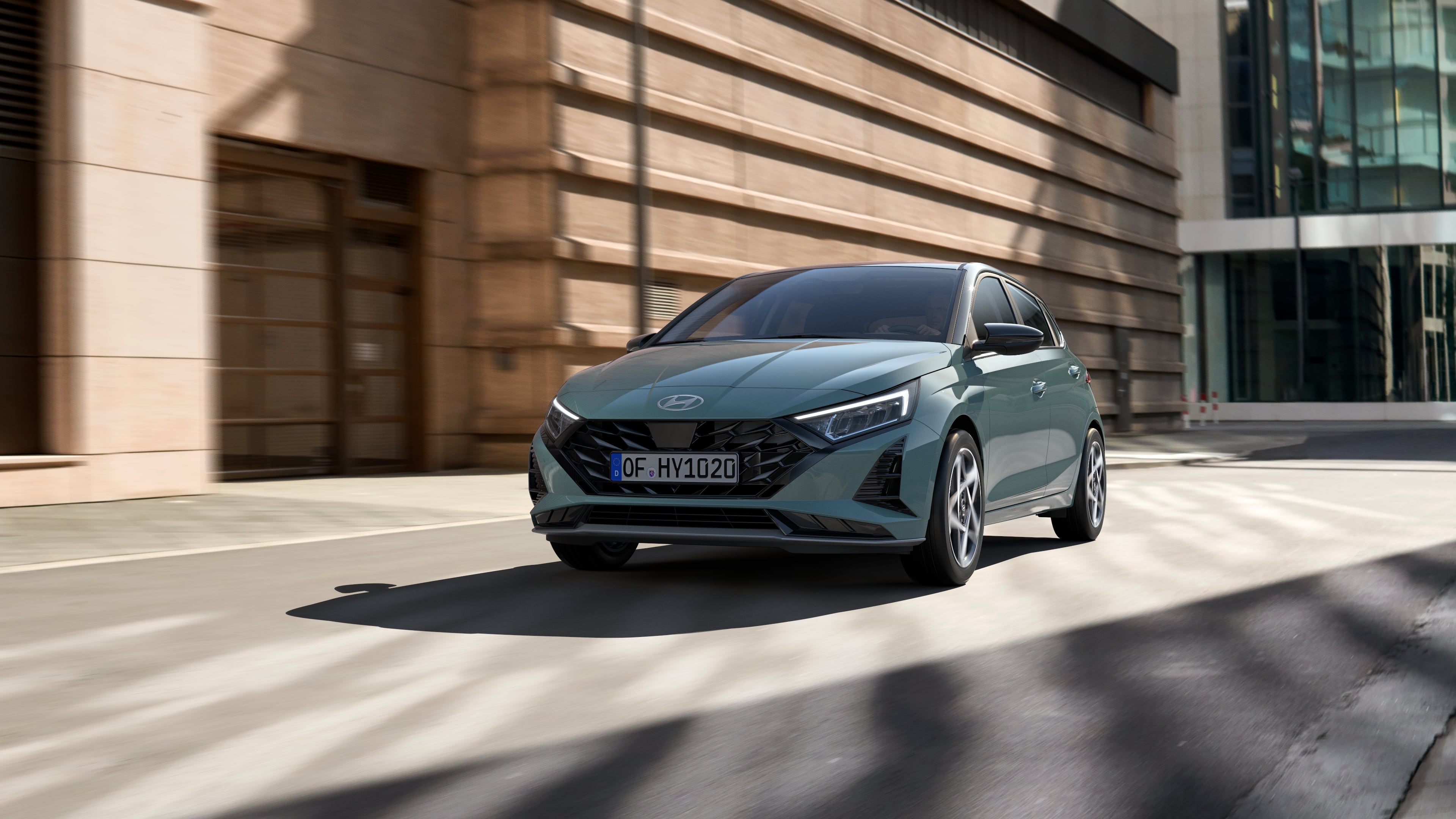
The 2023 Hyundai i20 is an updated version of the brand's third-generation B-segment hatchback. Introduced in May 2023, it brings refreshed styling, upgraded technology, and practical features to the compact class.
Hyundai i20 at a glance
Quick model context before comparing photos and trim-level specifications.
The mid-cycle facelift for the third-generation Hyundai i20 focuses on modernizing its appearance and enhancing in-cabin technology. Aimed at buyers needing a practical city car, the refreshed hatchback retains its front-wheel-drive layout and compact footprint. The 2023 update introduces subtle but effective styling tweaks alongside new exterior color options like Lucid Lime Metallic and Lumen Grey Pearl. With a wheelbase of 2580 mm and a length just over four meters, it balances maneuverability with a surprisingly accommodating cabin. It serves as a strong competitor in the European B-segment, offering a mix of efficient powertrains and modern connectivity.
- Power: 84-120 hp
- Engine displacement: 998-1197 cc
- Transmissions: 5-speed manual, 6-speed manual, 7-speed dual-clutch
- Seating: 5 seats
Photos, trims and specifications for Hyundai i20
This model page brings gallery images, trim comparison, and detailed technical data together for the 2023 generation.
Estimate fuel cost
Use trim-level fuel consumption data to estimate monthly and yearly fuel spending.
Fuel costs are estimates. Real consumption can change with driving style, traffic, tires, weather, load, and market-specific equipment.
Hyundai i20 overview
Editorial context for design, cabin, performance, practicality, and buyer notes.
Design
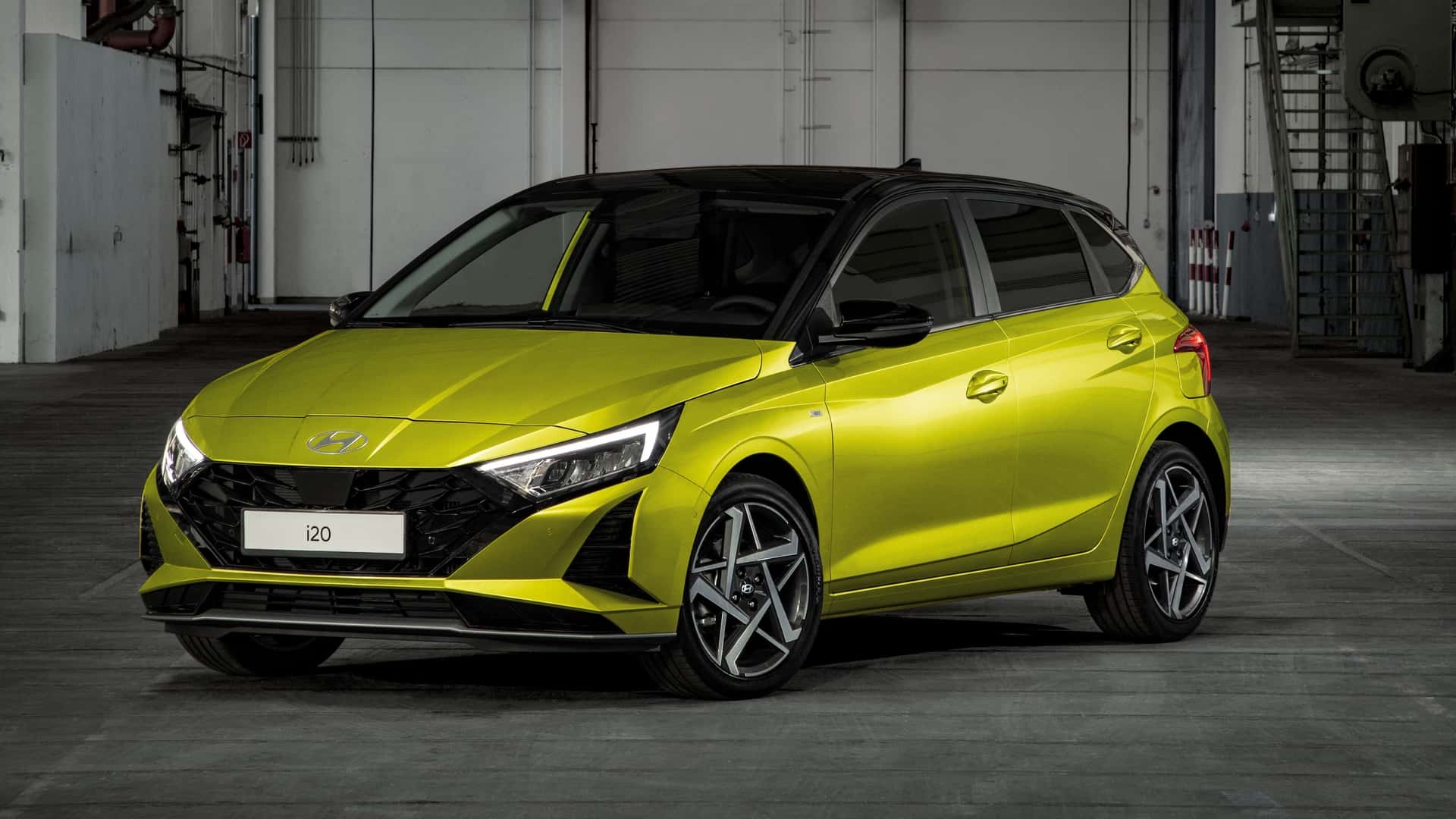
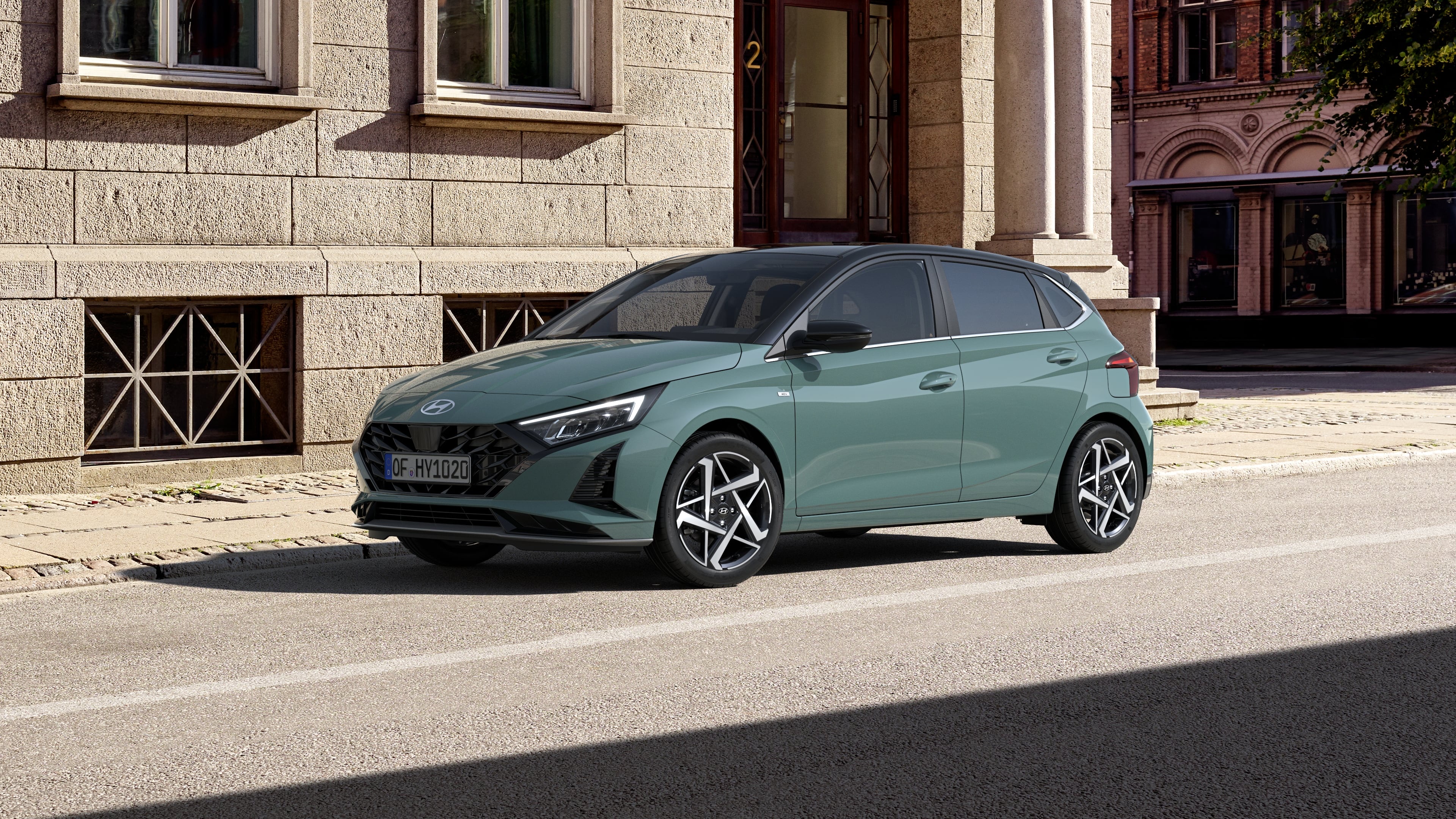
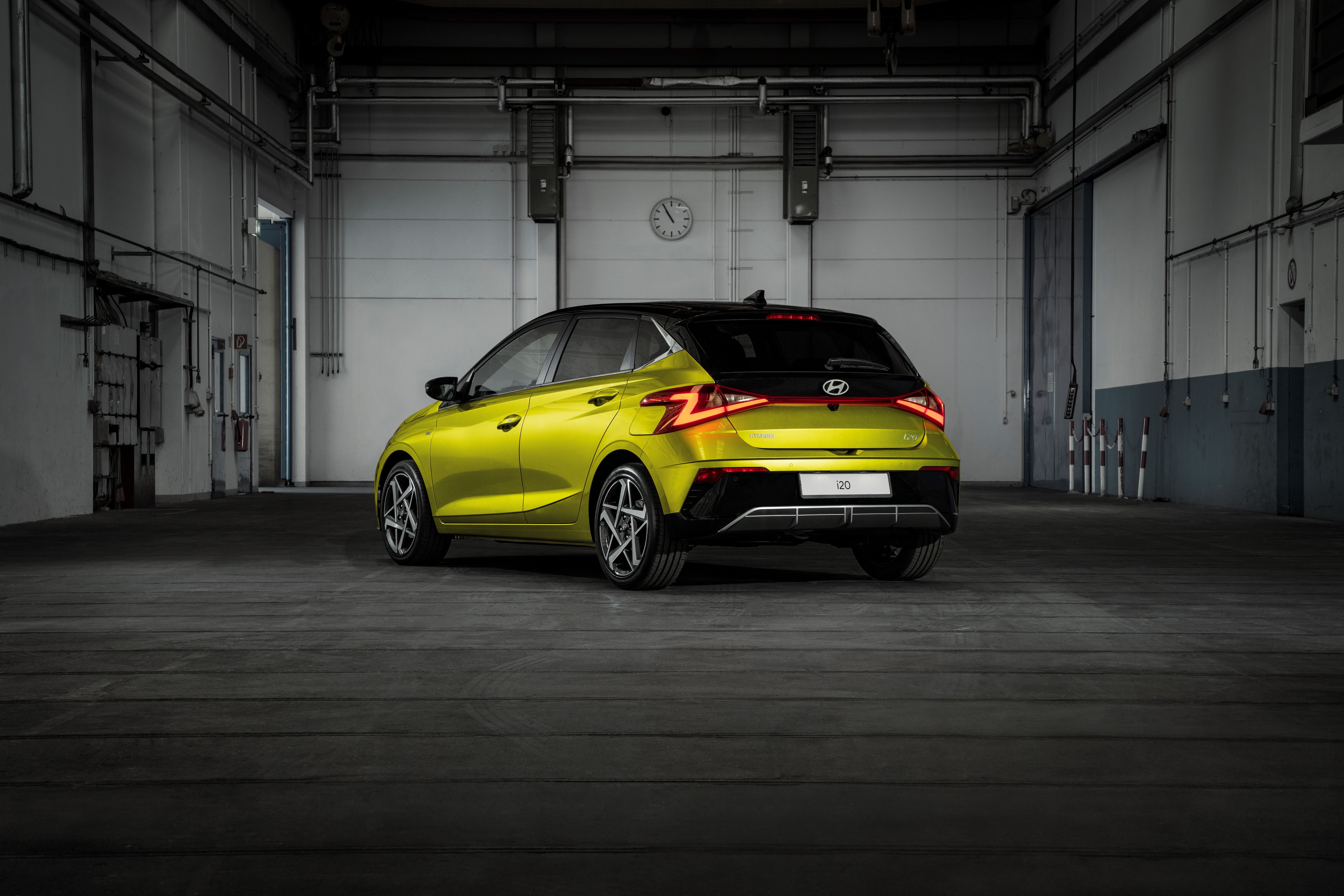
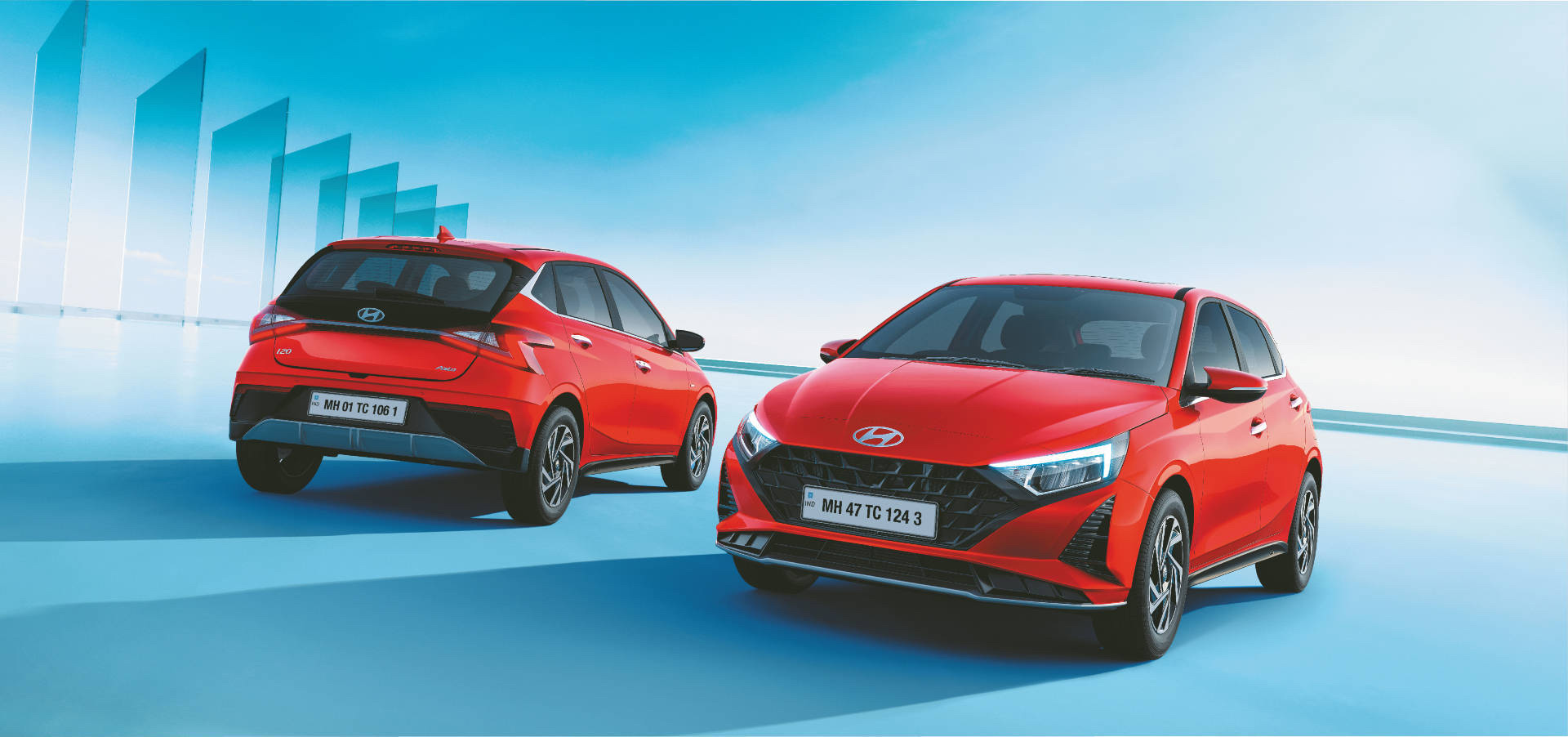
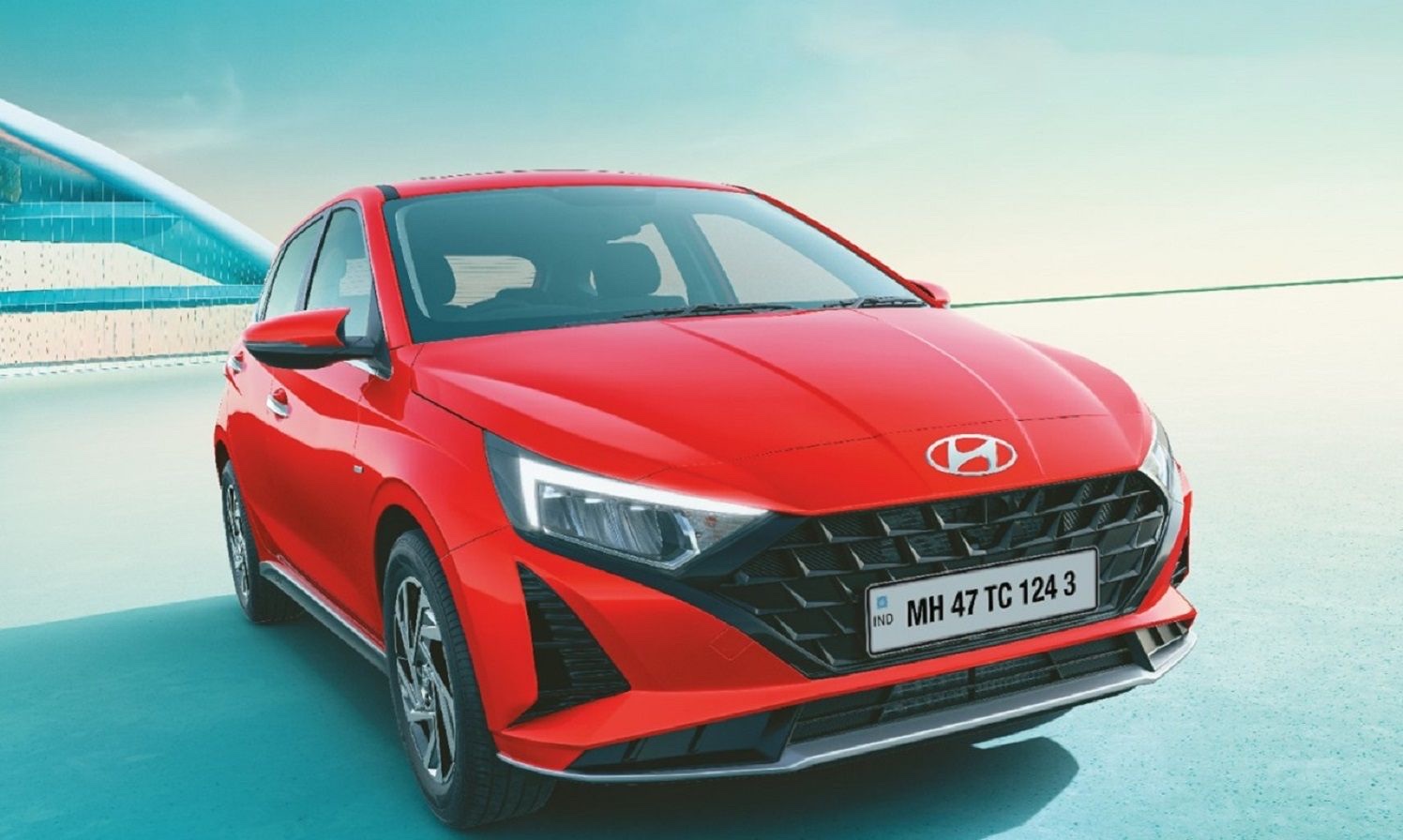
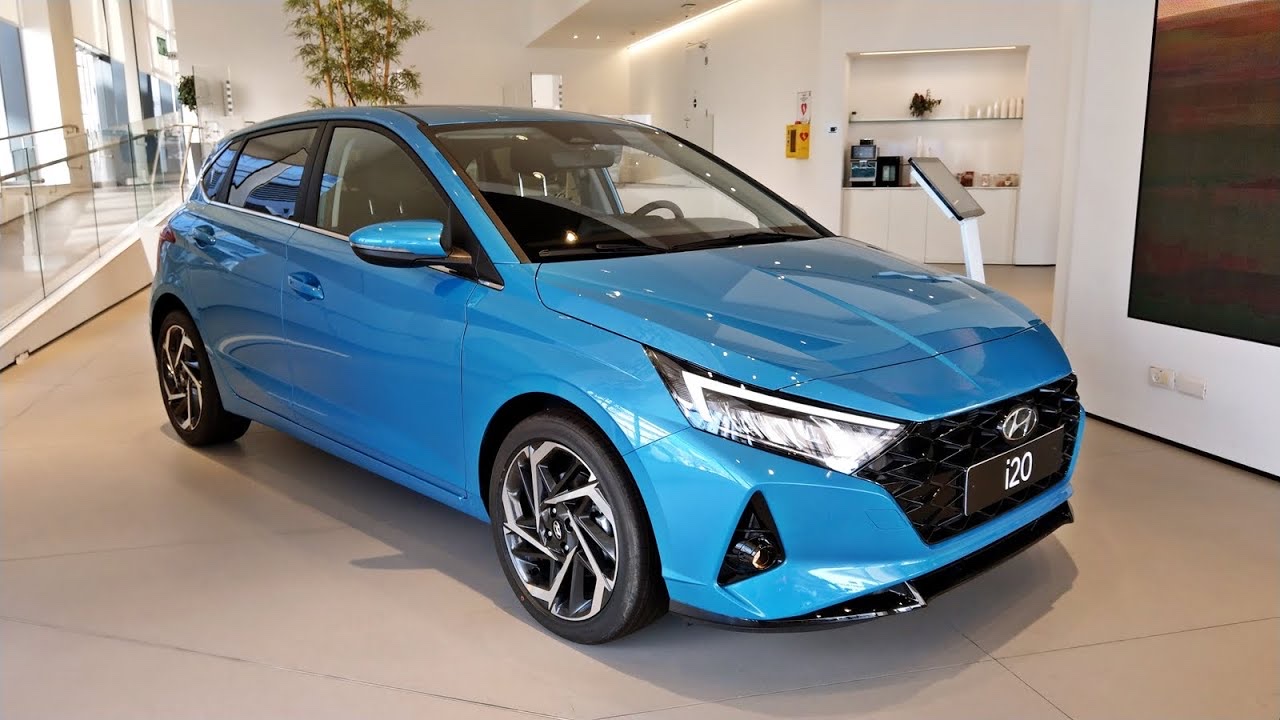
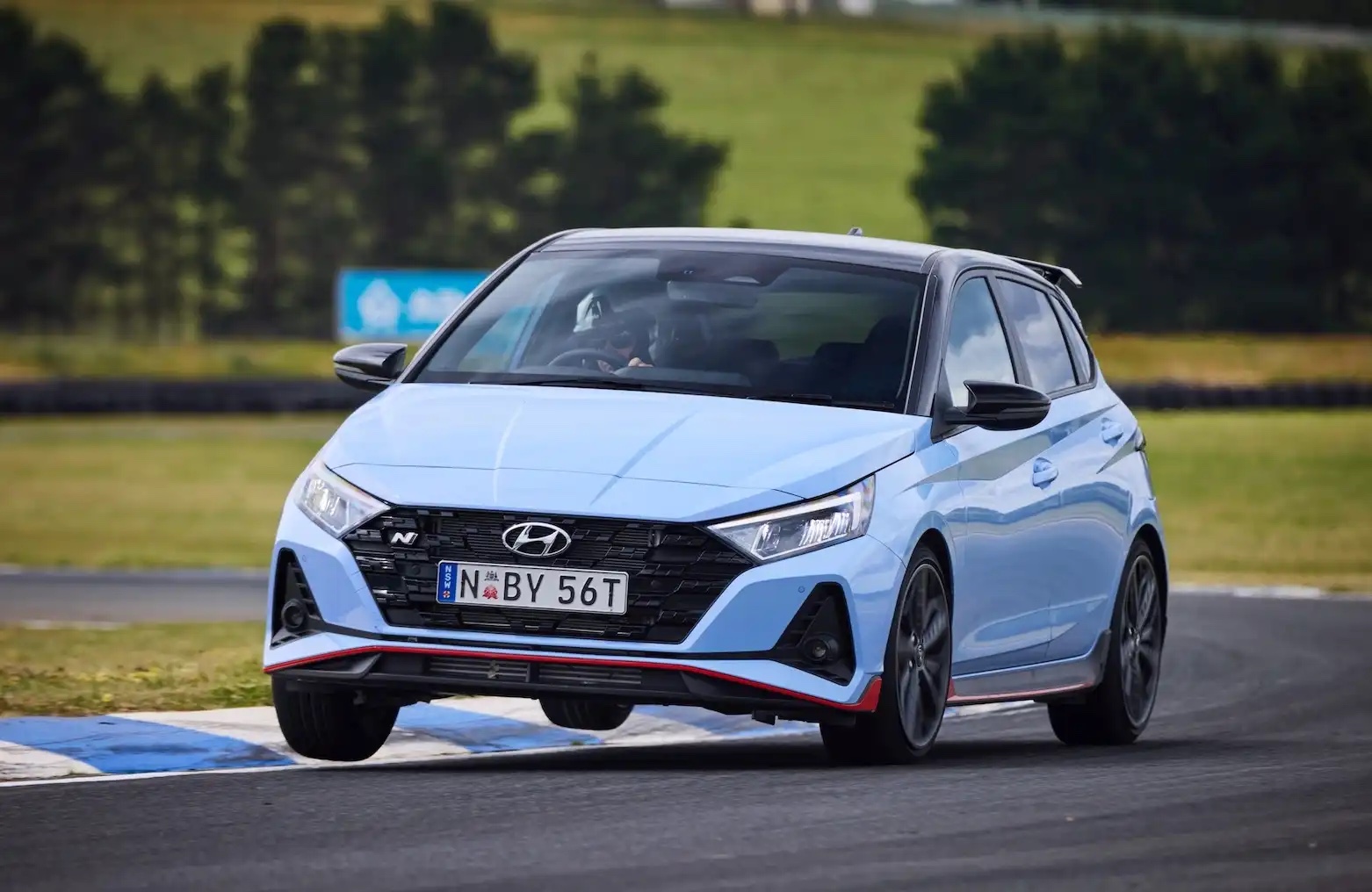
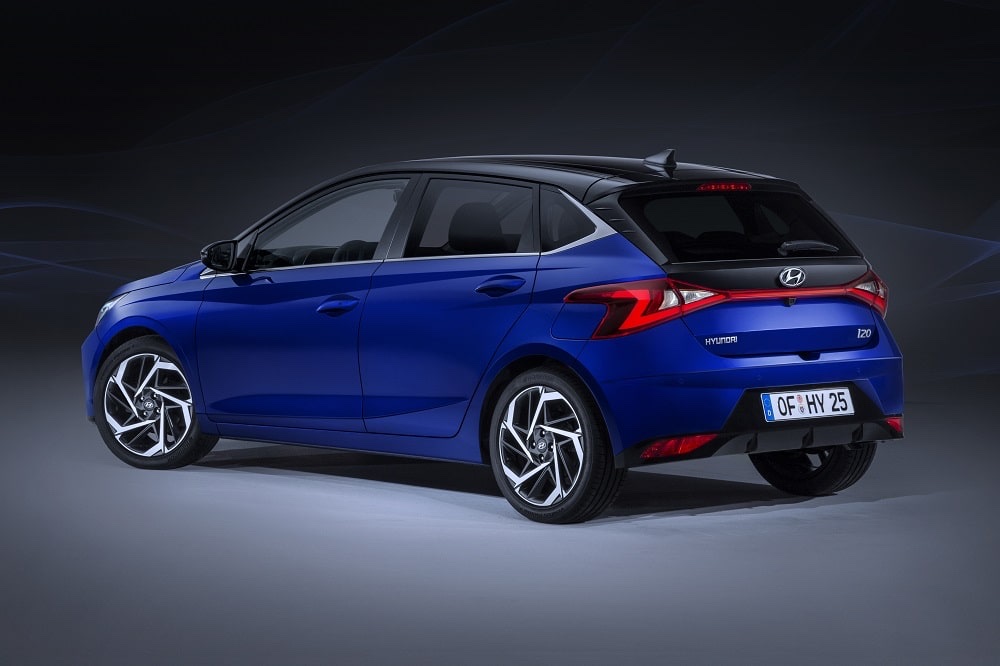
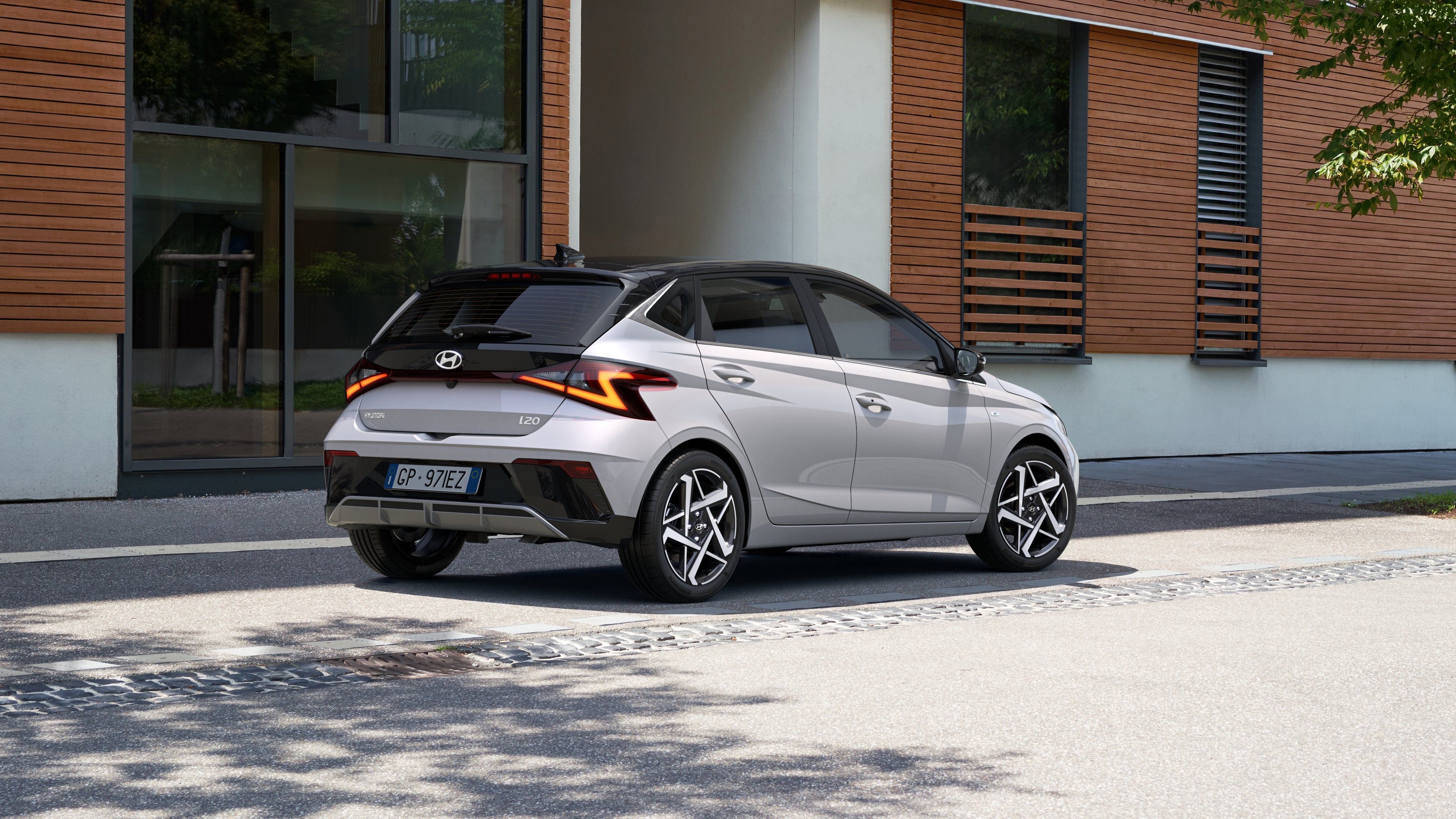
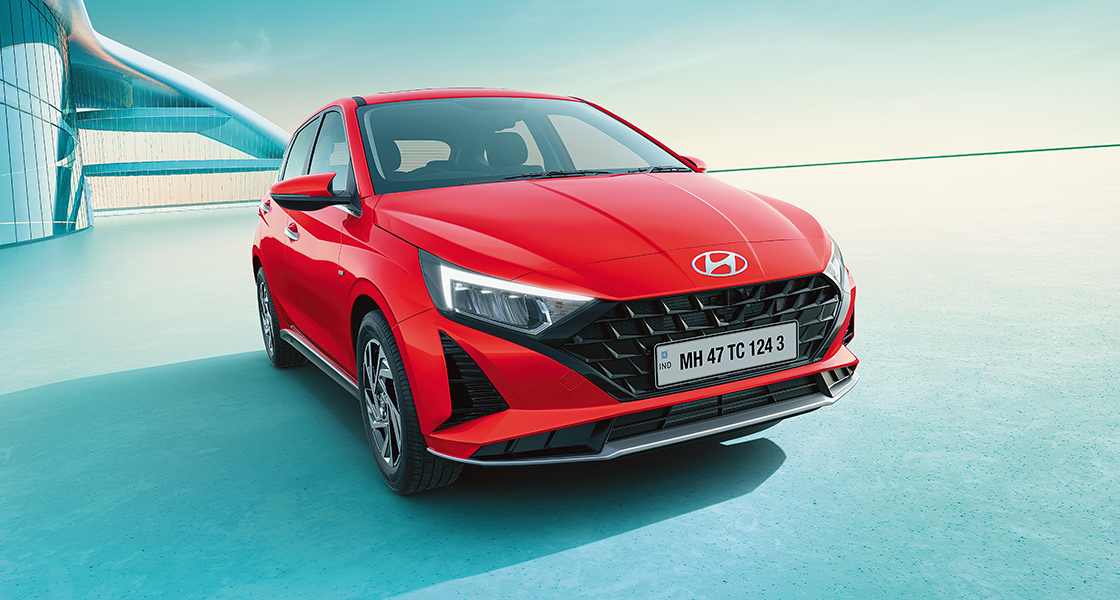
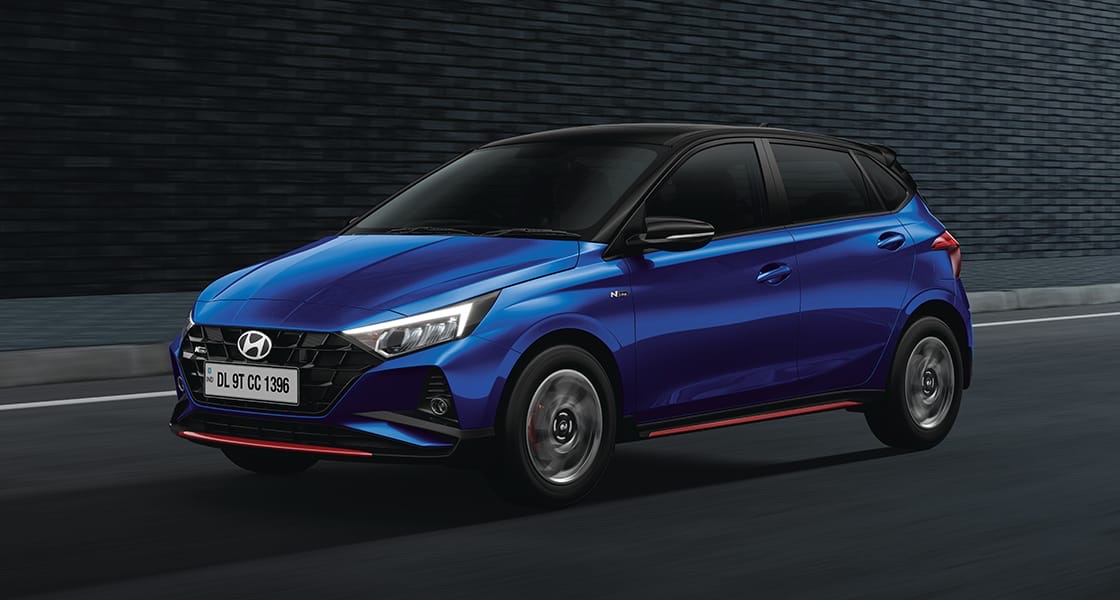
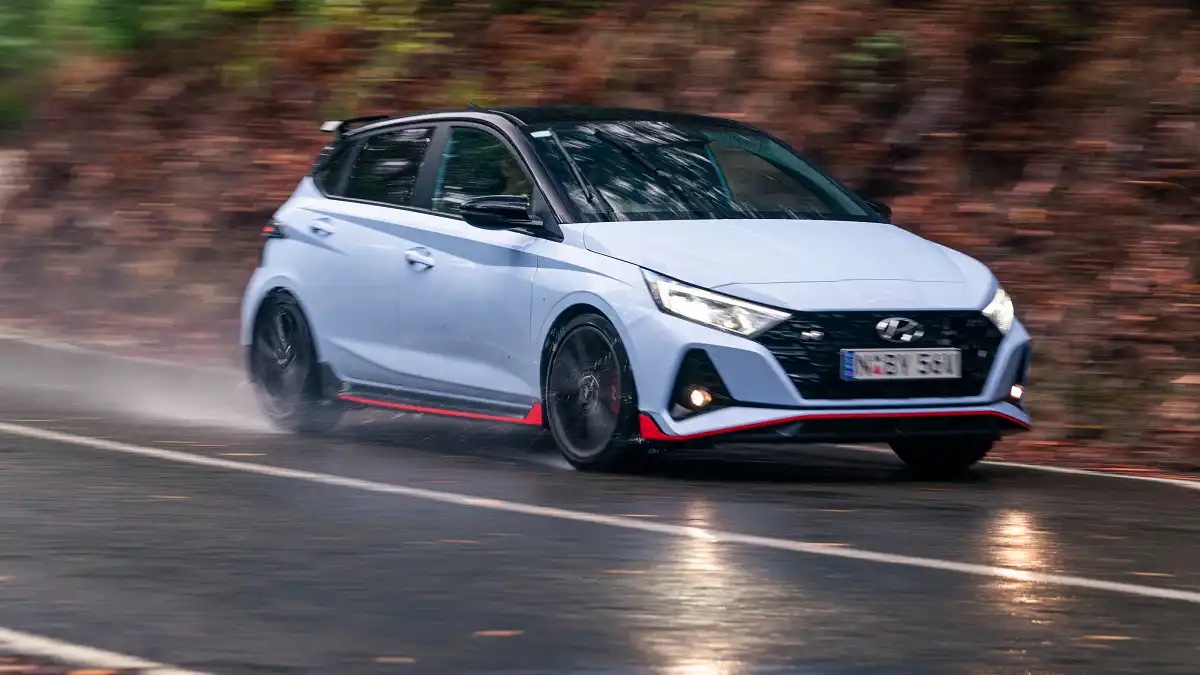
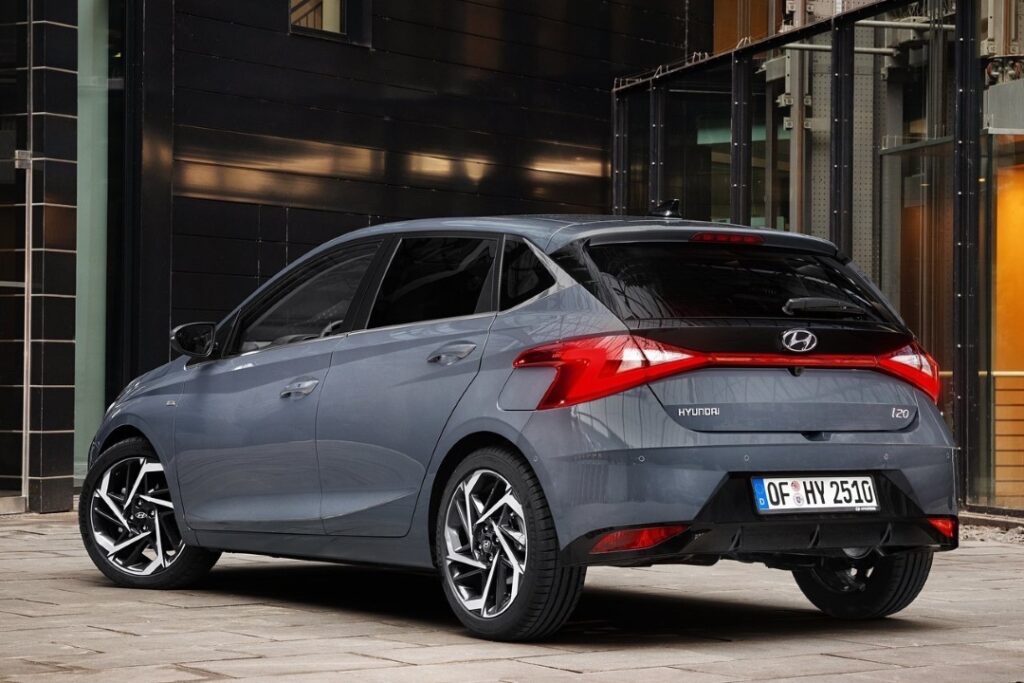
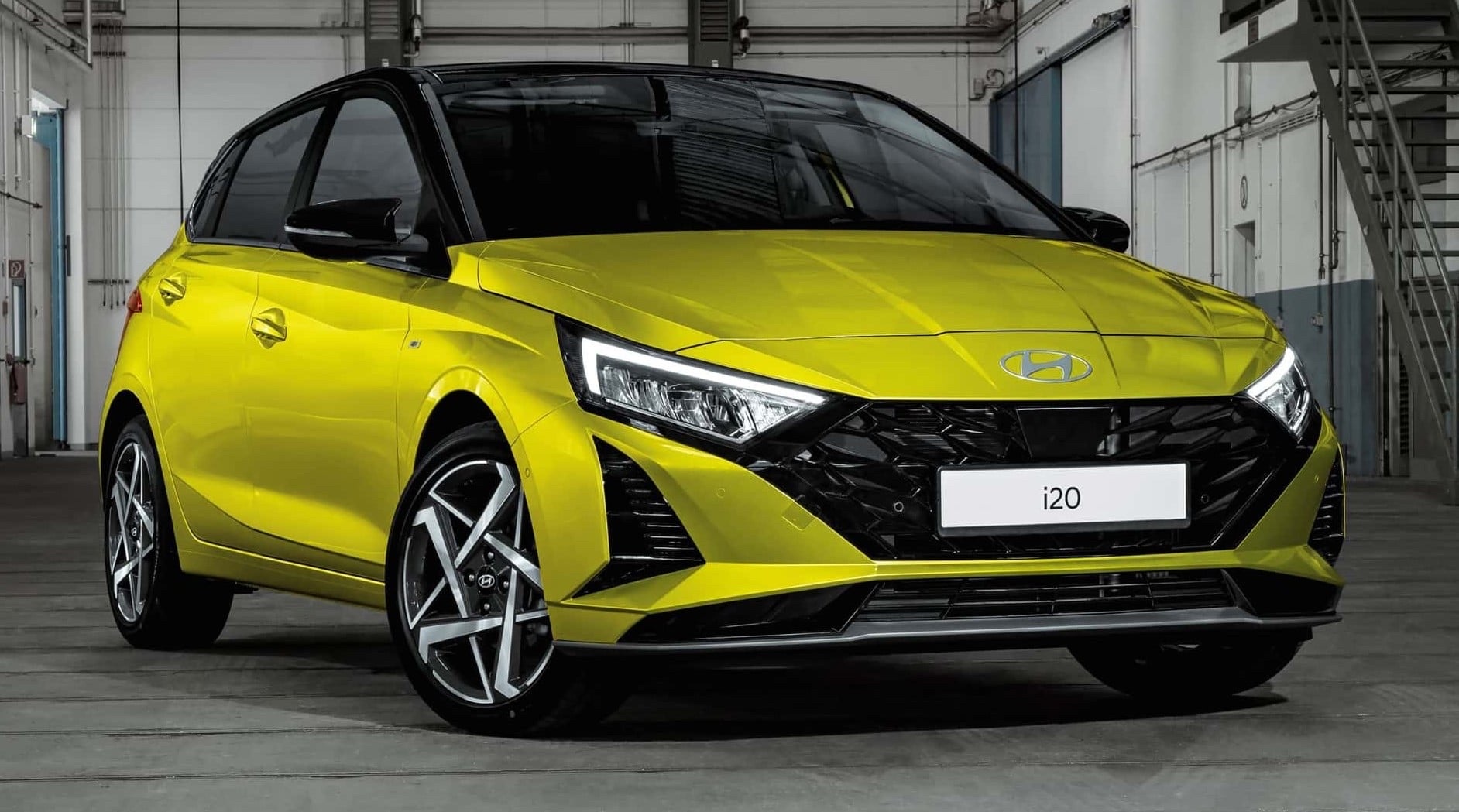
The exterior updates for the 2023 i20 include redesigned front and rear bumpers, a revised front grille, and a distinct new signature for the taillights. Buyers can choose from 16-inch or 17-inch alloy wheels that add a sportier edge to the profile. Hyundai offers eight exterior paint colors, which can be paired with an optional black contrasting roof for a two-tone look. Three shades'Meta Blue Pearl, Lumen Grey Pearl, and Lucid Lime Metallic'were introduced specifically for this restyled version.
Interior
Despite its B-segment classification, the i20 provides a functional and reasonably spacious interior. Cargo capacity measures 352 liters with the rear seats in place, expanding to 1,165 liters when folded. The cabin layout can be customized with the Lucid Lime interior package, adding sporty seat patterns and lime-colored stitching and accents throughout. Standard tech includes a 4.2-inch display and USB-C ports, while higher trims feature a 10.25-inch digital instrument cluster paired with a matching 10.25-inch infotainment touchscreen.
Performance
The 2023 i20 lineup offers several petrol engine configurations. The base option is a naturally aspirated 1.2-liter four-cylinder producing 84 horsepower, mated to a 5-speed manual transmission. For more power, buyers can opt for the 1.0-liter T-GDi turbocharged three-cylinder engine, available in 100-hp and 120-hp outputs. The turbocharged models can be equipped with either an intelligent 6-speed manual transmission (iMT) or a 7-speed dual-clutch automatic (7-DCT). The front-wheel-drive setup ensures predictable handling for urban commuting.
Practicality
As a five-door hatchback, the i20 is well-suited for everyday driving and urban parking. Its 140 mm ground clearance and compact dimensions (4065 mm long, 1775 mm wide) make navigating tight streets easy. The 352-liter trunk is competitive for the segment, providing enough room for groceries or weekend luggage, and the folding rear seats offer useful flexibility for larger items.
Safety and tech
Hyundai's Smart Sense safety suite includes forward collision warning with cyclist detection and lane keeping assist. The infotainment system supports Apple CarPlay and Android Auto, along with an updated Bluelink connected car system. Wireless charging and a second-generation 4G-based eCall system round out the vehicle's tech roster.
Buyer notes
When configuring a 2023 i20, shoppers should weigh the straightforward 1.2-liter engine against the much punchier 1.0-liter turbo options, especially if highway driving is frequent. The 7-speed dual-clutch transmission adds convenience in heavy traffic. Trim availability and exact feature sets, such as the 10.25-inch dual screens or specific two-tone paint combinations, will depend on the local market.
Trims and key specifications
Use this table to compare the main differences between available configurations.
| Trim / modification | Engine | Power | Seats | Transmission |
|---|---|---|---|---|
| 1.2 (84 hp) 5-speed manual | 1197 cc | 84 hp | 5 | 5-speed manual |
| 1.0 T-GDI (100 hp) 6-speed manual | 998 cc | 100 hp | 5 | 6-speed manual |
| 1.0 T-GDI (100 hp) 7-DCT | 998 cc | 100 hp | 5 | 7-speed dual-clutch |
| 1.0 T-GDI (120 hp) 7-DCT | 998 cc | 120 hp | 5 | 7-speed dual-clutch |
Specifications can vary by market, model year, and equipment package. Use the trim sections below to review the full data for each configuration.
Hyundai i20 photo gallery
16 images are collected here with the main specifications and trim data for this model.
Photo Hyundai i20
Specifications by trim
Choose a configuration below to open full technical data grouped by category.
1.2 (84 hp) 5-speed manual 34 specifications
Specifications
Performance and consumption
| Fuel consumption combined, L/100 km | 5.6 |
|---|---|
| Top speed, km/h | 173 |
| Acceleration 0-100 km/h, s | 13.1 |
| Emissions standard | Euro VI |
Engine
| Engine | 1.2 |
|---|---|
| Engine code | G4LF |
| Engine type | Internal combustion engine |
| Fuel type | Gasoline |
| Engine displacement, cc | 1197 |
| Cylinder layout | Inline |
| Number of cylinders | 4 |
| Valves | 16 |
| Power, hp | 84 |
| RPM at max power | 6000 |
| Torque, Nm | 118 |
| RPM at max torque | 4200 |
Dimensions
| Seats | 5 |
|---|---|
| Length, mm | 4065 |
| Height, mm | 1450 |
| Wheelbase, mm | 2580 |
| Front track, mm | 1545 |
| Rear track, mm | 1549 |
| Kerb weight, kg | 1198 |
| Gross weight, kg | 1550 |
| Fuel tank capacity, L | 40 |
| Ground clearance, mm | 140 |
| Width without mirrors, mm | 1775 |
| Trunk capacity, L | 352 |
Transmission and drive
| Transmission | 5-speed manual |
|---|---|
| Transmission type | manual |
| Drive | Rear-wheel drive |
| Number of gears | 5 |
| Transmission manufacturer | Hyundai |
| Transmission country | Korea |
1.0 T-GDI (100 hp) 6-speed manual 35 specifications
Specifications
Performance and consumption
| Fuel consumption combined, L/100 km | 5.6 |
|---|---|
| Top speed, km/h | 188 |
| Acceleration 0-100 km/h, s | 10.4 |
| Emissions standard | Euro VI |
Engine
| Engine | 1.0 T-GDI |
|---|---|
| Engine type | Internal combustion engine |
| Fuel type | Gasoline |
| Engine displacement, cc | 998 |
| Cylinder layout | Inline |
| Number of cylinders | 3 |
| Valves | 12 |
| Turbocharger | + |
| Compression ratio | 10.5:1 |
| Power, hp | 100 |
| RPM at max power | 4500–6000 |
| Torque, Nm | 172 |
| RPM at max torque | 1500–4000 |
Dimensions
| Seats | 5 |
|---|---|
| Length, mm | 4065 |
| Height, mm | 1450 |
| Wheelbase, mm | 2580 |
| Front track, mm | 1545 |
| Rear track, mm | 1549 |
| Kerb weight, kg | 1198 |
| Gross weight, kg | 1550 |
| Fuel tank capacity, L | 40 |
| Ground clearance, mm | 140 |
| Width without mirrors, mm | 1775 |
| Trunk capacity, L | 352 |
Transmission and drive
| Transmission | 6-speed manual |
|---|---|
| Transmission type | manual |
| Drive | Front-wheel drive |
| Number of gears | 6 |
| Transmission manufacturer | Hyundai |
| Transmission country | South Korea |
1.0 T-GDI (100 hp) 7-DCT 34 specifications
Specifications
Performance and consumption
| Fuel consumption combined, L/100 km | 5.6 |
|---|---|
| Top speed, km/h | 185 |
| Acceleration 0-100 km/h, s | 11.4 |
| Emissions standard | Euro VI |
Engine
| Engine | 1.0 T-GDI |
|---|---|
| Engine type | Internal combustion engine |
| Fuel type | Gasoline |
| Engine displacement, cc | 998 |
| Cylinder layout | Inline |
| Number of cylinders | 3 |
| Valves | 12 |
| Turbocharger | + |
| Compression ratio | 10.5:1 |
| Power, hp | 100 |
| RPM at max power | 4500–6000 |
| Torque, Nm | 172 |
| RPM at max torque | 1500–4000 |
Dimensions
| Seats | 5 |
|---|---|
| Length, mm | 4065 |
| Height, mm | 1450 |
| Wheelbase, mm | 2580 |
| Front track, mm | 1545 |
| Rear track, mm | 1549 |
| Kerb weight, kg | 1198 |
| Gross weight, kg | 1550 |
| Fuel tank capacity, L | 40 |
| Ground clearance, mm | 140 |
| Width without mirrors, mm | 1775 |
| Trunk capacity, L | 352 |
Transmission and drive
| Transmission | 7-speed dual-clutch |
|---|---|
| Transmission type | 2-speed automated manual |
| Drive | Front-wheel drive |
| Number of gears | 7 |
| Automatic transmission | + |
1.0 T-GDI (120 hp) 7-DCT 34 specifications
Specifications
Performance and consumption
| Fuel consumption combined, L/100 km | 5.5 |
|---|---|
| Top speed, km/h | 185 |
| Acceleration 0-100 km/h, s | 10.3 |
| Emissions standard | Euro VI |
Engine
| Engine | 1.0 T-GDI |
|---|---|
| Engine type | Internal combustion engine |
| Fuel type | Gasoline |
| Engine displacement, cc | 998 |
| Cylinder layout | Inline |
| Number of cylinders | 3 |
| Valves | 12 |
| Turbocharger | + |
| Compression ratio | 10.5:1 |
| Power, hp | 120 |
| RPM at max power | 6000 |
| Torque, Nm | 200 |
| RPM at max torque | 2000–3500 |
Dimensions
| Seats | 5 |
|---|---|
| Length, mm | 4065 |
| Height, mm | 1450 |
| Wheelbase, mm | 2580 |
| Front track, mm | 1545 |
| Rear track, mm | 1549 |
| Kerb weight, kg | 1198 |
| Gross weight, kg | 1550 |
| Fuel tank capacity, L | 40 |
| Ground clearance, mm | 140 |
| Width without mirrors, mm | 1775 |
| Trunk capacity, L | 352 |
Transmission and drive
| Transmission | 7-speed dual-clutch |
|---|---|
| Transmission type | 2-speed automated manual |
| Drive | Front-wheel drive |
| Number of gears | 7 |
| Automatic transmission | + |
Hyundai i20 questions
Short answers based on the specifications and photos available in this catalog.
What body style is the 2023 Hyundai i20?
It is a five-door, B-segment compact hatchback.
What engines are available?
Powertrain options include an 84-hp 1.2-liter naturally aspirated engine and a 1.0-liter turbocharged three-cylinder available with 100 or 120 horsepower.
Does the i20 support Apple CarPlay and Android Auto?
Yes, smartphone integration is available, typically accessed via the optional 10.25-inch infotainment screen.
How big is the trunk in the Hyundai i20?
The trunk holds 352 liters with the rear seats up and expands to 1,165 liters when the seats are folded flat.
What changed for the 2023 model year?
The 2023 restyling brought updated bumpers, a new grille, revised lighting signatures, fresh exterior colors, and upgraded in-cabin technology.