Hyundai Santa Cruz specifications and photos
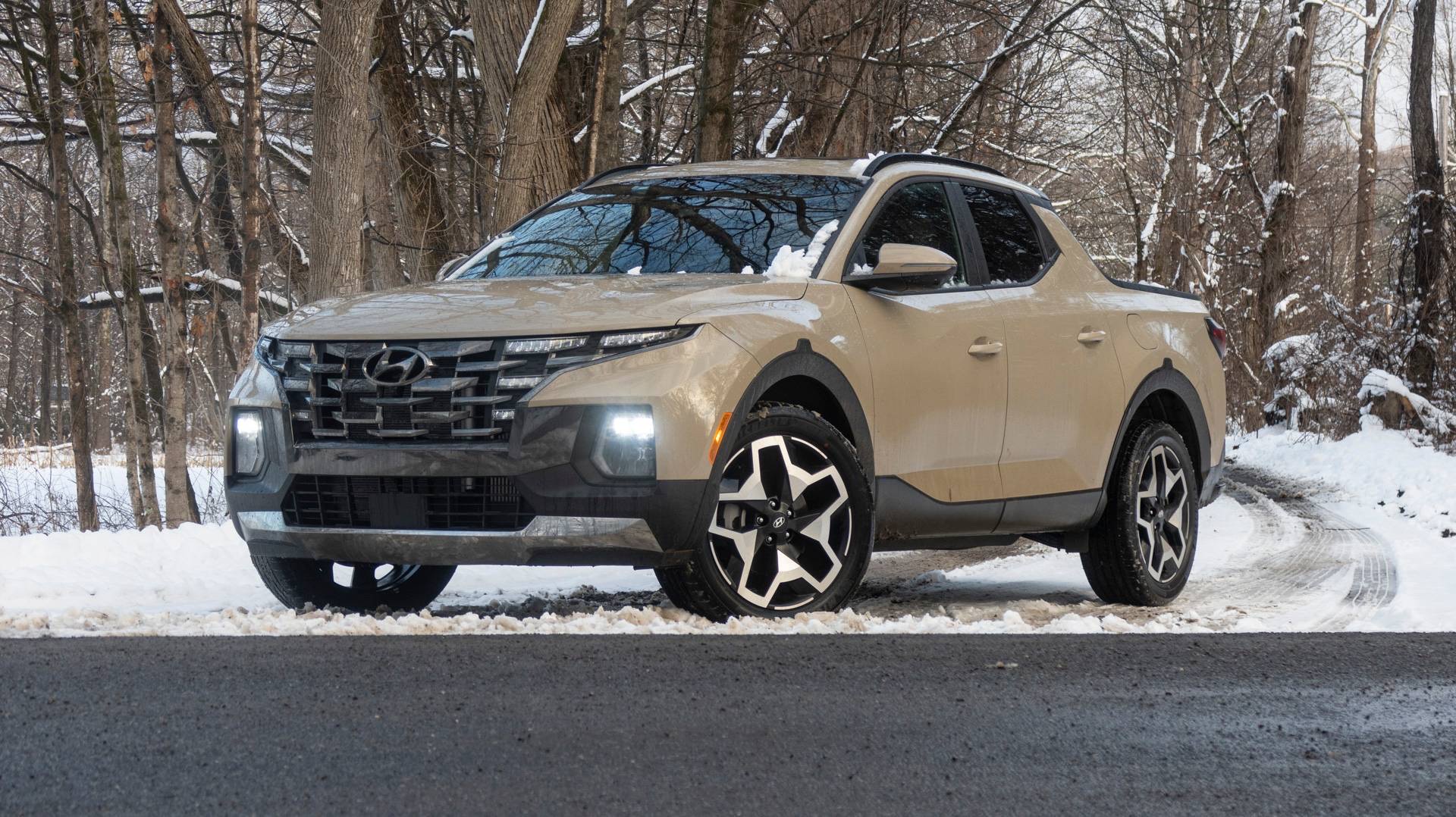
The 2021 Hyundai Santa Cruz is a compact, unibody pickup designed to blend the comfort of a crossover with the utility of an open cargo bed. Introduced as the brand's first entry into the Sport Adventure Vehicle niche, it targets urban drivers who need practical cargo space for active lifestyles.
Hyundai Santa Cruz at a glance
Quick model context before comparing photos and trim-level specifications.
Making its official debut in April 2021, the first-generation Hyundai Santa Cruz introduces a new format to the brand's lineup. Rather than competing with traditional body-on-frame trucks, it is built on the Hyundai-KIA N3 platform, the same architecture that underpins the Tucson crossover. This unibody construction provides car-like driving dynamics while offering a versatile open cargo area in the back. Measuring 4970 mm in length with a 3005 mm wheelbase, it is considerably smaller than standard American pickups, making it highly maneuverable in city environments. The vehicle is designed specifically for buyers who want an open bed for transporting outdoor gear without sacrificing the drivability and efficiency of a standard SUV.
- Power: 194-285 hp
- Engine displacement: 2497 cc
- Transmissions: 8-speed automatic, 8-speed dual-clutch
- Seating: 5 seats
Photos, trims and specifications for Hyundai Santa Cruz
This model page brings gallery images, trim comparison, and detailed technical data together for the 2021 generation.
Estimate fuel cost
Use trim-level fuel consumption data to estimate monthly and yearly fuel spending.
Fuel costs are estimates. Real consumption can change with driving style, traffic, tires, weather, load, and market-specific equipment.
Hyundai Santa Cruz overview
Editorial context for design, cabin, performance, practicality, and buyer notes.
Design
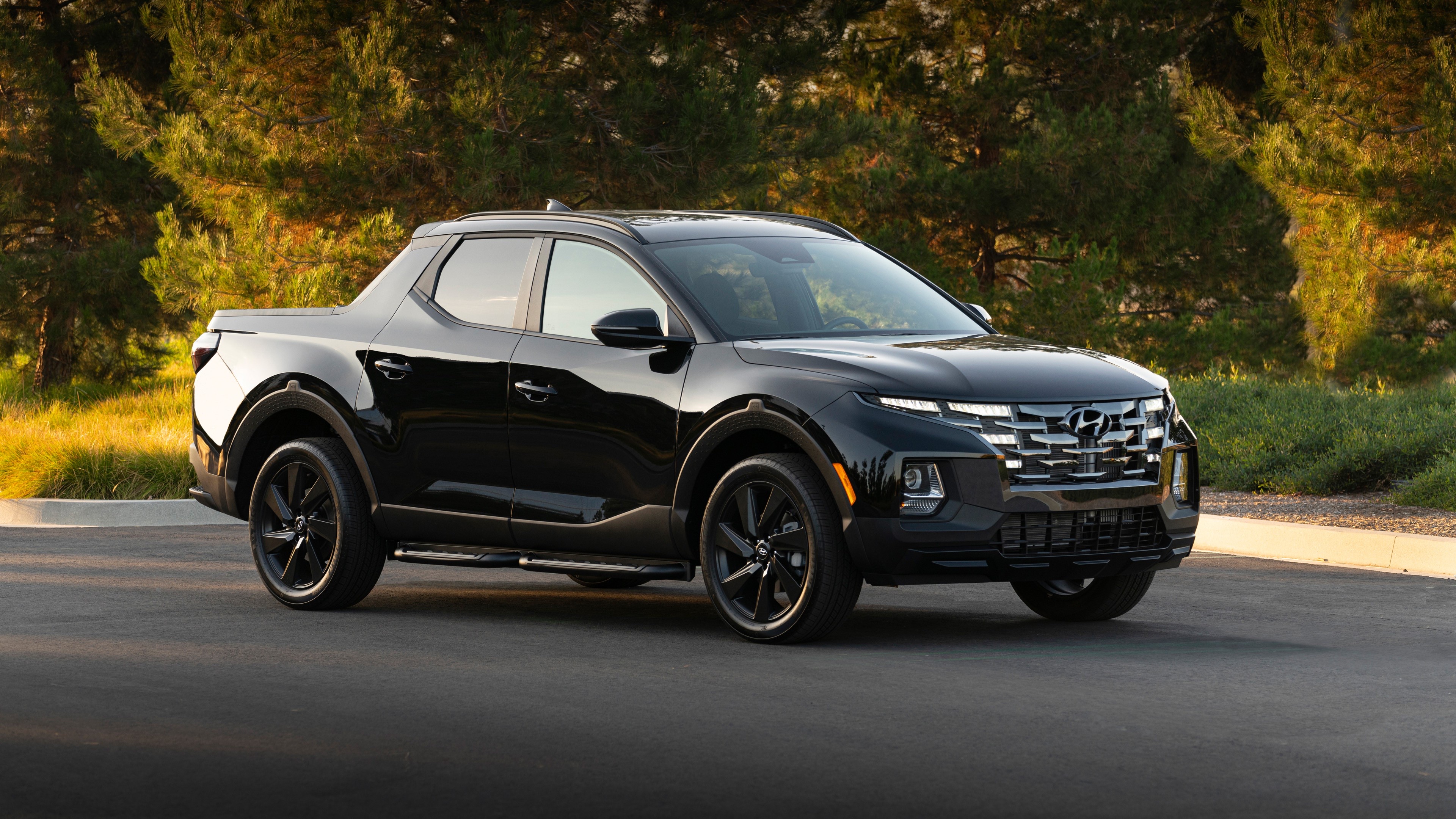
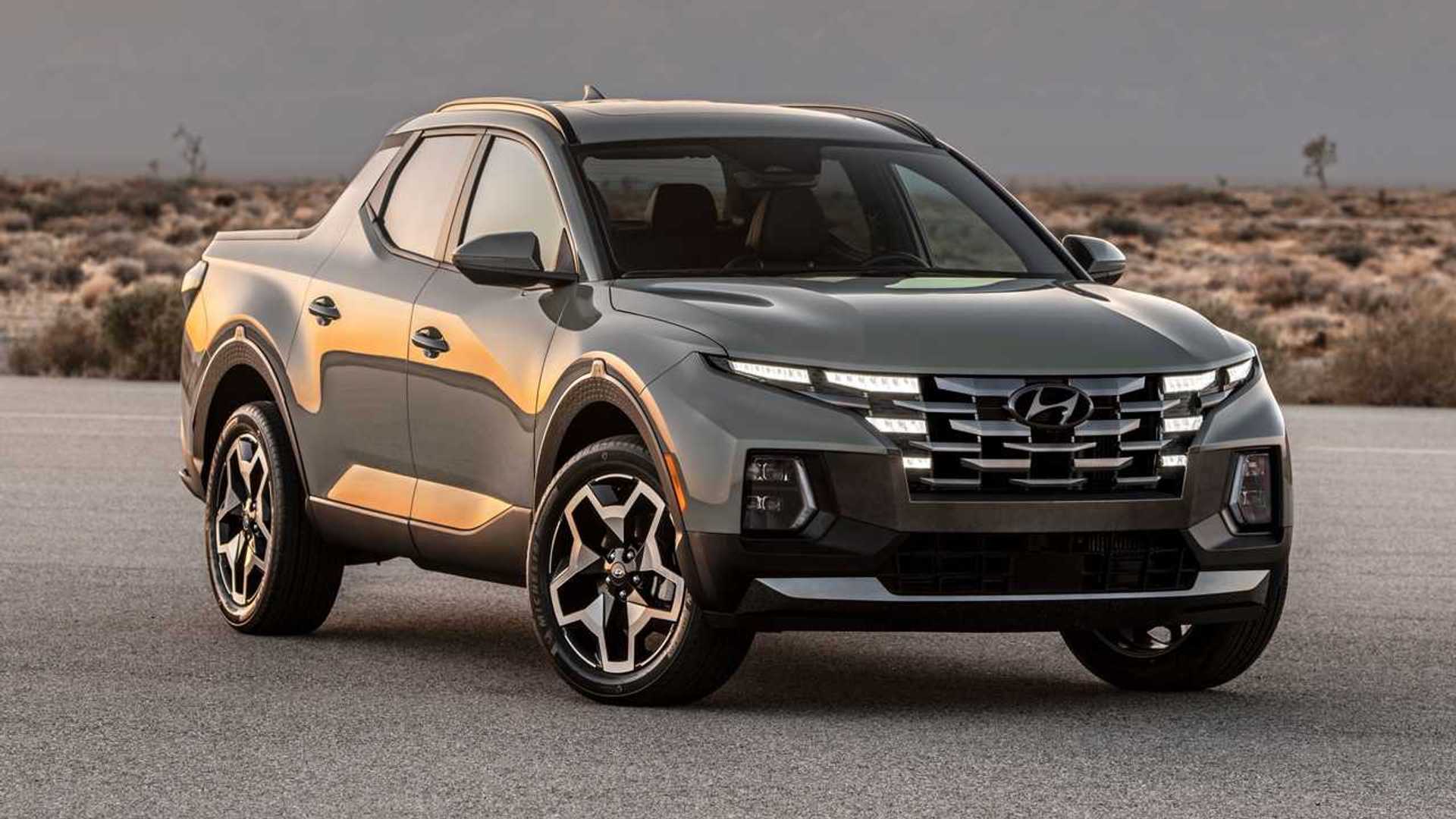
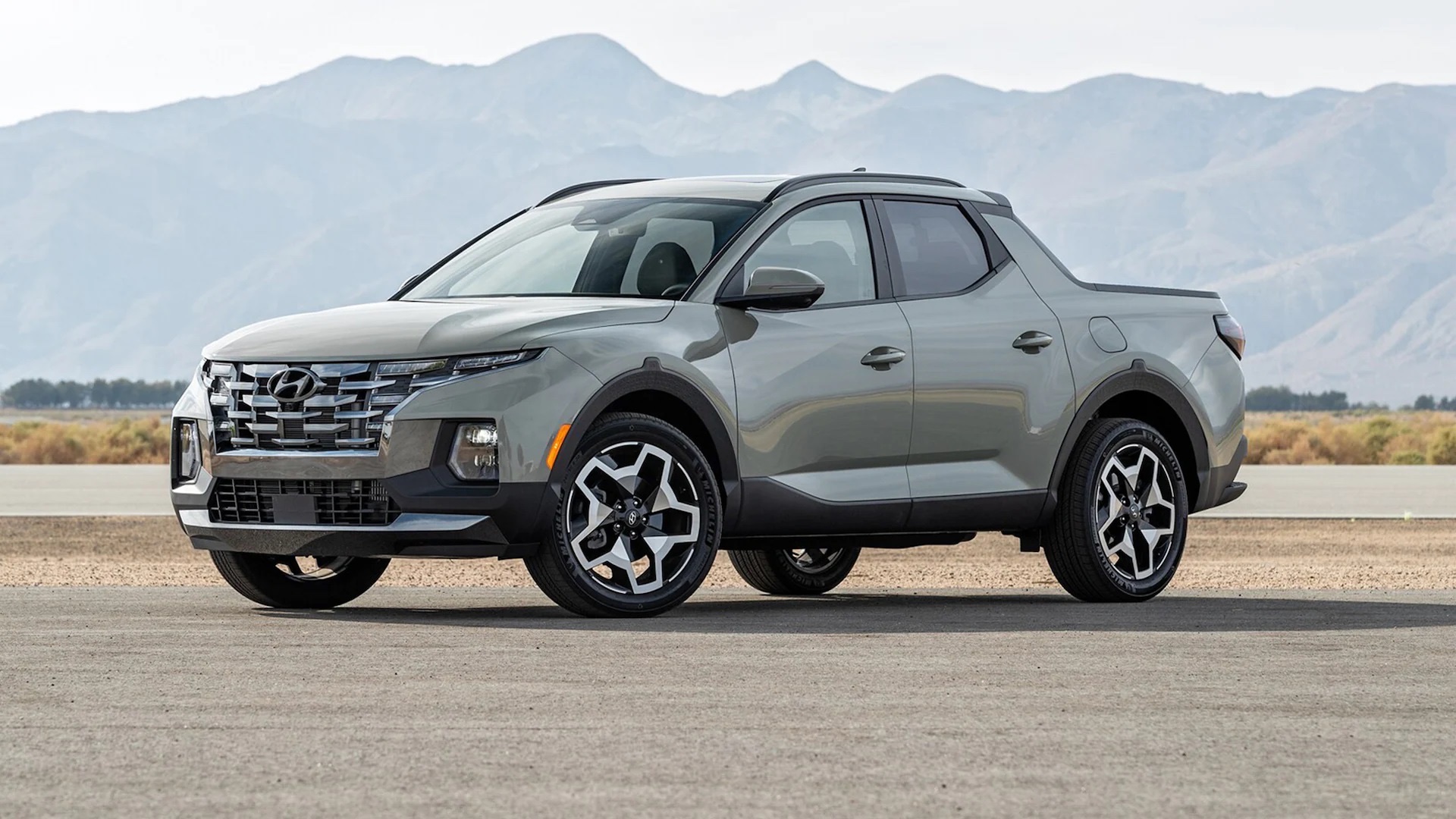
The Santa Cruz shares a clear visual connection with the Tucson, most notably through its Parametric Jewel front grille, though the front fascia has its own distinct detailing. The exterior proportions are compact, with an overall width of 1905 mm and a height of 1695 mm. Its four-door cabin leads into a specialized short bed, giving it a unique profile that bridges the gap between a standard crossover and a midsize truck.
Interior
Inside, the layout borrows heavily from the American-market Tucson, prioritizing comfort and modern technology. The center console features a traditional gear selector lever rather than a push-button setup. Buyers can equip the cabin with a 10.25-inch digital instrument cluster without a traditional hood, alongside a matching 10.25-inch infotainment display and touch-sensitive climate controls. Practical storage solutions are integrated throughout, including a concealed storage compartment located beneath the second-row seats.
Performance
Power comes from a choice of two 2.5-liter four-cylinder engines. The naturally aspirated 2.5 GDI produces 194 horsepower and 246 Nm of torque, paired with a traditional 8-speed automatic transmission. For more power, a turbocharged 2.5 T-GDI engine delivers 285 horsepower and 422 Nm of torque, utilizing an 8-speed dual-clutch transmission. While front-wheel drive is standard on the base engine, Hyundai's HTRAC all-wheel-drive system is available across the lineup. Both setups utilize a multi-link rear suspension to ensure smooth handling on paved roads.
Practicality
Despite its compact footprint, the Santa Cruz offers useful cargo capabilities with a payload capacity of 640 kg. The lockable cargo bed measures 1323 mm long and 1368 mm wide, leaving 1085 mm of space between the wheel arches. The bed area is highly functional, featuring under-floor storage, built-in lighting, various tie-down points, and a hidden 115-volt power outlet for running accessories.
Safety and tech
The vehicle can be equipped with a comprehensive suite of driver assistance features. Available safety technologies include adaptive cruise control, automatic emergency braking with pedestrian and cyclist detection, and active lane keeping assist. Blind-spot monitoring and rear cross-traffic alert provide additional awareness, while an available 360-degree surround-view camera system aids in tight parking situations.
Buyer notes
When choosing a Santa Cruz, buyers should evaluate their performance needs between the standard 194-hp engine and the much more powerful 285-hp turbocharged option. Those planning to carry heavier loads or drive in adverse weather should look for models equipped with the HTRAC all-wheel-drive system. Keep in mind that features like the 10.25-inch dual screens and advanced active safety tech may vary depending on the selected trim level.
Trims and key specifications
Use this table to compare the main differences between available configurations.
| Trim / modification | Engine | Power | Seats | Transmission |
|---|---|---|---|---|
| 2.5 GDI (194 hp) 8-speed automatic | 2497 cc | 194 hp | 5 | 8-speed automatic |
| 2.5 GDI (194 hp) 8-speed automatic 4x4 | 2497 cc | 194 hp | 5 | 8-speed automatic |
| 2.5 T-GDI (285 hp) 8-DCT 4x4 | 2497 cc | 285 hp | 5 | 8-speed dual-clutch |
Specifications can vary by market, model year, and equipment package. Use the trim sections below to review the full data for each configuration.
Hyundai Santa Cruz photo gallery
10 images are collected here with the main specifications and trim data for this model.
Photo Hyundai Santa Cruz
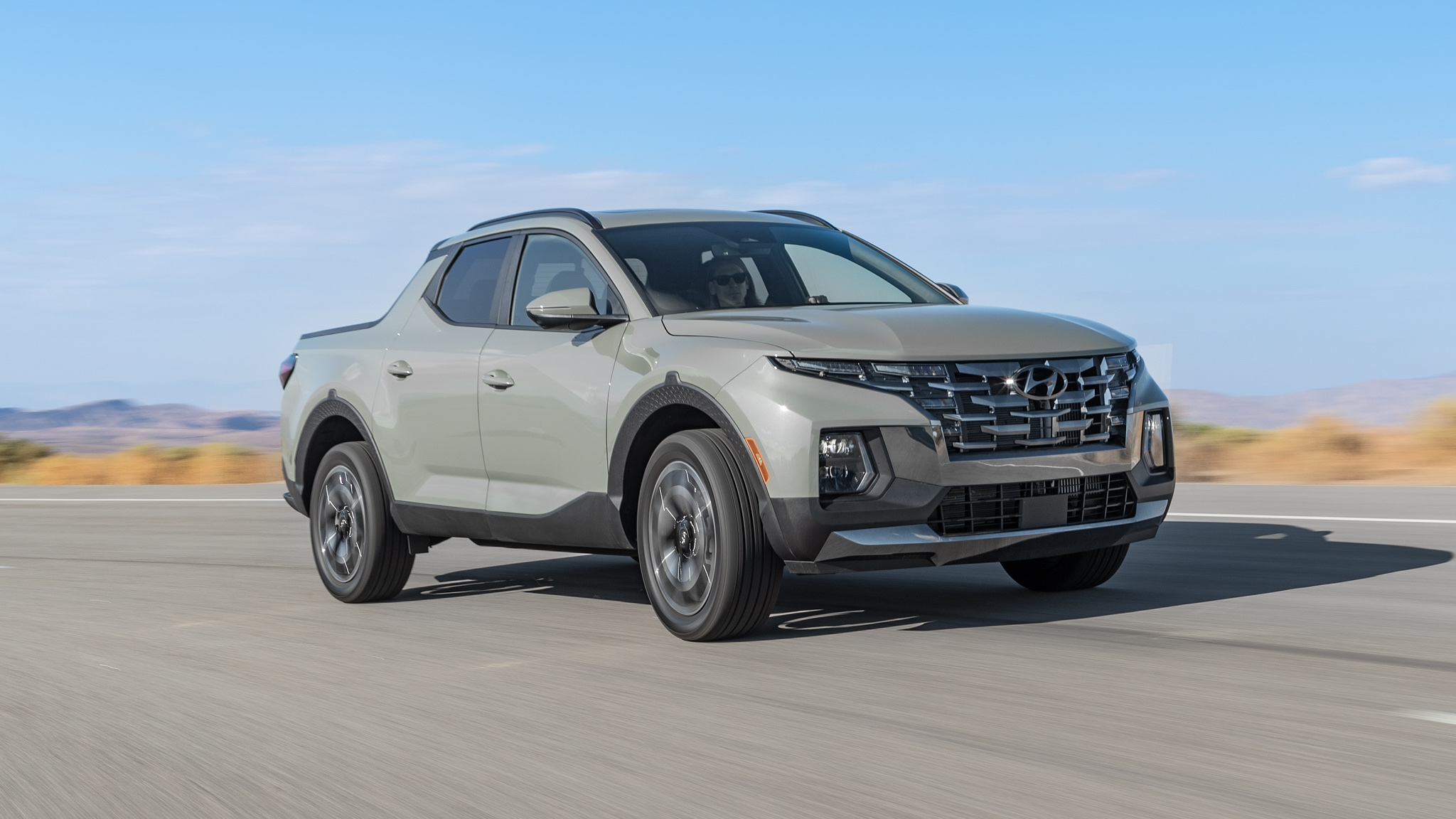
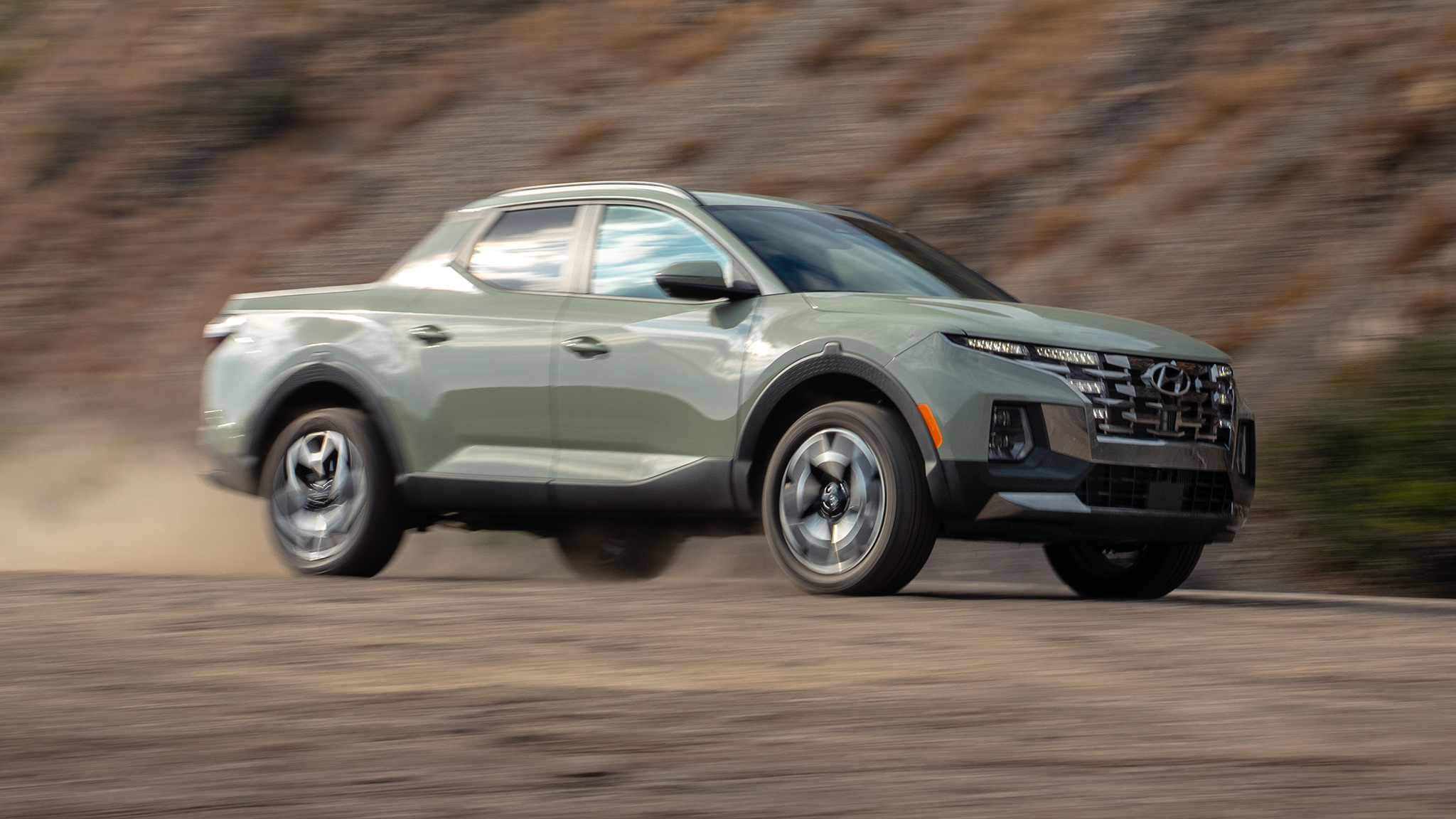
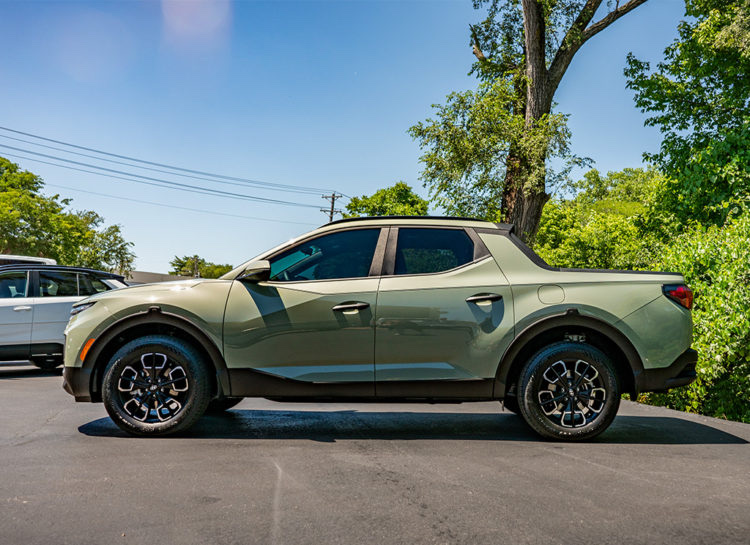
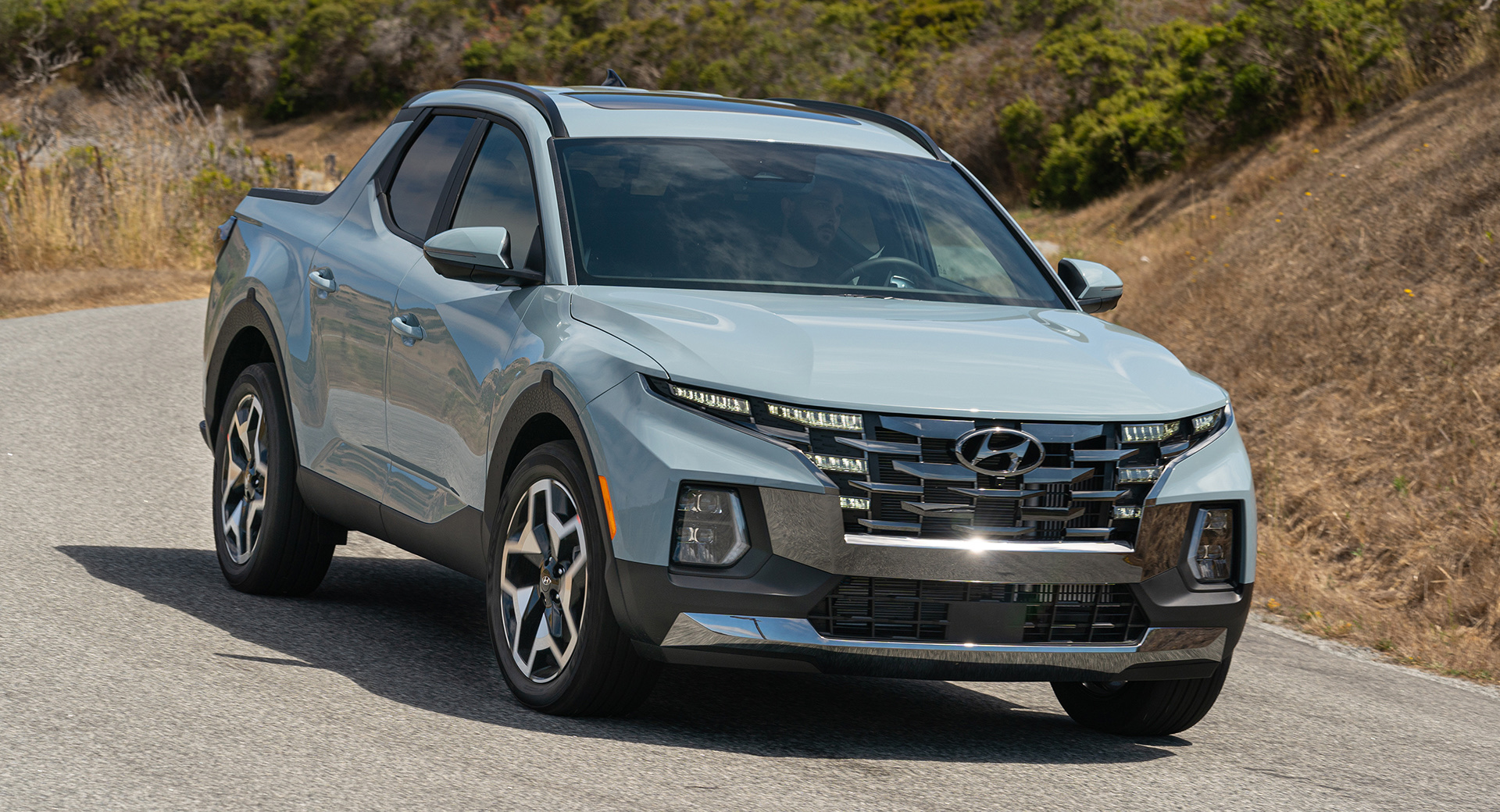
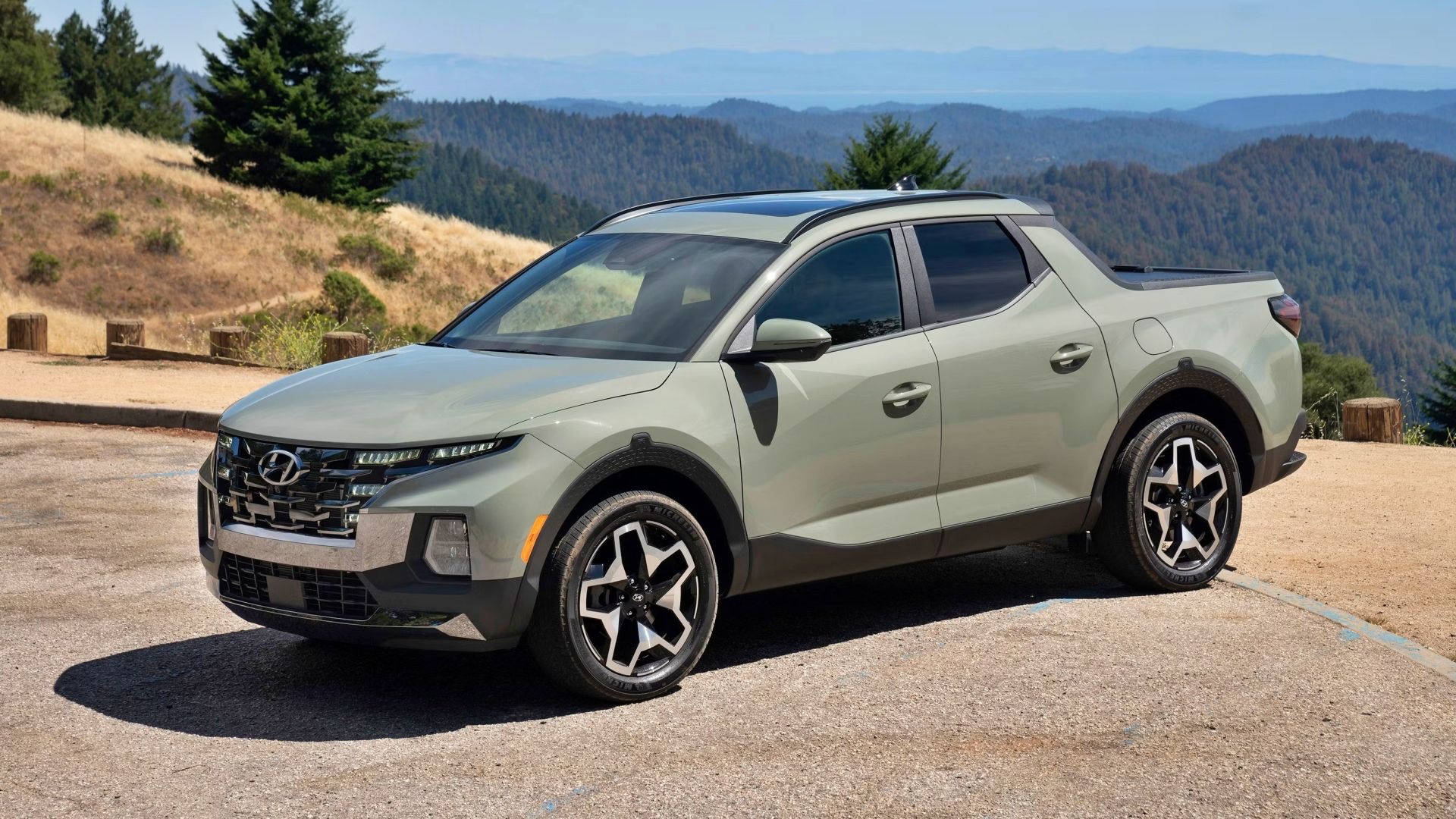
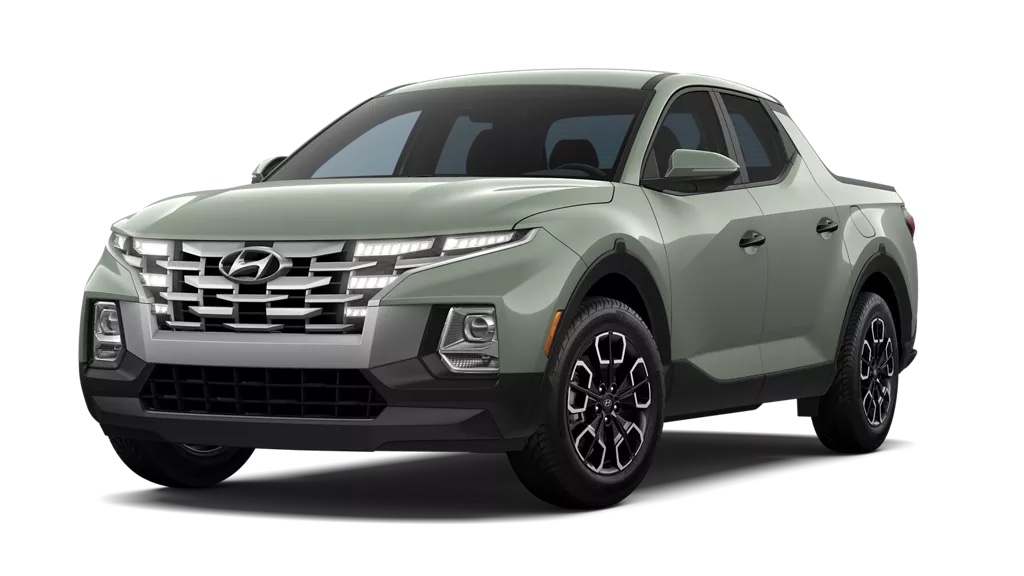
Specifications by trim
Choose a configuration below to open full technical data grouped by category.
2.5 GDI (194 hp) 8-speed automatic 31 specifications
Specifications
Performance and consumption
| Fuel consumption city, L/100 km | 11.2 |
|---|---|
| Fuel consumption highway, L/100 km | 9 |
| Fuel consumption combined, L/100 km | 10.2 |
Engine
| Engine | 2.5 GDI |
|---|---|
| Engine type | Internal combustion engine |
| Fuel type | Gasoline |
| Engine displacement, cc | 2497 |
| Cylinder layout | Inline |
| Number of cylinders | 4 |
| Valves | 16 |
| Compression ratio | 13:1 |
| Power, hp | 194 |
| RPM at max power | 6100 |
| Torque, Nm | 246 |
| RPM at max torque | 4000 |
Dimensions
| Seats | 5 |
|---|---|
| Length, mm | 4970 |
| Height, mm | 1695 |
| Wheelbase, mm | 3005 |
| Front track, mm | 1643 |
| Rear track, mm | 1648 |
| Kerb weight, kg | 1680 |
| Fuel tank capacity, L | 67 |
| Turning circle, m | 12.1 |
| Width without mirrors, mm | 1905 |
Transmission and drive
| Transmission | 8-speed automatic |
|---|---|
| Transmission type | automatic |
| Drive | Front-wheel drive |
| Number of gears | 8 |
| Transmission manufacturer | Hyundai |
| Automatic transmission | + |
2.5 GDI (194 hp) 8-speed automatic 4x4 31 specifications
Specifications
Performance and consumption
| Fuel consumption city, L/100 km | 11.2 |
|---|---|
| Fuel consumption highway, L/100 km | 8.7 |
| Fuel consumption combined, L/100 km | 10.2 |
Engine
| Engine | 2.5 GDI |
|---|---|
| Engine type | Internal combustion engine |
| Fuel type | Gasoline |
| Engine displacement, cc | 2497 |
| Cylinder layout | Inline |
| Number of cylinders | 4 |
| Valves | 16 |
| Compression ratio | 13:1 |
| Power, hp | 194 |
| RPM at max power | 6100 |
| Torque, Nm | 246 |
| RPM at max torque | 4000 |
Dimensions
| Seats | 5 |
|---|---|
| Length, mm | 4970 |
| Height, mm | 1695 |
| Wheelbase, mm | 3005 |
| Front track, mm | 1643 |
| Rear track, mm | 1648 |
| Kerb weight, kg | 1680 |
| Fuel tank capacity, L | 67 |
| Turning circle, m | 12.1 |
| Width without mirrors, mm | 1905 |
Transmission and drive
| Transmission | 8-speed automatic |
|---|---|
| Transmission type | automatic |
| Drive | All-wheel drive |
| Number of gears | 8 |
| Transmission manufacturer | Hyundai |
| Automatic transmission | + |
2.5 T-GDI (285 hp) 8-DCT 4x4 34 specifications
Specifications
Performance and consumption
| Fuel consumption city, L/100 km | 12.4 |
|---|---|
| Fuel consumption highway, L/100 km | 8.7 |
| Fuel consumption combined, L/100 km | 10.7 |
Engine
| Engine | 2.5 T-GDI |
|---|---|
| Engine code | G4KP |
| Engine type | Internal combustion engine |
| Fuel type | Gasoline |
| Engine displacement, cc | 2497 |
| Cylinder layout | Inline |
| Number of cylinders | 4 |
| Valves | 16 |
| Turbocharger | + |
| Compression ratio | 10.5:1 |
| Power, hp | 285 |
| RPM at max power | 5800 |
| Torque, Nm | 422 |
| RPM at max torque | 1700–4000 |
Dimensions
| Seats | 5 |
|---|---|
| Length, mm | 4970 |
| Height, mm | 1695 |
| Wheelbase, mm | 3005 |
| Front track, mm | 1643 |
| Rear track, mm | 1648 |
| Kerb weight, kg | 1680 |
| Fuel tank capacity, L | 67 |
| Turning circle, m | 12.1 |
| Width without mirrors, mm | 1905 |
Transmission and drive
| Transmission | 8-speed dual-clutch |
|---|---|
| Transmission type | 2-speed automated manual |
| Drive | All-wheel drive |
| Number of gears | 8 |
| Transmission manufacturer | Hyundai-KIA |
| Automatic transmission | + |
| Transmission country | South Korea |
Hyundai Santa Cruz questions
Short answers based on the specifications and photos available in this catalog.
What body style is the Hyundai Santa Cruz?
The Santa Cruz is a compact, four-door unibody pickup truck, often referred to by Hyundai as a Sport Adventure Vehicle.
What platform is the Santa Cruz built on?
It is built on the Hyundai-KIA N3 platform, which it shares with the Tucson crossover. This gives it a unibody chassis and multi-link rear suspension.
What engines are available for the 2021 Santa Cruz?
It offers two 2.5-liter engines: a naturally aspirated version with 194 horsepower and a turbocharged variant delivering 285 horsepower.
How big is the cargo bed?
The bed is 1323 mm long and 1368 mm wide. It includes functional additions like under-floor storage and a 115-volt outlet.
Is all-wheel drive available?
Yes, Hyundai's HTRAC all-wheel-drive system is available on the base engine and comes paired with the turbocharged engine.