Hyundai Bayon specifications and photos
The Hyundai Bayon is a front-wheel-drive subcompact crossover introduced in 2021 as the brand's entry-level B-SUV for the European market. Built on the same architecture as the i20 hatchback, it provides a raised seating position, unique styling, and a focus on everyday utility.
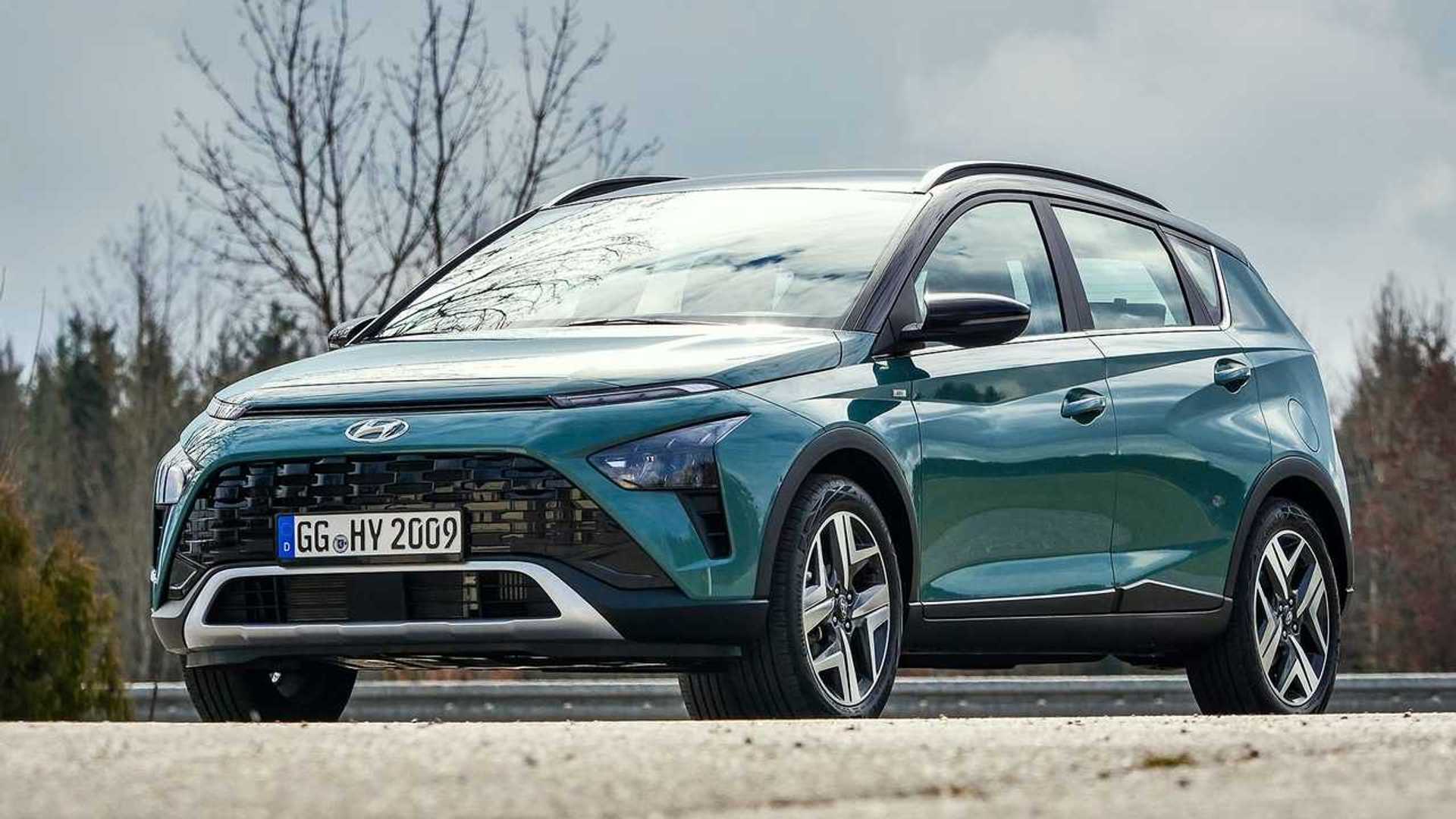
Hyundai Bayon at a glance
Quick model context before comparing photos and trim-level specifications.
Positioned as Hyundai's most compact crossover in Europe, the 2021 Bayon shares its core K2 platform and 2580 mm wheelbase with the i20 but expands in nearly every other outward dimension. Measuring 4180 mm in length, the vehicle provides increased ground clearance—up to 183 mm on 17-inch wheels—and a larger cabin greenhouse. The Bayon is designed for buyers who want the footprint of a subcompact hatchback but require the greater cargo capacity and higher visibility of an SUV. It is available strictly in a front-wheel-drive layout, emphasizing urban maneuverability alongside an extensive suite of active electronic safety systems.
- Power: 84-120 hp
- Engine displacement: 998-1197 cc
- Transmissions: 5-speed manual, 6-speed manual, 6-iMT
- Seating: 5 seats
Photos, trims and specifications for Hyundai Bayon
This model page brings gallery images, trim comparison, and detailed technical data together for the 2021 generation.
Estimate fuel cost
Use trim-level fuel consumption data to estimate monthly and yearly fuel spending.
Fuel costs are estimates. Real consumption can change with driving style, traffic, tires, weather, load, and market-specific equipment.
Hyundai Bayon overview
Editorial context for design, cabin, performance, practicality, and buyer notes.
Design
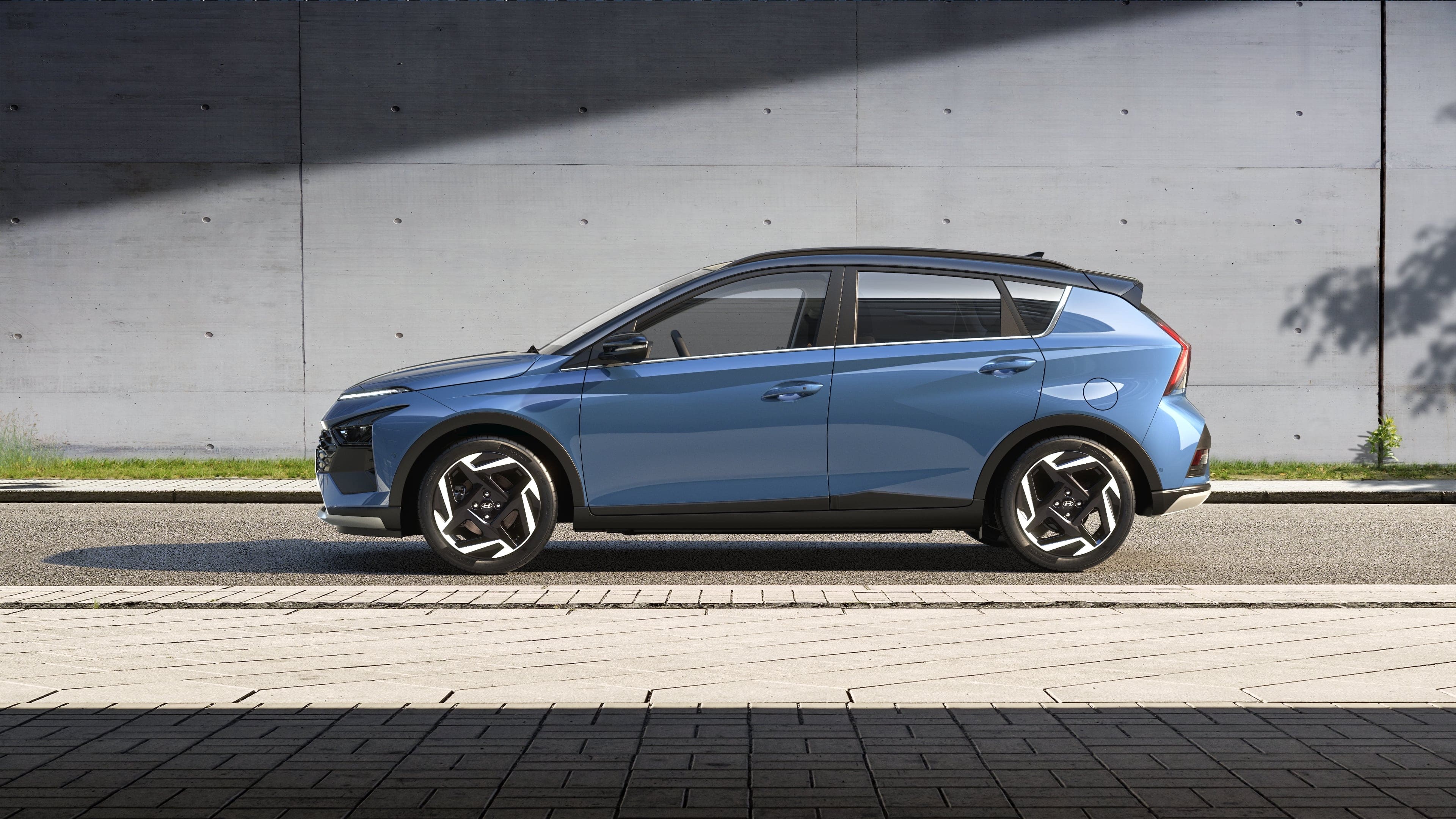
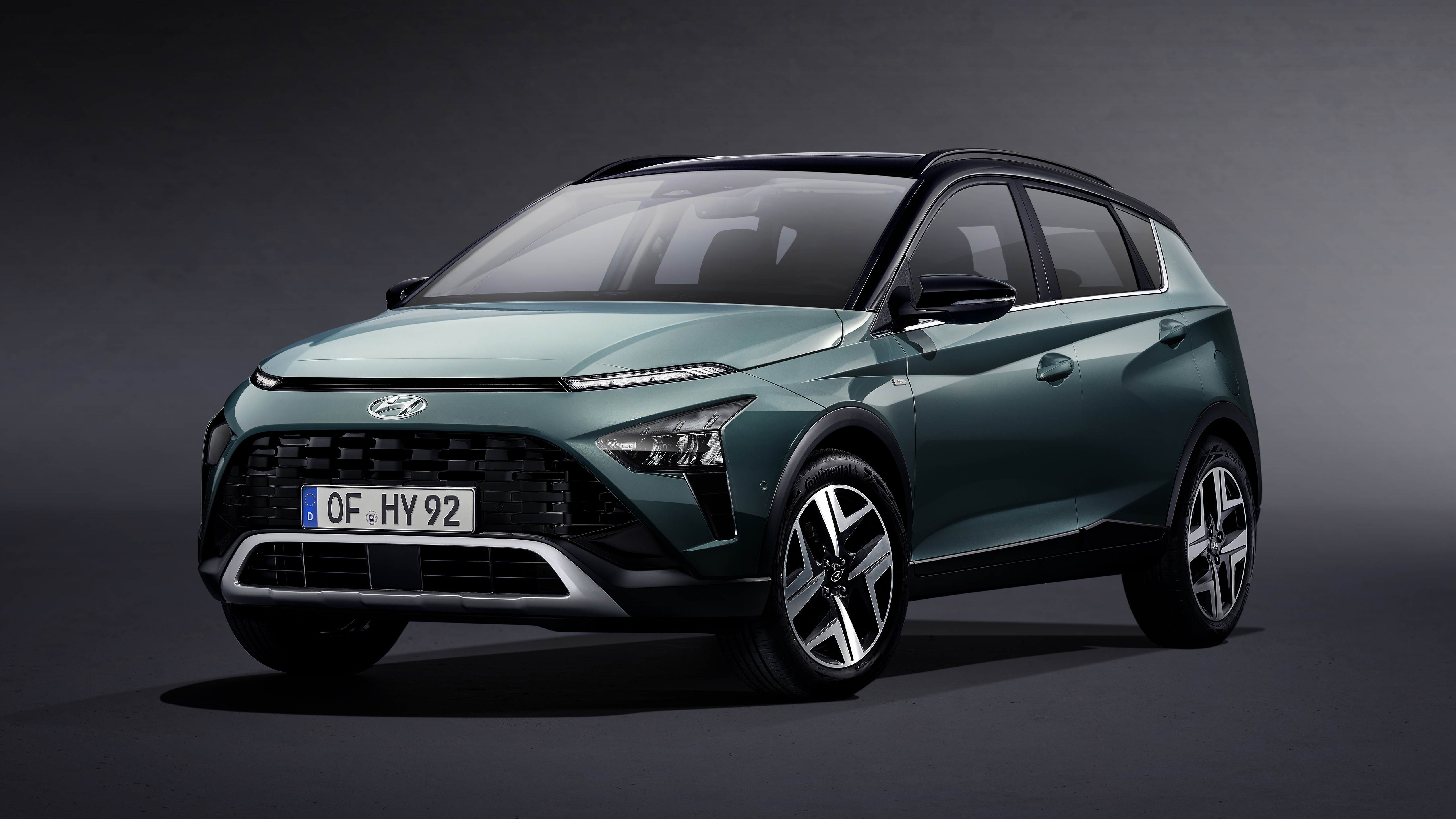
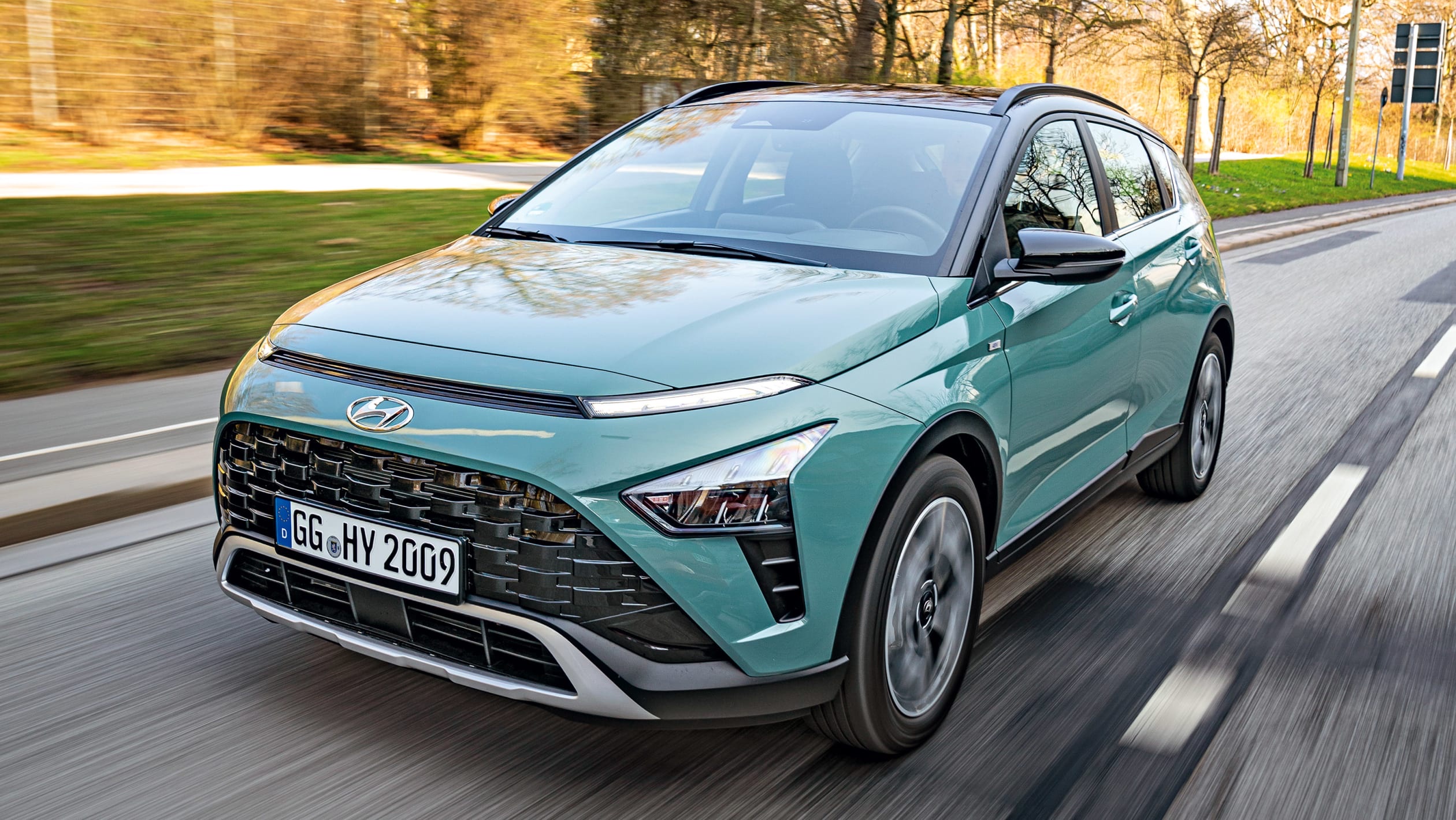
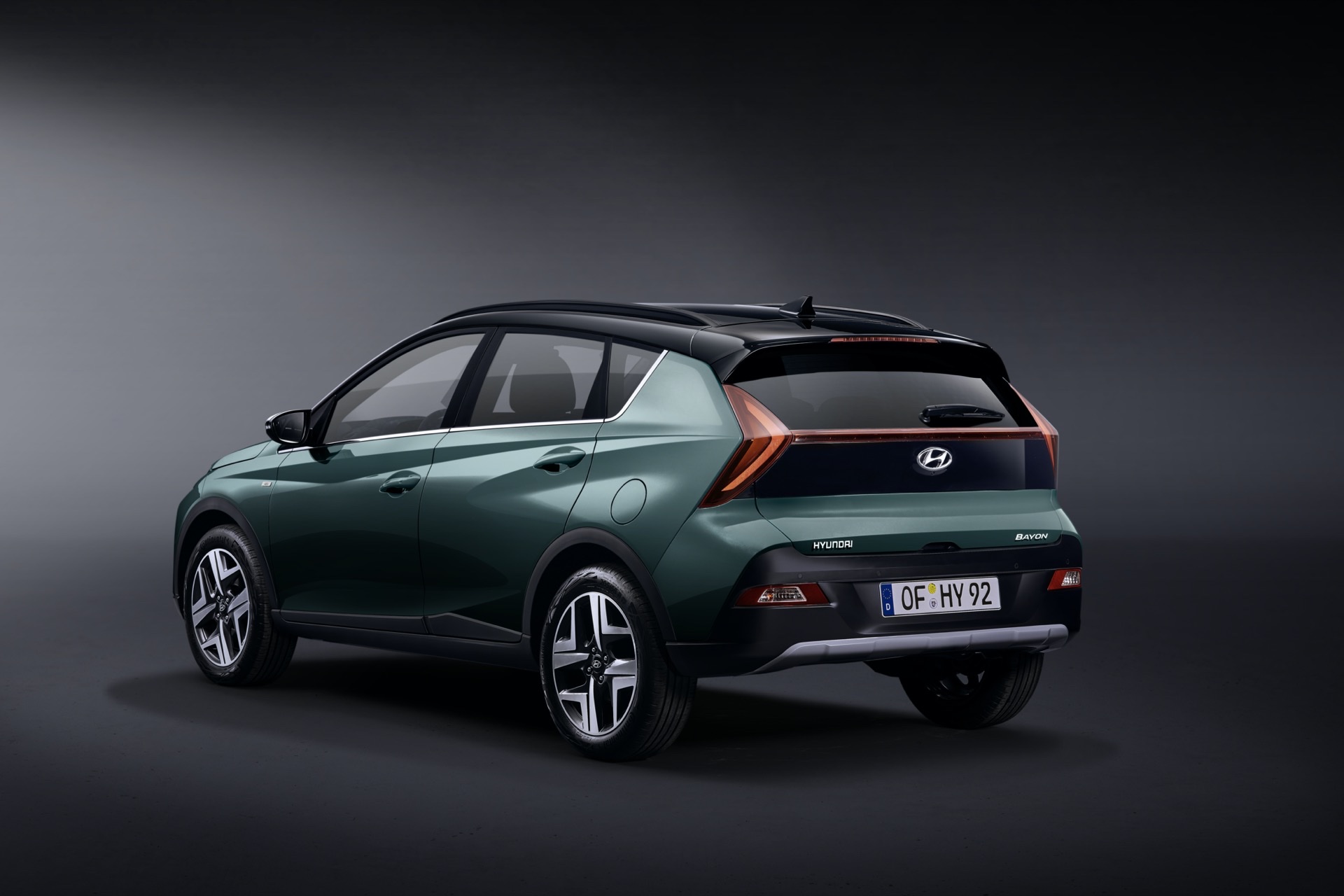
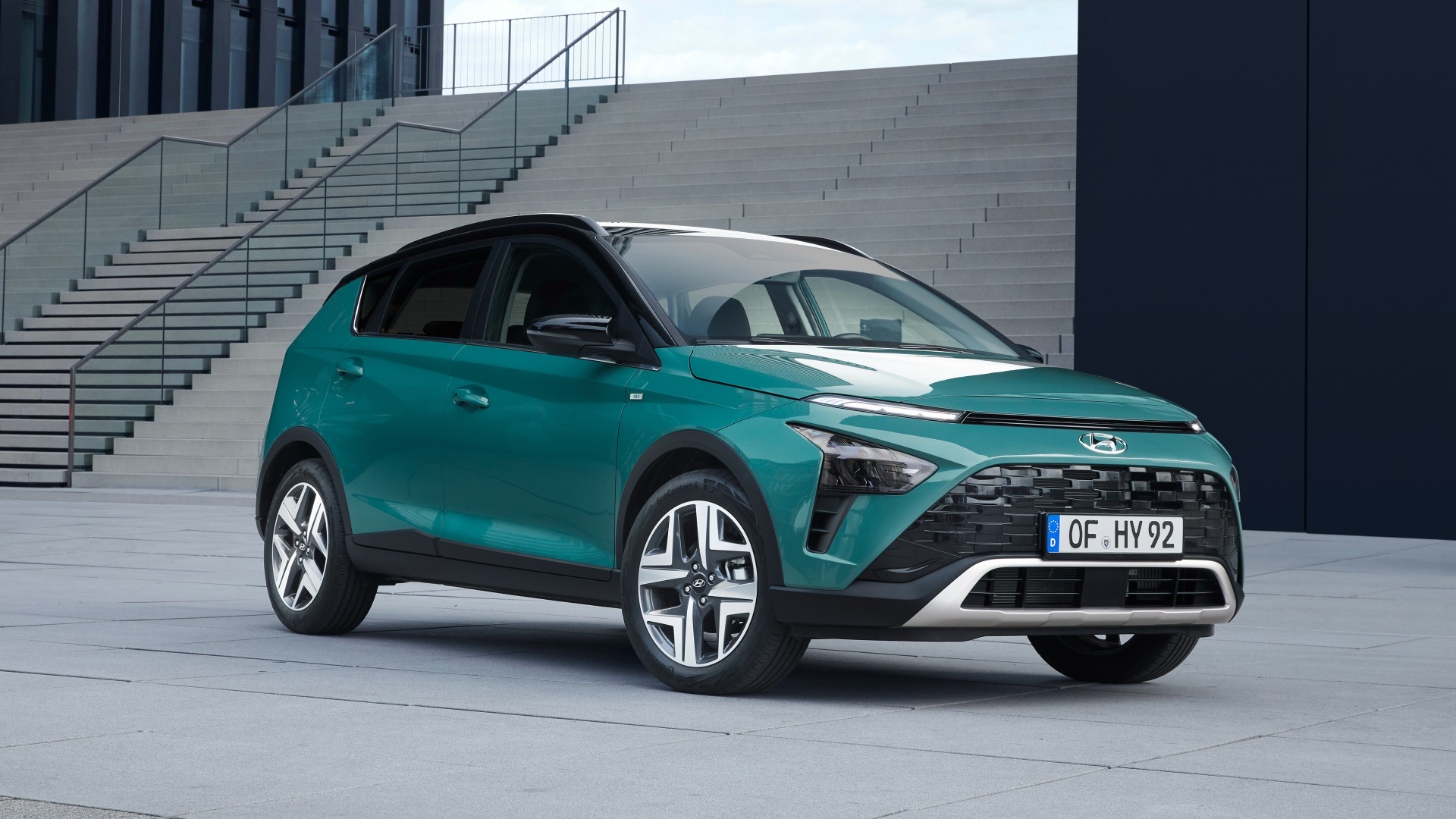
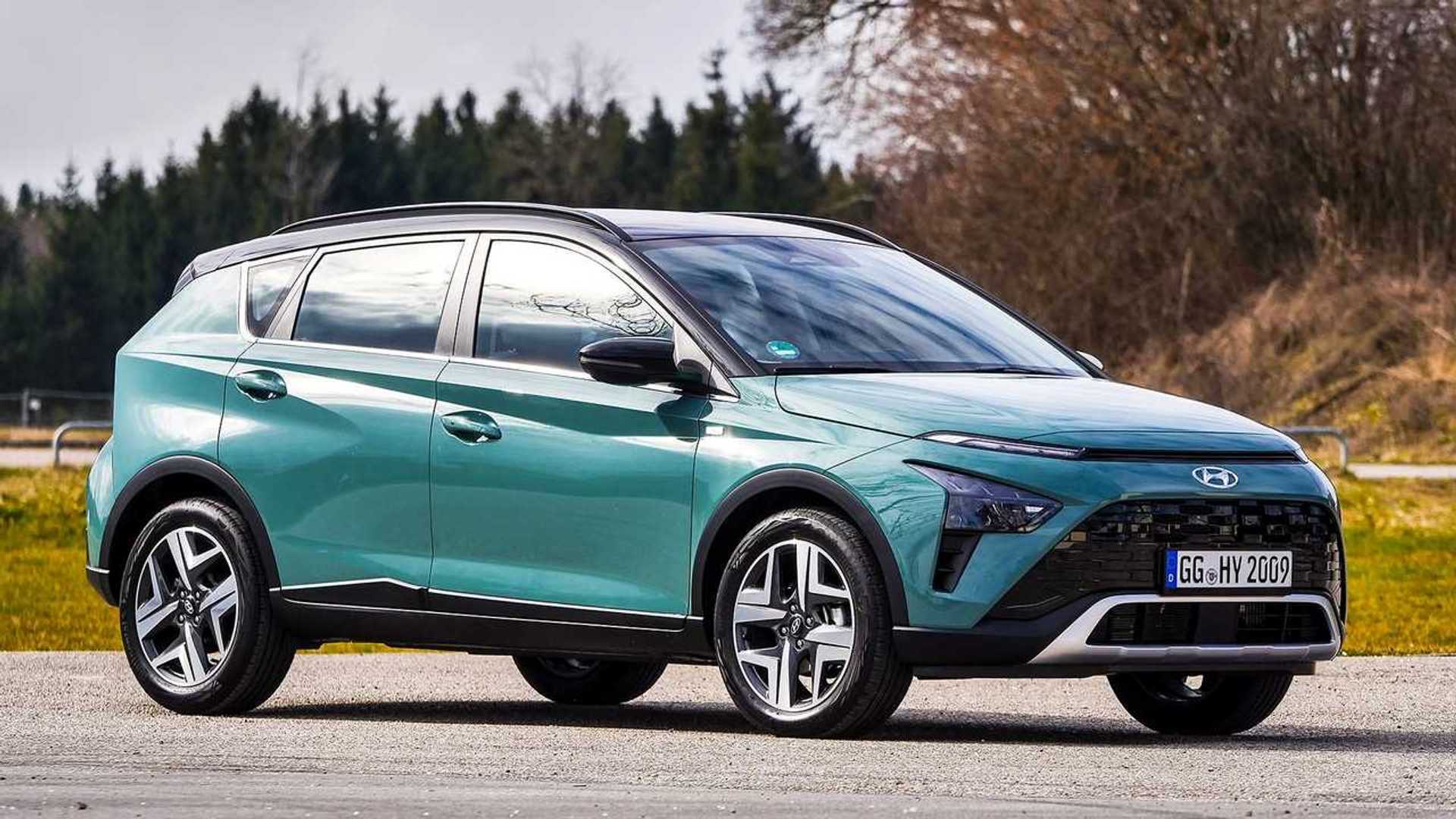
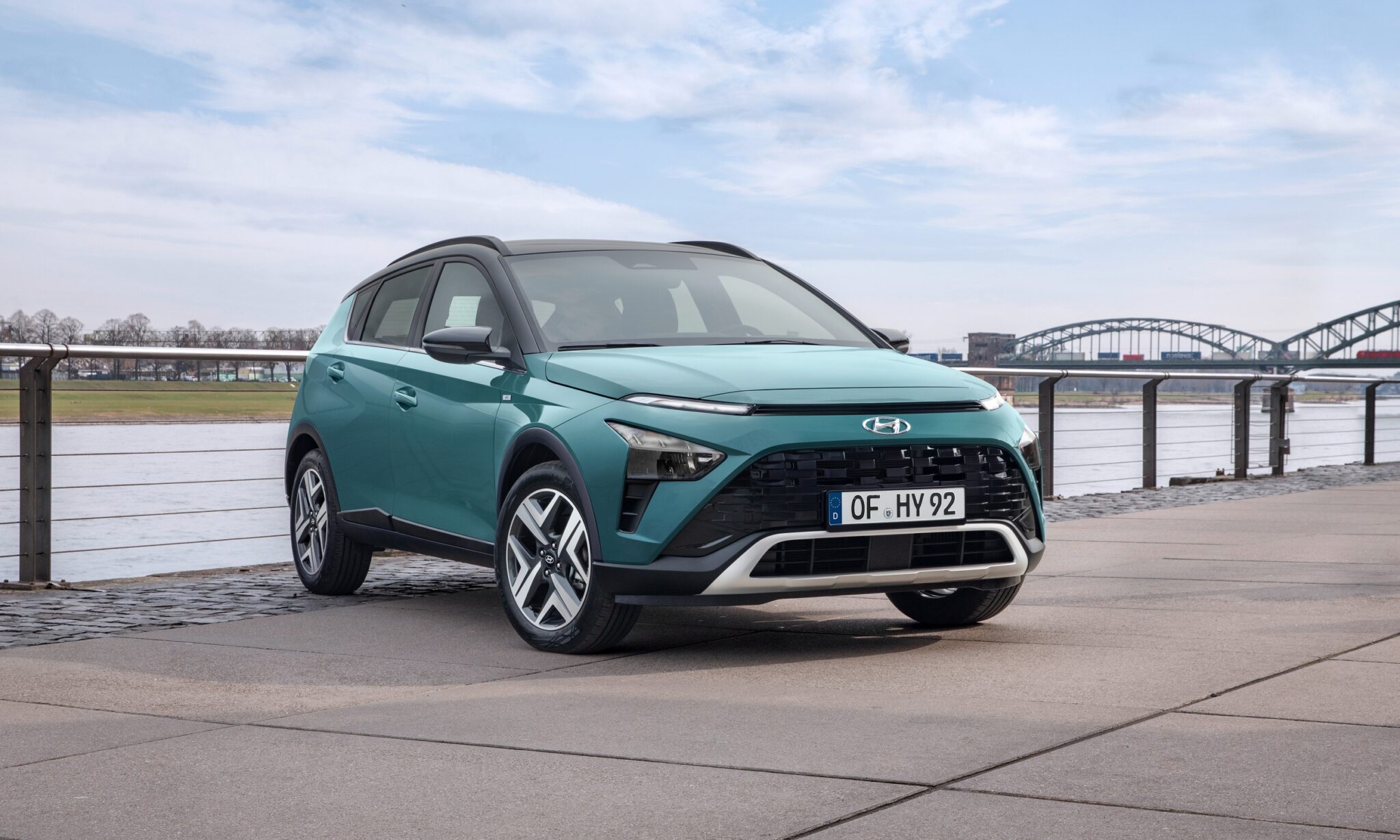
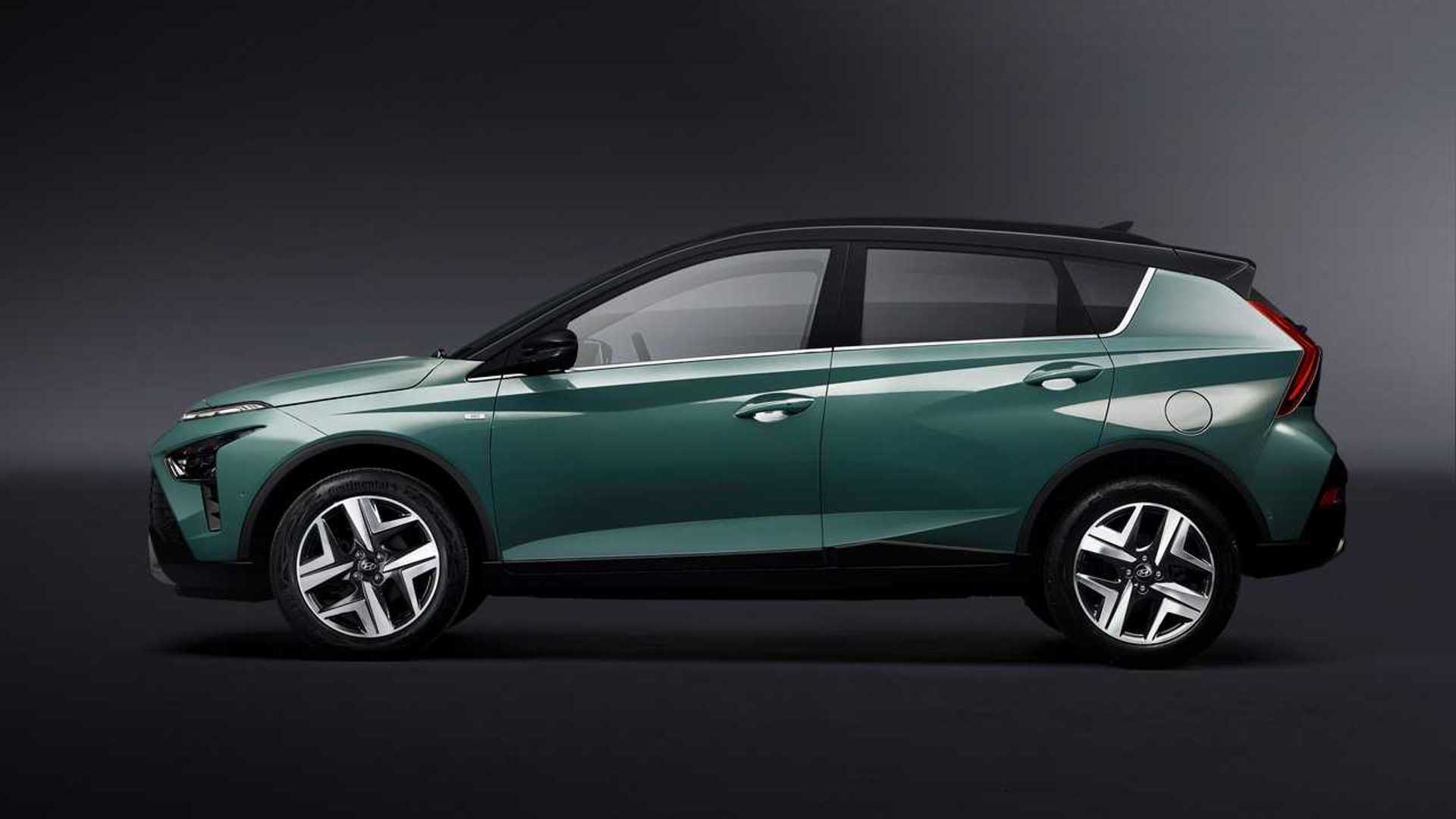
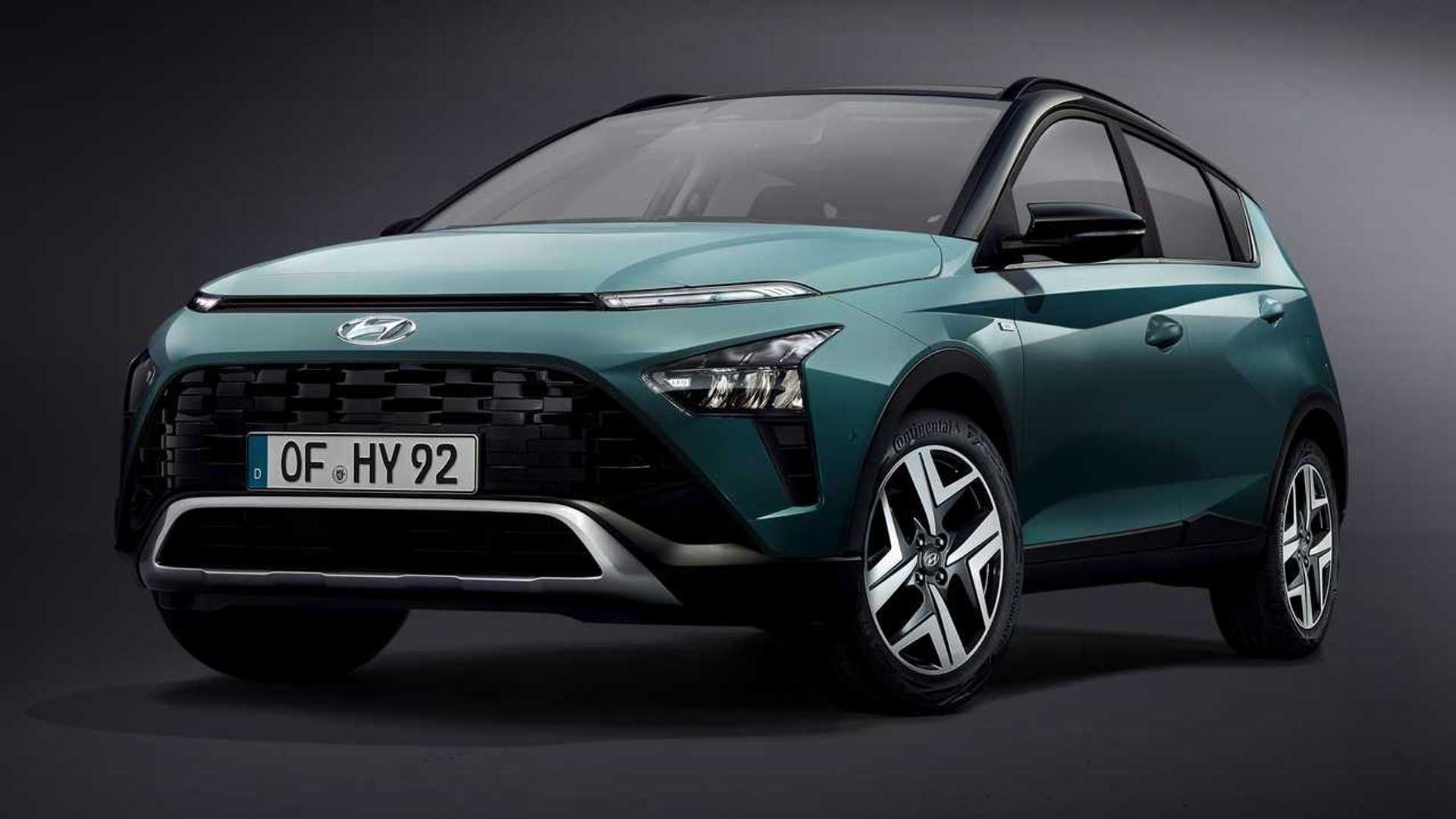
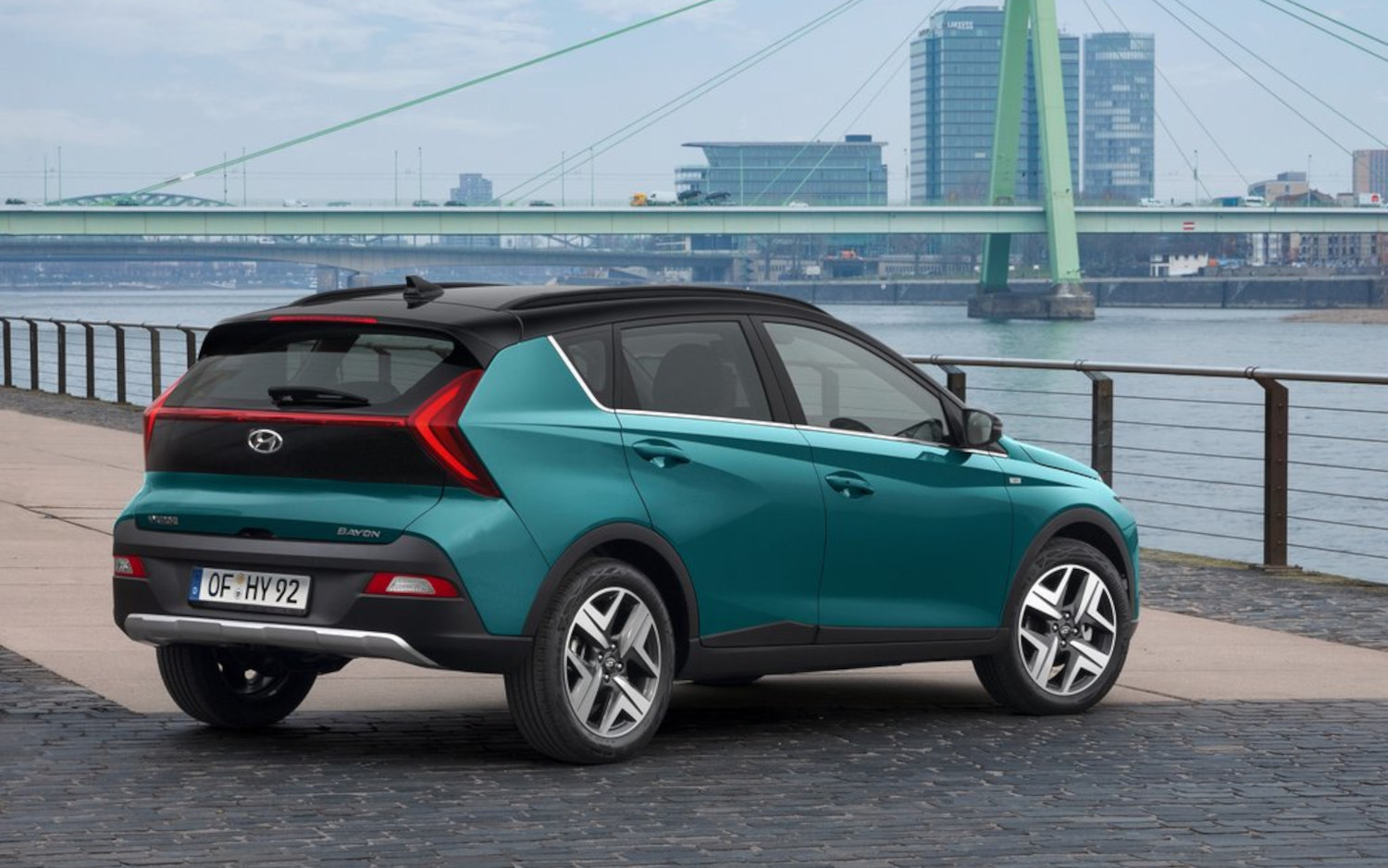
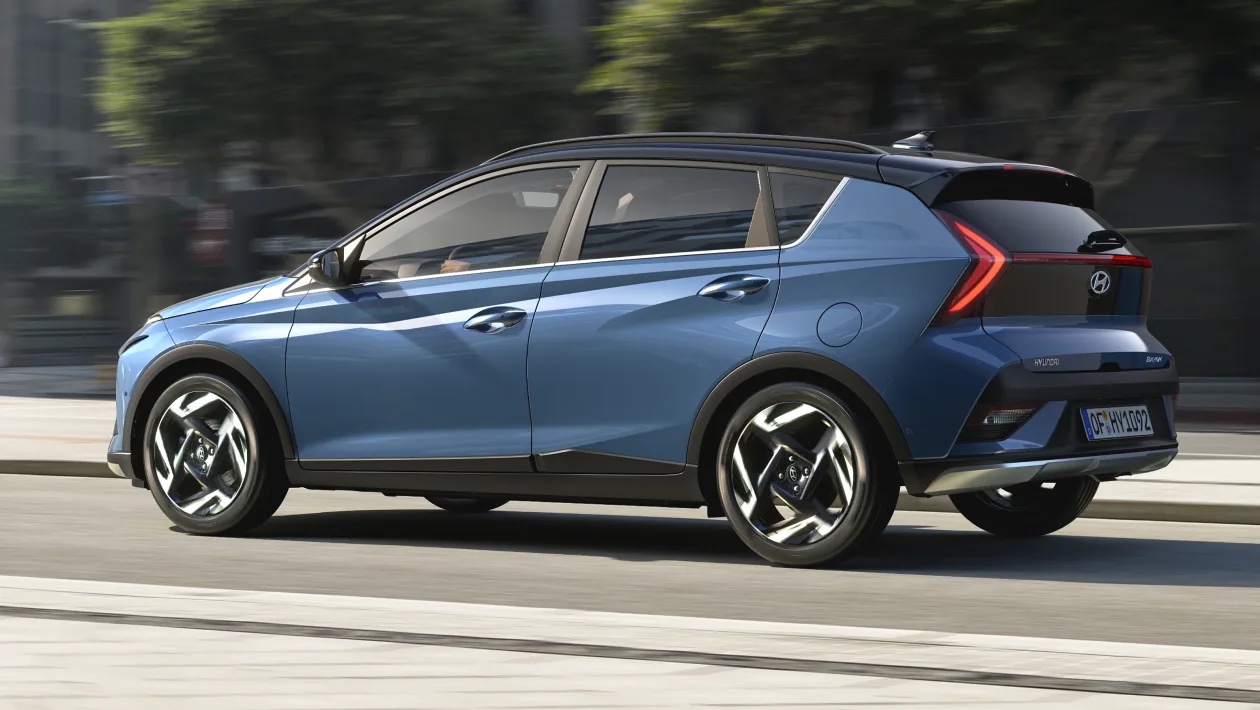
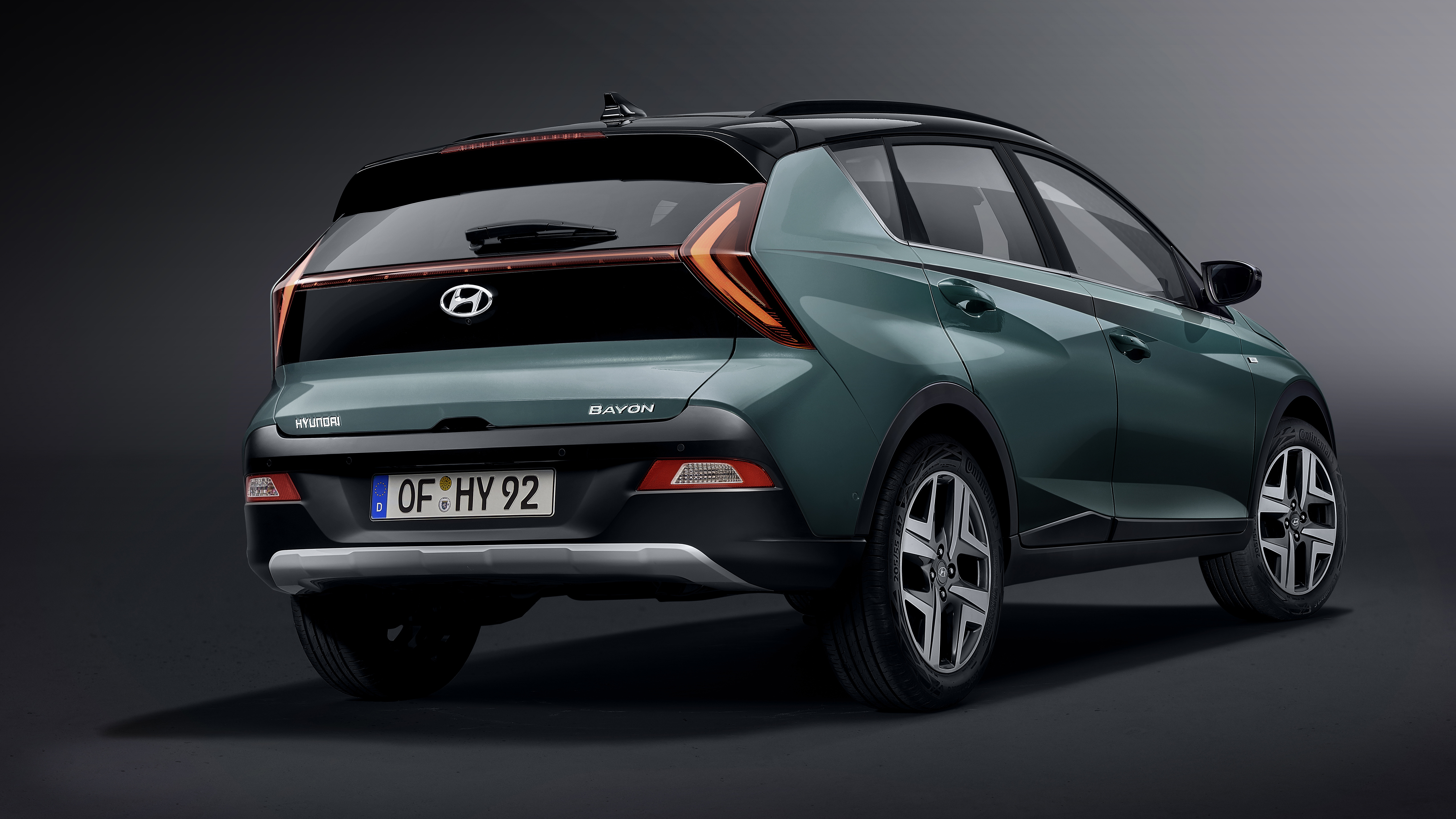
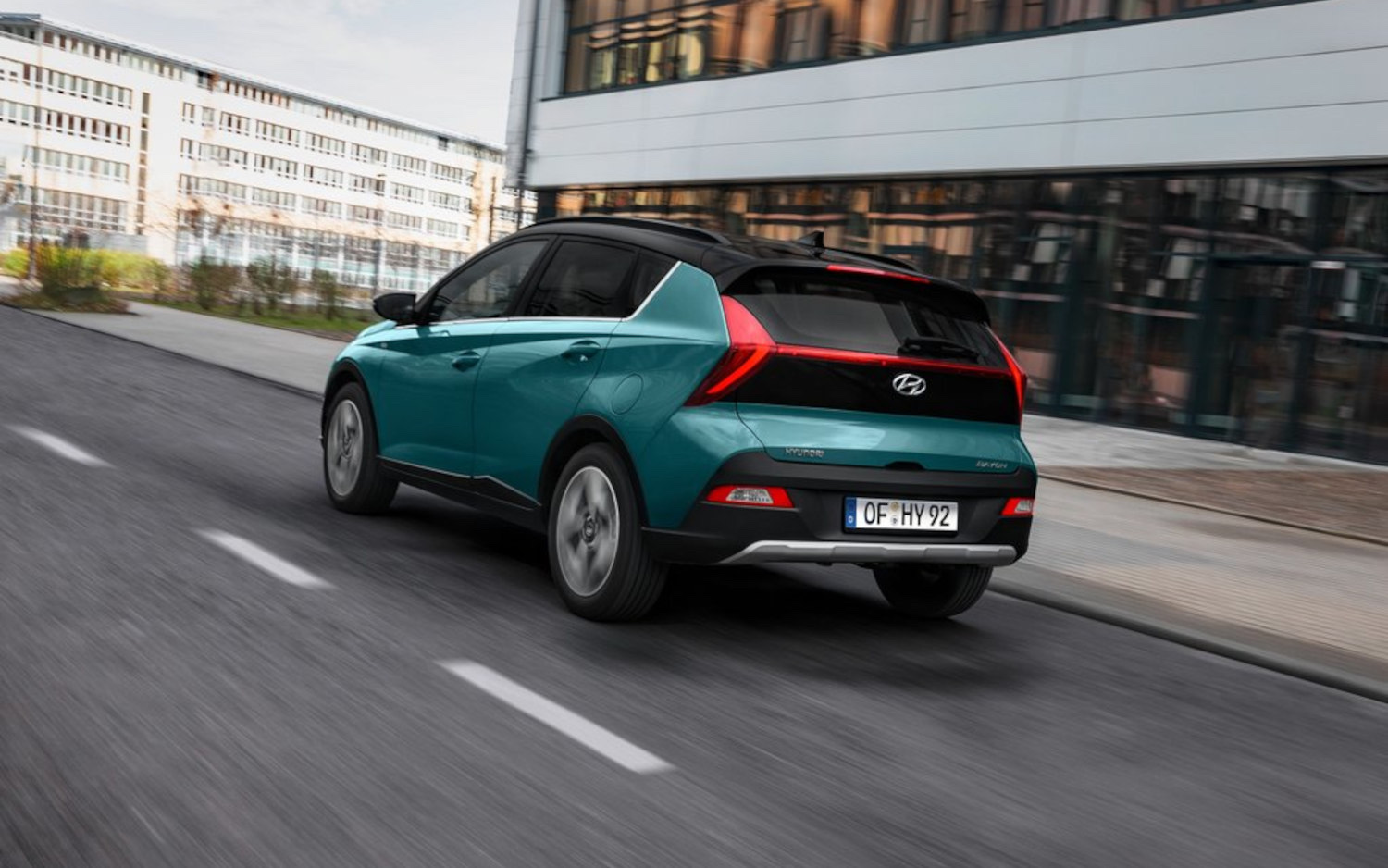
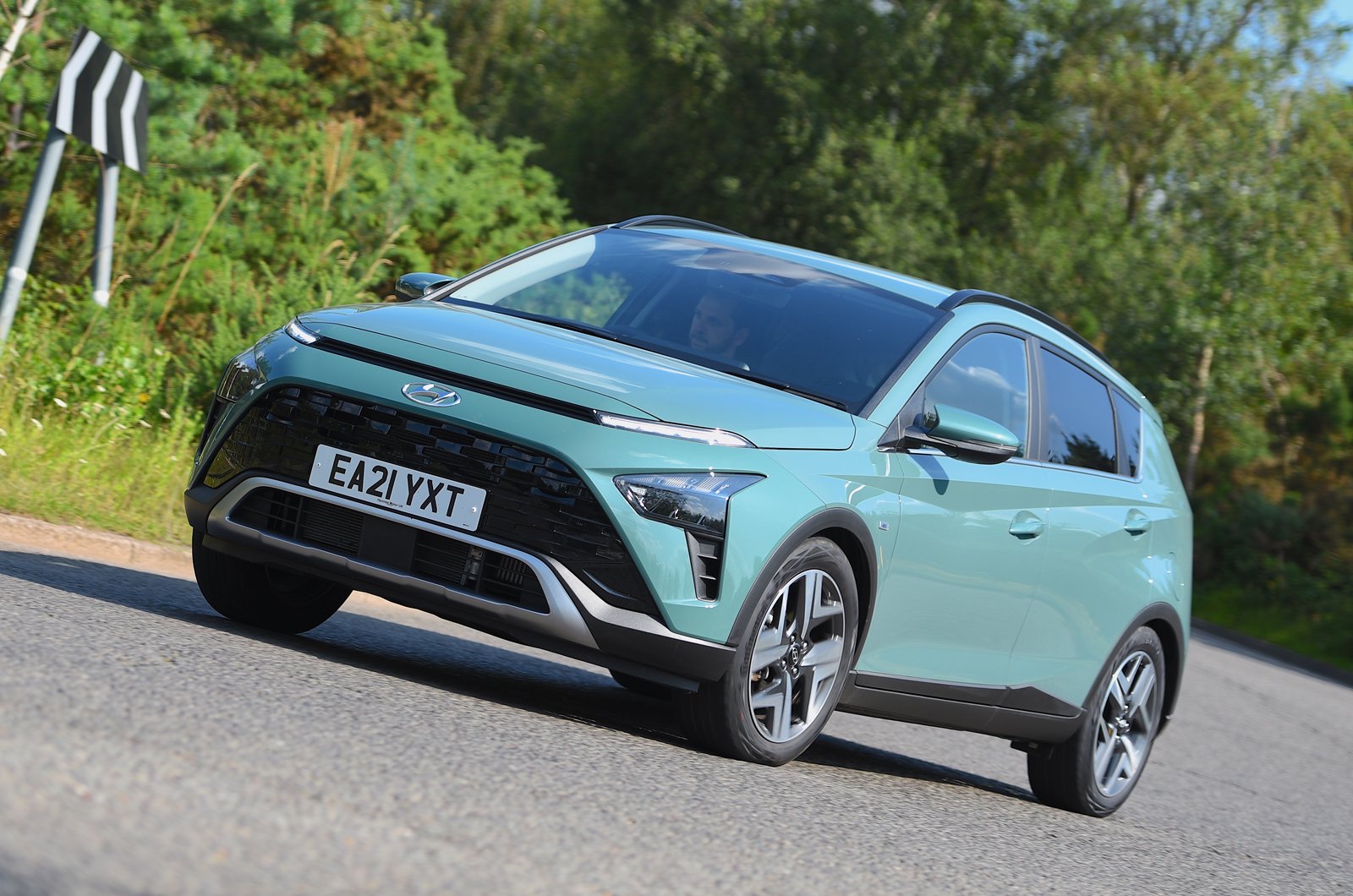
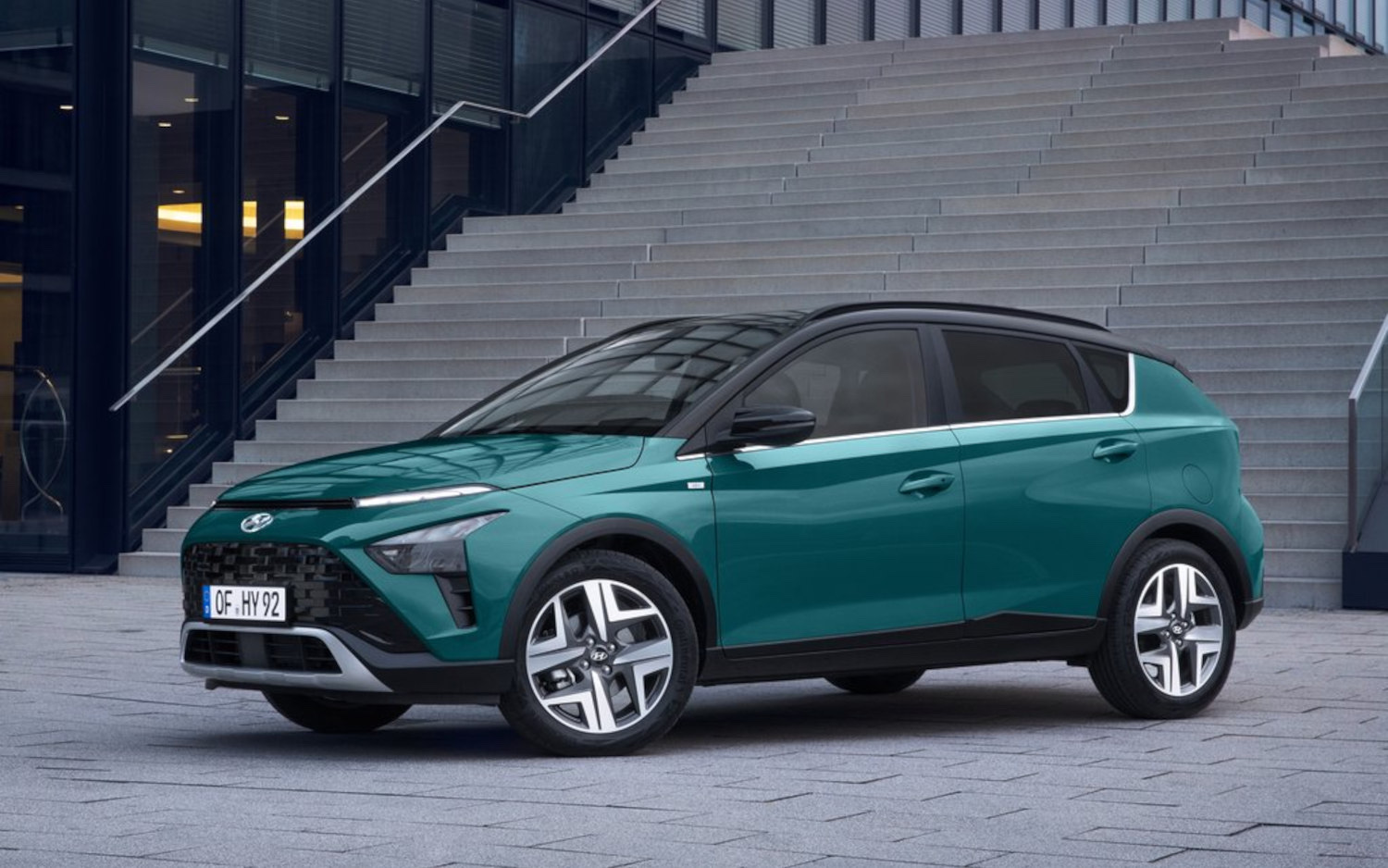
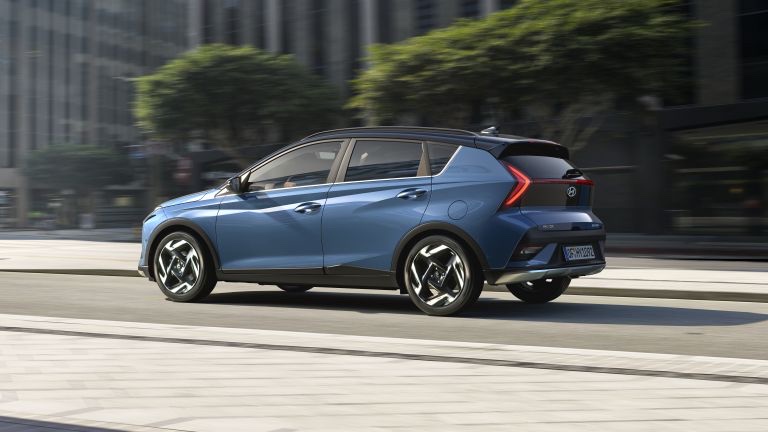
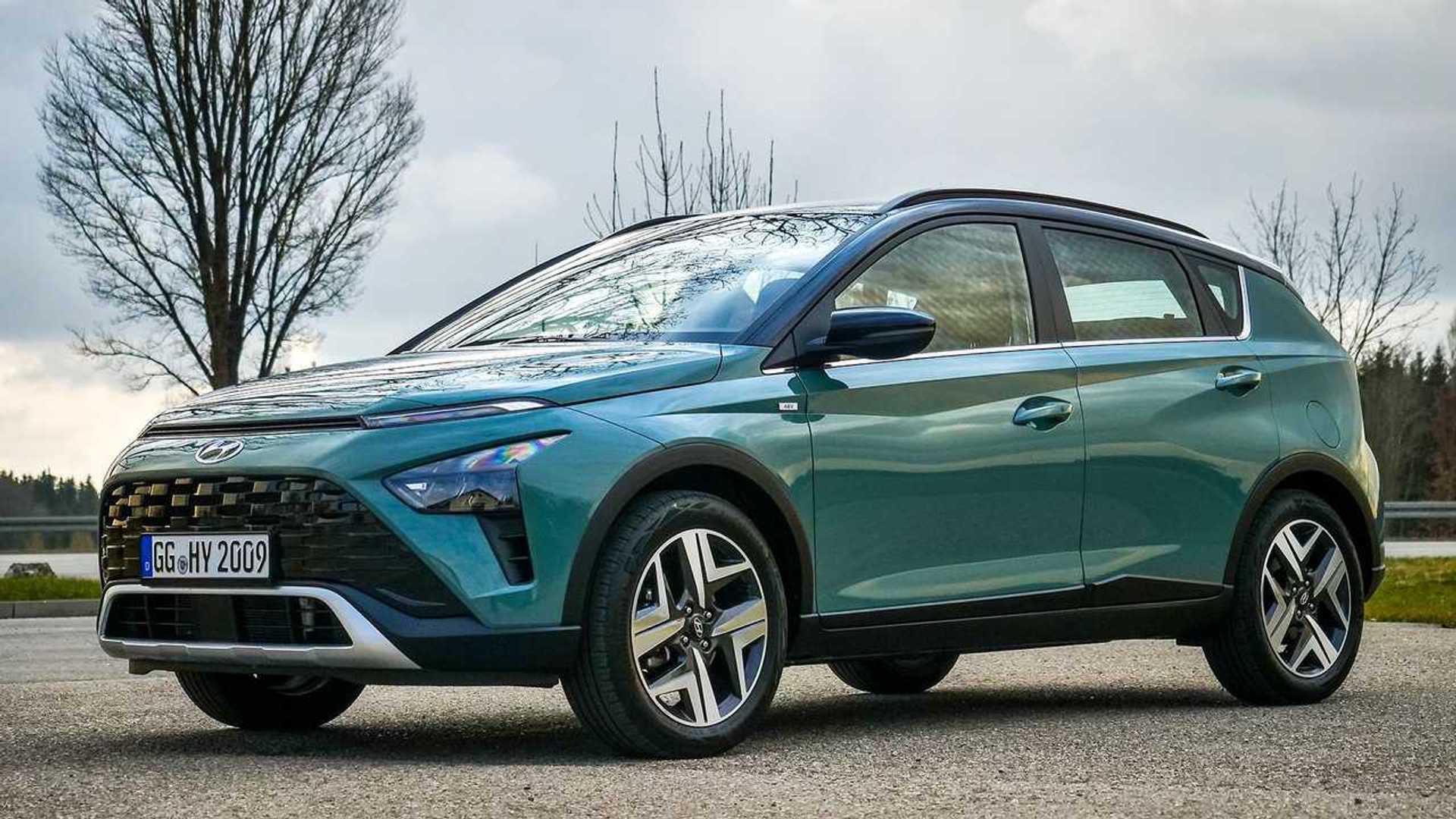
The exterior design adopts Hyundai's contemporary SUV styling language, characterized by a split-level headlight setup and a prominent, massive front grille. Sharp creases define the side profile, while the rear features distinctive arrow-shaped taillights connected by a horizontal light bar. The concave section of the tailgate adds further visual depth to the rear fascia. Overall, the design gives the Bayon a wider and more rugged appearance compared to its traditional hatchback sibling.
Interior
Inside, the cabin layout is largely identical to the i20, focusing on a driver-oriented dashboard with horizontal air vents that visually stretch across the width of the interior. Base models feature an 8-inch touchscreen with wireless Apple CarPlay and Android Auto, while higher trims upgrade to a 10.25-inch infotainment system and a matching 10.25-inch digital instrument cluster. Rear passengers can benefit from available heated outer seats and USB ports. The 60:40 split-folding rear bench expands the standard 411-liter trunk to a flat 1205-liter load space when folded.
Performance
Powertrain options are strictly gasoline-powered. The entry-level engine is a naturally aspirated 1.2-liter four-cylinder making 84 horsepower, paired exclusively with a five-speed manual transmission. For increased performance, a 1.0-liter turbocharged three-cylinder (T-GDI) produces either 100 hp or 120 hp. The turbo engines can be mated to a standard six-speed manual, a six-speed intelligent manual transmission (iMT) with an electronic clutch, or a seven-speed dual-clutch automatic (DCT). The higher-output configurations frequently feature a 48-volt mild-hybrid system to improve efficiency.
Practicality
Despite its subcompact B-SUV dimensions, the Bayon offers substantial practicality for daily urban commuting. The 411-liter trunk is generously sized for its segment, and the raised roofline provides ample headroom for passengers. The vehicle's relatively short length makes it easy to park in tight city spaces, while its flexible interior storage solutions and fold-flat rear seats allow it to adapt quickly to larger cargo requirements.
Safety and tech
The crossover includes a robust suite of advanced driver assistance systems. Available features include navigation-based adaptive cruise control, active lane-keeping assist, blind-spot monitoring, and rear cross-traffic alert. Hyundai also equipped the Bayon with a rear occupant alert system to prevent leaving children or pets behind, as well as a leading vehicle departure alert that notifies the driver when the car ahead has started moving in heavy traffic.
Buyer notes
Shoppers considering the Hyundai Bayon should weigh their typical driving routes when selecting an engine. The base 1.2-liter engine is adequate for low-speed city driving, but the turbocharged 1.0-liter options, particularly those equipped with the 48-volt mild-hybrid system, offer substantially better acceleration for highway merging. Buyers should also note that all-wheel drive is not available, as the Bayon is strictly a front-wheel-drive vehicle tailored for paved environments.
Trims and key specifications
Use this table to compare the main differences between available configurations.
| Trim / modification | Engine | Power | Seats | Transmission |
|---|---|---|---|---|
| 1.2 MPi (84 hp) 5-speed manual | 1197 cc | 84 hp | 5 | 5-speed manual |
| 1.0 T-GDI (100 hp) 6-speed manual | 998 cc | 100 hp | 5 | 6-speed manual |
| 1.0 T-GDI (100 hp) 6-iMT | 998 cc | 100 hp | 5 | 6-iMT |
| 1.0 T-GDI (100 hp) 7-DCT | 998 cc | 100 hp | 5 | 7-speed dual-clutch |
| 1.0 T-GDI (120 hp) 6-iMT | 998 cc | 120 hp | 5 | 6-iMT |
| 1.0 T-GDI (120 hp) 7-DCT | 998 cc | 120 hp | 5 | 7-speed dual-clutch |
Specifications can vary by market, model year, and equipment package. Use the trim sections below to review the full data for each configuration.
Hyundai Bayon photo gallery
19 images are collected here with the main specifications and trim data for this model.
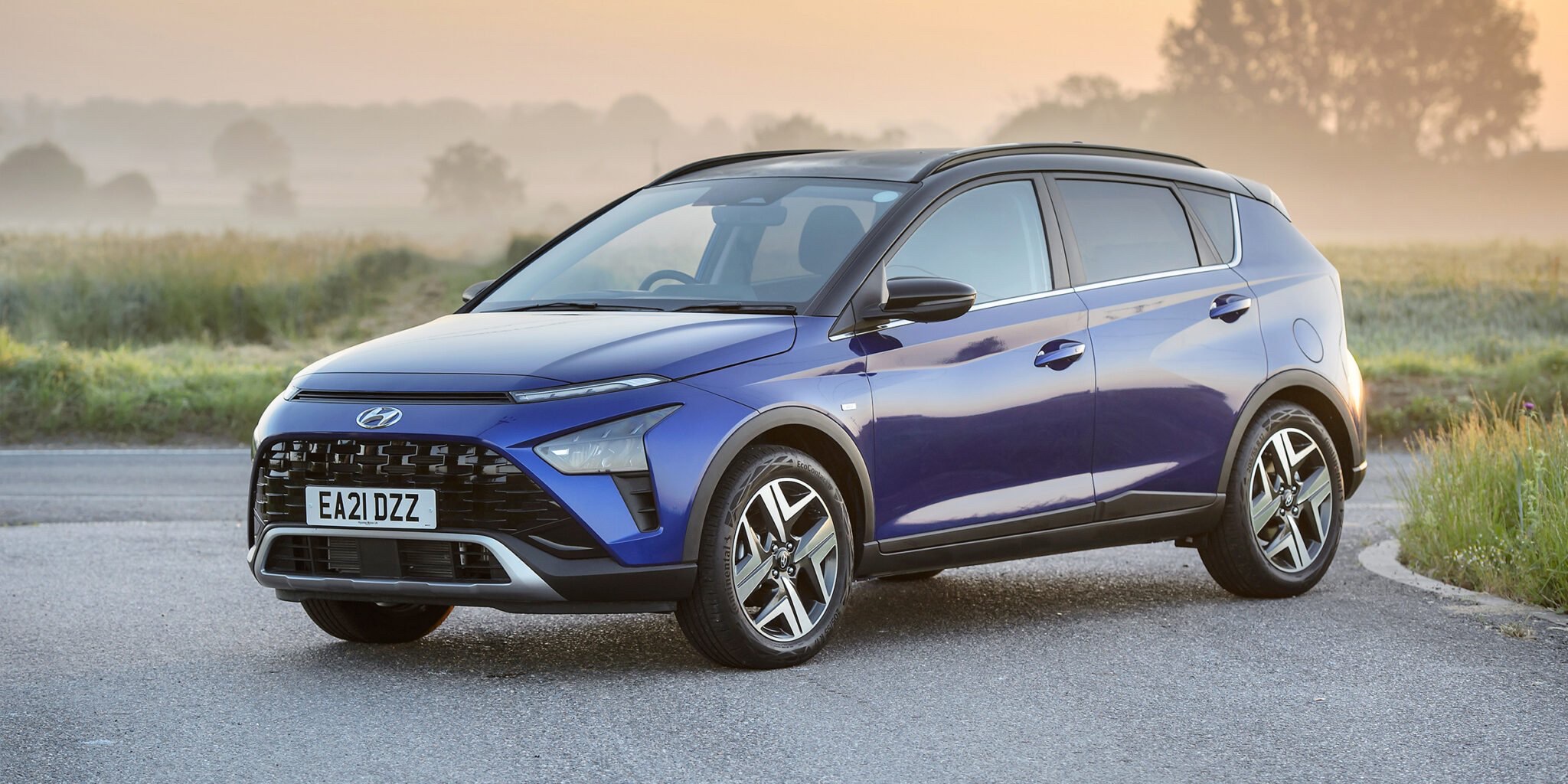
Photo Hyundai Bayon
Specifications by trim
Choose a configuration below to open full technical data grouped by category.
1.2 MPi (84 hp) 5-speed manual 35 specifications
Specifications
Performance and consumption
| Fuel consumption combined, L/100 km | 5.7 |
|---|---|
| Top speed, km/h | 165 |
| Acceleration 0-100 km/h, s | 13.5 |
| Emissions standard | Euro VI |
Engine
| Engine | 1.2 MPi |
|---|---|
| Engine code | G4LA |
| Engine type | Internal combustion engine |
| Fuel type | Gasoline |
| Engine displacement, cc | 1197 |
| Cylinder layout | Inline |
| Number of cylinders | 4 |
| Valves | 16 |
| Compression ratio | 10.5:1 |
| Power, hp | 84 |
| RPM at max power | 6000 |
| Torque, Nm | 118 |
| RPM at max torque | 4000 |
Dimensions
| Seats | 5 |
|---|---|
| Length, mm | 4180 |
| Height, mm | 1500 |
| Wheelbase, mm | 2580 |
| Front track, mm | 1545 |
| Rear track, mm | 1551 |
| Kerb weight, kg | 1045 |
| Gross weight, kg | 1580 |
| Fuel tank capacity, L | 40 |
| Ground clearance, mm | 165 |
| Width without mirrors, mm | 1775 |
| Trunk capacity, L | 411 |
Transmission and drive
| Transmission | 5-speed manual |
|---|---|
| Transmission type | manual |
| Drive | Front-wheel drive |
| Number of gears | 5 |
| Transmission manufacturer | Hyundai |
| Transmission country | Korea |
1.0 T-GDI (100 hp) 6-speed manual 35 specifications
Specifications
Performance and consumption
| Fuel consumption combined, L/100 km | 5.7 |
|---|---|
| Top speed, km/h | 183 |
| Acceleration 0-100 km/h, s | 10.7 |
| Emissions standard | Euro VI |
Engine
| Engine | 1.0 T-GDI |
|---|---|
| Engine type | Internal combustion engine |
| Fuel type | Gasoline |
| Engine displacement, cc | 998 |
| Cylinder layout | Inline |
| Number of cylinders | 3 |
| Valves | 12 |
| Turbocharger | + |
| Compression ratio | 10.5:1 |
| Power, hp | 100 |
| RPM at max power | 4500–6000 |
| Torque, Nm | 172 |
| RPM at max torque | 1500–4000 |
Dimensions
| Seats | 5 |
|---|---|
| Length, mm | 4180 |
| Height, mm | 1500 |
| Wheelbase, mm | 2580 |
| Front track, mm | 1545 |
| Rear track, mm | 1551 |
| Kerb weight, kg | 1045 |
| Gross weight, kg | 1580 |
| Fuel tank capacity, L | 40 |
| Ground clearance, mm | 165 |
| Width without mirrors, mm | 1775 |
| Trunk capacity, L | 411 |
Transmission and drive
| Transmission | 6-speed manual |
|---|---|
| Transmission type | manual |
| Drive | Front-wheel drive |
| Number of gears | 6 |
| Transmission manufacturer | Hyundai |
| Transmission country | South Korea |
1.0 T-GDI (100 hp) 6-iMT 34 specifications
Specifications
Performance and consumption
| Fuel consumption combined, L/100 km | 5.5 |
|---|---|
| Top speed, km/h | 183 |
| Acceleration 0-100 km/h, s | 10.7 |
| Emissions standard | Euro VI |
Engine
| Engine | 1.0 T-GDI |
|---|---|
| Engine type | Internal combustion engine |
| Fuel type | Gasoline |
| Engine displacement, cc | 998 |
| Cylinder layout | Inline |
| Number of cylinders | 3 |
| Valves | 12 |
| Turbocharger | + |
| Compression ratio | 10.5:1 |
| Power, hp | 100 |
| RPM at max power | 4500–6000 |
| Torque, Nm | 172 |
| RPM at max torque | 1500–4000 |
Dimensions
| Seats | 5 |
|---|---|
| Length, mm | 4180 |
| Height, mm | 1500 |
| Wheelbase, mm | 2580 |
| Front track, mm | 1545 |
| Rear track, mm | 1551 |
| Kerb weight, kg | 1045 |
| Gross weight, kg | 1580 |
| Fuel tank capacity, L | 40 |
| Ground clearance, mm | 165 |
| Width without mirrors, mm | 1775 |
| Trunk capacity, L | 411 |
Transmission and drive
| Transmission | 6-iMT |
|---|---|
| Transmission type | manual |
| Drive | Front-wheel drive |
| Number of gears | 6 |
| Automatic transmission | + |
1.0 T-GDI (100 hp) 7-DCT 34 specifications
Specifications
Performance and consumption
| Fuel consumption combined, L/100 km | 5.5 |
|---|---|
| Top speed, km/h | 180 |
| Acceleration 0-100 km/h, s | 11.7 |
| Emissions standard | Euro VI |
Engine
| Engine | 1.0 T-GDI |
|---|---|
| Engine type | Internal combustion engine |
| Fuel type | Gasoline |
| Engine displacement, cc | 998 |
| Cylinder layout | Inline |
| Number of cylinders | 3 |
| Valves | 12 |
| Turbocharger | + |
| Compression ratio | 10.5:1 |
| Power, hp | 100 |
| RPM at max power | 4500–6000 |
| Torque, Nm | 172 |
| RPM at max torque | 1500–4000 |
Dimensions
| Seats | 5 |
|---|---|
| Length, mm | 4180 |
| Height, mm | 1500 |
| Wheelbase, mm | 2580 |
| Front track, mm | 1545 |
| Rear track, mm | 1551 |
| Kerb weight, kg | 1045 |
| Gross weight, kg | 1580 |
| Fuel tank capacity, L | 40 |
| Ground clearance, mm | 165 |
| Width without mirrors, mm | 1775 |
| Trunk capacity, L | 411 |
Transmission and drive
| Transmission | 7-speed dual-clutch |
|---|---|
| Transmission type | 2-speed automated manual |
| Drive | Front-wheel drive |
| Number of gears | 7 |
| Automatic transmission | + |
1.0 T-GDI (120 hp) 6-iMT 35 specifications
Specifications
Performance and consumption
| Fuel consumption combined, L/100 km | 5.5 |
|---|---|
| Top speed, km/h | 185 |
| Acceleration 0-100 km/h, s | 10.4 |
| Emissions standard | Euro VI |
Engine
| Engine | 1.0 T-GDI |
|---|---|
| Engine code | G3LE/G3LF |
| Engine type | Internal combustion engine |
| Fuel type | Gasoline |
| Engine displacement, cc | 998 |
| Cylinder layout | Inline |
| Number of cylinders | 3 |
| Valves | 12 |
| Turbocharger | + |
| Compression ratio | 10.5:1 |
| Power, hp | 120 |
| RPM at max power | 6000 |
| Torque, Nm | 172 |
| RPM at max torque | 1500–4000 |
Dimensions
| Seats | 5 |
|---|---|
| Length, mm | 4180 |
| Height, mm | 1500 |
| Wheelbase, mm | 2580 |
| Front track, mm | 1545 |
| Rear track, mm | 1551 |
| Kerb weight, kg | 1045 |
| Gross weight, kg | 1580 |
| Fuel tank capacity, L | 40 |
| Ground clearance, mm | 165 |
| Width without mirrors, mm | 1775 |
| Trunk capacity, L | 411 |
Transmission and drive
| Transmission | 6-iMT |
|---|---|
| Transmission type | manual |
| Drive | Front-wheel drive |
| Number of gears | 6 |
| Automatic transmission | + |
1.0 T-GDI (120 hp) 7-DCT 37 specifications
Specifications
Performance and consumption
| Fuel consumption combined, L/100 km | 5.5 |
|---|---|
| Top speed, km/h | 185 |
| Acceleration 0-100 km/h, s | 10.4 |
| Emissions standard | Euro VI |
Engine
| Engine | 1.0 T-GDI |
|---|---|
| Engine code | G3LE/G3LF |
| Engine type | Internal combustion engine |
| Fuel type | Gasoline |
| Engine displacement, cc | 998 |
| Cylinder layout | Inline |
| Number of cylinders | 3 |
| Valves | 12 |
| Turbocharger | + |
| Compression ratio | 10.5:1 |
| Power, hp | 120 |
| RPM at max power | 6000 |
| Torque, Nm | 172 |
| RPM at max torque | 1500–4000 |
Dimensions
| Seats | 5 |
|---|---|
| Length, mm | 4180 |
| Height, mm | 1500 |
| Wheelbase, mm | 2580 |
| Front track, mm | 1545 |
| Rear track, mm | 1551 |
| Kerb weight, kg | 1045 |
| Gross weight, kg | 1580 |
| Fuel tank capacity, L | 40 |
| Ground clearance, mm | 165 |
| Width without mirrors, mm | 1775 |
| Trunk capacity, L | 411 |
Transmission and drive
| Transmission | 7-speed dual-clutch |
|---|---|
| Transmission type | 2-speed automated manual |
| Drive | Front-wheel drive |
| Number of gears | 7 |
| Transmission manufacturer | Hyundai-KIA |
| Automatic transmission | + |
| Transmission country | South Korea |
Hyundai Bayon questions
Short answers based on the specifications and photos available in this catalog.
What body style is the Hyundai Bayon?
The Hyundai Bayon is a five-door subcompact crossover SUV, operating within the European B-SUV segment.
Is the Bayon available with all-wheel drive?
No, the Bayon is offered exclusively with front-wheel drive across all engine and trim configurations.
How much cargo space does the Hyundai Bayon have?
It provides 411 liters of trunk space behind the rear seats, which expands to a flat load area of 1205 liters when the rear seats are folded down.
What engine options are available?
The lineup includes a naturally aspirated 1.2-liter four-cylinder engine (84 hp) and a turbocharged 1.0-liter three-cylinder engine available with either 100 hp or 120 hp.
What is the intelligent manual transmission (iMT)?
The iMT is a six-speed manual gearbox with an electronic clutch. It is designed to work with the mild-hybrid system, allowing the engine to decouple and switch off while coasting to improve fuel efficiency.