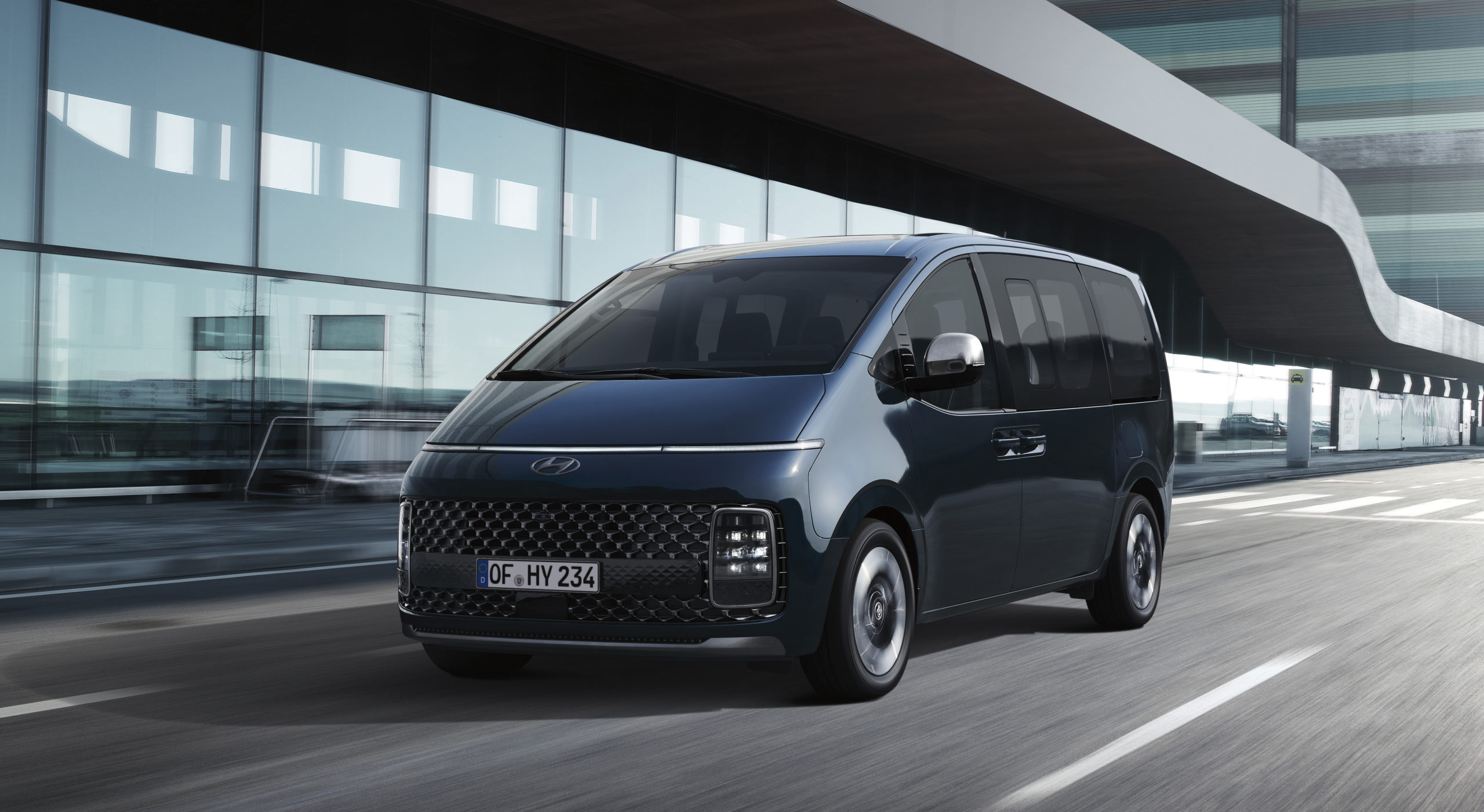
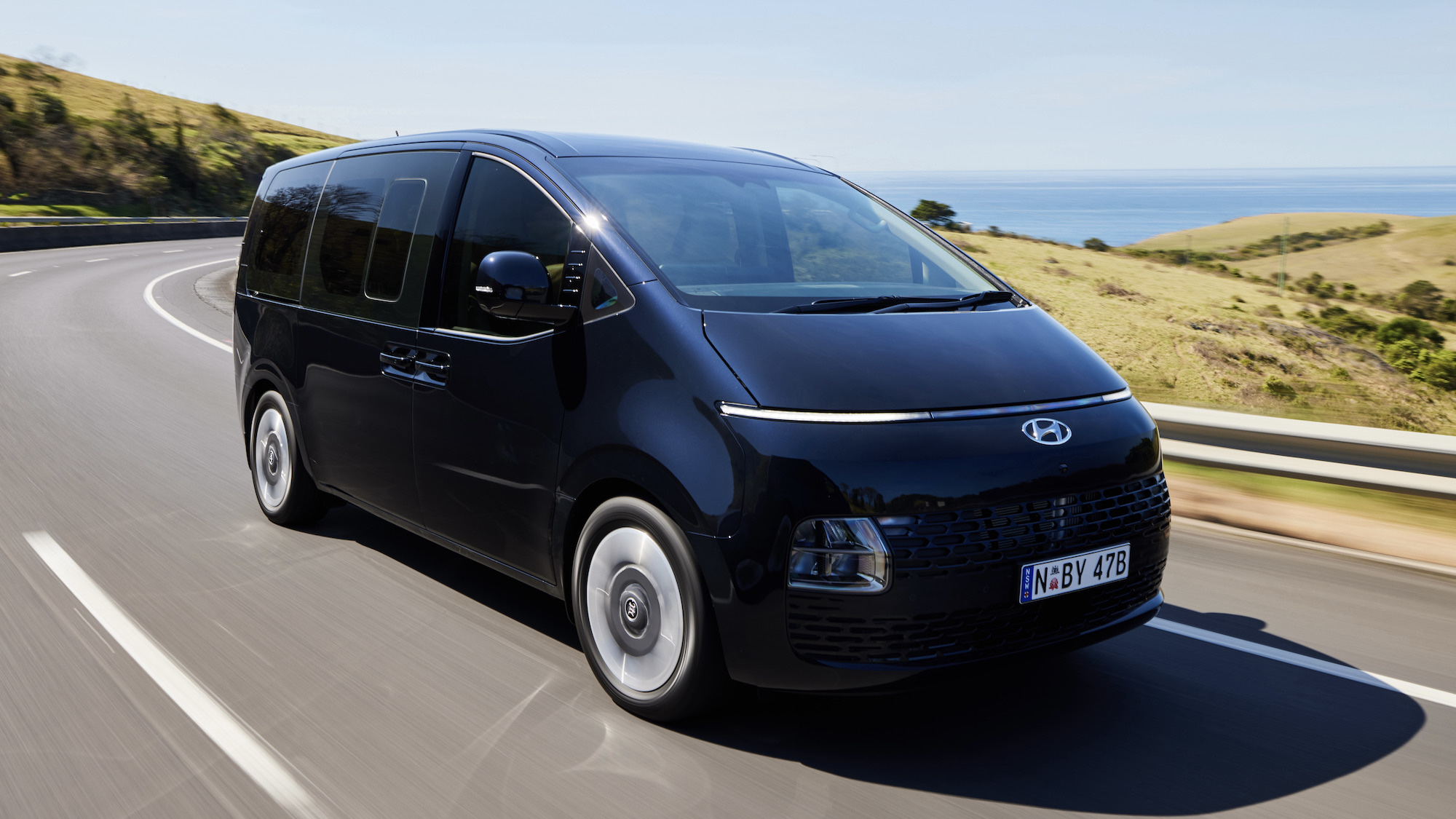
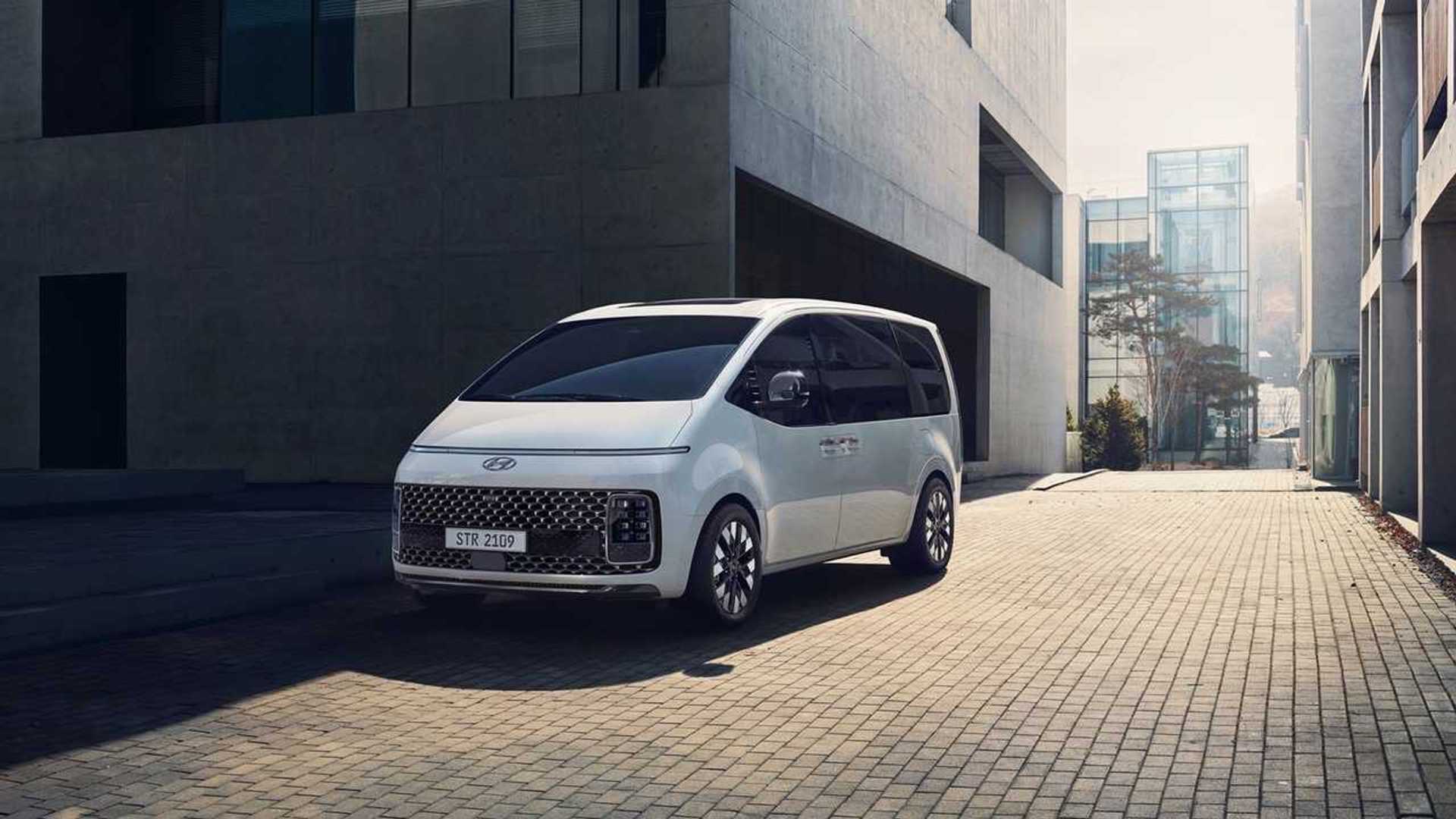
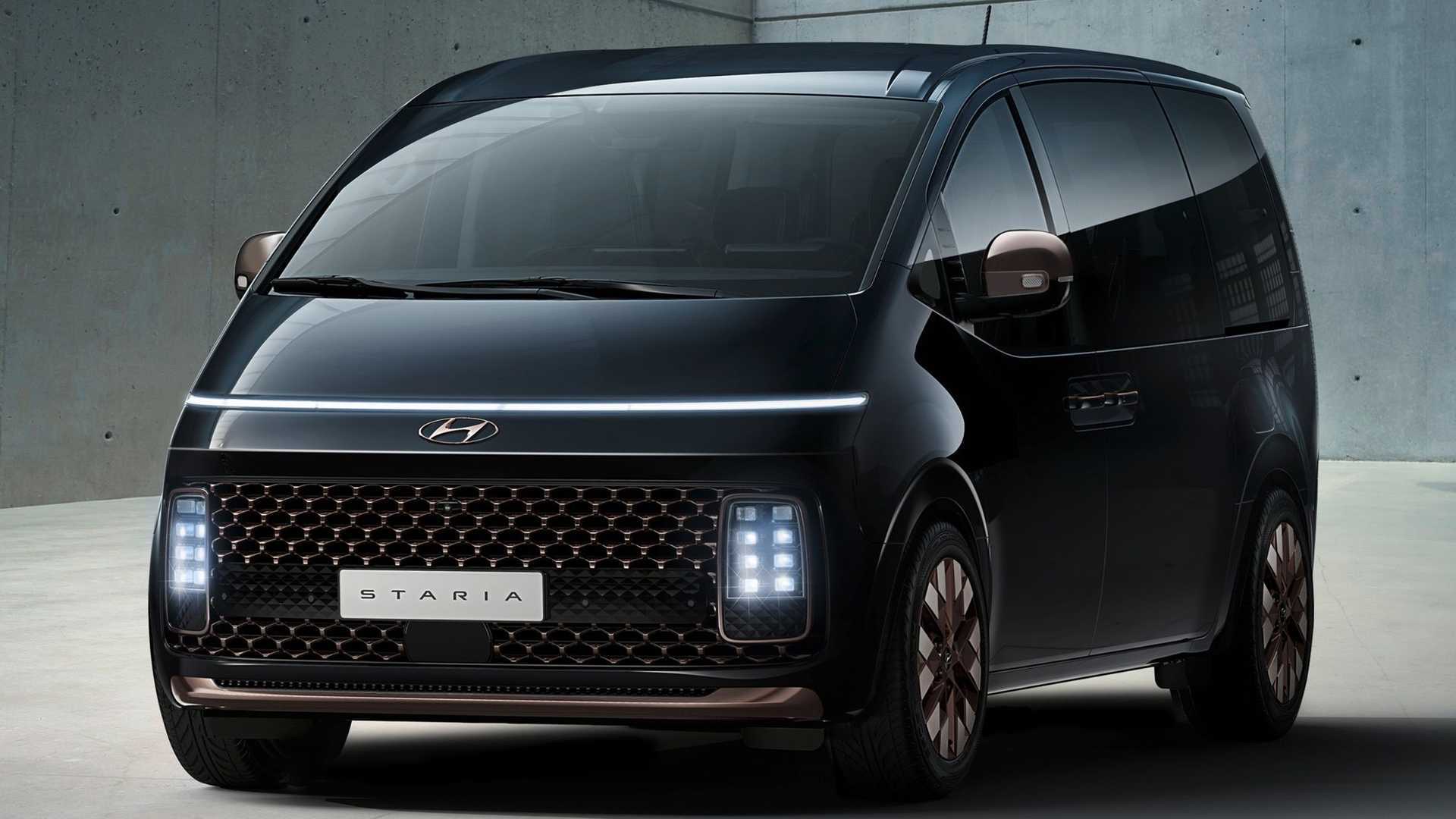
The 2021 Hyundai Staria is a distinct new approach to the large minivan, serving as the official successor to the Starex and H-1. Introduced in April 2021, this first-generation MPV shifts to a front-wheel-drive platform, offering a lower interior floor and optimized passenger space.
Years2021
Body typeminivan
Trims9
Photos19
Overview
Hyundai Staria at a glance
Quick model context before comparing photos and trim-level specifications.
Hyundai's launch of the Staria marks a significant structural departure from its previous utility vehicles. Moving away from a rear-drive commercial layout, the new platform adopts front-wheel drive and a multi-link rear suspension for improved ride quality. With an overall length of 5,225 mm, a generous 3,275 mm wheelbase, and a width of 1,995 mm, the footprint has expanded compared to its predecessor. The vehicle is designed to serve diverse operational needs, split distinctly between high-capacity cargo variants and passenger models that can seat up to 11 people. Premium trims further elevate the experience, aiming at executive transport and large families who prioritize interior space and comfort.
Power: 177-272 hp
Engine displacement: 2199-3470 cc
Transmissions: 8-speed automatic, 6-speed manual
Seating: 3-9 seats
Research hub
Photos, trims and specifications for Hyundai Staria
This model page brings gallery images, trim comparison, and detailed technical data together for the 2021 generation.
Use trim-level fuel consumption data to estimate monthly and yearly fuel spending.
Cost per 100 km-
Monthly cost-
Yearly cost-
Fuel costs are estimates. Real consumption can change with driving style, traffic, tires, weather, load, and market-specific equipment.
Model guide
Hyundai Staria overview
Editorial context for design, cabin, performance, practicality, and buyer notes.
Design
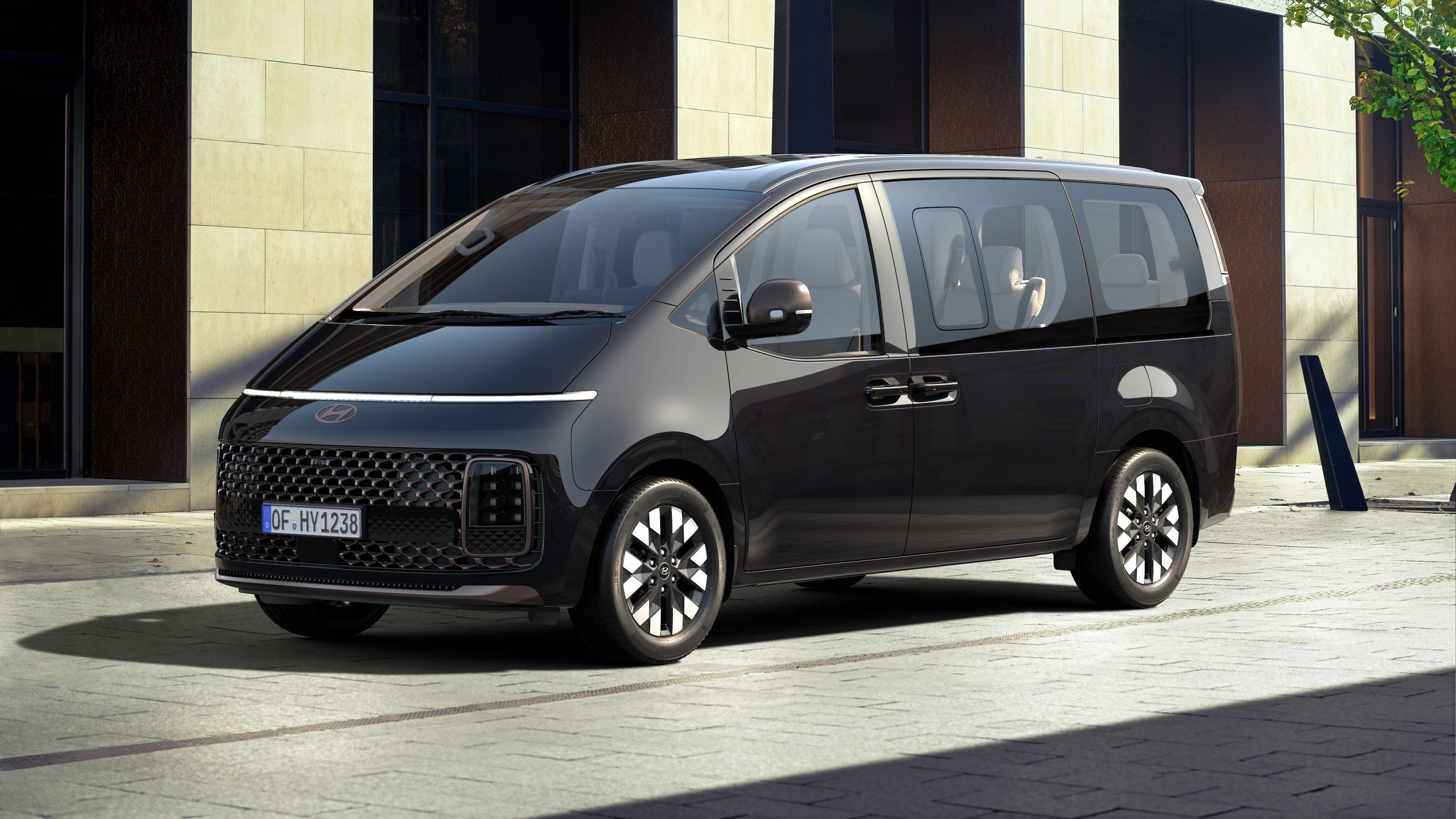
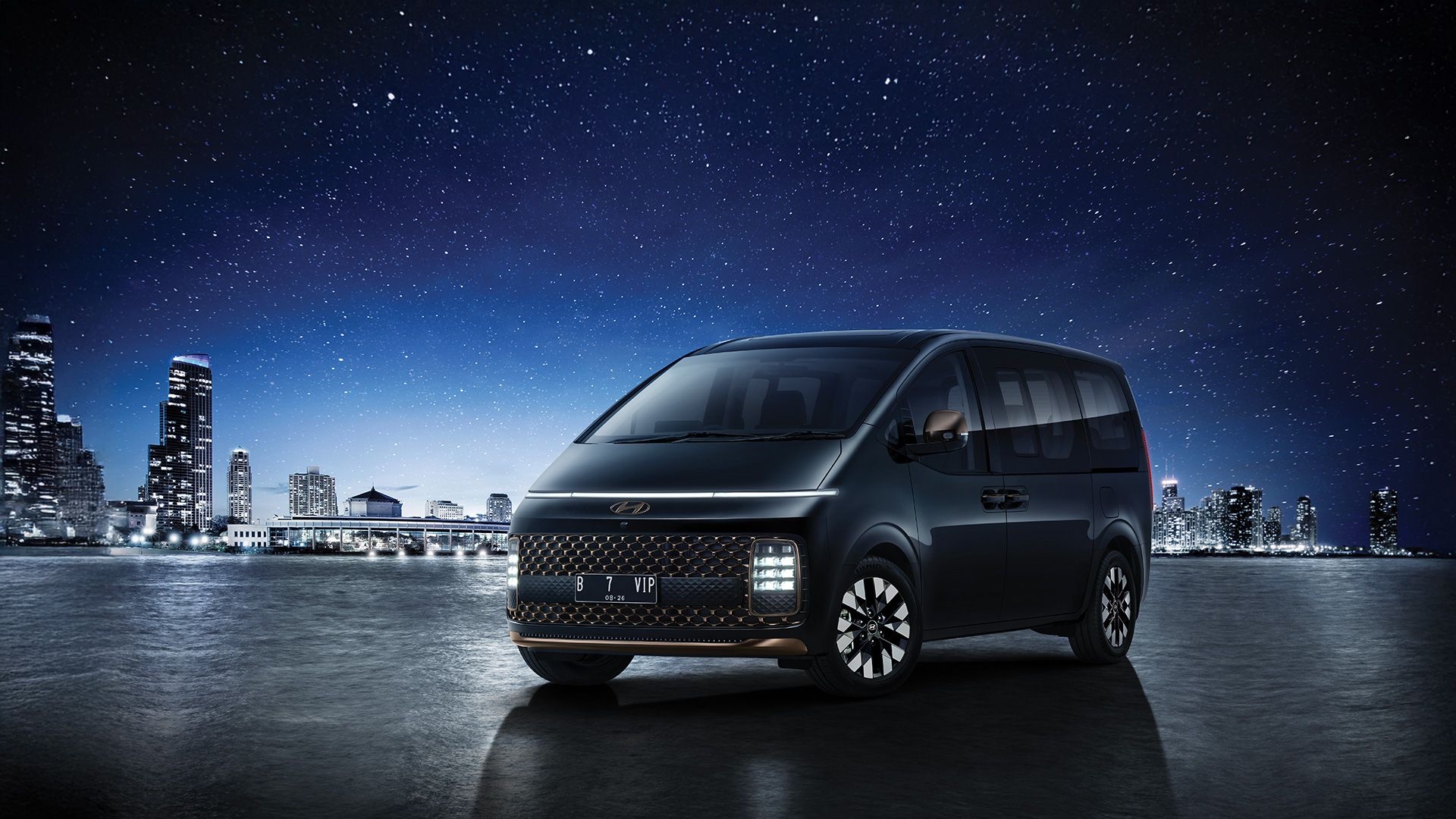
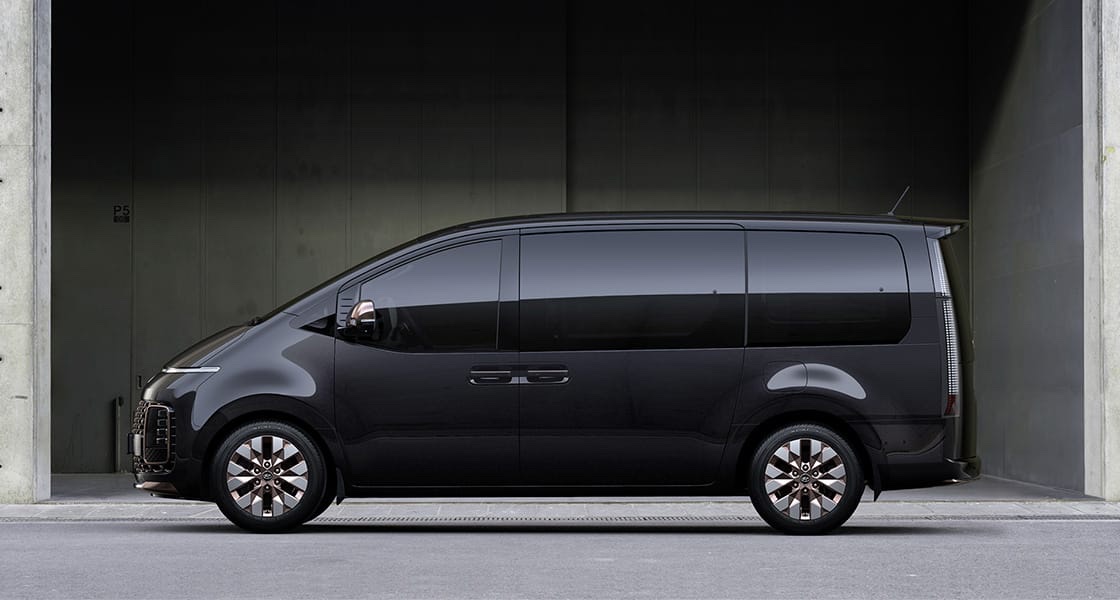
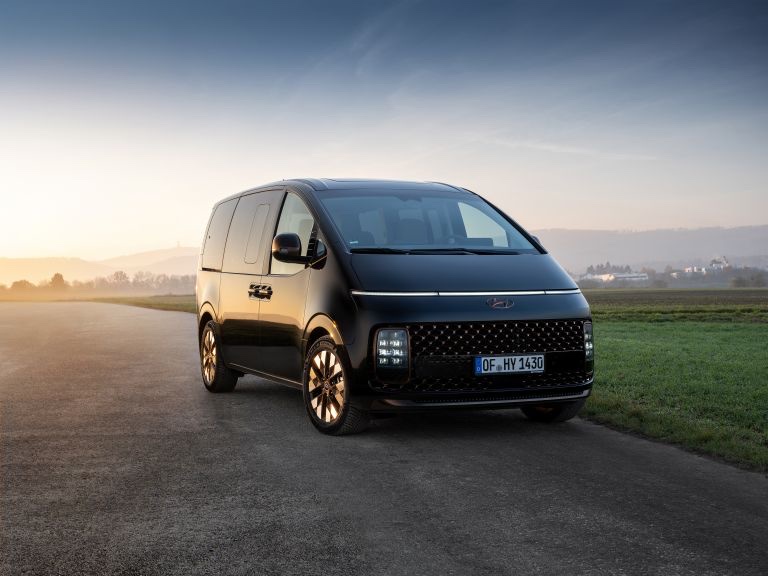
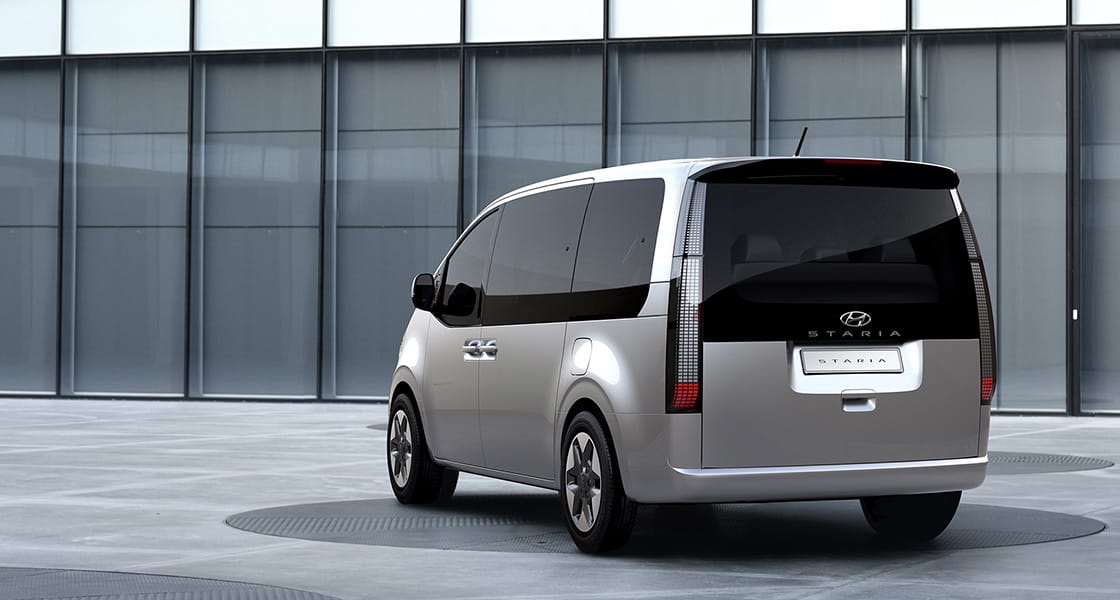
Applying an 'inside-out' design methodology, the exterior styling is structured to maximize interior volume while creating a striking profile. A single, continuous curve sweeps from the front hood to the roofline, emphasized by a low beltline that allows for expansive side windows. The front fascia is defined by a distinct horizontal daytime running light strip, contrasting with the tall, vertical taillights at the rear. This minimalist aesthetic differentiates the Staria from conventional commercial vans and improves outward visibility for occupants.
Interior
The cabin layout varies dramatically depending on the chosen configuration. Premium seven-seat versions feature second-row captain's chairs equipped with electric adjustments, leg rests, heating, and ventilation. Nine-seat premium models offer second-row seats that can swivel 180 degrees to face the rear passengers. Up front, the dashboard integrates a digital instrument cluster and a 10.25-inch central touchscreen. Ambient lighting with 64 colors and an available Bose audio system enhance the environment on higher-tier models.
Performance
Powertrain options cater to different load and regional requirements. A 2.2-liter turbodiesel engine produces 177 horsepower and 430 Nm of torque, paired with either a six-speed manual or an eight-speed automatic transmission. This diesel variant also offers an available HTRAC all-wheel-drive system that engages the rear axle via a coupling. Alternatively, a 3.5-liter naturally aspirated V6 gas engine delivers 272 horsepower and 331 Nm of torque, matched exclusively to the eight-speed automatic gearbox. The transition to a modern unibody architecture improves overall driving dynamics.
Practicality
The vehicle excels in everyday utility and capacity. Cargo-focused versions utilize a semi-independent rear suspension for heavy loads, offering nearly five cubic meters of space in the single-row configuration—enough to accommodate three Euro pallets. Passenger models focus on accessibility, offering options like power sliding doors and a rear-cabin camera system that lets the driver monitor occupants. An integrated intercom system with individual microphones also makes communicating across the long cabin easier.
Safety and tech
Modern driver assistance technology is central to the equipment list. Available systems include a safe exit assist that prevents doors from opening if an approaching vehicle is detected from behind. Radar-based passenger presence sensors, surround-view cameras, and standard parking sensors simplify maneuvering the large vehicle. Multi-zone climate control with an air purification system ensures a comfortable environment for all rows.
Buyer notes
When comparing trims, buyers should closely consider their seating needs, as configurations range from a simple three-seat cargo setup to 11-seat passenger layouts. The Premium passenger trims offer significantly more functional second-row seating. All-wheel drive is limited to the diesel powertrain, which may be a deciding factor for those in colder climates. Equipment availability, including the V6 engine options, can vary depending on the local market.
Configurations
Trims and key specifications
Use this table to compare the main differences between available configurations.
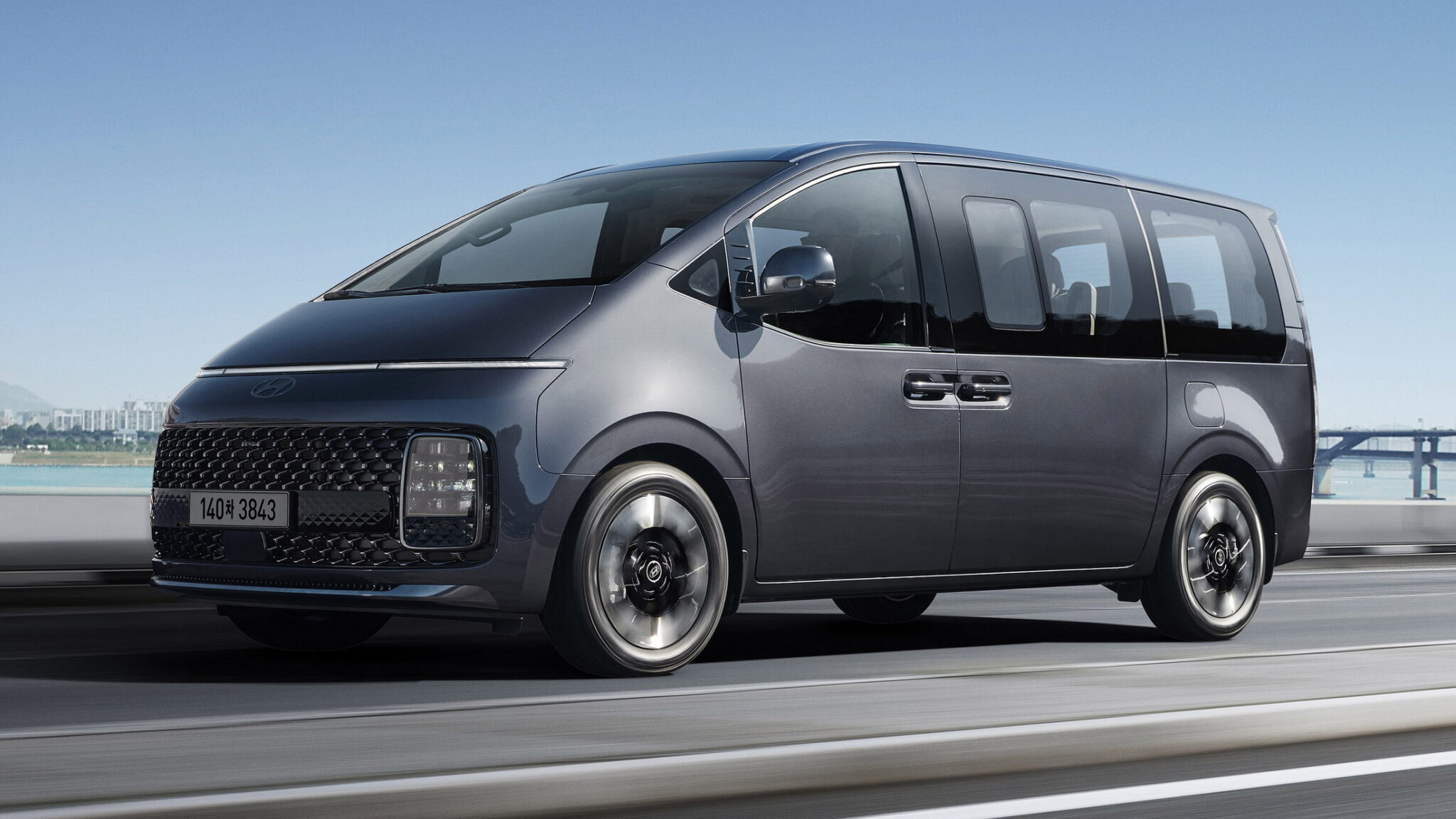
A gray 2021 Hyundai Staria minivan travels along a bridge roadway under clear daylight, showing its large side windows and front grille.
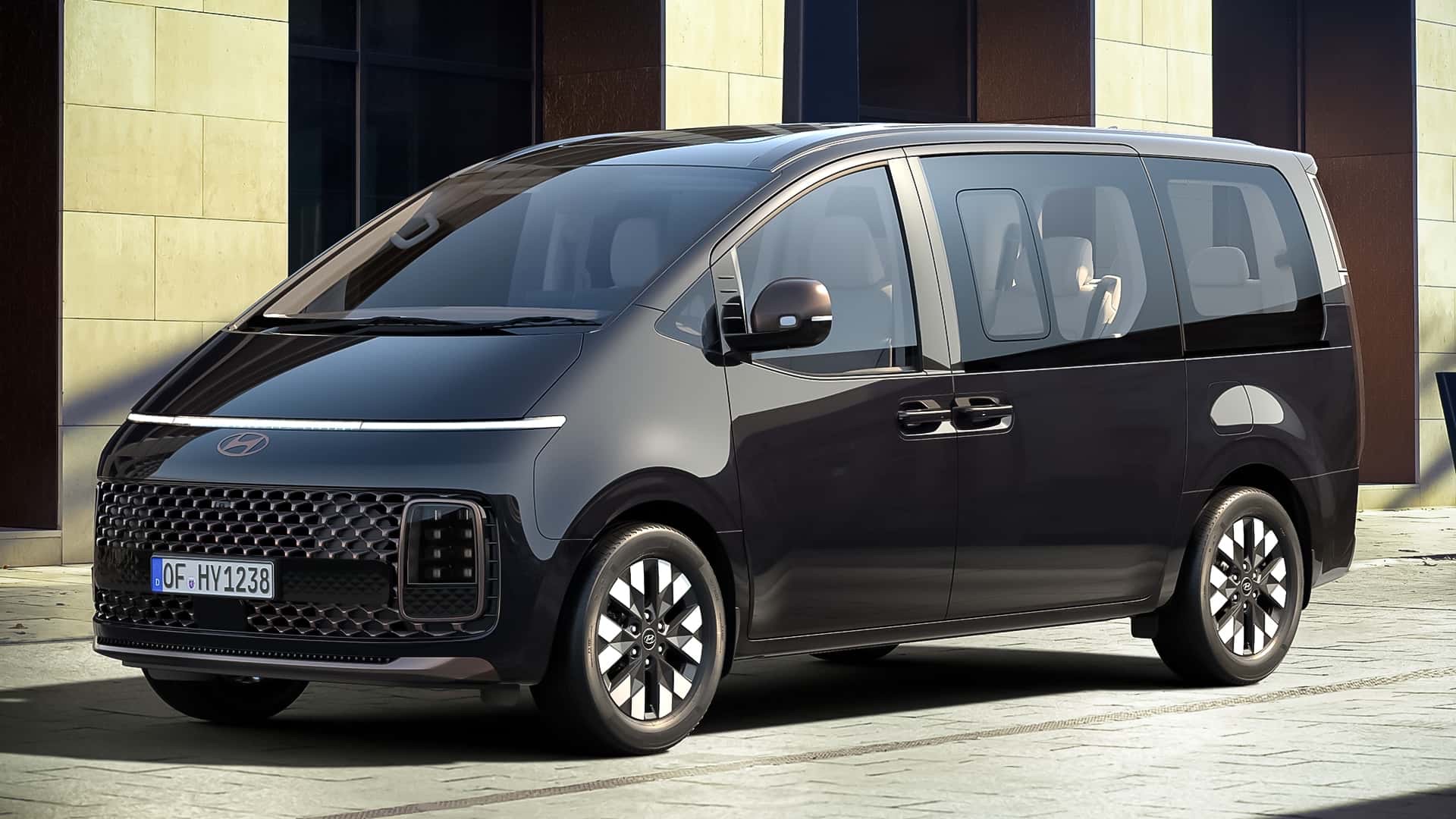
A black 2021 Hyundai Staria minivan parked outdoors on a paved surface beside a modern building.
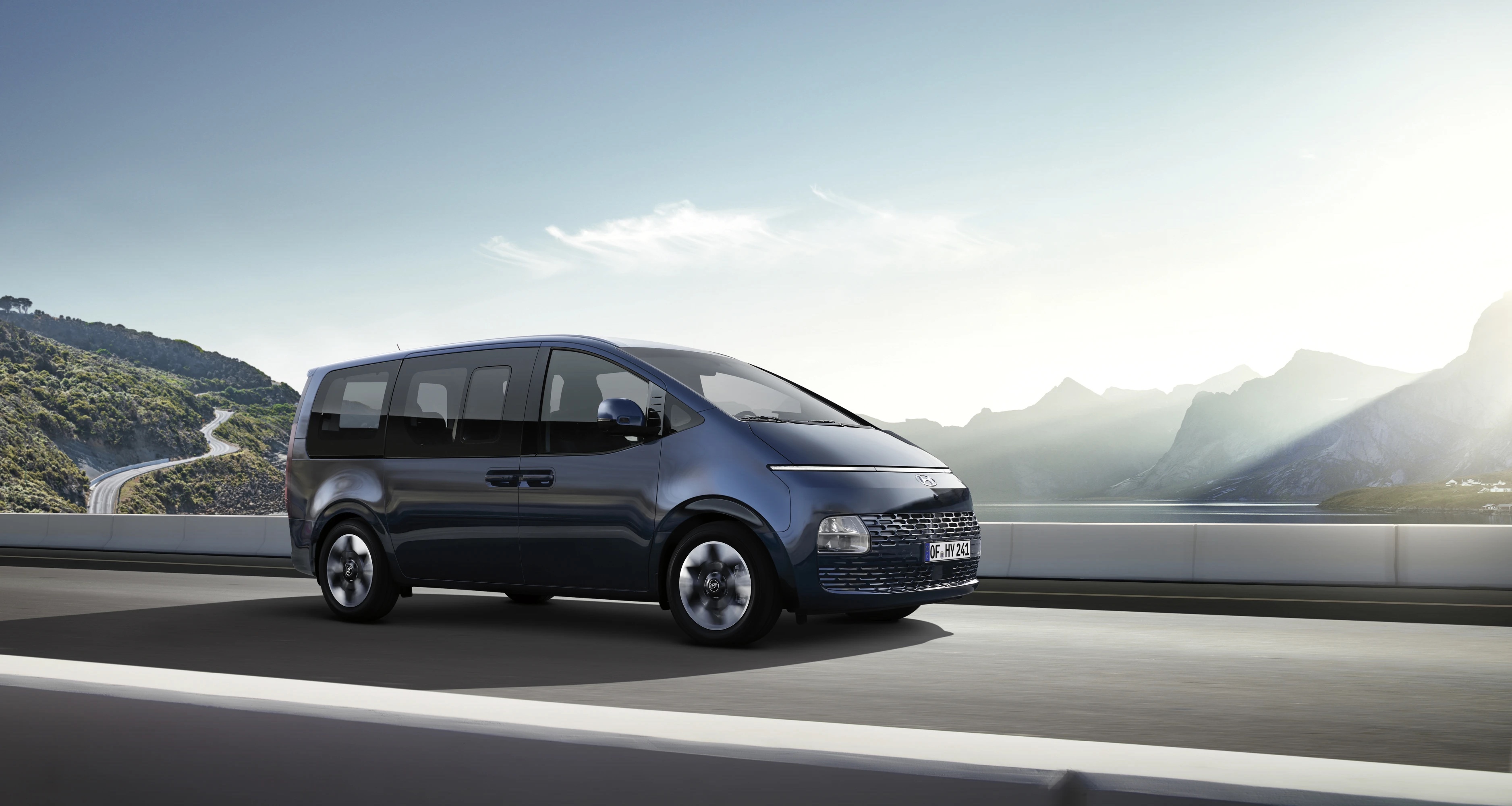
A dark blue 2021 Hyundai Staria minivan travels along a coastal bridge with scenic mountains and bright sunlight in the background.
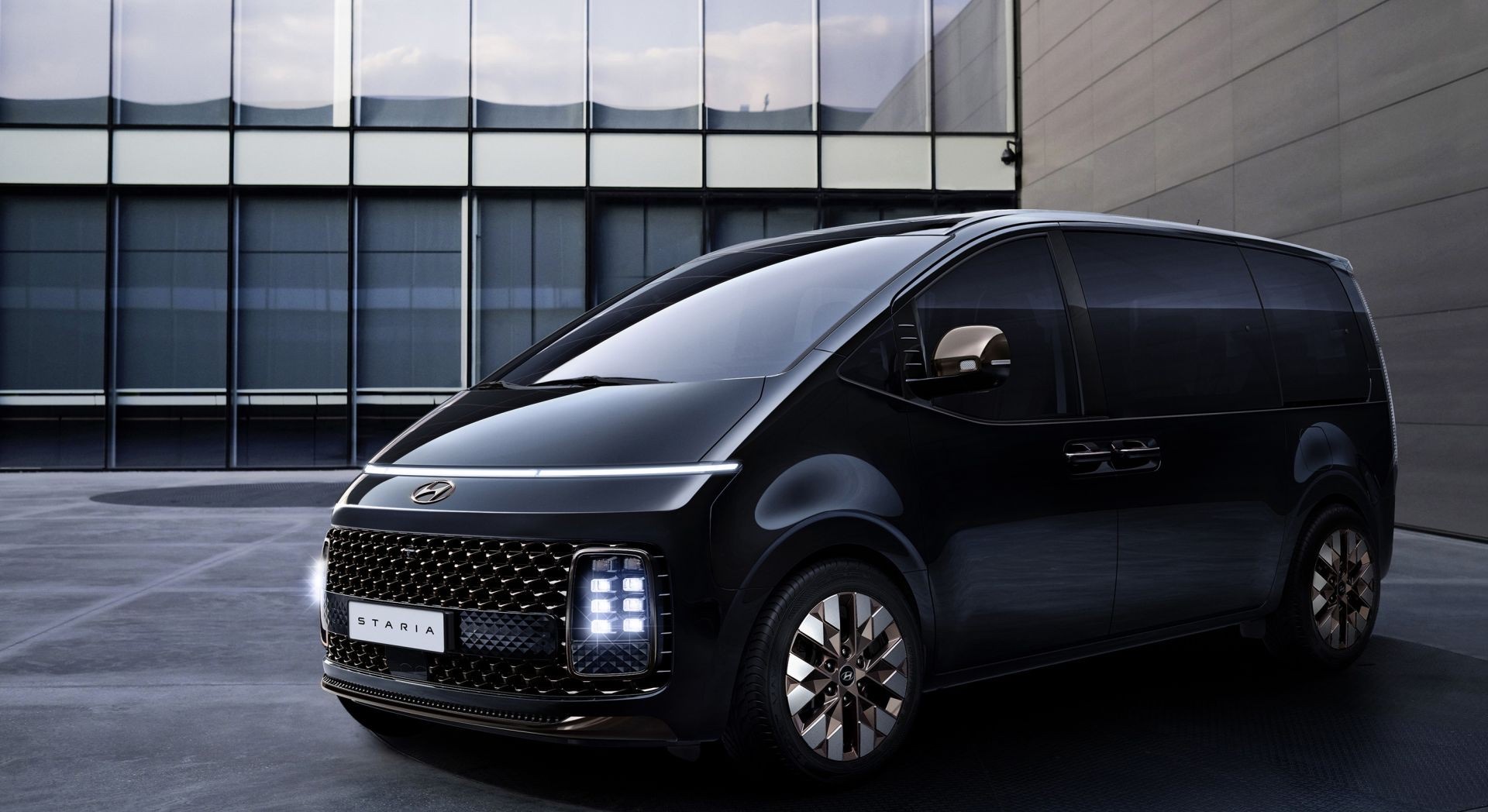
A black 2021 Hyundai Staria minivan is parked outdoors in front of a modern glass-facade building on a paved plaza.
A dark blue 2021 Hyundai Staria minivan drives along a paved roadway beside a modern glass terminal building.
A dark blue Hyundai Staria minivan travels along a curved coastal road with the ocean and green hills in the background.
A white 2021 Hyundai Staria minivan is parked on a paved stone courtyard outside contemporary concrete and glass architectural buildings.
Front three-quarter view of a black 2021 Hyundai Staria minivan in a studio setting with concrete walls.
A black 2021 Hyundai Staria minivan is parked on a paved outdoor courtyard beside modern buildings.
A black 2021 Hyundai Staria minivan is parked outdoors at night against a starry sky and illuminated city skyline.
Side profile of a black Hyundai Staria minivan showing its streamlined silhouette, tinted windows, multi-spoke wheels, and vertical taillight design against an architectural wall.
A black 2021 Hyundai Staria minivan parked on a paved rural road with open fields in the background during sunrise.
A silver 2021 Hyundai Staria minivan is shown from the rear three-quarter angle on a paved outdoor courtyard beside a glass building facade.
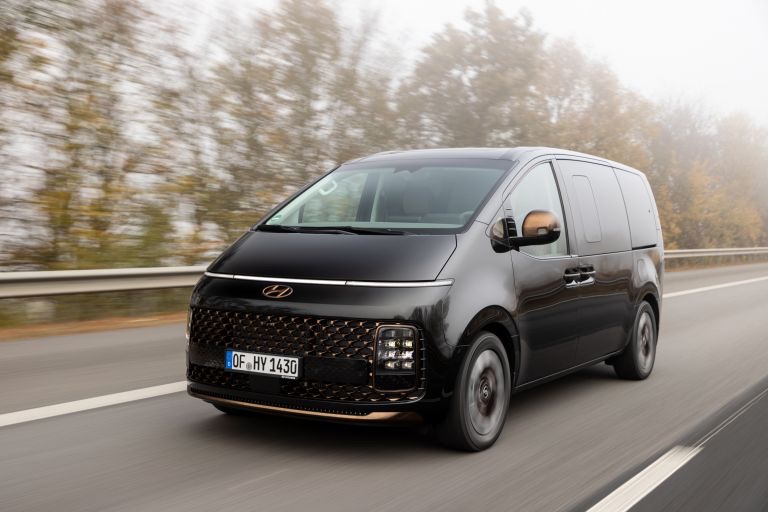
A black 2021 Hyundai Staria minivan travels on an asphalt road bordered by guardrails and trees.
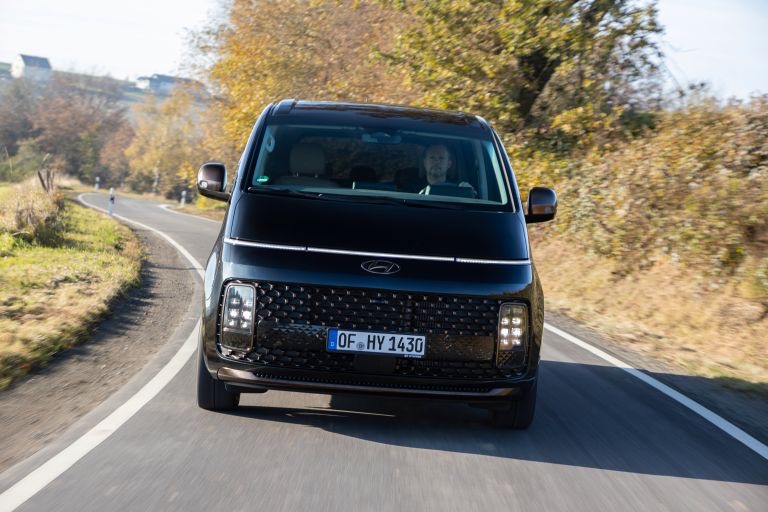
A black 2021 Hyundai Staria minivan drives along a winding asphalt country road bordered by autumn trees and grassy embankments.
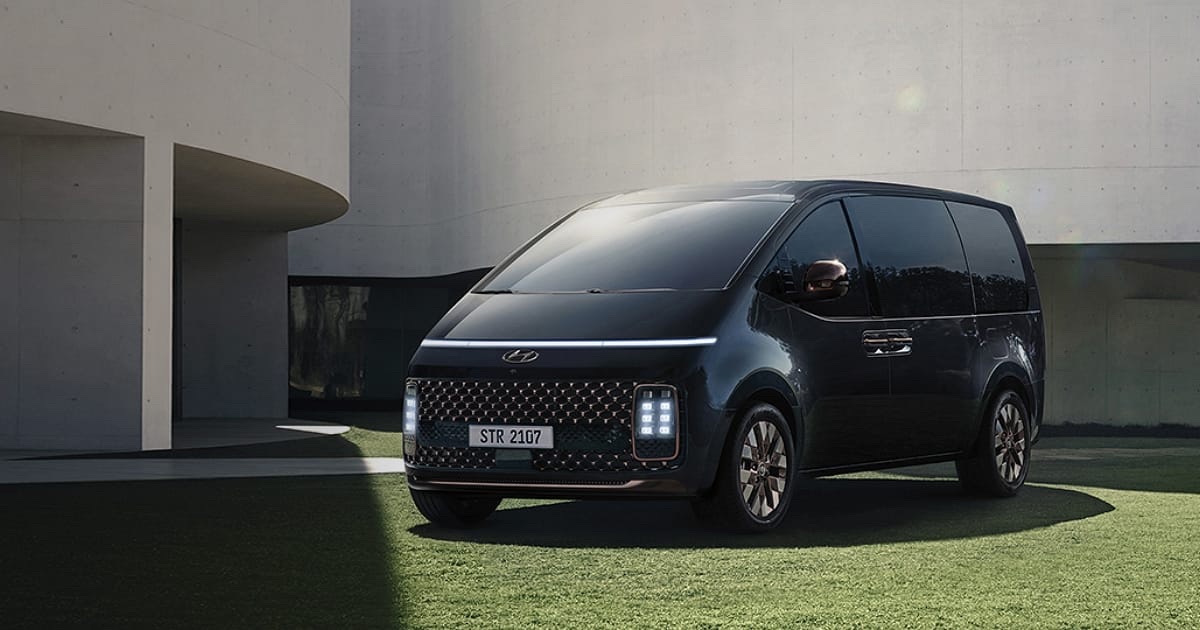
A black 2021 Hyundai Staria minivan is parked on a manicured lawn next to a modern curved concrete building.
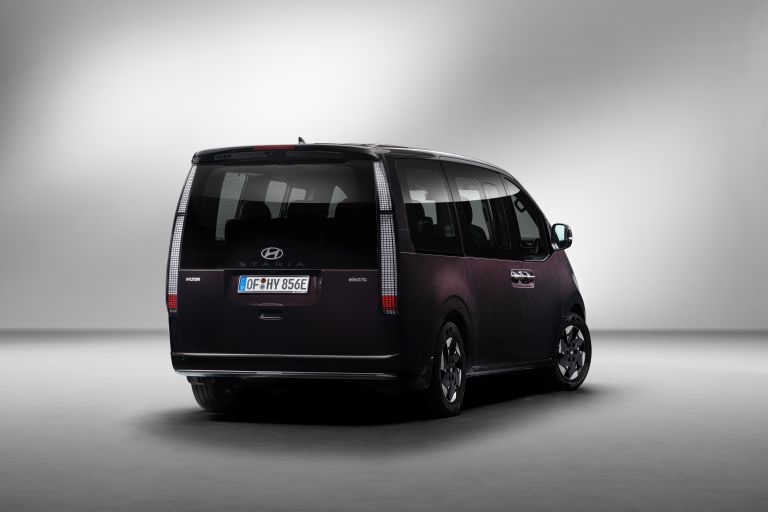
Rear three-quarter view of a dark purple 2021 Hyundai Staria minivan parked in a neutral studio environment.
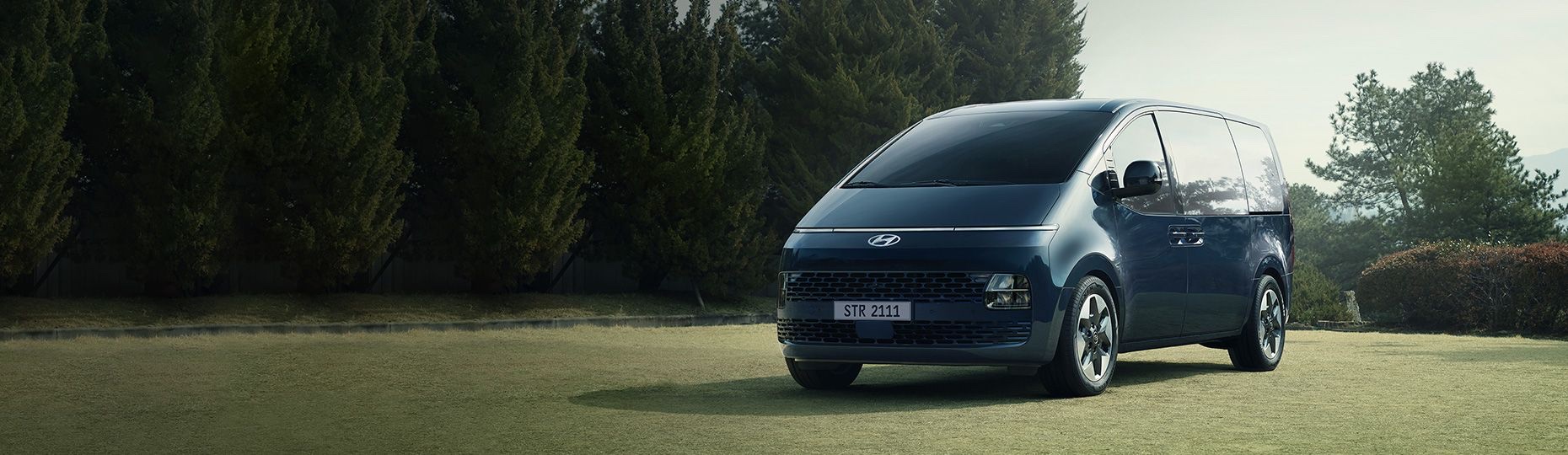
A dark blue Hyundai Staria minivan rests on an open grassy lawn with evergreen trees in the background.
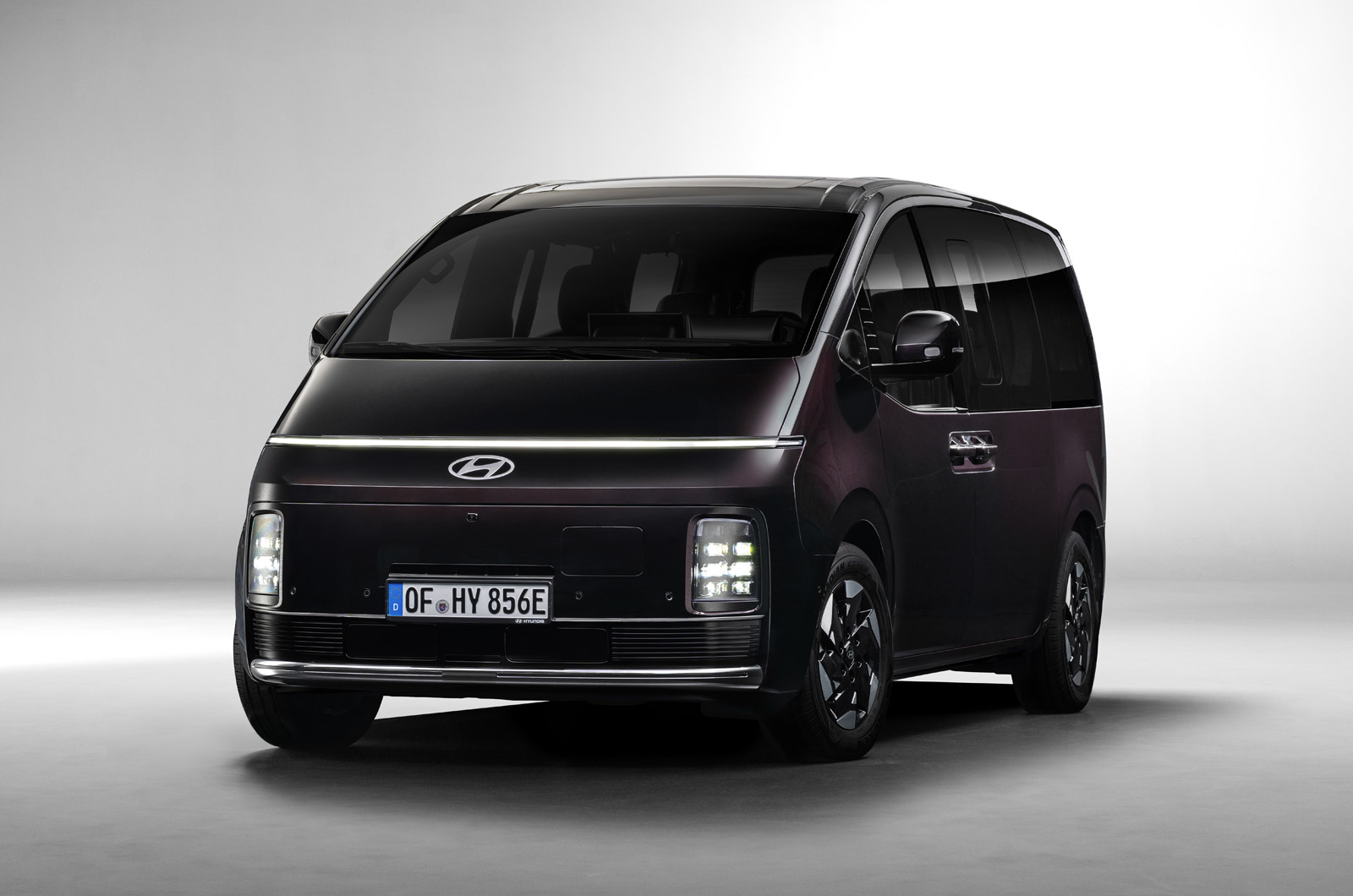
A black 2021 Hyundai Staria minivan is shown from the front three-quarter angle against a neutral studio backdrop.
Detailed specs
Specifications by trim
Choose a configuration below to open full technical data grouped by category.
Short answers based on the specifications and photos available in this catalog.
What body style is the Hyundai Staria?
The Hyundai Staria is a large, multi-purpose minivan designed for both commercial cargo and passenger transport.
What engines are available for the 2021 model?
The lineup includes a 2.2-liter turbodiesel producing 177 horsepower and a 3.5-liter V6 gas engine with 272 horsepower.
Is all-wheel drive an option?
Yes, an HTRAC all-wheel-drive system is available, though it is exclusively paired with the 2.2-liter diesel engine and automatic transmission.
How practical is the Staria for large families?
It is highly practical, offering up to 11 seats, expansive windows for visibility, and optional features like an intercom and cabin monitoring camera.
What is the difference between cargo and passenger versions?
Cargo variants have fewer seats (one or two rows) and a solid rear axle for higher payload capacity, while passenger models feature multi-link rear suspension for comfort and various seating configurations.
Explore more
Related model pages
Continue through nearby generations, manufacturer pages, and similar body styles.
More from Hyundai
Nearby indexed model pages from the same manufacturer.