Nissan Pathfinder specifications and photos
The 2021 Nissan Pathfinder marks the introduction of the fifth-generation midsize SUV. Transitioning away from a continuously variable transmission (CVT), this model features a major styling overhaul and improved interior packaging.
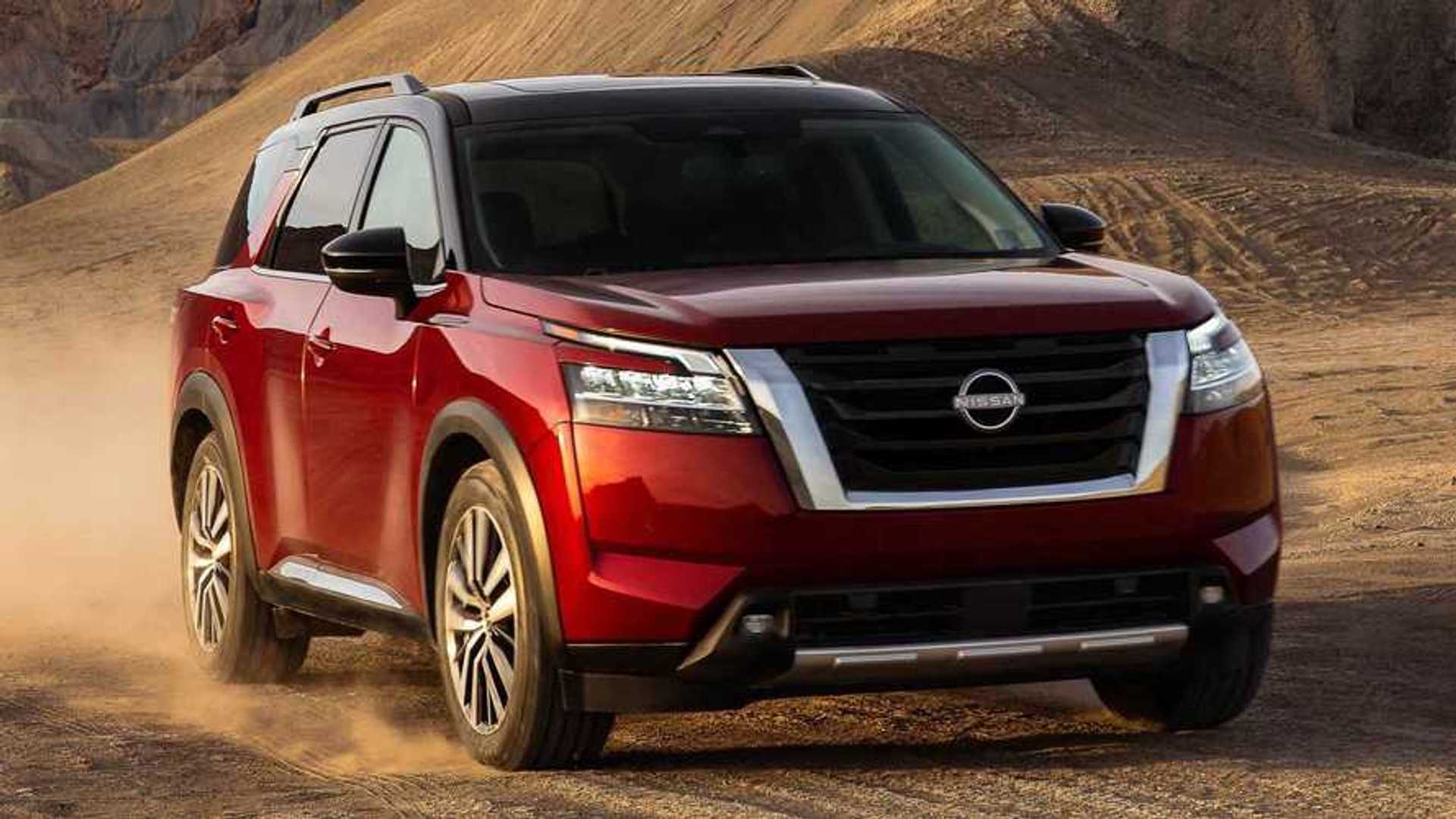
Nissan Pathfinder at a glance
Quick model context before comparing photos and trim-level specifications.
Built on the updated Nissan D platform, the fifth-generation Nissan Pathfinder maintains a 2900 mm wheelbase but gains a wider track and increased interior space. Structural stiffness is enhanced through the use of 50 percent more high-strength steel. The exterior receives a bolder, more rugged design with a prominent V-motion grille, two-tier headlights, and an optional two-tone roof treatment. Inside, the layout closely mirrors the Nissan Rogue, offering a cleaner design and improved soundproofing via a laminated windshield, thicker second-row side glass, and additional insulation. The drivetrain consists of a carryover 3.5-liter V6 engine, now mated to a traditional nine-speed automatic transmission rather than the previous CVT. It is available in either front- or all-wheel-drive configurations, providing a more responsive driving experience.
- Power: 288 hp
- Engine displacement: 3499 cc
- Transmissions: 9-speed automatic
Photos, trims and specifications for Nissan Pathfinder
This model page brings gallery images, trim comparison, and detailed technical data together for the 2021 generation.
Estimate fuel cost
Use trim-level fuel consumption data to estimate monthly and yearly fuel spending.
Fuel costs are estimates. Real consumption can change with driving style, traffic, tires, weather, load, and market-specific equipment.
Nissan Pathfinder overview
Editorial context for design, cabin, performance, practicality, and buyer notes.
Design
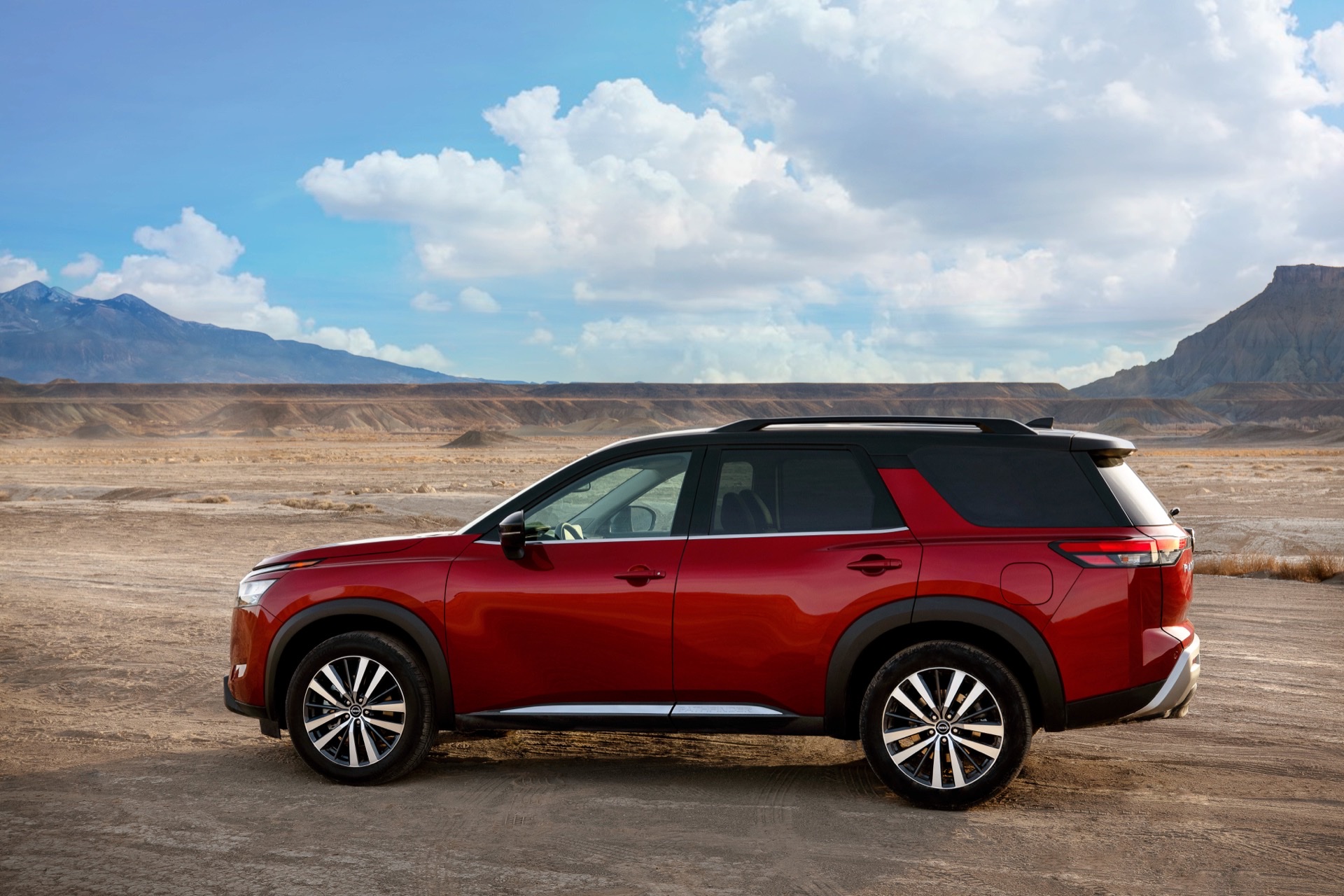
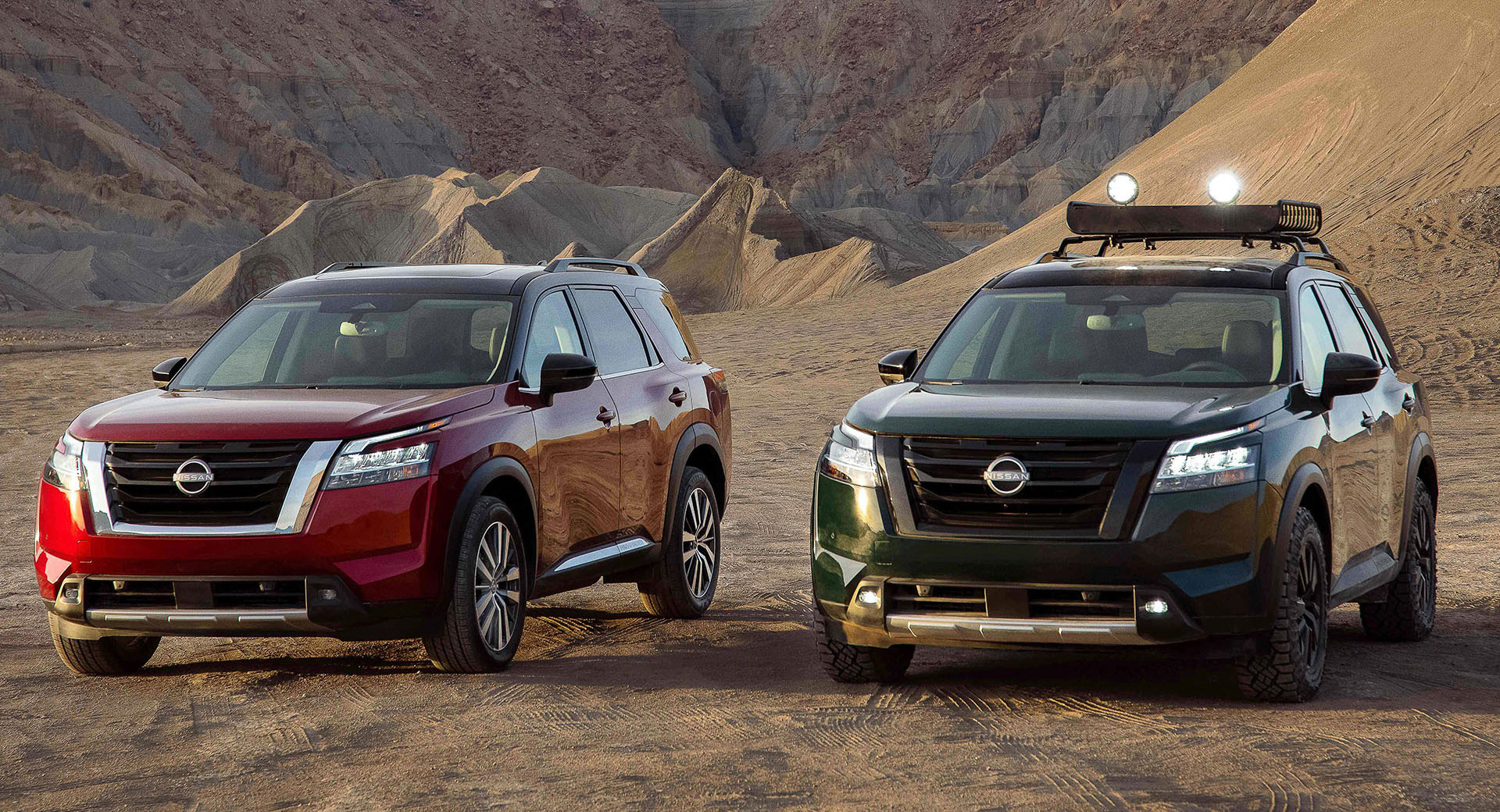
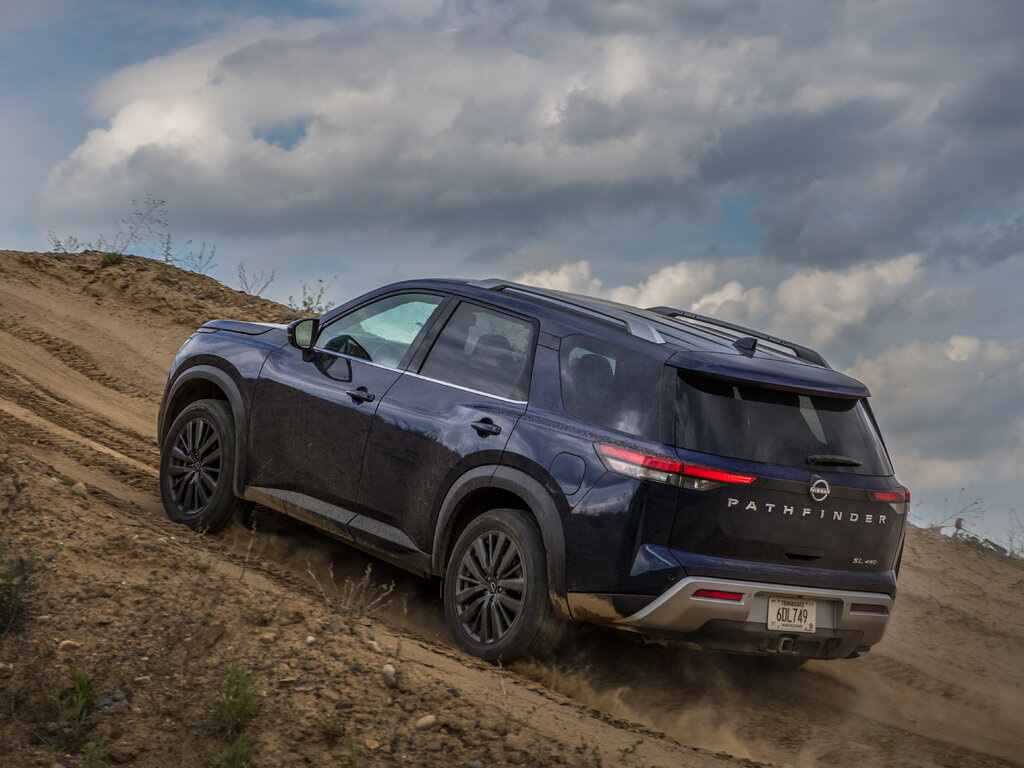
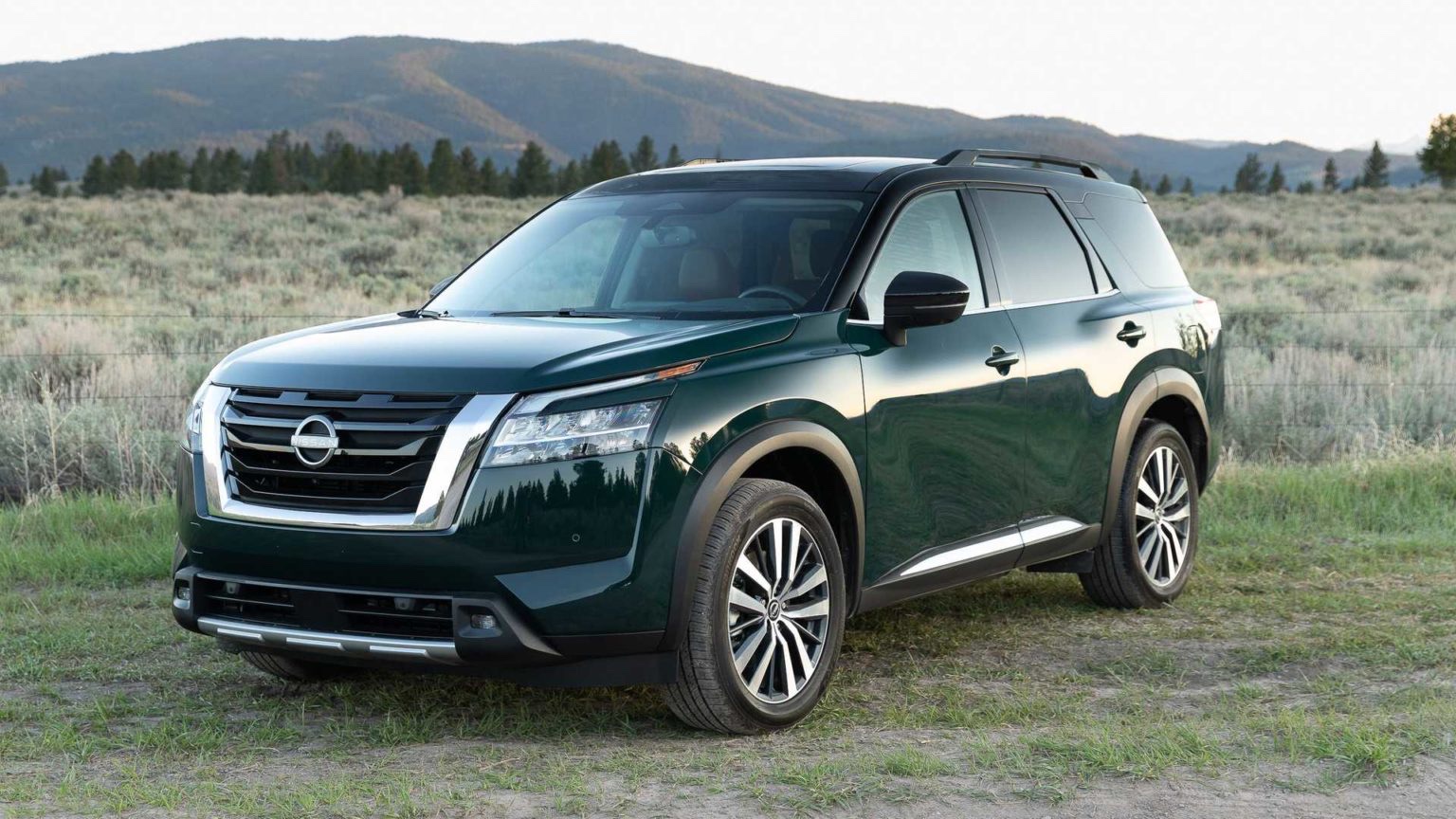
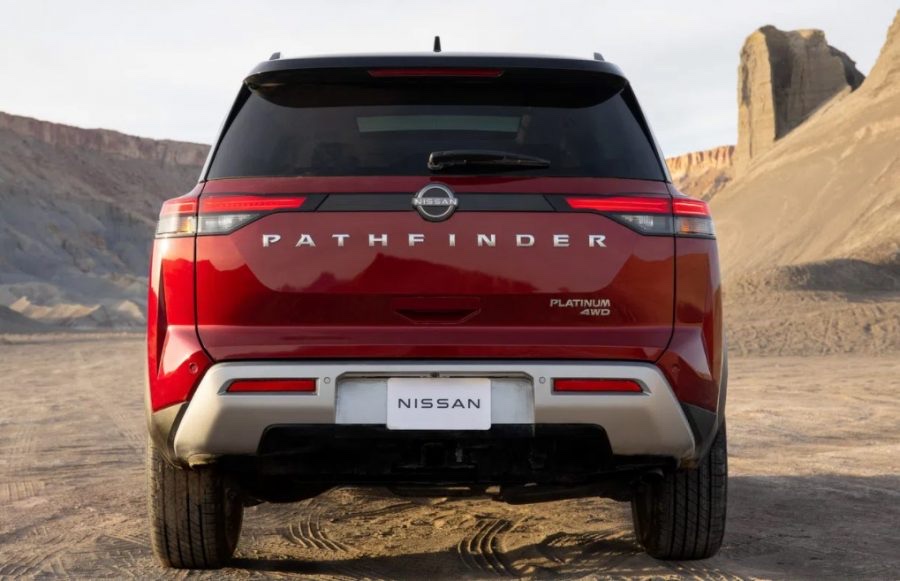
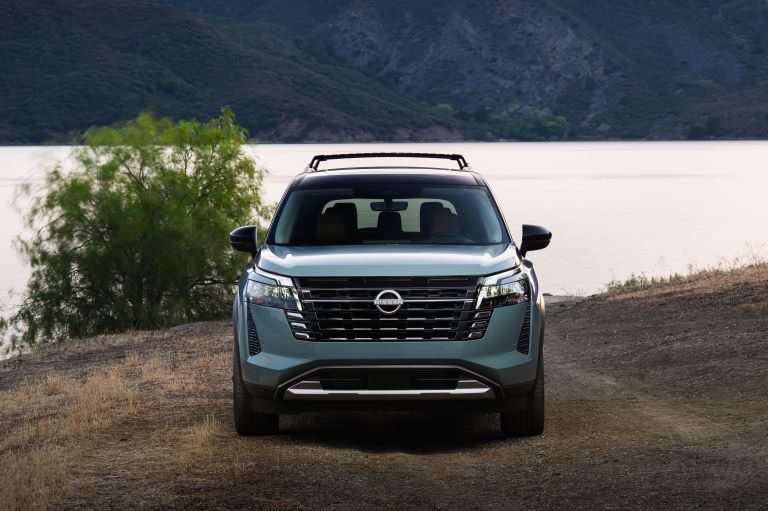
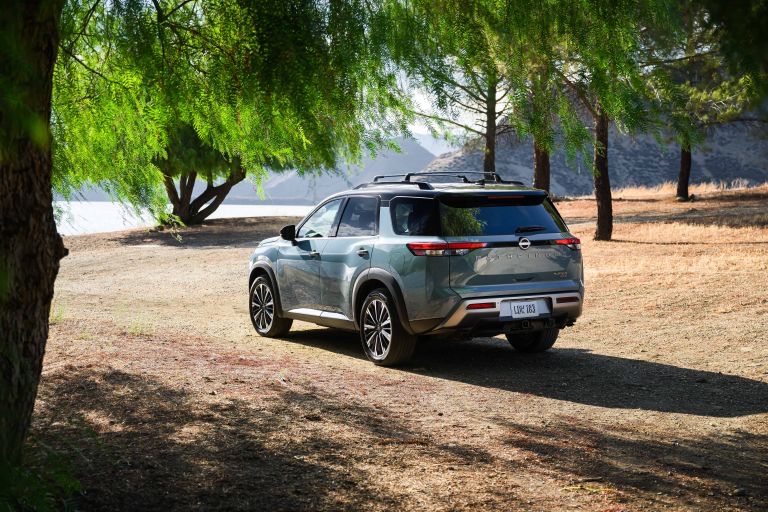
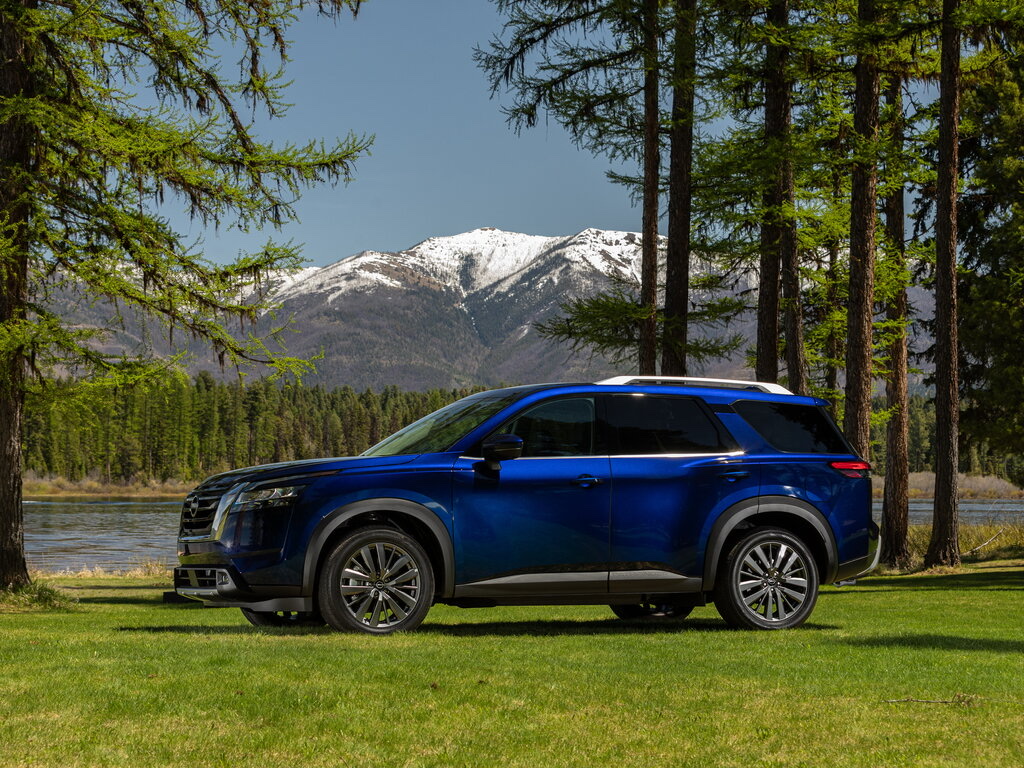
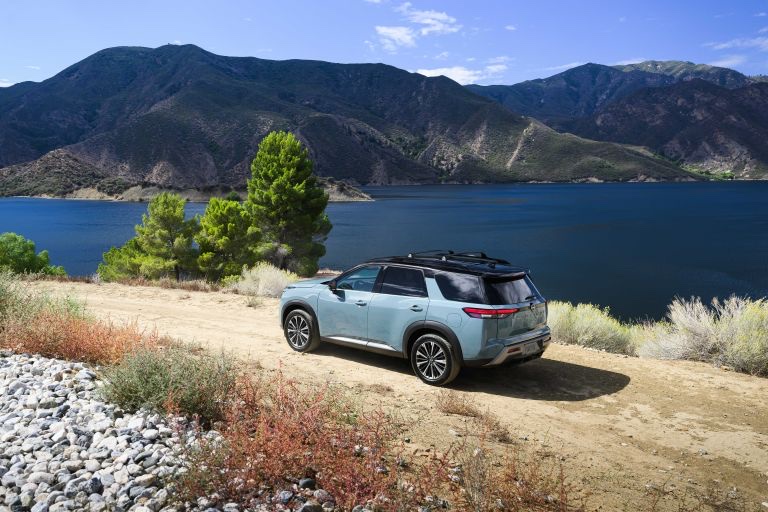
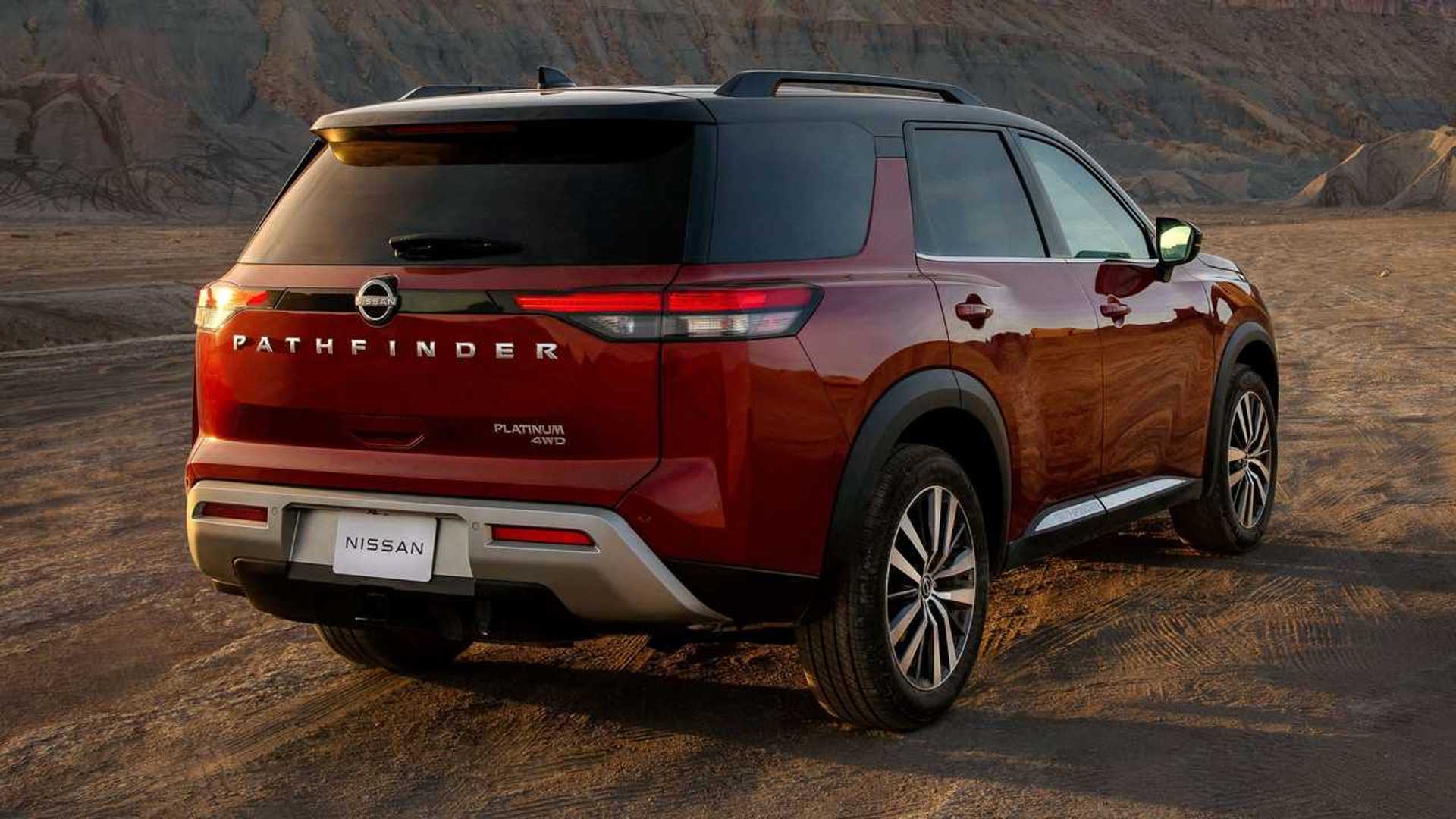
The redesigned exterior features a more rugged, squared-off aesthetic than its predecessor, shifting away from soft curves. The front end is dominated by a large V-shaped grille and split-level headlights, while the rear features a wide light bar. A distinctive blacked-out C-pillar is introduced to enable a two-tone paint configuration. Under the skin, chassis updates include a wider track and retuned suspension mounts and springs. These changes are intended to reduce body roll and improve handling response compared to the previous model.
Interior
The cabin layout is modern and shares styling elements with the smaller Rogue, including a floating center console and a blocky dashboard design. Standard versions accommodate up to eight passengers across three rows, with the third row splitting 60:40. An optional seven-seat configuration replaces the second-row bench with captain's chairs and a removable console. Standard cargo capacity behind the third row is 470 liters. Technology upgrades on higher trims include a 12.3-inch digital instrument cluster, a 9-inch infotainment screen, and a 10.8-inch head-up display.
Performance
Under the hood, the SUV retains its 3.5-liter atmospheric V6 engine (engine code VQ35DD) producing 288 horsepower and 351 Nm of torque. The major drivetrain change is the replacement of the previous generation's CVT with a ZF-sourced nine-speed automatic transmission. The SUV is offered in front-wheel drive (2WD) or with an updated all-wheel-drive (4x4) system designed to engage the rear axle more rapidly. Fuel economy is rated at 11.2 liters per 100 km in the city, and between 8.7 and 9 liters on the highway depending on the drivetrain.
Practicality
With three rows of seats and a standard eight-passenger capacity, this SUV is designed for daily family utility. Standard cargo space is 470 liters behind the third row, which folds in a 60:40 split to accommodate larger items. Cabin comfort is enhanced by a dual-level center console for storage, and road noise is noticeably reduced thanks to a laminated windshield, thicker second-row side glass, and additional sound insulation inside the doors.
Safety and tech
The SUV comes standard with ten airbags and the Nissan Safety Shield 360 safety suite, which includes automatic emergency braking with obstacle detection, blind-spot monitoring, lane-departure warning, and rear cross-traffic alert. Tech options include a 360-degree surround-view camera, blind-spot intervention with active steering, and the ProPilot Assist level-2 driver assistance system. This semi-autonomous system uses navigation map data to adjust vehicle speed automatically.
Buyer notes
When comparing different trims of this SUV, buyers should consider whether they need front-wheel drive or the faster-acting all-wheel-drive system. The seating configuration is another key decision point, as the standard layout accommodates eight people, whereas the optional package offers seven seats with second-row captain's chairs and a removable console. Buyers should also verify if advanced technology like the 12.3-inch instrument cluster and ProPilot driver assistance is included, as these are reserved for higher trims.
Trims and key specifications
Use this table to compare the main differences between available configurations.
| Trim / modification | Engine | Power | Seats | Transmission |
|---|---|---|---|---|
| 3.5i (288 hp) 9-speed automatic | 3499 cc | 288 hp | 7/8 | 9-speed automatic |
| 3.5i (288 hp) 9-speed automatic 4x4 | 3499 cc | 288 hp | 7/8 | 9-speed automatic |
Specifications can vary by market, model year, and equipment package. Use the trim sections below to review the full data for each configuration.
Nissan Pathfinder photo gallery
14 images are collected here with the main specifications and trim data for this model.
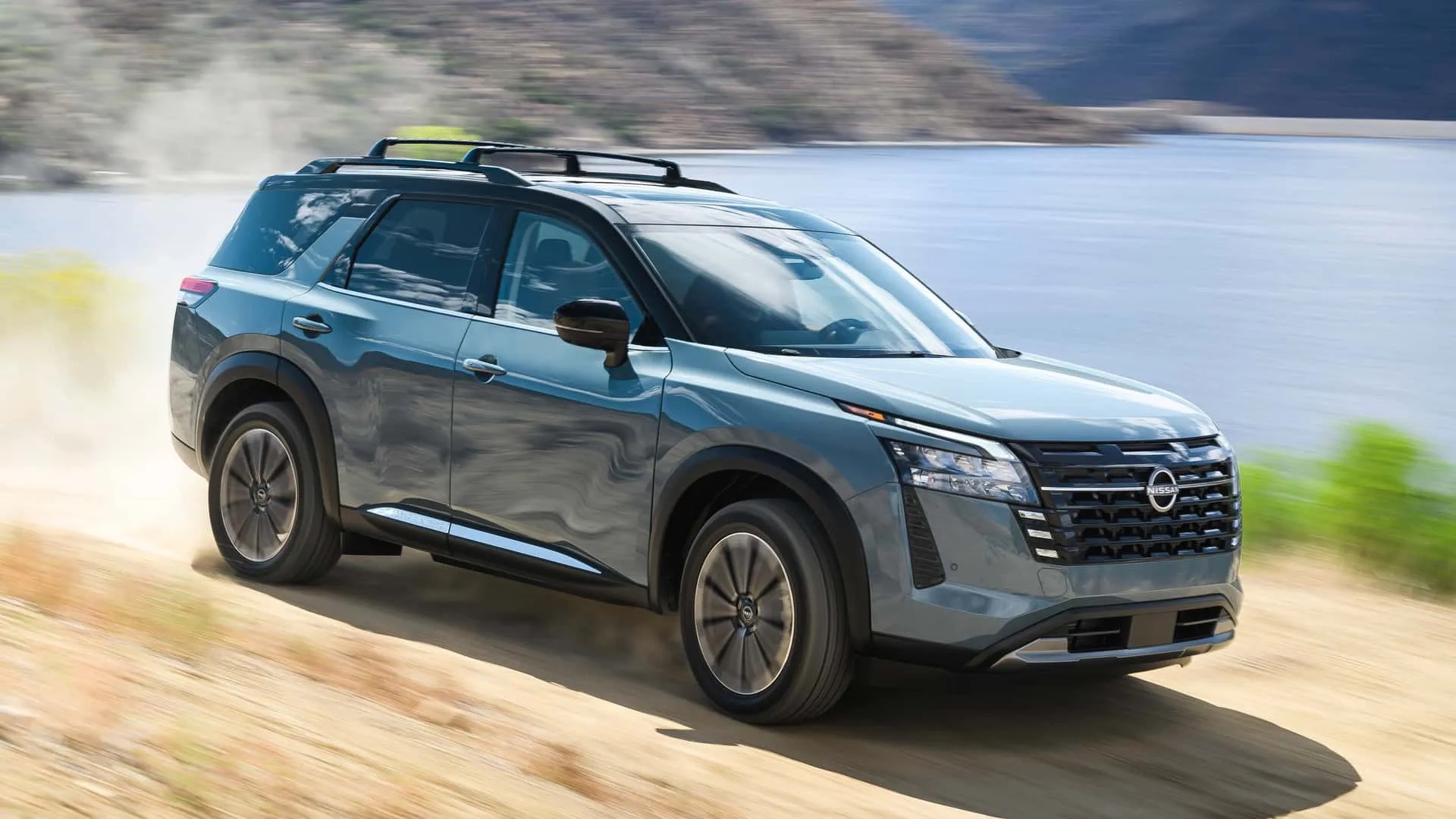
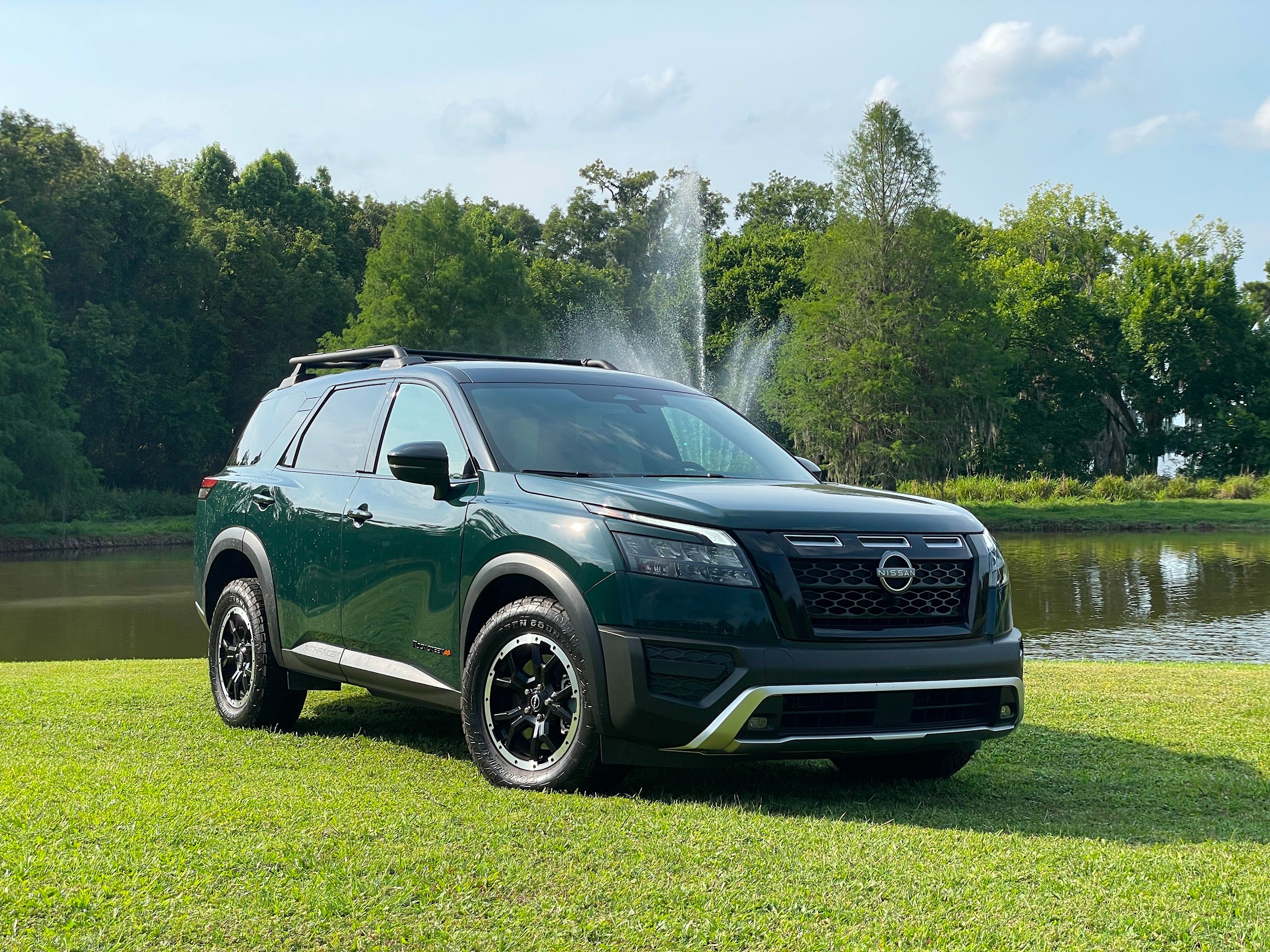
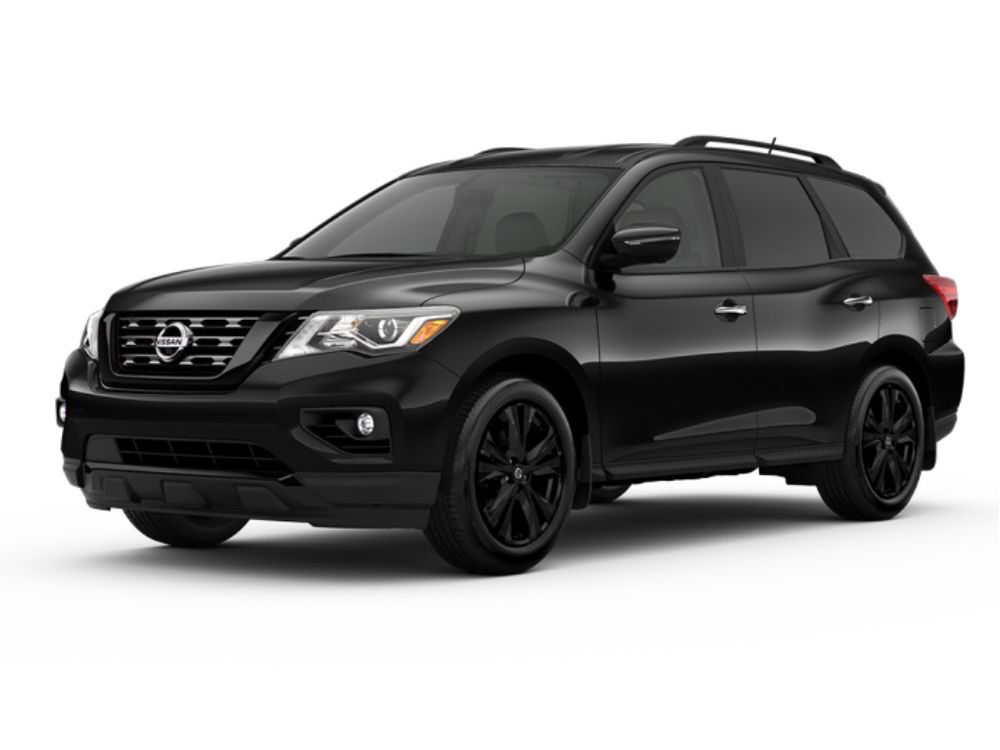
Photo Nissan Pathfinder
Specifications by trim
Choose a configuration below to open full technical data grouped by category.
3.5i (288 hp) 9-speed automatic 30 specifications
Specifications
Performance and consumption
| Fuel consumption city, L/100 km | 11.2 |
|---|---|
| Fuel consumption highway, L/100 km | 9 |
| Fuel consumption combined, L/100 km | 10.2 |
Engine
| Engine | 3.5i |
|---|---|
| Engine code | VQ35DD |
| Engine type | Internal combustion engine |
| Fuel type | Gasoline |
| Engine displacement, cc | 3499 |
| Cylinder layout | V-type |
| Number of cylinders | 6 |
| Valves | 24 |
| Power, hp | 288 |
| RPM at max power | 6400 |
| Torque, Nm | 351 |
| RPM at max torque | 4800 |
Dimensions
| Seats | 7/8 |
|---|---|
| Length, mm | 5020 |
| Height, mm | 1766 |
| Wheelbase, mm | 2900 |
| Front track, mm | 1700 |
| Rear track, mm | 1700 |
| Kerb weight, kg | 2031 |
| Ground clearance, mm | 178 |
| Width without mirrors, mm | 1978 |
| Trunk capacity, L | 470 |
Transmission and drive
| Transmission | 9-speed automatic |
|---|---|
| Transmission type | automatic |
| Drive | Front-wheel drive |
| Number of gears | 9 |
| Automatic transmission | + |
3.5i (288 hp) 9-speed automatic 4x4 30 specifications
Specifications
Performance and consumption
| Fuel consumption city, L/100 km | 11.2 |
|---|---|
| Fuel consumption highway, L/100 km | 8.7 |
| Fuel consumption combined, L/100 km | 10.2 |
Engine
| Engine | 3.5i |
|---|---|
| Engine code | VQ35DD |
| Engine type | Internal combustion engine |
| Fuel type | Gasoline |
| Engine displacement, cc | 3499 |
| Cylinder layout | V-type |
| Number of cylinders | 6 |
| Valves | 24 |
| Power, hp | 288 |
| RPM at max power | 6400 |
| Torque, Nm | 351 |
| RPM at max torque | 4800 |
Dimensions
| Seats | 7/8 |
|---|---|
| Length, mm | 5020 |
| Height, mm | 1766 |
| Wheelbase, mm | 2900 |
| Front track, mm | 1700 |
| Rear track, mm | 1700 |
| Kerb weight, kg | 2031 |
| Ground clearance, mm | 178 |
| Width without mirrors, mm | 1978 |
| Trunk capacity, L | 470 |
Transmission and drive
| Transmission | 9-speed automatic |
|---|---|
| Transmission type | automatic |
| Drive | All-wheel drive |
| Number of gears | 9 |
| Automatic transmission | + |
Nissan Pathfinder questions
Short answers based on the specifications and photos available in this catalog.
What generation of the Nissan Pathfinder is the 2021 model?
The 2021 Nissan Pathfinder represents the fifth generation of the midsize SUV. It features a complete exterior redesign, a structural update using more high-strength steel, and a new automatic transmission.
What engine and transmission does the 2021 Nissan Pathfinder use?
It uses a 3.5-liter V6 engine producing 288 horsepower and 351 Nm of torque. The engine is paired with a nine-speed automatic transmission, replacing the previous generation's CVT.
How many passengers can the 2021 Nissan Pathfinder accommodate?
The SUV comes standard with an eight-passenger seating configuration. An optional seven-passenger configuration is available that replaces the second-row bench with individual captain's chairs.
What safety features are standard on the 2021 Nissan Pathfinder?
It features ten airbags and the Nissan Safety Shield 360 suite as standard. This package includes automatic emergency braking, blind-spot monitoring, lane-departure warning, and rear cross-traffic assist.
Is the 2021 Nissan Pathfinder available with all-wheel drive?
Yes, the SUV is available with either front-wheel drive or an updated all-wheel-drive system designed to engage the rear axle quicker than the previous generation.