Audi SQ5 (FY) specifications and photos
The 2020 Audi SQ5 represents the facelifted second generation of Audi’s performance-focused midsize SUV. Revealed in late 2020, this iteration balances dynamic acceleration with updated technology to meet stringent emissions standards, primarily relying on a heavily revised diesel powertrain and mild-hybrid integration.
Audi SQ5 (FY) at a glance
Quick model context before comparing photos and trim-level specifications.
For the 2020 model year, Audi focused on tightening the emissions profile of the SQ5 without sacrificing the driving character expected from an S-badged model. Positioned as a sportier alternative to the standard Q5, this restyled second-generation SUV receives subtle exterior styling updates and major mechanical tweaks under the hood. While overall power output saw a minor reduction to comply with stricter environmental regulations, acceleration and top-speed figures remain identical to the outgoing model. It caters to buyers who want a versatile family vehicle that offers a noticeable step up in performance, handling, and aesthetic appeal compared to standard crossover offerings.
- Power: 341 hp
- Engine displacement: 2967 cc
- Transmissions: 8-Tiptronic
- Seating: 5 seats
Photos, trims and specifications for Audi SQ5 (FY)
This model page brings gallery images, trim comparison, and detailed technical data together for the 2020 generation.
Estimate fuel cost
Use trim-level fuel consumption data to estimate monthly and yearly fuel spending.
Fuel costs are estimates. Real consumption can change with driving style, traffic, tires, weather, load, and market-specific equipment.
Audi SQ5 (FY) overview
Editorial context for design, cabin, performance, practicality, and buyer notes.
Design
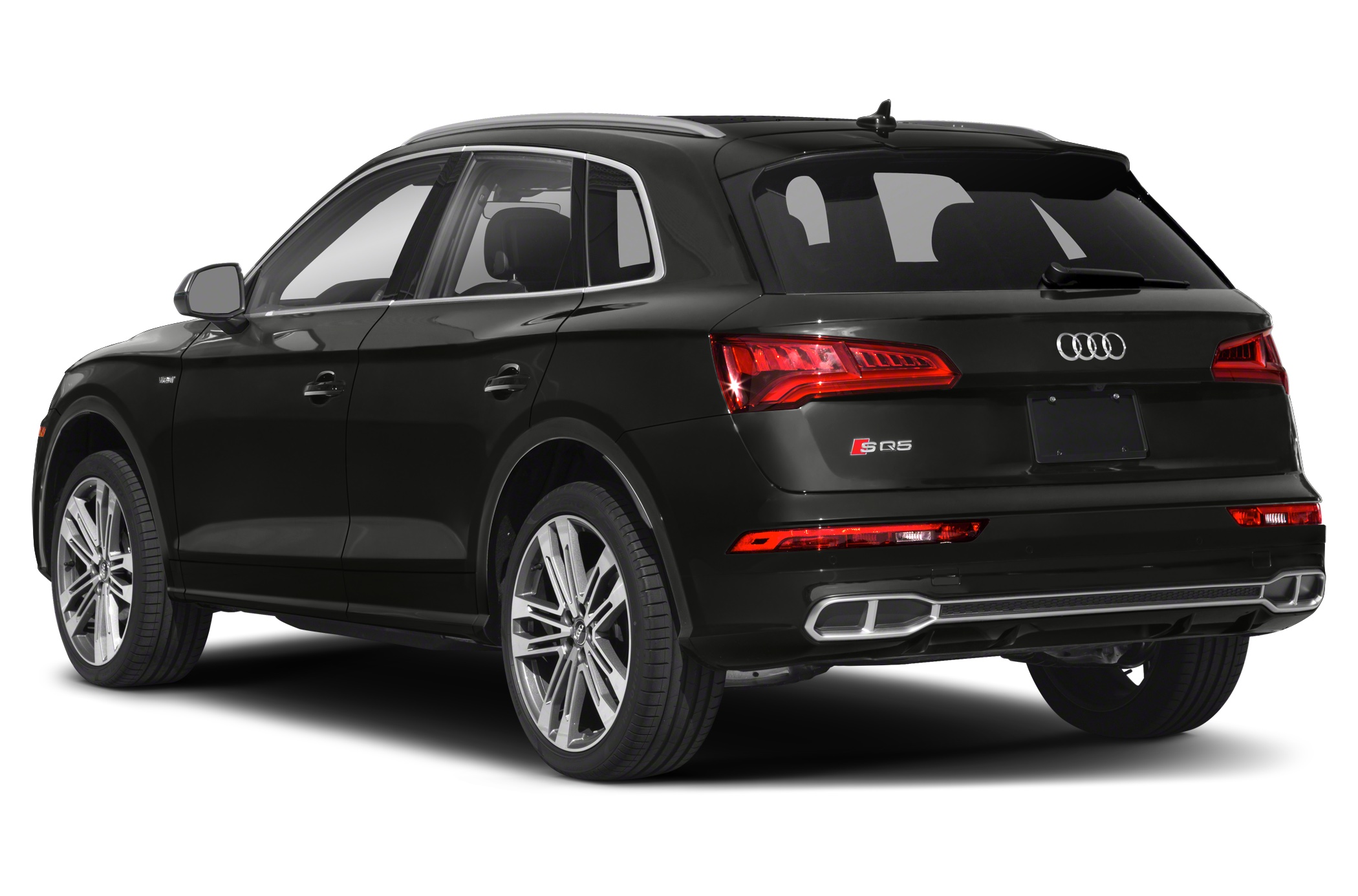
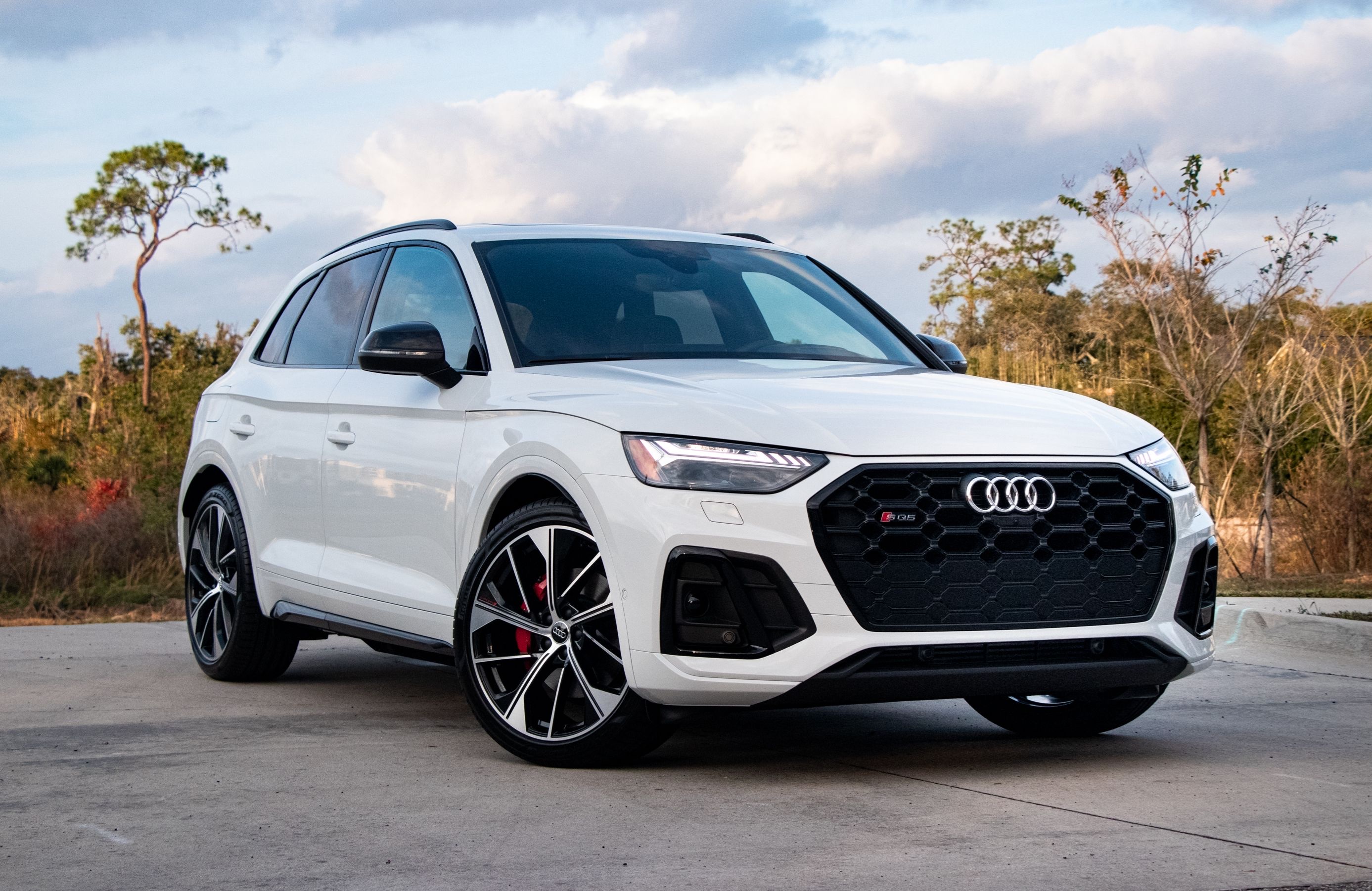
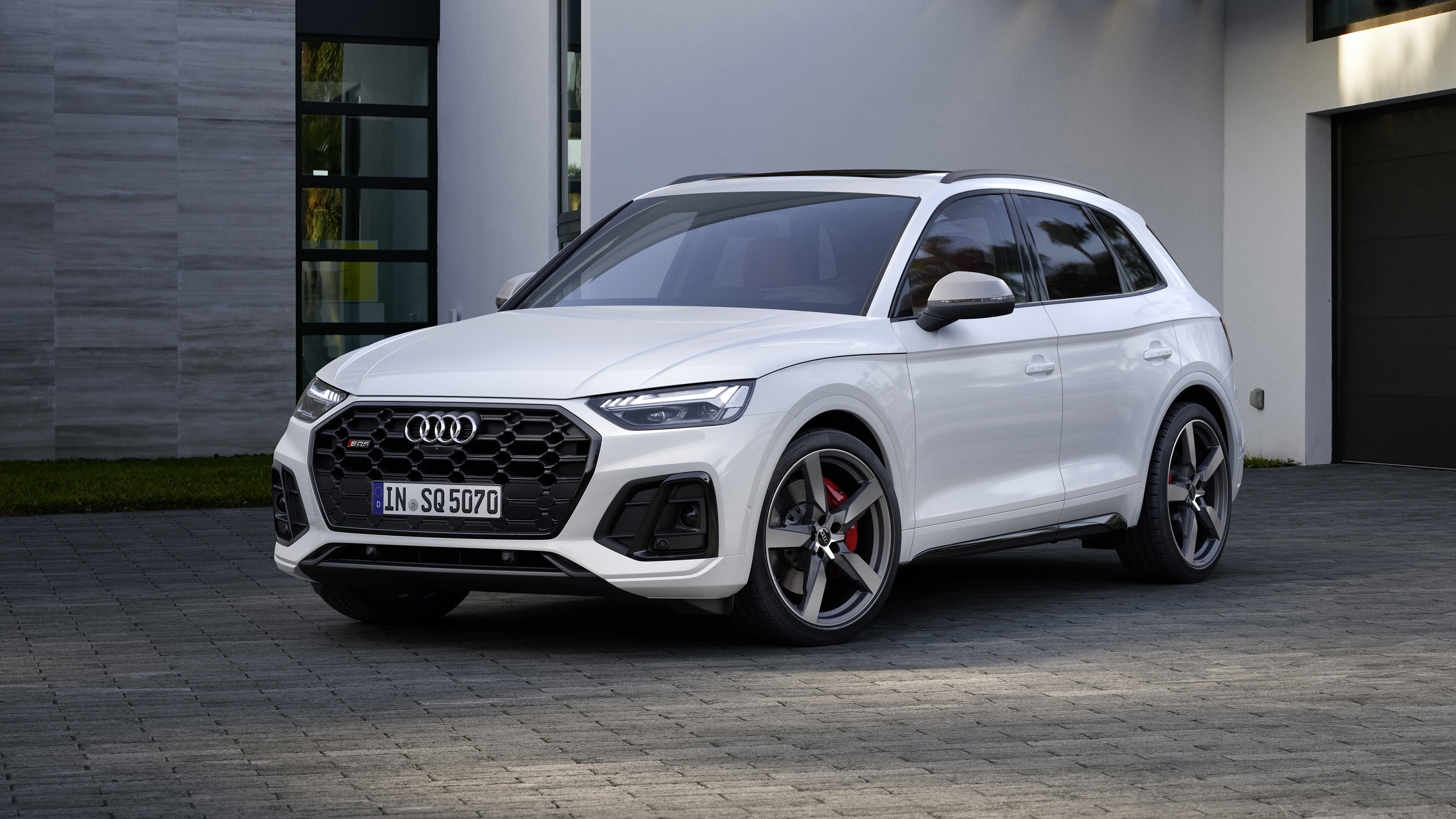
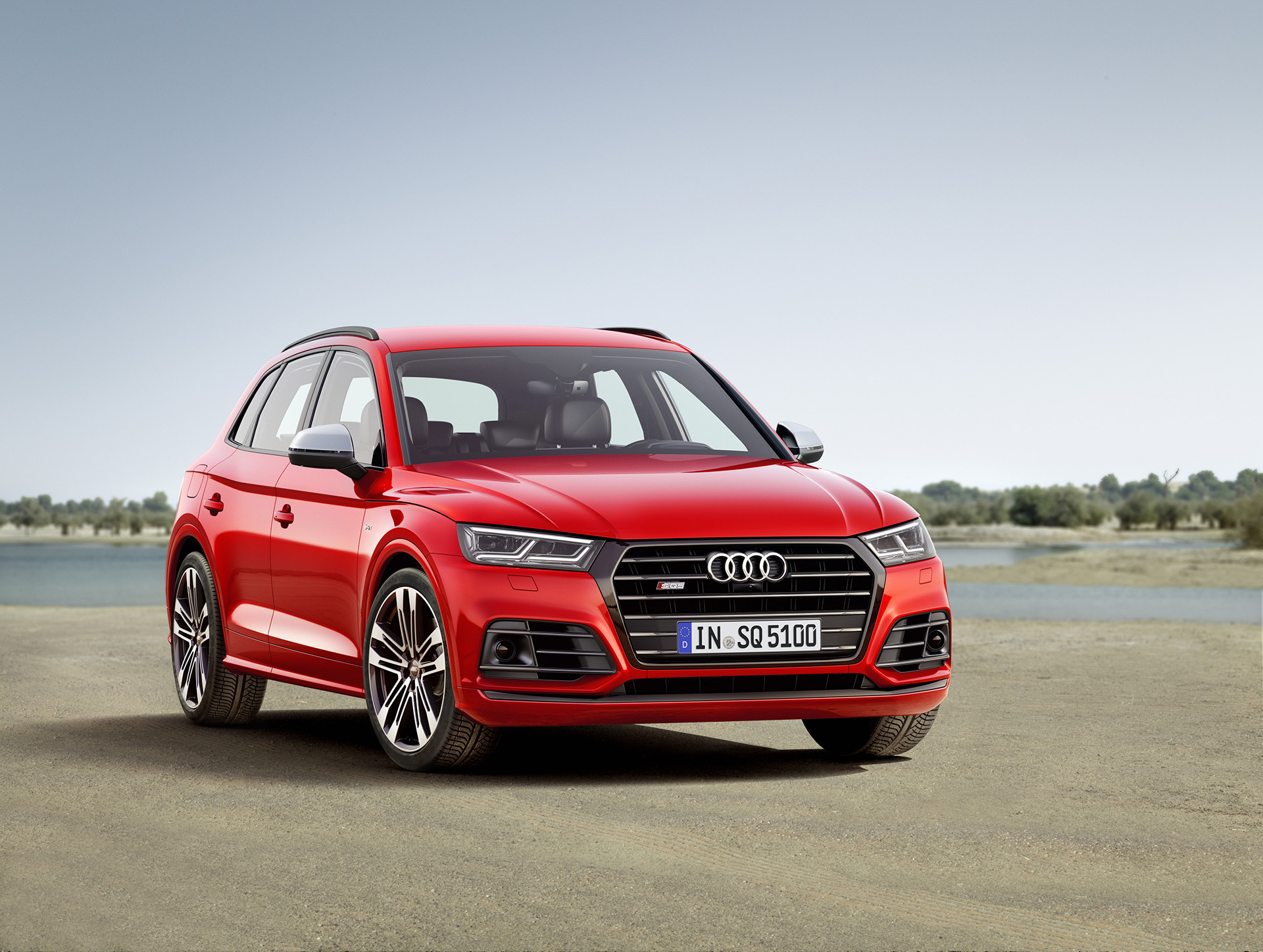
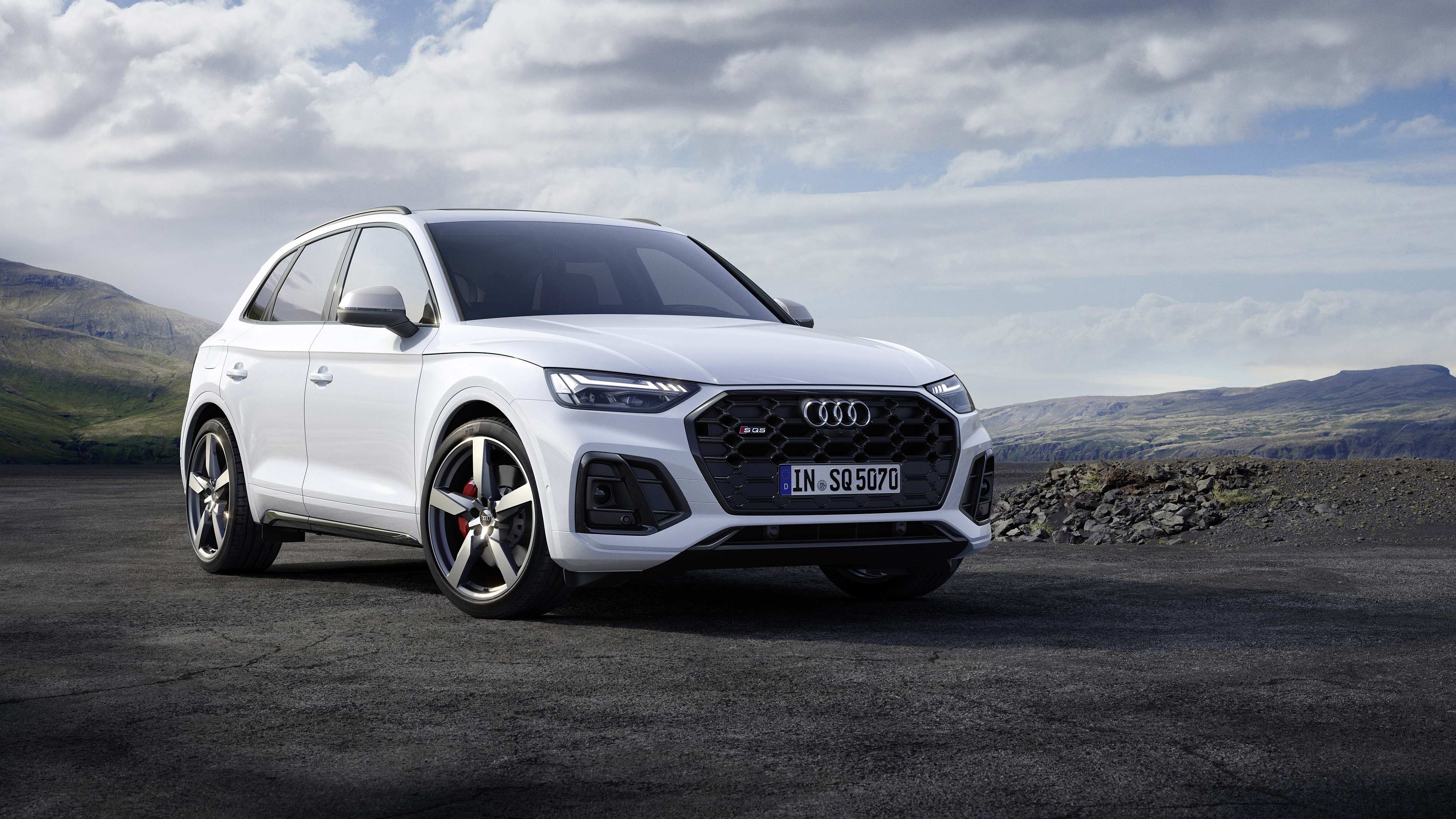
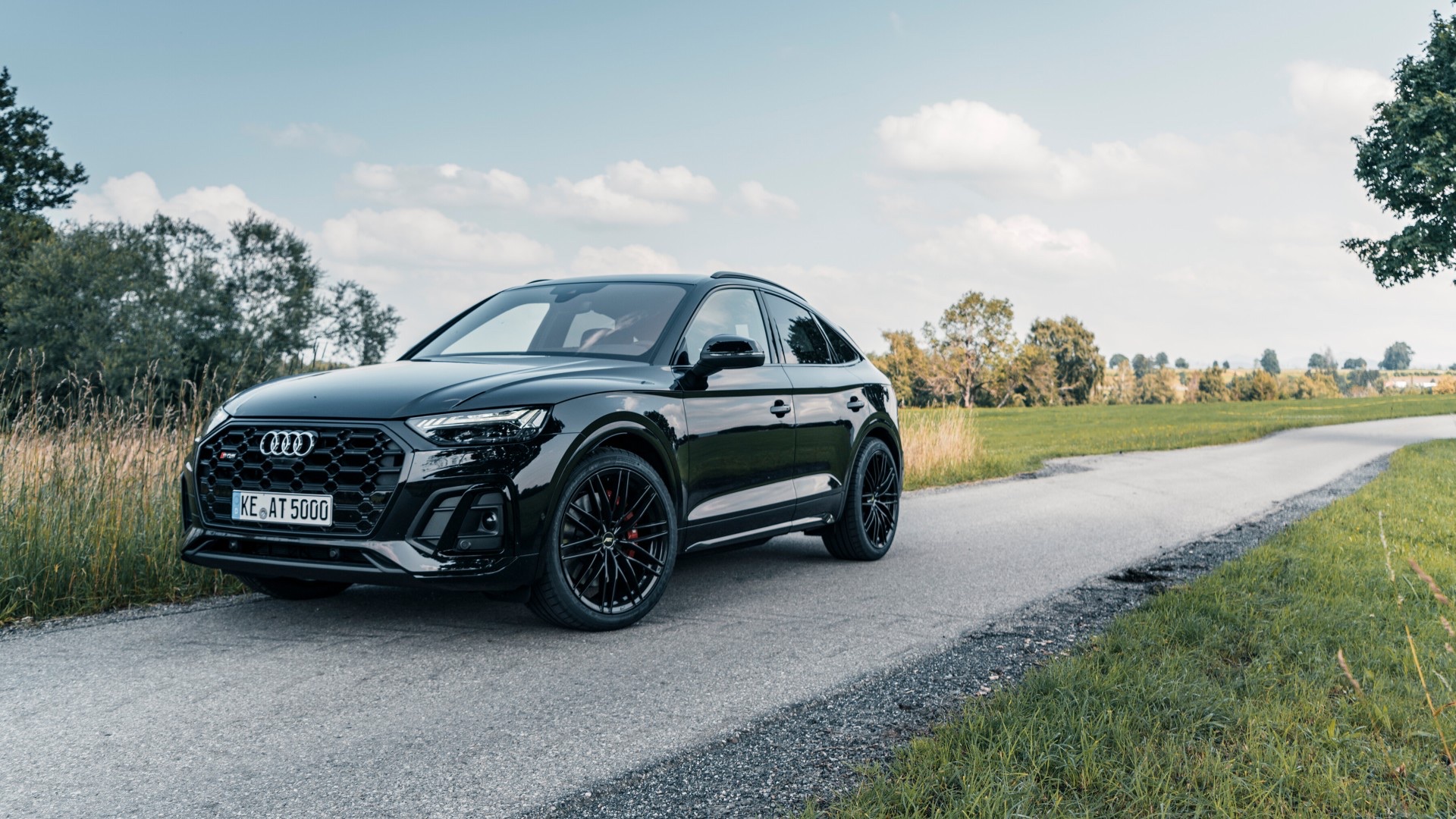
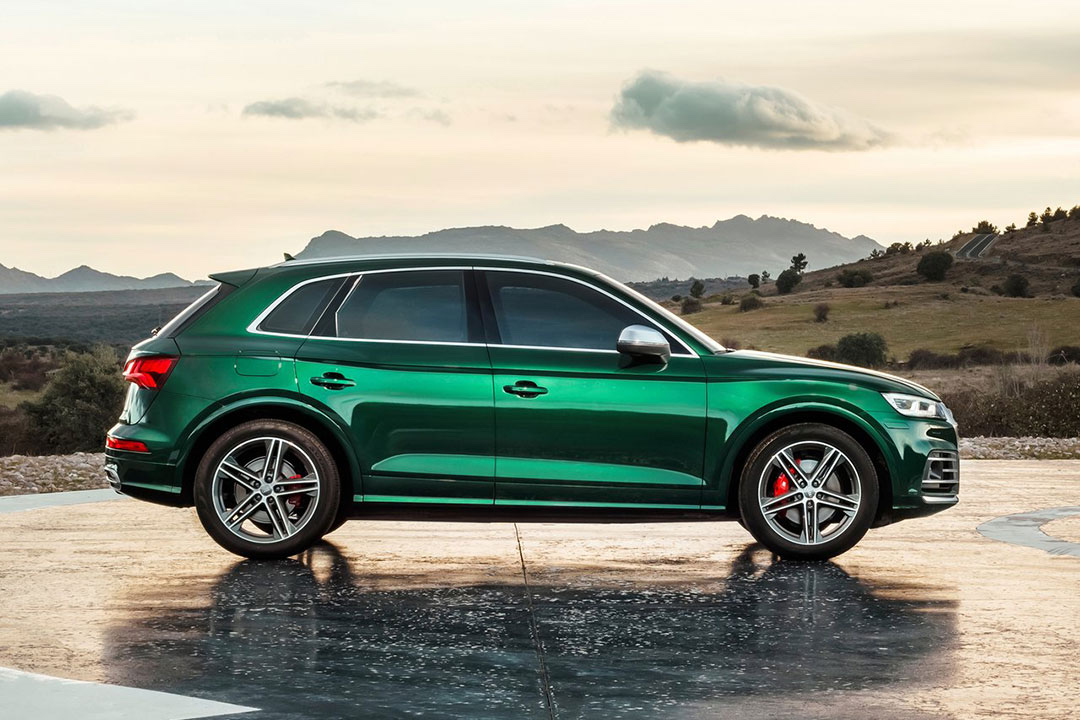
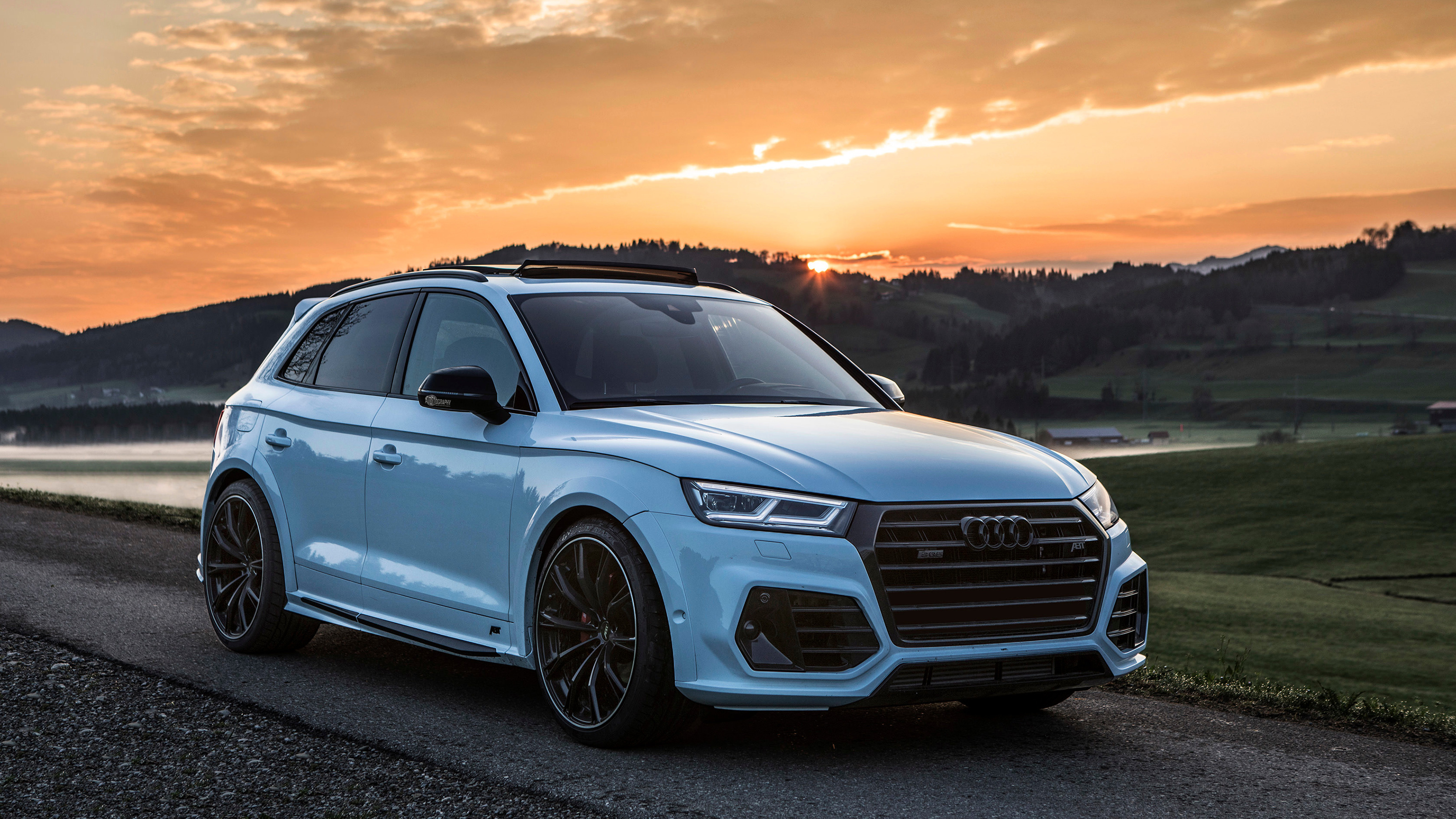
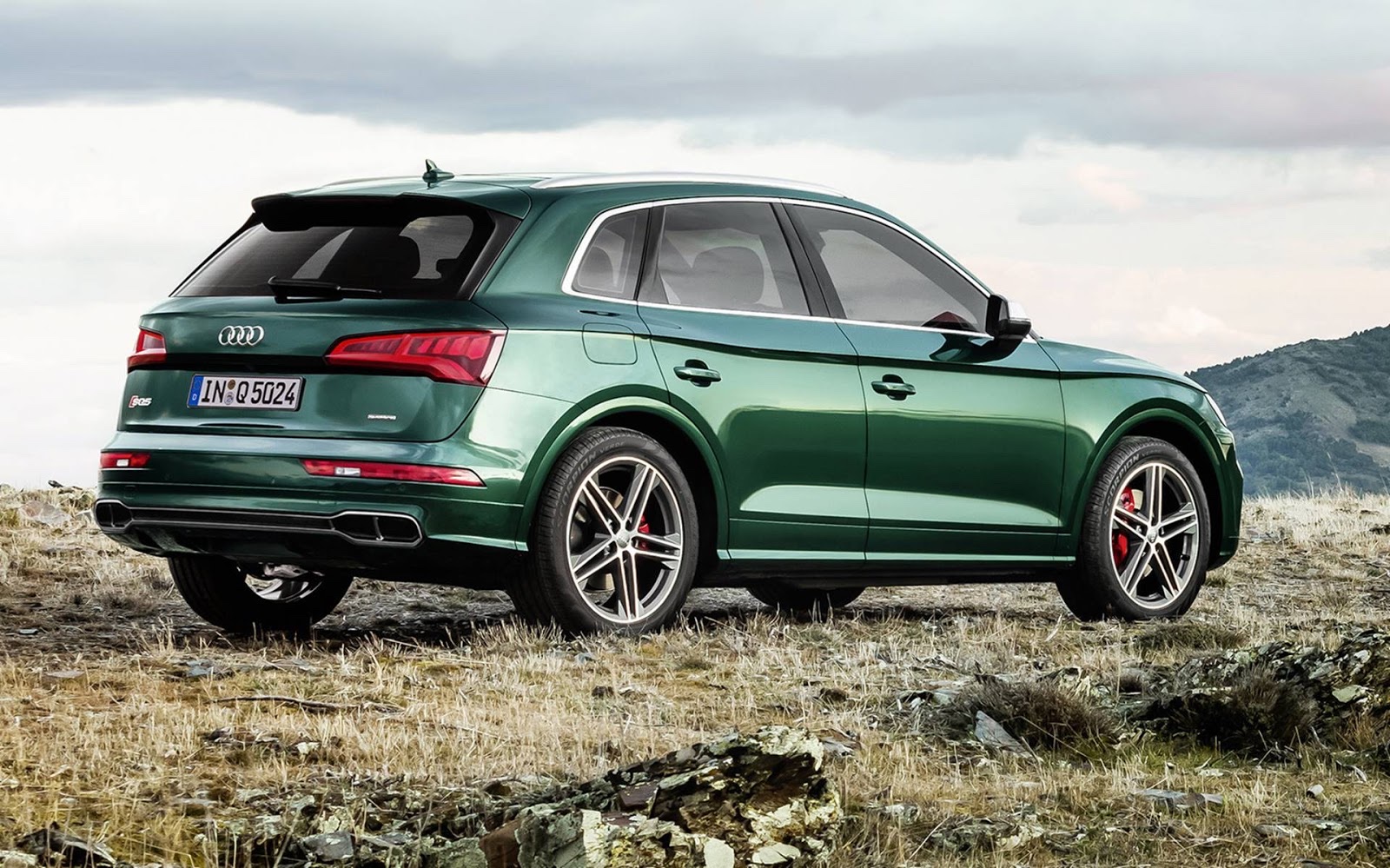
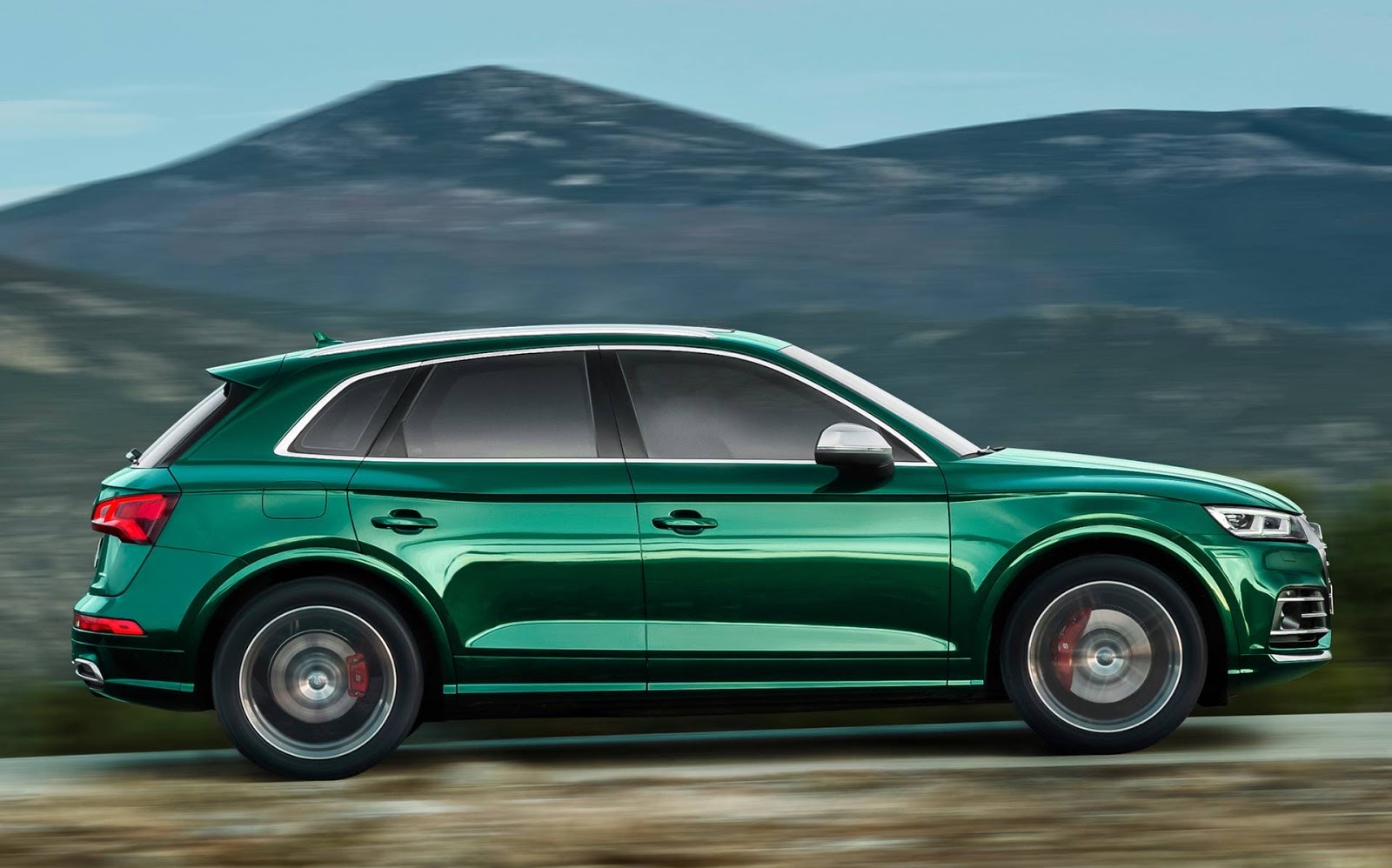
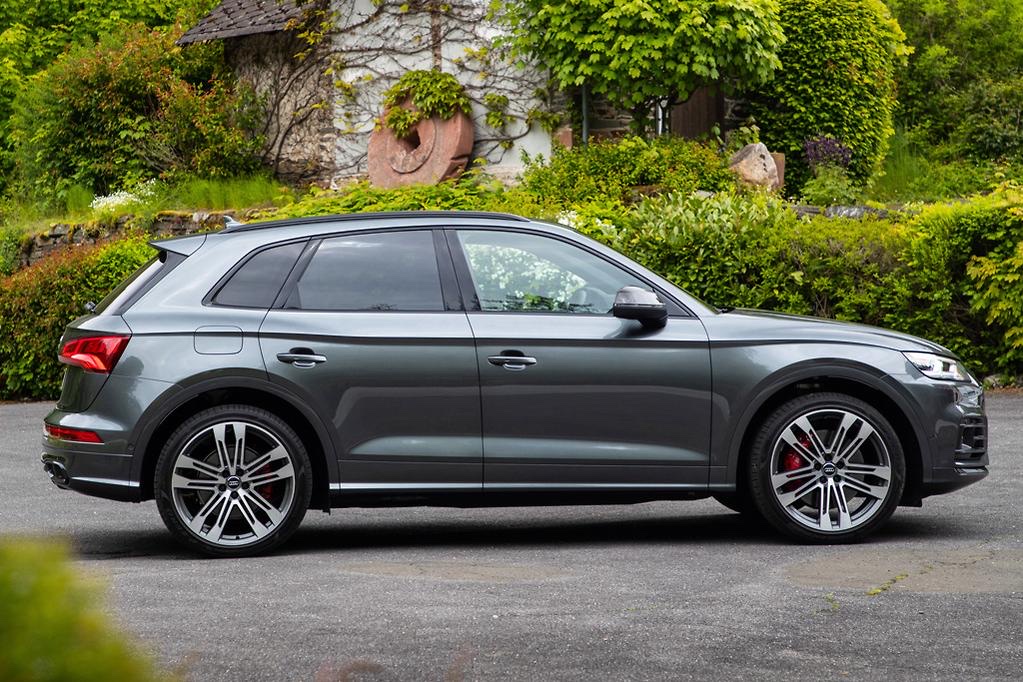
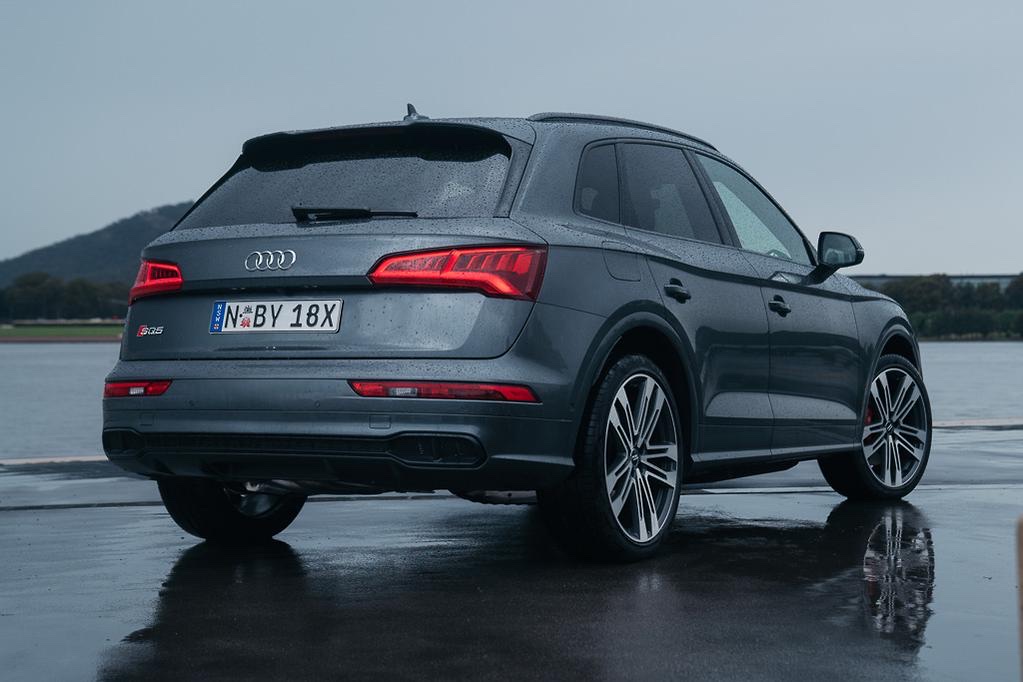
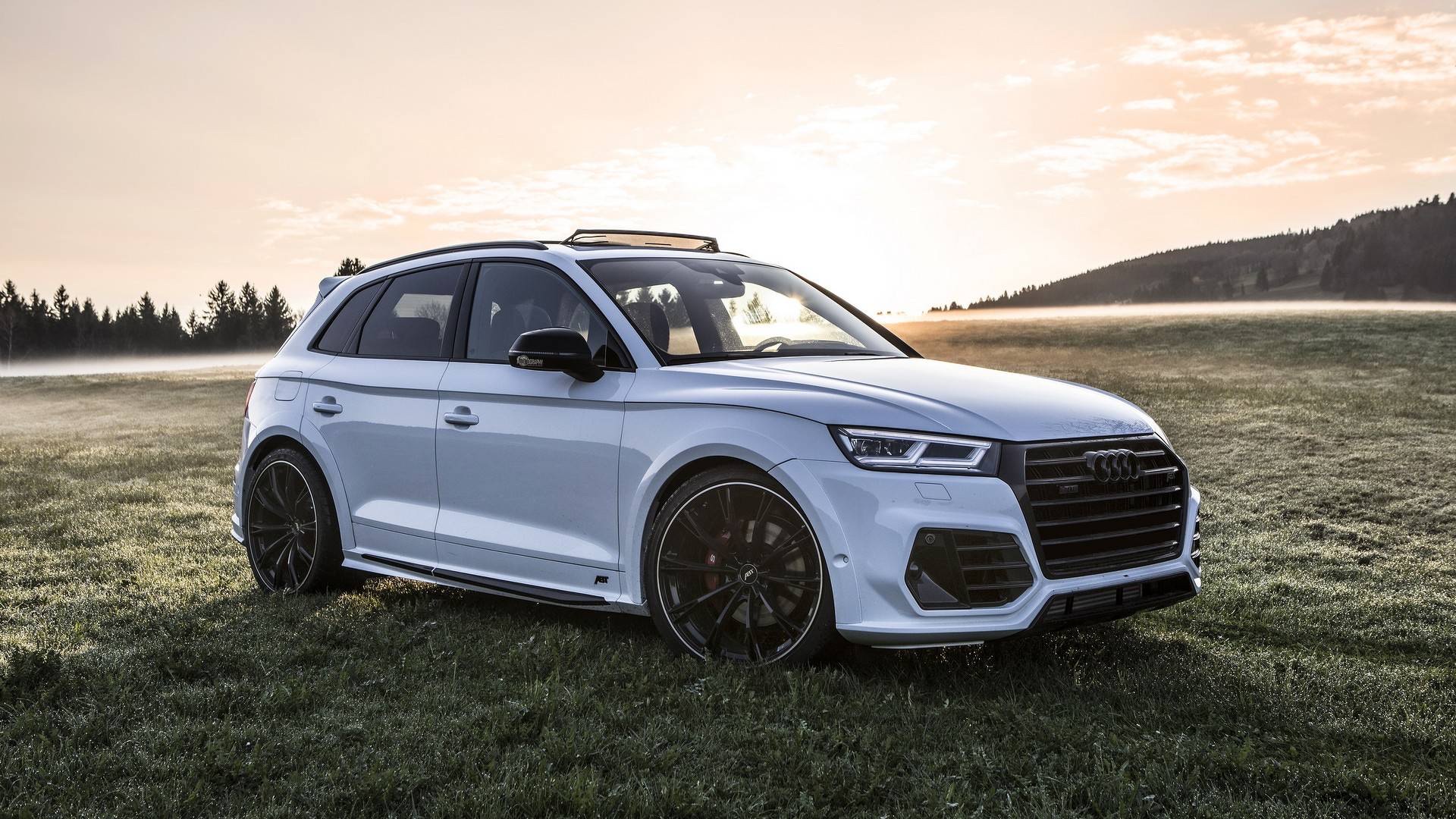
The exterior styling of the restyled SQ5 is distinguished by a more intricate front grille pattern and distinct silver accents on the front bumper. At the rear, it features a matte aluminum insert, an aggressive lower diffuser, and quad exhaust tips that hint at its performance capabilities. The stance is lowered by 30 millimeters compared to the standard Q5, giving it a more planted look. Buyers could also specify matrix LED headlights, customizable OLED taillights with three distinct signature patterns, and 21-inch alloy wheels to further personalize the vehicle's appearance.
Interior
Inside the cabin, the SQ5 maintains a driver-focused, premium environment. Standard highlights include a sport steering wheel, bolstered sport seats featuring S embossing, and matte aluminum trim accents. The interior is designed to be both comfortable and functional, with available upgrades such as tri-zone climate control, massaging and ventilated front seats, and a Bang & Olufsen audio system. Technology is well-integrated, with options for a head-up display and a wireless device charging pad, alongside an available panoramic sunroof that adds an airy feel to the passenger space.
Performance
Under the hood, this iteration relies on a heavily revised 3.0-liter V6 TDI engine producing 341 horsepower and 700 Nm of torque. Despite a slight dip in peak power from the previous version, the SUV still hits 100 km/h in just 5.1 seconds. The engine upgrades include forged steel pistons, a water-to-air intercooler, and a 48-volt mild-hybrid system. This electrical network powers both an electric compressor, which spools up almost instantly to eliminate turbo lag, and a starter-alternator that allows the vehicle to coast with the engine off for up to 40 seconds. Power is managed by an 8-speed ZF automatic transmission and a rear-biased Quattro all-wheel-drive system utilizing a Torsen center differential.
Practicality
Despite its performance focus, the SQ5 remains highly practical for everyday use. As a midsize SUV, it provides comfortable seating for five passengers within a 2,824 mm wheelbase. Cargo capacity is a generous 510 liters, offering plenty of space for family road trips or daily errands. The standard adaptive suspension provides a balance of ride comfort and handling, while an optional adaptive air suspension allows drivers to adjust the ride height for varied driving conditions. A 70-liter fuel tank combined with the efficiency of the mild-hybrid diesel engine ensures a strong touring range.
Safety and tech
Audi equips the SQ5 with a comprehensive suite of active safety technologies and driver assistance systems. Visibility and nighttime safety are enhanced by the available matrix LED headlights and innovative OLED taillights. The 48-volt electrical architecture not only improves powertrain efficiency but also supports advanced onboard electronics, including active torque vectoring by braking, which improves stability and cornering safety in diverse weather conditions.
Buyer notes
When evaluating a 2020 SQ5, buyers should pay attention to the optional performance hardware. While the standard torque-vectoring-by-braking system is capable, enthusiastic drivers might want to look for models equipped with the true active rear sport differential. Additionally, the choice between the standard adaptive steel suspension and the optional air suspension significantly alters the dual-purpose character of the SUV. Note that powertrain configurations, particularly the availability of the TDI engine, can vary significantly depending on the regional market.
Trims and key specifications
Use this table to compare the main differences between available configurations.
| Trim / modification | Engine | Power | Seats | Transmission |
|---|---|---|---|---|
| 3.0 TDI (341 hp) 8-Tiptronic 4x4 | 2967 cc | 341 hp | 5 | 8-Tiptronic |
Specifications can vary by market, model year, and equipment package. Use the trim sections below to review the full data for each configuration.
Audi SQ5 (FY) photo gallery
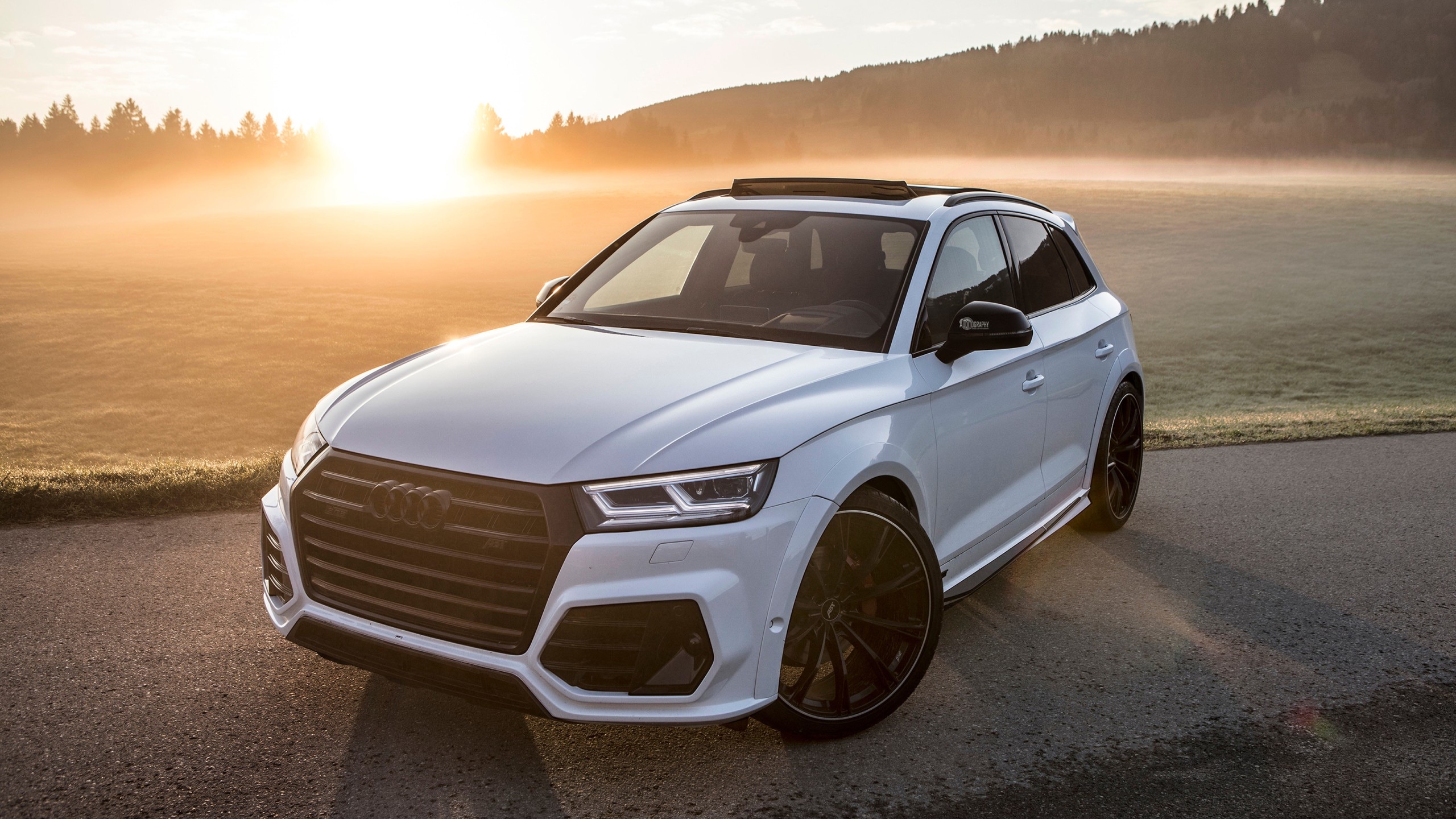
14 images are collected here with the main specifications and trim data for this model.
Photo Audi SQ5 (FY)
Specifications by trim
Choose a configuration below to open full technical data grouped by category.
3.0 TDI (341 hp) 8-Tiptronic 4x4 39 specifications
Specifications
Performance and consumption
| Fuel consumption city, L/100 km | 8.7 |
|---|---|
| Fuel consumption highway, L/100 km | 6 |
| Fuel consumption combined, L/100 km | 7 |
| Top speed, km/h | 250 |
| Acceleration 0-100 km/h, s | 5.1 |
| Emissions standard | Euro VI |
Engine
| Engine | 3.0 TDI |
|---|---|
| Engine code | EA897evo2 MHEV |
| Engine type | Internal combustion engine |
| Fuel type | Diesel |
| Engine displacement, cc | 2967 |
| Cylinder layout | V-type |
| Number of cylinders | 6 |
| Valves | 24 |
| Turbocharger | + |
| Power, hp | 341 |
| RPM at max power | 2800–3900 |
| Torque, Nm | 700 |
| RPM at max torque | 1750–3250 |
Dimensions
| Seats | 5 |
|---|---|
| Length, mm | 4682 |
| Width, mm | 2140 |
| Height, mm | 1635 |
| Wheelbase, mm | 2824 |
| Front track, mm | 1624 |
| Rear track, mm | 1612 |
| Kerb weight, kg | 2085 |
| Gross weight, kg | 2660 |
| Fuel tank capacity, L | 70 |
| Turning circle, m | 11.8 |
| Width without mirrors, mm | 1893 |
| Trunk capacity, L | 510 |
Transmission and drive
| Transmission | 8-Tiptronic |
|---|---|
| Transmission type | automatic |
| Drive | All-wheel drive |
| Number of gears | 8 |
| Transmission manufacturer | ZF |
| Automatic transmission | + |
| Transmission country | Germany |
Audi SQ5 (FY) questions
Short answers based on the specifications and photos available in this catalog.
What engine does the 2020 Audi SQ5 have?
The 2020 model detailed here features a 3.0-liter V6 TDI diesel engine with a 48-volt mild-hybrid system and an electric compressor, producing 341 horsepower and 700 Nm of torque.
How fast is the Audi SQ5?
It can accelerate from 0 to 100 km/h in 5.1 seconds and has an electronically limited top speed of 250 km/h.
What kind of transmission and all-wheel drive does it use?
It uses an 8-speed ZF automatic transmission paired with Audi's Quattro all-wheel-drive system, featuring a Torsen self-locking center differential that defaults to a rear-wheel bias.
Is the SQ5 lower than the standard Q5?
Yes, the standard adaptive suspension on the SQ5 sits 30 millimeters lower than the base Q5. An adaptive air suspension was also available as an option.
How much cargo space does it offer?
The SQ5 provides 510 liters of cargo capacity behind the second row of seats, making it quite practical for daily use.