Volkswagen Atlas specifications and photos
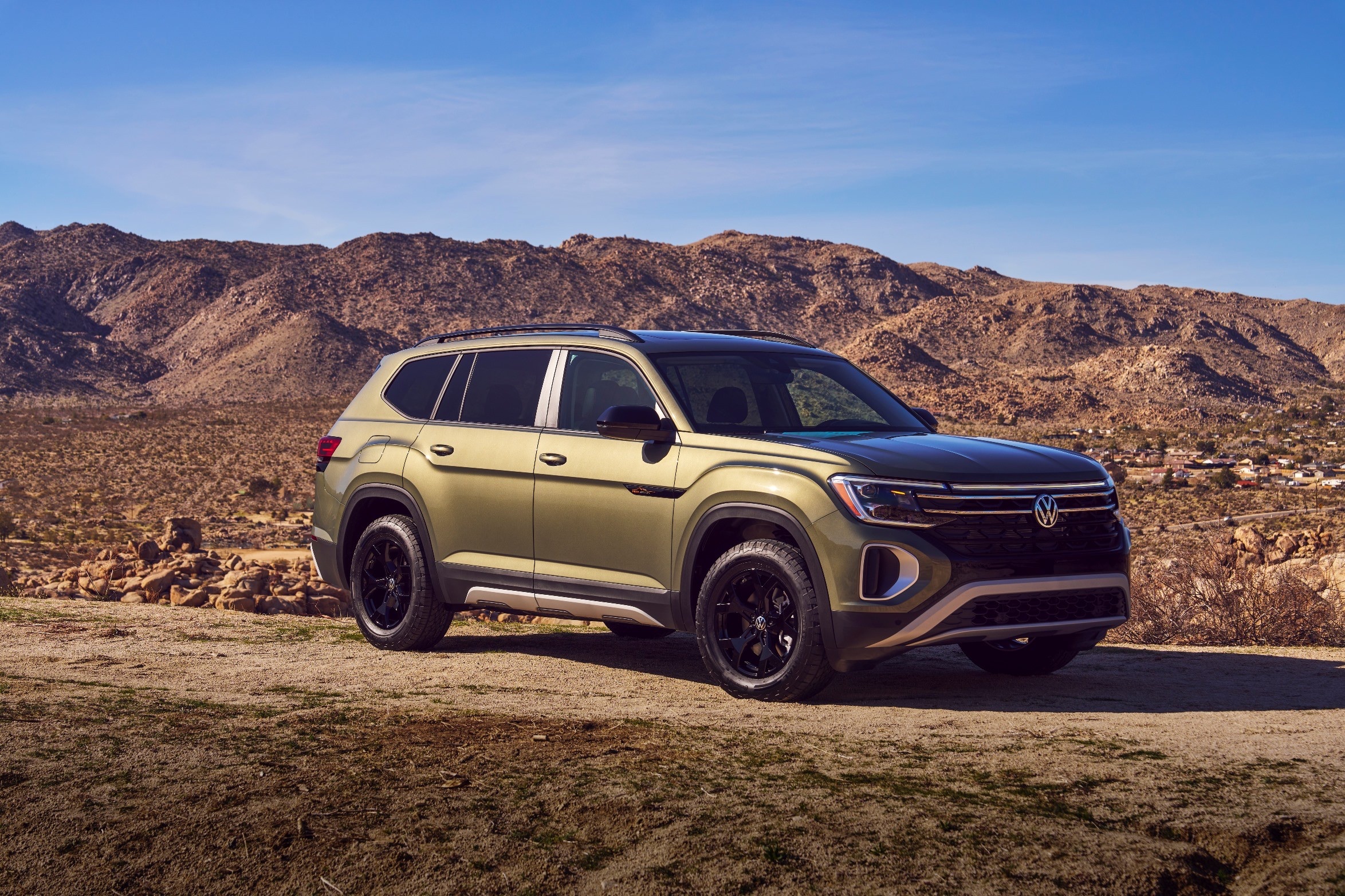
The 2023 Volkswagen Atlas represents the second major styling update for this midsize three-row SUV. It features a revised exterior appearance, a more premium cabin, and updated digital displays. This version also marks a significant shift in its powertrain lineup by moving to a single turbocharged engine.
Volkswagen Atlas at a glance
Quick model context before comparing photos and trim-level specifications.
Introduced at the Chicago Auto Show in February 2023, this update brings the first-generation Volkswagen Atlas in line with the brand's latest design language and technology. Positioned as a large family crossover, it competes in the competitive three-row segment by focusing on passenger space and everyday comfort. The mid-cycle refresh replaces the previously available naturally aspirated V6 engine with a modern turbocharged four-cylinder unit across all trims. Along with the mechanical changes, the exterior features revised front and rear styling, including illuminated light bars on most trim levels. Inside, the cabin receives higher-quality materials and a restructured dashboard designed to elevate the overall feel of the interior. The Atlas continues to serve buyers looking for a spacious utility vehicle that prioritizes passenger room, safety features, and a functional cabin layout for up to seven occupants.
- Power: 269 hp
- Engine displacement: 1984 cc
- Transmissions: 8-Tiptronic
- Seating: 7 seats
Photos, trims and specifications for Volkswagen Atlas
This model page brings gallery images, trim comparison, and detailed technical data together for the 2023 generation.
Estimate fuel cost
Use trim-level fuel consumption data to estimate monthly and yearly fuel spending.
Fuel costs are estimates. Real consumption can change with driving style, traffic, tires, weather, load, and market-specific equipment.
Volkswagen Atlas overview
Editorial context for design, cabin, performance, practicality, and buyer notes.
Design
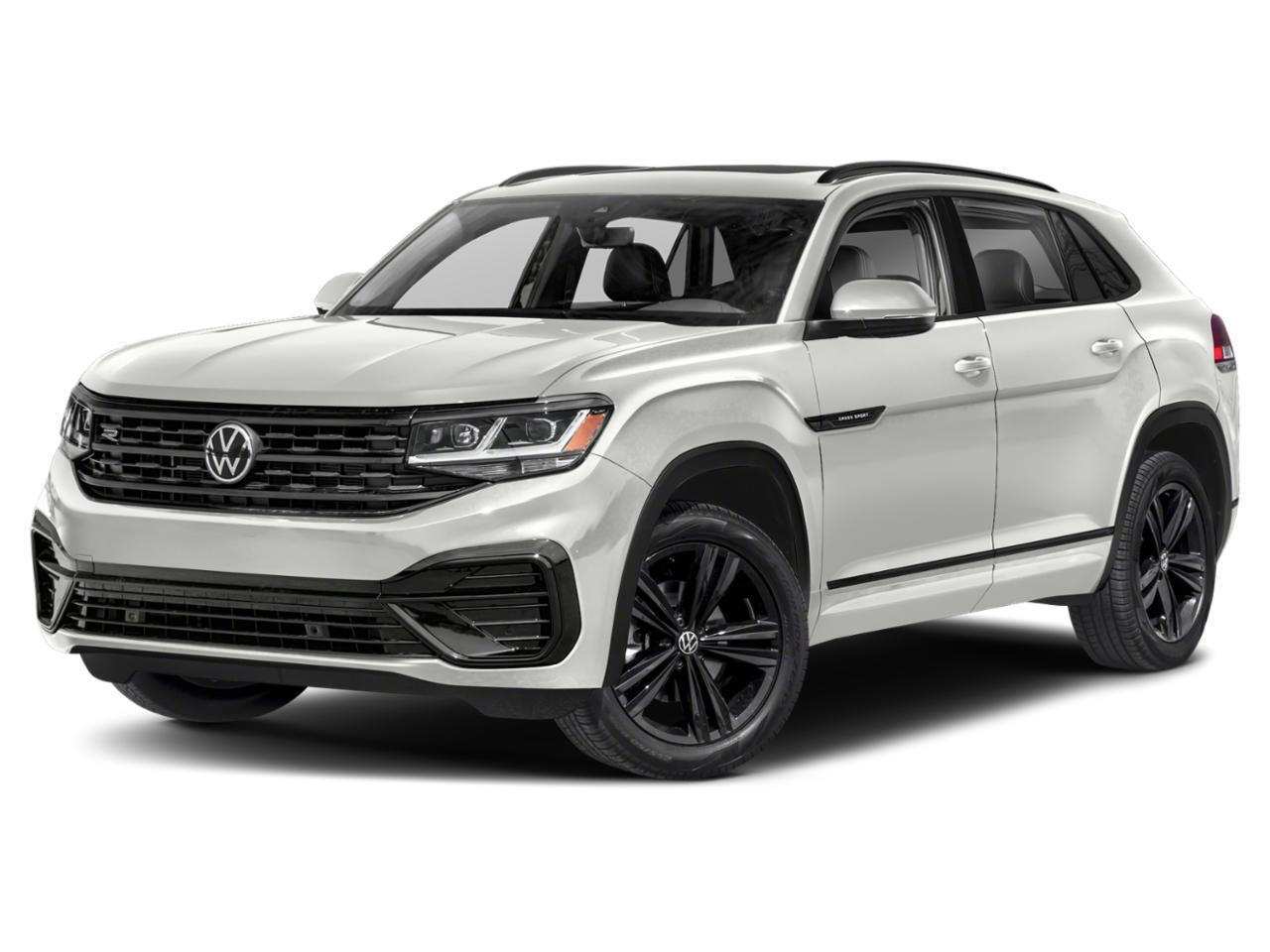
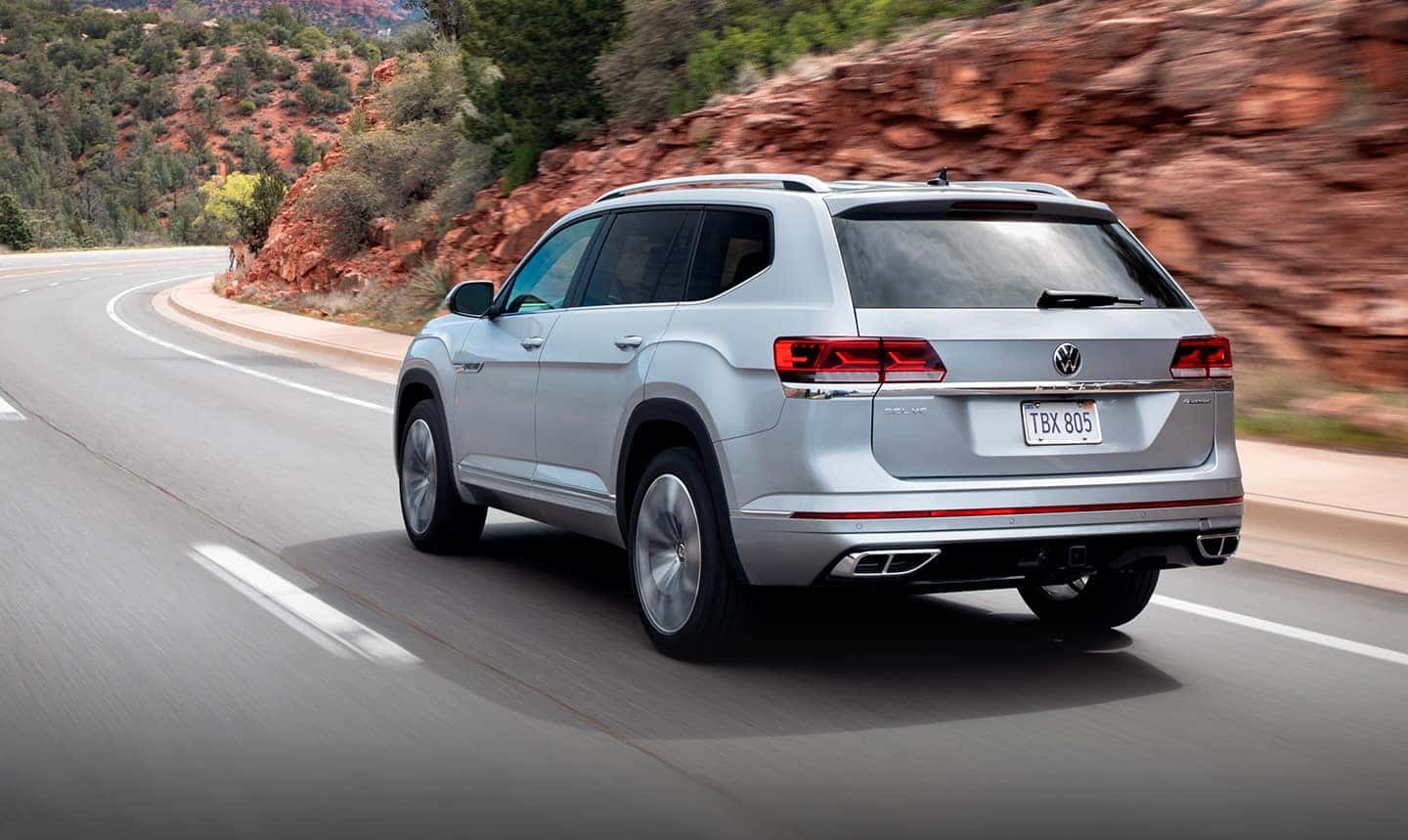
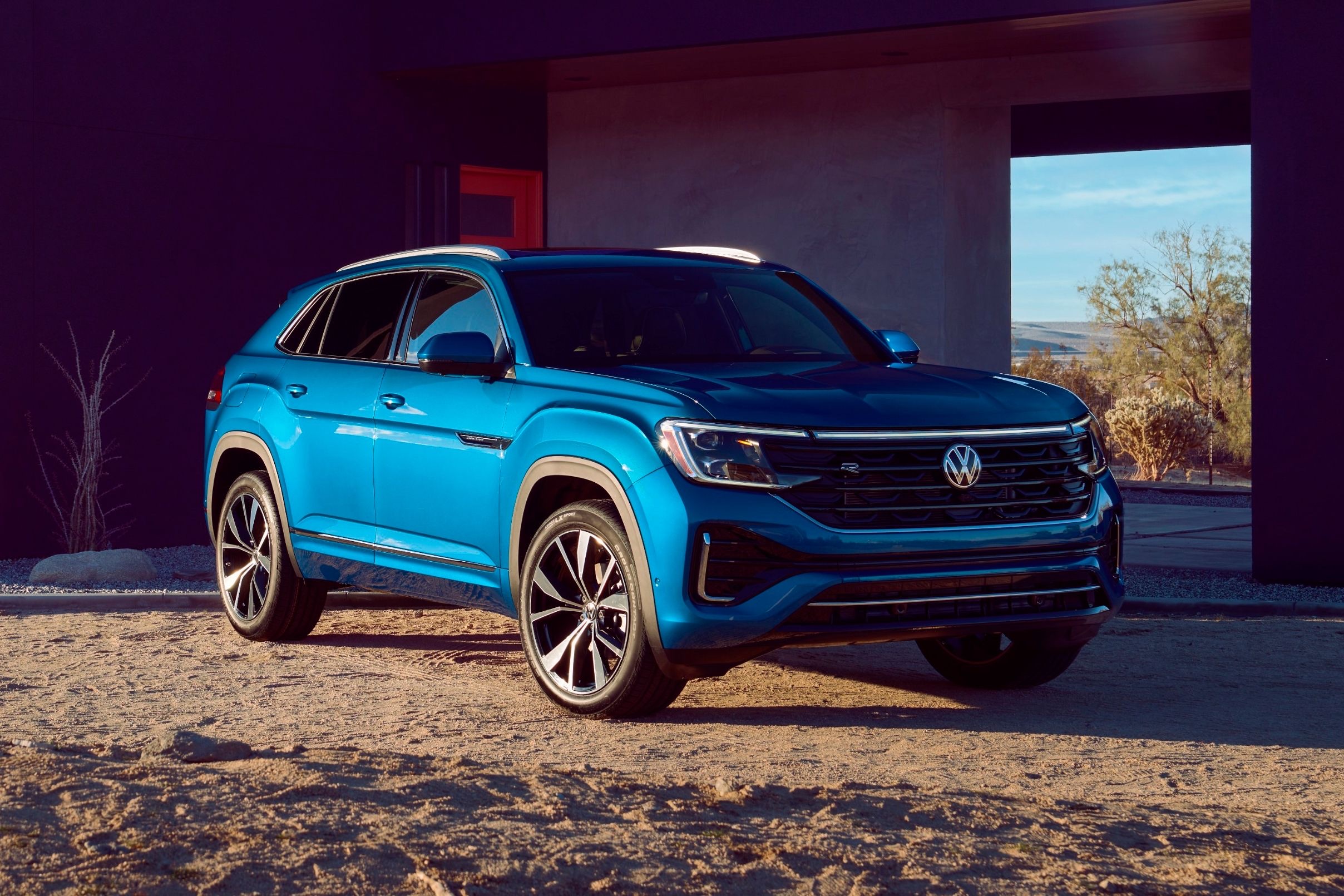
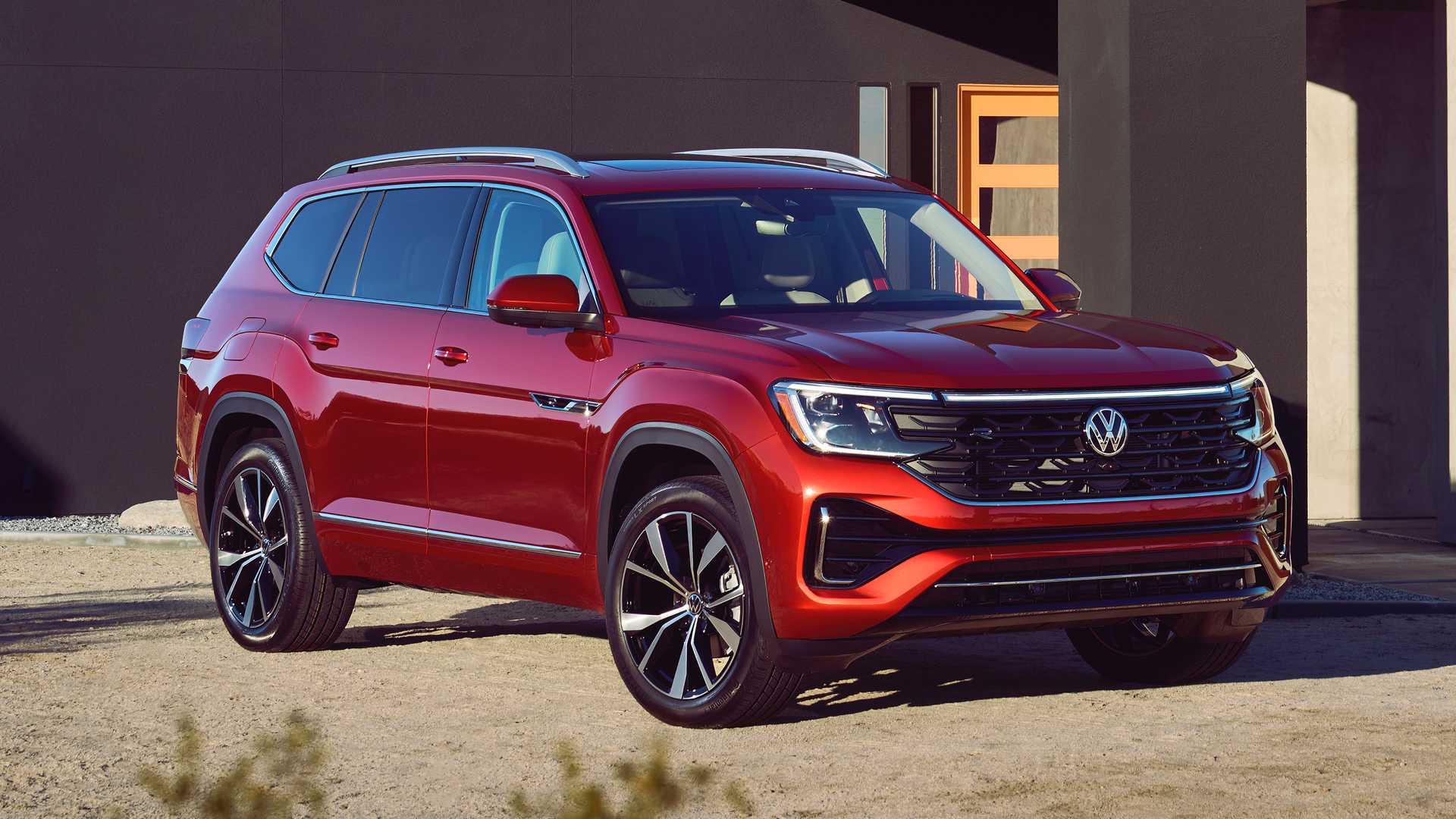
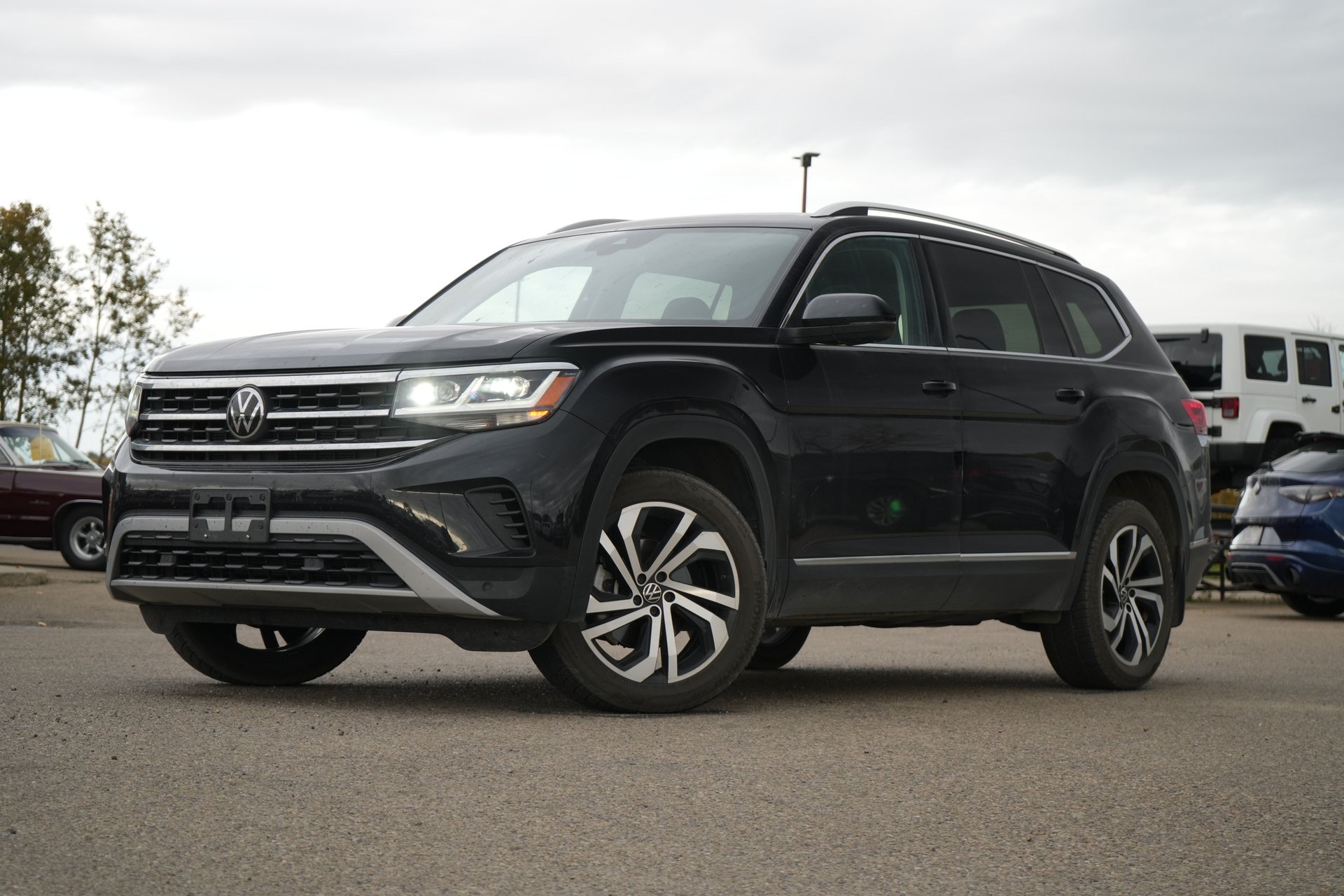
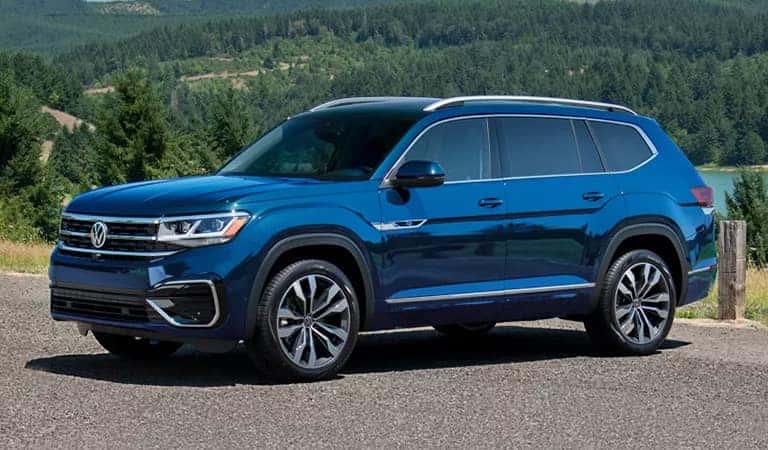
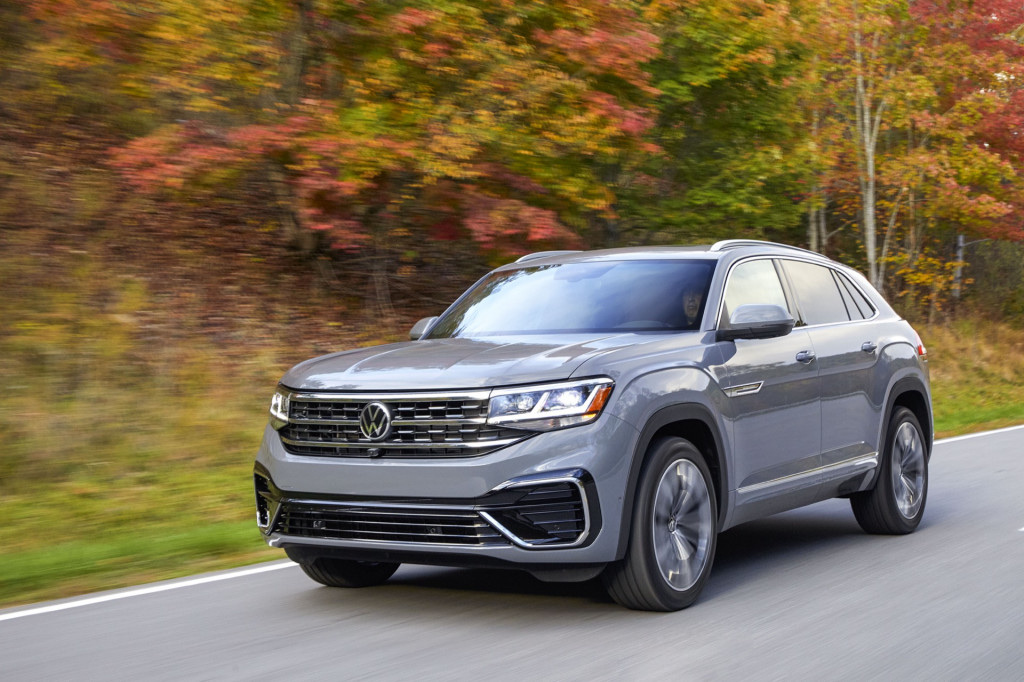
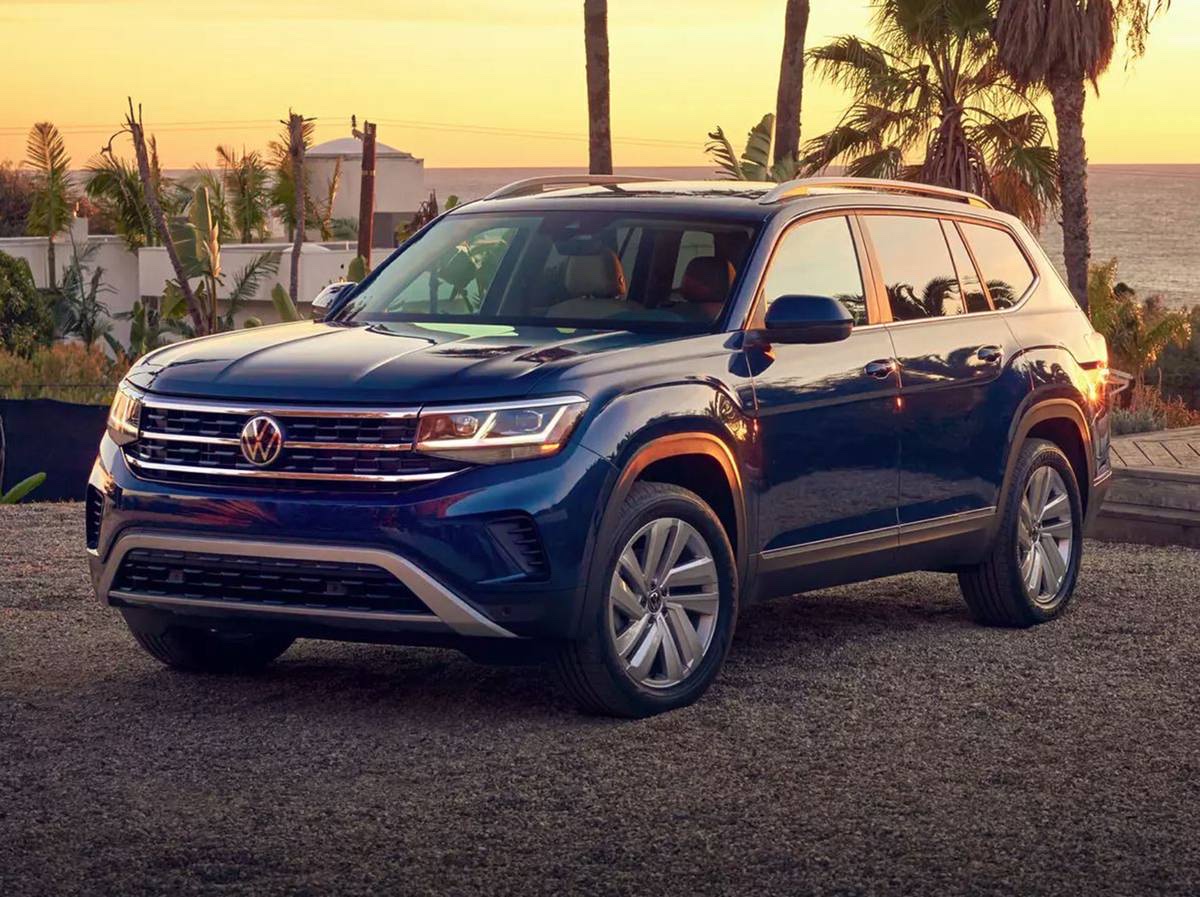
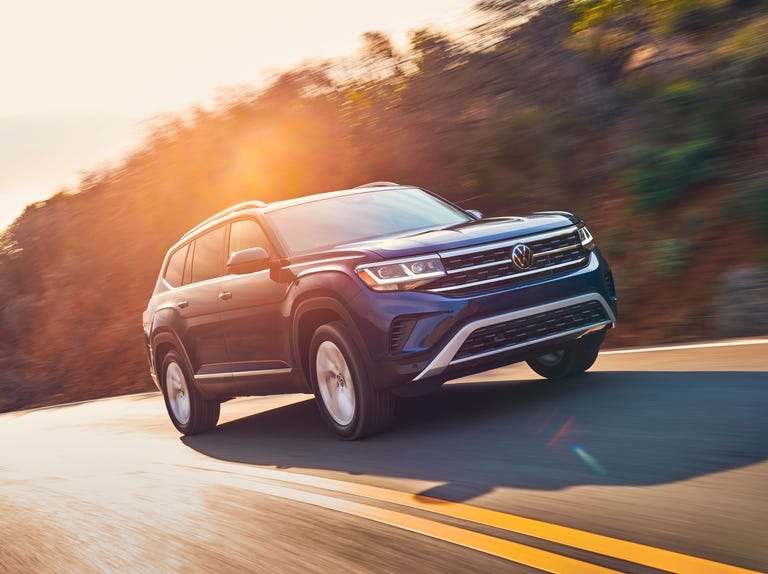
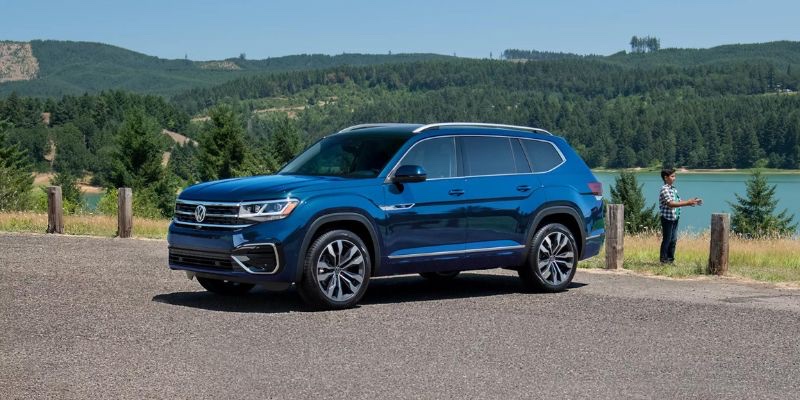
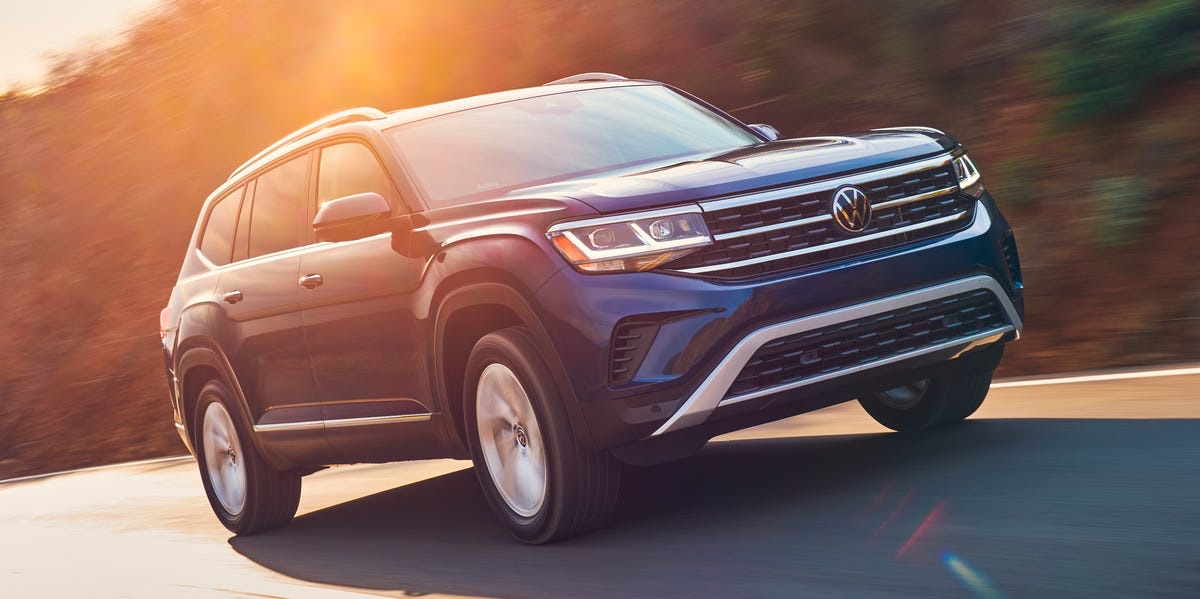
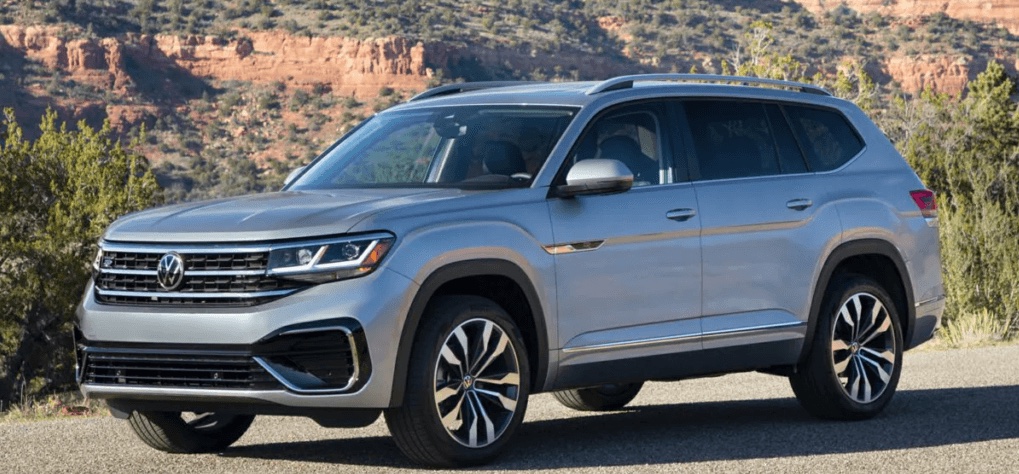
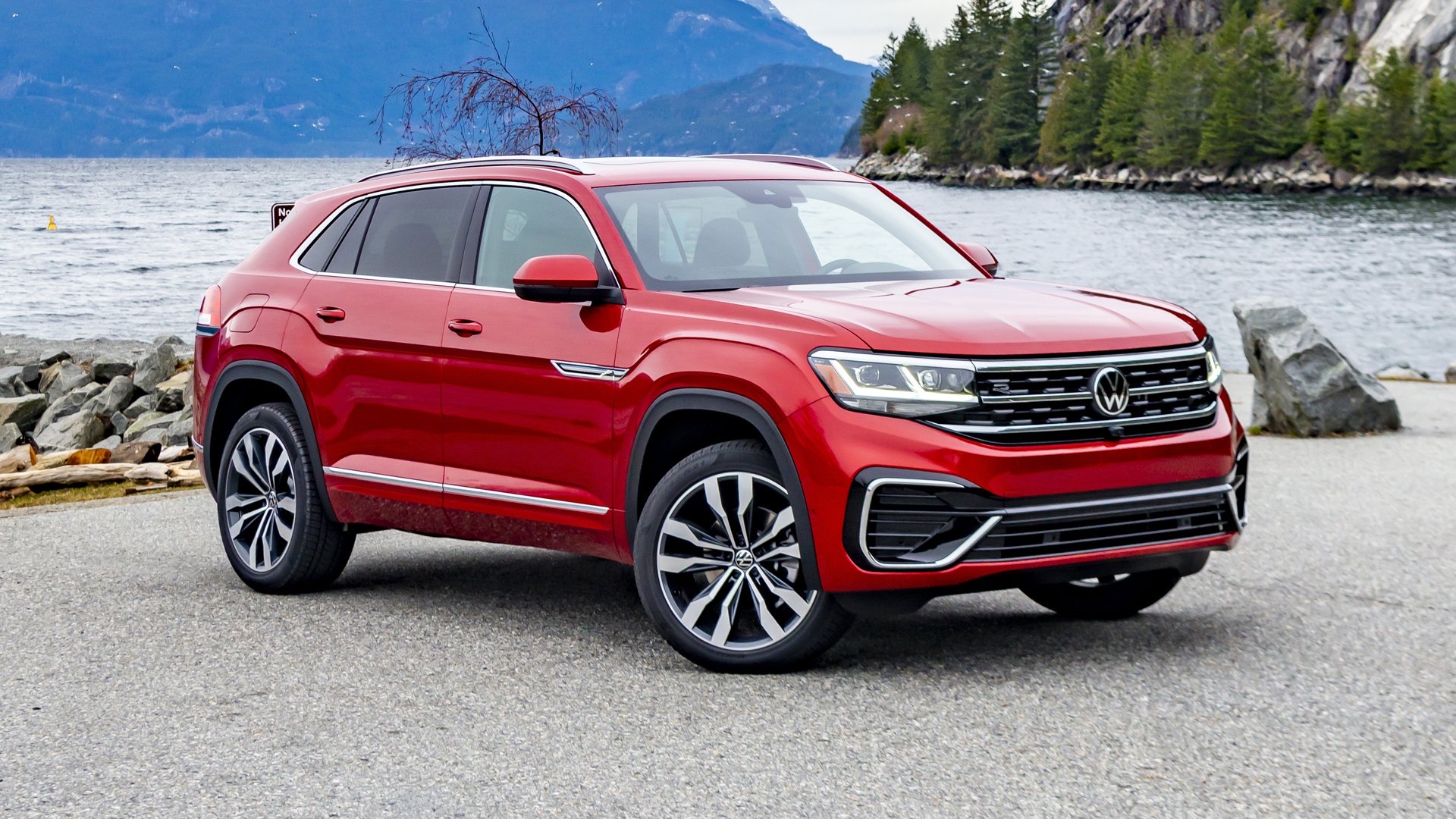
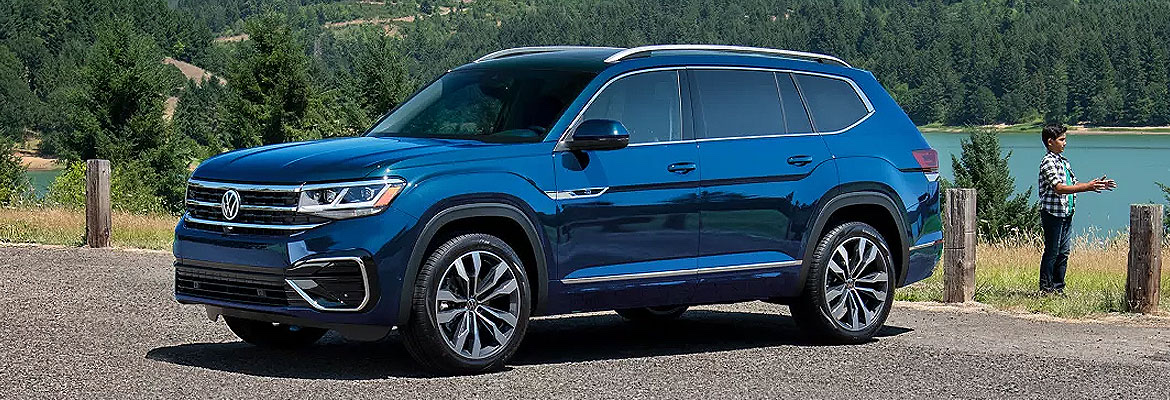
Exterior updates for the 2023 Atlas are highlighted by a redesigned front fascia featuring a wide, four-bar chrome grille. On most trims, adaptive LED headlights are connected by a full-width light bar that meets at a backlit brand logo. The front bumper has been reshaped with integrated air intakes to improve both airflow and appearance. Along the sides, the vehicle retains its signature squared-off wheel arches, housing wheels ranging from 18 to 21 inches depending on the specific model, with larger configurations reserved for the sportier R-Line packages. The rear styling also features updates, including a larger roof spoiler and connected LED tail lights that mirror the light bar design of the front grille.
Interior
The cabin layout is revised with a focus on better materials and enhanced comfort. The dashboard is wrapped in soft-touch leatherette that flows directly into the door panels, creating a cohesive design that extends to the rear passenger doors. The front seats come standard with power adjustments, heating, ventilation, and lumbar support. High-tier models feature leather upholstery with diamond stitching patterns and a customizable 30-color ambient lighting system. The middle row offers optional heating and can be folded forward easily to allow access to the third-row seating, which is designed to fit adult passengers comfortably. Ambient lighting on the dashboard also includes a backlit model designation on the passenger side.
Performance
The 2023 model drops the previous V6 engine option, utilizing a single 2.0-liter turbocharged four-cylinder TSI engine across the lineup. This engine produces 269 horsepower and 370 Nm of torque, which is sent through an eight-speed automatic transmission. The maximum torque is delivered over a wide RPM band, improving towing capability and acceleration. Buyers can choose between front-wheel drive and a 4x4 all-wheel-drive system. The front-wheel-drive model has an average combined fuel consumption of 10.2 liters per 100 km, while the all-wheel-drive version consumes 10.7 liters per 100 km under the same cycle. Both variants rely on a 70-liter fuel tank.
Practicality
As a dedicated family utility vehicle, the crossover offers a seven-seat layout distributed across three rows. It measures 5,097 mm in length and has a 2,980 mm wheelbase, which translates to a highly spacious cabin. The trunk provides 583 liters of cargo capacity behind the third row of seats, accommodating daily luggage needs. A turning circle of 12.2 meters and a ground clearance of 160 mm make it suitable for urban environments and light gravel paths. The interior includes multiple storage compartments, a standard wireless charging pad, and six USB-C ports with 45-watt power delivery to keep devices charged.
Safety and tech
Technology updates center on a new 12-inch floating touchscreen infotainment display and a 10.25-inch customizable digital instrument panel. Connectivity is handled through App-Connect, supporting integration for both Android Auto and Apple CarPlay. Safety is managed by the standard IQ.DRIVE driver assistance suite, which provides semi-automated driving functionality. This system includes lane-keeping assist, capacitive steering wheel sensors to monitor driver attention on highways, and urban collision monitoring to detect potential hazards in city traffic.
Buyer notes
When shopping for this midsize crossover, buyers should weigh the efficiency of the front-wheel-drive configuration against the traction of the 4x4 system, as the all-wheel-drive model increases combined fuel consumption to 10.7 liters per 100 km. Higher trims offer premium details like diamond-stitched leather upholstery, heated second-row seats, and a 30-color ambient lighting setup. Standard equipment is generous, with active safety systems and digital screens included on all models. Buyers should verify regional trim availability and specific package options with their local dealer, as standard equipment can vary.
Trims and key specifications
Use this table to compare the main differences between available configurations.
| Trim / modification | Engine | Power | Seats | Transmission |
|---|---|---|---|---|
| 2.0 TSI (269 hp) 8-Tiptronic | 1984 cc | 269 hp | 7 | 8-Tiptronic |
| 2.0 TSI (269 hp) 8-Tiptronic 4x4 | 1984 cc | 269 hp | 7 | 8-Tiptronic |
Specifications can vary by market, model year, and equipment package. Use the trim sections below to review the full data for each configuration.
Volkswagen Atlas photo gallery
16 images are collected here with the main specifications and trim data for this model.
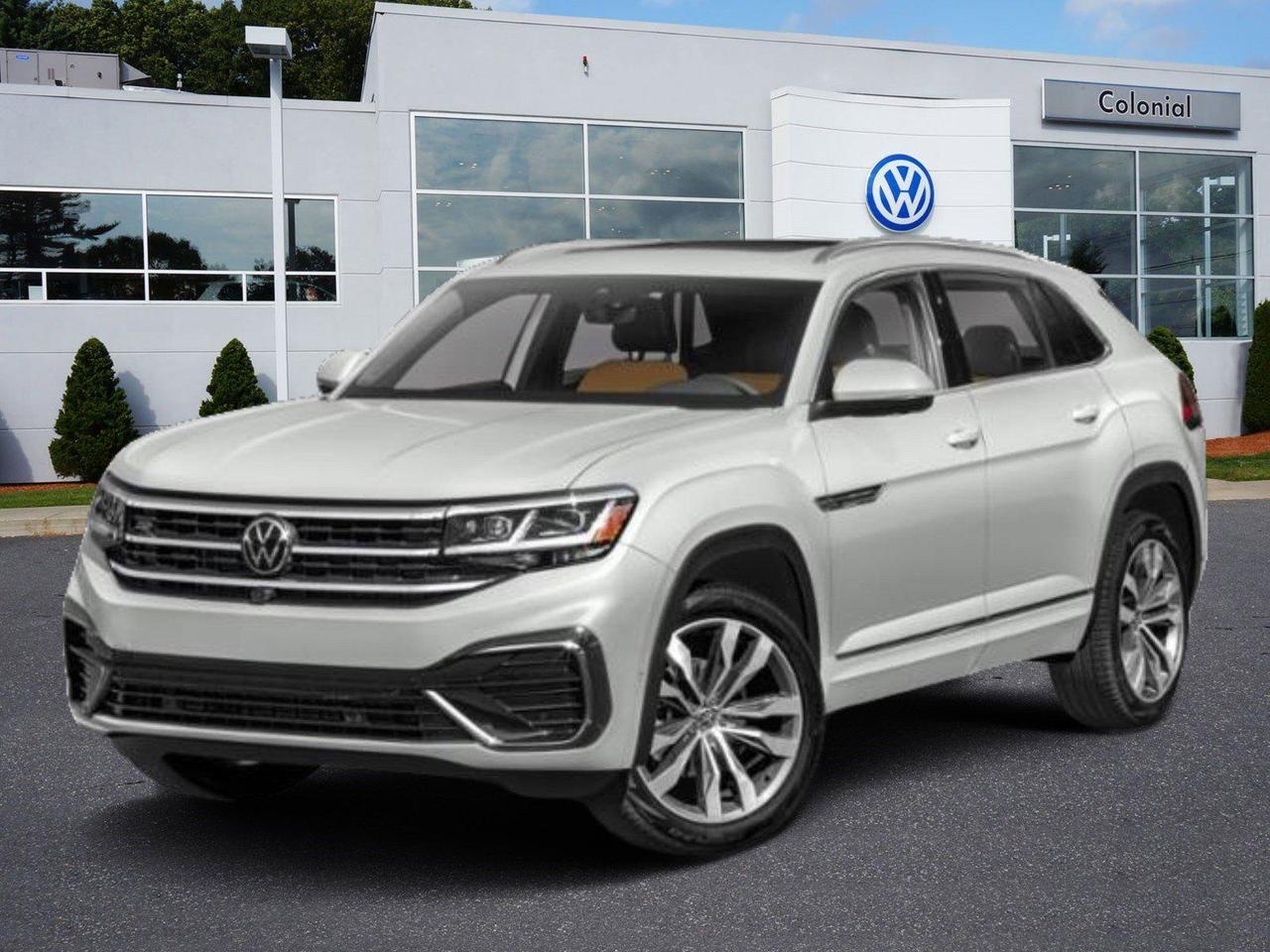
Photo Volkswagen Atlas
Specifications by trim
Choose a configuration below to open full technical data grouped by category.
2.0 TSI (269 hp) 8-Tiptronic 37 specifications
Specifications
Performance and consumption
| Fuel consumption city, L/100 km | 11.8 |
|---|---|
| Fuel consumption highway, L/100 km | 8.7 |
| Fuel consumption combined, L/100 km | 10.2 |
Engine
| Engine | 2.0 TSI |
|---|---|
| Engine code | EA888 evo4 |
| Engine type | Internal combustion engine |
| Fuel type | Gasoline |
| Engine displacement, cc | 1984 |
| Cylinder layout | Inline |
| Number of cylinders | 4 |
| Valves | 16 |
| Turbocharger | + |
| Compression ratio | 9.6:1 |
| Power, hp | 269 |
| RPM at max power | 5500-6500 |
| Torque, Nm | 370 |
| RPM at max torque | 1600-4750 |
Dimensions
| Seats | 7 |
|---|---|
| Length, mm | 5097 |
| Width, mm | 2249 |
| Height, mm | 1789 |
| Wheelbase, mm | 2980 |
| Front track, mm | 1720 |
| Rear track, mm | 1718 |
| Kerb weight, kg | 1970 |
| Fuel tank capacity, L | 70 |
| Turning circle, m | 12.2 |
| Ground clearance, mm | 160 |
| Width without mirrors, mm | 1990 |
| Trunk capacity, L | 583 |
Transmission and drive
| Transmission | 8-Tiptronic |
|---|---|
| Transmission type | automatic |
| Drive | Front-wheel drive |
| Number of gears | 8 |
| Transmission manufacturer | ZF |
| Automatic transmission | + |
| Transmission country | Germany |
2.0 TSI (269 hp) 8-Tiptronic 4x4 37 specifications
Specifications
Performance and consumption
| Fuel consumption city, L/100 km | 12.4 |
|---|---|
| Fuel consumption highway, L/100 km | 9 |
| Fuel consumption combined, L/100 km | 10.7 |
Engine
| Engine | 2.0 TSI |
|---|---|
| Engine code | EA888 evo4 |
| Engine type | Internal combustion engine |
| Fuel type | Gasoline |
| Engine displacement, cc | 1984 |
| Cylinder layout | Inline |
| Number of cylinders | 4 |
| Valves | 16 |
| Turbocharger | + |
| Compression ratio | 9.6:1 |
| Power, hp | 269 |
| RPM at max power | 5500-6500 |
| Torque, Nm | 370 |
| RPM at max torque | 1600-4750 |
Dimensions
| Seats | 7 |
|---|---|
| Length, mm | 5097 |
| Width, mm | 2249 |
| Height, mm | 1789 |
| Wheelbase, mm | 2980 |
| Front track, mm | 1720 |
| Rear track, mm | 1718 |
| Kerb weight, kg | 1970 |
| Fuel tank capacity, L | 70 |
| Turning circle, m | 12.2 |
| Ground clearance, mm | 160 |
| Width without mirrors, mm | 1990 |
| Trunk capacity, L | 583 |
Transmission and drive
| Transmission | 8-Tiptronic |
|---|---|
| Transmission type | automatic |
| Drive | All-wheel drive |
| Number of gears | 8 |
| Transmission manufacturer | ZF |
| Automatic transmission | + |
| Transmission country | Germany |
Volkswagen Atlas questions
Short answers based on the specifications and photos available in this catalog.
What engine is available in the 2023 Volkswagen Atlas?
The 2023 model is powered exclusively by a 2.0-liter turbocharged four-cylinder TSI engine. This engine produces 269 horsepower and 370 Nm of torque, paired with an eight-speed automatic transmission.
Is the 2023 Atlas available with all-wheel drive?
Yes, buyers can choose between front-wheel drive and a 4x4 all-wheel-drive system. The all-wheel-drive model has a slightly higher fuel consumption rating than the front-wheel-drive version.
How many passengers can the 2023 Atlas accommodate?
The vehicle features a three-row seating configuration that can accommodate up to seven passengers. The third-row seats are designed with enough space to fit adult passengers comfortably.
What safety features are standard on the 2023 Volkswagen Atlas?
All versions come standard with the IQ.DRIVE safety package. This suite includes lane-keeping assist, capacitive hands-on detection for the steering wheel, and collision monitoring systems for city driving.
How much cargo space does the 2023 Atlas offer?
The crossover provides 583 liters of cargo capacity behind the third row of seats. The interior also features multiple storage areas and easy-folding seats to expand the cargo area when needed.